Disclosure: This post contains affiliate links and I will be compensated if you make a purchase after clicking through my links. Learn More
For 0.030 vs 0.035 flux core wire, pick .030 for a 120V flux core welder and thin steel, and .035 for a 140-amp-plus or 240V machine on 1/8 inch and thicker steel. The deciding factor is how much amperage your welder makes on the duty cycle you need.
Both sizes weld the same E71T-11 and E71T-GS self-shielded wires, run on the same polarity, and cover the same positions. The .035 wire just needs more current to melt it properly. Here’s the side-by-side, then the details for flux core welding at home.
| Feature | 0.030 flux core wire | 0.035 flux core wire |
|---|---|---|
| Diameter | 0.030 in (0.8 mm) | 0.035 in (0.9 mm) |
| Lincoln NR-211-MP amp range (typical procedures) | About 30 to 140 A | About 30 to 155 A |
| Lincoln NR-211-MP voltage range | About 13 to 19 V | About 14 to 21 V |
| Recommended stickout (NR-211-MP) | 1/2 in | 1/2 to 5/8 in |
| Best metal thickness | Sheet metal to about 3/16 in | About 1/8 in and up |
| Best machine | 120V, 90 to 140 A flux core welders | 140 A and up, 240V or dual-voltage |
| Arc on thin sheet | Easier to control, less burn-through | Hotter, needs fast travel |
| Deposition at the same amps | About the same at low amps | Higher at high amps |
| Contact tip | 0.030 (0.8 mm) | 0.035 (0.9 mm) |
| Drive roll | Knurled, 0.030 groove | Knurled, 0.035 groove |
Amp and voltage ranges come from Lincoln Electric’s published typical operating procedures for Innershield NR-211-MP (E71T-11). Lincoln lists a 5/16 inch maximum plate thickness for both sizes of that wire. Other brands publish their own ranges, so check the box for your wire.
What Is 0.030 Flux Core Wire?
0.030 flux core wire is a self-shielded tubular wire 0.030 inch (0.8 mm) across. The flux inside melts into gas and slag, so you don’t need a gas bottle. It’s the common size on 2 lb spools for small 120V welders, because it melts well at the current those machines make.
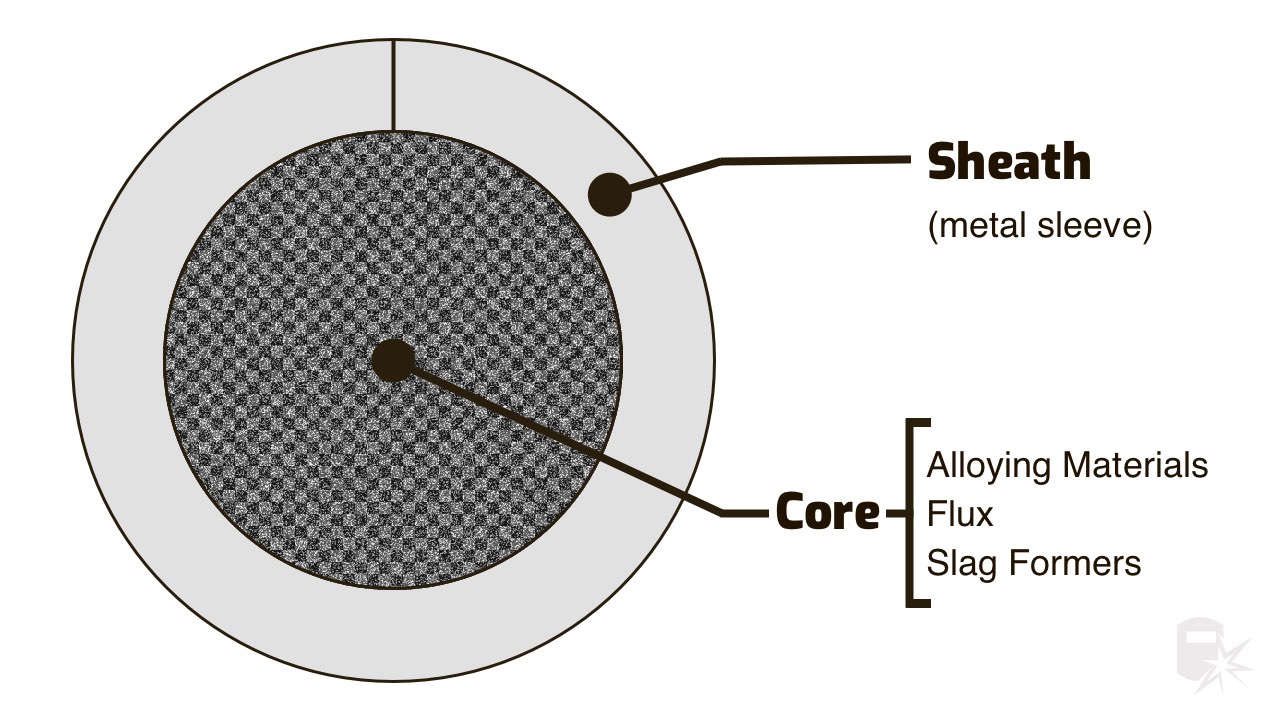
Credit: weldguru.com
What Is 0.035 Flux Core Wire?
0.035 flux core wire is the same kind of self-shielded wire at 0.035 inch (0.9 mm). The extra diameter carries more current and puts more metal into the joint at higher amps. It’s the usual pick for 140 to 200 amp machines, trailer work and 1/4 inch steel in more than one pass.
0.030 vs 0.035 Flux Core Wire: Which Is Better?
0.030 vs 0.035 flux core wire comes down to your welder’s output. On a 120V machine rated 125 to 140 amps, .030 gives a smoother arc and better control, because the welder can melt it fully. On a 240V or dual-voltage machine, .035 runs better on 1/8 inch and thicker steel and fills joints faster.
Key Differences
Amperage and Machine Size
.030 wins on small machines. Thinner wire needs less current for the same burn-off, so a 120V welder stays inside its duty cycle longer. A 120V machine pushed to its top setting to melt .035 runs out of duty cycle fast and can give a cold, lumpy bead.
Metal Thickness
.030 wins on sheet metal; .035 wins on thicker plate. On 18 to 14 gauge, .030 lets you run lower heat with less burn-through. On 1/4 inch steel, .035 at higher amps gives more fill per pass. Lincoln rates both sizes of NR-211-MP to 5/16 inch maximum, in multiple passes.
Arc Control and Spatter
.030 is easier for beginners. The smaller puddle is easier to steer, and the arc is softer at low settings. .035 at low amps can stub and spatter, because the wire doesn’t melt fast enough.
Speed and Deposition
.035 wins on speed, but only when the machine has the amps for it. At the same low current, the two wires deposit about the same amount, so .035 gives no speed gain on a small welder.
Setup Parts
Each size needs its own contact tip and the matching groove on a knurled drive roll. A .035 tip on .030 wire lets the wire wander, and a .030 tip on .035 wire jams.
Where Each One Fits
| Job | Better wire | Why |
|---|---|---|
| Auto body patch panels (20 to 18 gauge) | 0.030 | Low heat, less burn-through |
| Garden gates and light fencing (14 to 11 gauge) | 0.030 | Good fusion at 120V amps |
| Utility trailer frame (3/16 to 1/4 in) | 0.035 | More fill per pass on a 140 A+ machine |
| Farm equipment repair, thick brackets | 0.035 | Higher amps, faster deposition |
| Outdoor repairs in wind on a 120V welder | 0.030 | Self-shielded, matches machine output |
Settings Starting Points
Use the chart inside your welder’s door first. For reference, Lincoln’s typical procedures for NR-211-MP list these pairs:
- .030 wire: about 100 in/min at 13 to 14 V (about 60 A), up to about 300 in/min at 18 to 19 V (about 140 A)
- .035 wire: about 70 in/min at 15 to 16 V (about 60 A), up to about 275 in/min at 20 to 21 V
Run flux core wire on the polarity printed on the spool, which is DCEN for most self-shielded wires. Our guide to polarity for self-shielded flux core explains the lead swap.
Cost
We don’t list prices here, since they change by brand, spool size and store. Both sizes usually sell at similar prices per pound in the same brand and spool size, so pick by machine and metal, then check current prices at your supplier.
Which One Should You Choose?
Choose 0.030 flux core wire if:
- Your welder is a 120V flux core or MIG machine at 140 amps or less
- You weld mostly sheet metal and steel under 3/16 inch
- You’re new to welding and want an easier puddle
Choose 0.035 flux core wire if:
- Your welder makes 140 amps or more, or runs on 240V
- You weld 1/8 inch to 5/16 inch steel often
- You want more fill per pass on trailers, brackets and frames
Safety Note
Flux core wire makes more smoke and fumes than solid wire. Weld outdoors or with strong ventilation, keep your head out of the plume, and wear a helmet, leather gloves and a flame-resistant jacket. Chip slag with eye protection on, since it flies off hot.
FAQs
Can You Use 0.035 Flux Core Wire on a 120V Welder?
Yes, if the welder lists .035 on its spec sheet, but it often runs at the top of the dial with a short duty cycle. Many 120V machines weld better with .030. Check the settings chart in the door, and use .035 only for thicker steel near the machine’s limit.
Is 0.030 Flux Core Wire Strong Enough?
Yes. Wire diameter doesn’t set weld strength; the wire’s AWS class does. An E71T-11 wire has the same 70,000 psi minimum tensile rating in .030 and .035. Joint strength comes from good fusion, so match the wire size to your welder’s amperage and the metal.
Can I Use a 0.035 Tip With 0.030 Wire?
You can, but the arc will wander and the wire can arc inside the bore, which wears tips and causes burnback. Use a tip that matches the wire. Swap the drive roll to the .030 groove too, so the knurled roll grips without crushing the wire.
What Thickness Can 0.030 Flux Core Wire Weld?
0.030 flux core wire welds sheet metal up to about 3/16 inch in one pass on a typical 120V machine. Lincoln rates its NR-211-MP wire to 5/16 inch maximum plate in multiple passes. Thicker steel needs more amps, a bevel and several passes.
Do 0.030 and 0.035 Flux Core Wire Use the Same Polarity?
Yes. The polarity comes from the wire type, not the diameter. Most self-shielded flux core wires in both sizes run on DCEN, so the gun lead goes to the negative terminal. Read the spool label, since a few flux core wires call for DCEP.
Final Verdict
Pick 0.030 flux core wire for a 120V welder, sheet metal and steel under 3/16 inch. Pick 0.035 when your machine has 140 amps or more and you weld 1/8 inch and thicker steel most of the time.
Whichever you choose, match the contact tip and drive roll groove to the wire, set the polarity from the spool label, and start from the chart inside your welder’s door.