Disclosure: This post contains affiliate links and I will be compensated if you make a purchase after clicking through my links. Learn More
Flux cored arc welding, often called FCAW, stands out as a reliable and efficient welding process. Many industries trust FCAW because it works well for both thick and thin metals, and it handles harsh outdoor conditions better than most other welding methods.
Construction, shipbuilding, and repair shops often choose FCAW because it delivers strong welds quickly. But to use this process safely and effectively, you need to understand how it works, what equipment you need, and the best practices for quality results.
This article explains flux cored arc welding from start to finish. You will learn how the process works, the equipment involved, the types of wires, suitable applications, advantages and disadvantages, safety precautions, setup steps, troubleshooting tips, and more. By the end, you will have a deep understanding of FCAW, whether you are a beginner or already have some welding experience.
What Is Flux Cored Arc Welding?
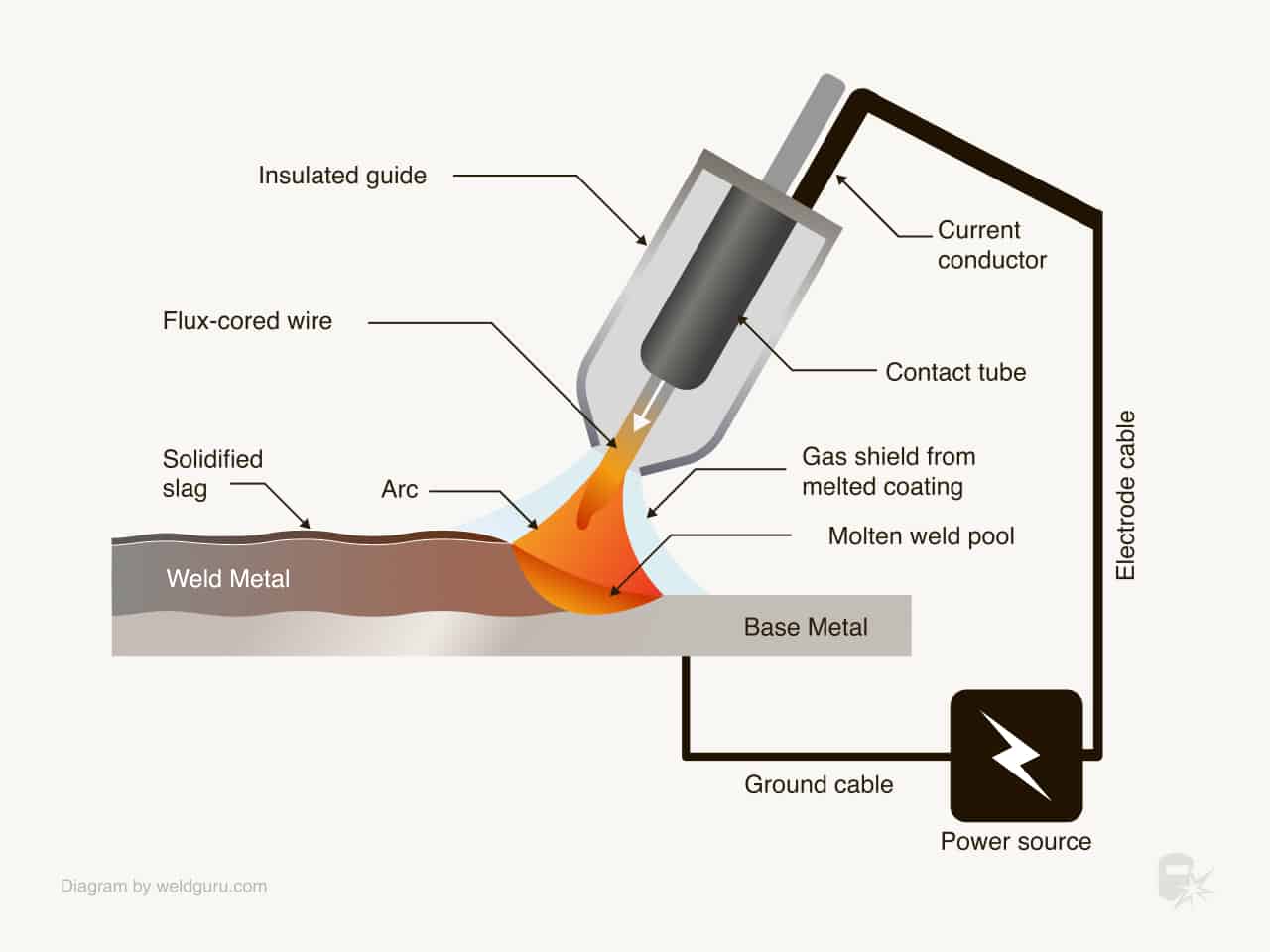
Flux cored arc welding uses a continuous wire electrode filled with flux. This wire feeds through a welding gun, which creates an electric arc between the wire and the workpiece. The heat from the arc melts the wire and the metal, forming a weld pool.
The flux inside the wire melts, producing gas and slag that protect the weld from air contamination.
FCAW can be automatic or semi-automatic. In semi-automatic welding, a person moves the gun along the joint. In fully automatic welding, machines do most of the work. FCAW is similar to MIG welding (GMAW), but the main difference is the flux core inside the wire.
How Fcaw Works
In flux cored arc welding, the wire electrode is fed from a spool through the welding gun. When you pull the trigger, current flows and creates an electric arc. The arc melts both the wire and the base metal. The flux inside the wire reacts with the heat and produces shielding gases and slag.
These protect the molten weld pool from oxygen and nitrogen in the air, which can cause defects.
There are two main types of FCAW:
- Self-shielded FCAW (FCAW-S): The flux inside the wire creates all the shielding gas needed. No extra gas cylinder is required.
- Gas-shielded FCAW (FCAW-G): The process uses both the flux in the wire and an external shielding gas, such as CO₂ or a mix of CO₂ and argon.
Key Steps In The Process
- Set up the welding machine and wire feeder.
- Choose the correct wire type and diameter.
- Attach the work clamp (ground).
- Insert the wire into the gun.
- Set the proper voltage and wire speed.
- Hold the gun at the correct angle and distance.
- Pull the trigger to start welding.
- Move the gun steadily along the joint.
Main Equipment For Fcaw
You need several tools and machines for flux cored arc welding. Each piece plays an important role in quality welds.
Welding Power Source
The power source supplies the electric current. FCAW usually uses a constant voltage (CV) power source. Most FCAW runs on direct current, electrode positive (DCEP). The voltage and current depend on the wire type, size, and thickness of the metal.
Wire Feeder
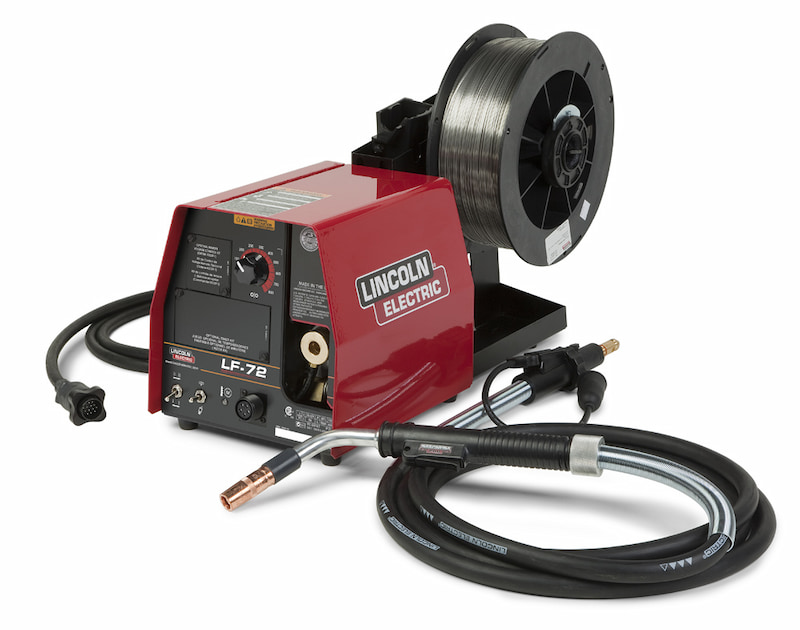
The wire feeder pushes the continuous electrode wire from a spool through the gun to the weld area. It controls the wire feed speed, which affects the heat and size of the weld.
Welding Gun
The gun holds the contact tip, nozzle, and wire liner. It feeds the wire and channels the electric current. In gas-shielded FCAW, the gun also directs the shielding gas to the weld pool.
Electrode Wire
The wire serves as both the filler metal and the source of flux for shielding. Wires come in different sizes and types for specific jobs.
Shielding Gas Supply
Gas-shielded FCAW needs a cylinder of CO₂, argon, or a mix. Self-shielded FCAW does not need extra gas.
Work Clamp
The work clamp connects to the metal piece being welded to complete the electrical circuit.
Personal Protective Equipment (ppe)
Welders must wear a helmet with a suitable filter lens, gloves, flame-resistant clothing, and safety boots. The intense light, sparks, and fumes can cause serious injuries.
Types Of Flux Cored Wires
Choosing the right wire is essential for good welds. FCAW wires have different classifications, compositions, and uses.
Self-shielded Flux Cored Wire (fcaw-s)
This wire contains flux that generates its own shielding gas. It is best for outdoor work or windy conditions where external gas shielding would not work well. Common for field repairs, construction, and farm equipment.
Gas-shielded Flux Cored Wire (fcaw-g)
This wire needs an external gas supply for extra shielding. It produces cleaner welds with less spatter and smoother appearance. It is often used in factories and shipyards.
Wire Classification
Wires have codes like E71T-1 or E71T-11. The “E” stands for electrode. The numbers show tensile strength, welding position, and other features. For example, E71T-1 means:
- E: Electrode
- 7: 70,000 psi tensile strength
- 1: All-position welding
- T: Tubular wire
- 1: Specific performance characteristics
Wire Size
Common wire diameters are 0. 8 mm, 1. 0 mm, 1. 2 mm, and 1. 6 mm. Thicker wires deposit more metal and weld faster, but need higher current.
Applications Of Fcaw
Flux cored arc welding is valued for its speed, versatility, and strength. It is used in many industries.
- Construction: Bridges, buildings, and heavy structures often use FCAW for strong welds on thick steel.
- Shipbuilding: FCAW handles large joints and thick plates, saving time and cost.
- Automotive repair: FCAW repairs frames and bodies, especially when working outdoors.
- Pipe welding: FCAW is suitable for field pipeline work because it tolerates dirty and rusty metals.
- Manufacturing: Large machinery, farm tools, and railways use FCAW for durable welds.
- Repair work: FCAW can weld over rust, paint, or mill scale better than some other methods.
Advantages Of Flux Cored Arc Welding
FCAW offers several strong benefits that make it the preferred choice for many tasks.
High Deposition Rate
FCAW deposits metal into the joint quickly. This means faster work compared to stick welding or even MIG welding.
Good For Outdoors
Self-shielded FCAW works well in windy or dirty environments. Wind cannot easily blow away the shielding gas because the flux creates its own protection.
Works On Dirty Or Rusty Metals
FCAW can weld over surfaces with rust, oil, or paint. This saves time on cleaning and preparation.
All-position Welding
Many FCAW wires are rated for all positions: flat, horizontal, vertical, and overhead. This flexibility is useful on construction sites.
Deep Penetration
FCAW can weld thick metal in a single pass. The process produces strong, deep welds.
Less Skill Needed Than Stick Welding
FCAW is easier to learn than stick welding. The wire feed is continuous, so you do not need to change electrodes as often.
Low Hydrogen Welds
Many FCAW wires are low hydrogen, reducing the risk of cracking in the weld.
Credit: fractory.com
Disadvantages And Limitations
While FCAW has many strengths, it is not perfect. Some downsides can affect project decisions.
Slag Removal Required
FCAW produces slag that forms on the weld bead. This must be chipped or brushed away after each pass.
More Smoke And Fumes
The flux produces more smoke and fumes than MIG welding. Good ventilation is necessary for safety.
Equipment Cost
FCAW equipment, especially with gas shielding, can be costly compared to stick welding.
Porosity Risk
If the technique is wrong or the wire gets damp, gas pockets (porosity) may form and weaken the weld.
Limited Suitability For Thin Metals
FCAW can burn through thin sheet metal, so it is not always the best choice for bodywork.
Wire Storage Needs
Flux cored wire can absorb moisture from the air, which leads to weld defects. Proper storage is important.
Comparing Fcaw To Other Welding Processes
Many people ask how FCAW compares to other common welding methods. Here is a clear comparison.
| Process | Shielding | Positions | Speed | Best Use |
|---|---|---|---|---|
| FCAW-S | Self-shielded | All | High | Outdoor, heavy steel |
| FCAW-G | Gas + flux | All | High | Indoor, clean steel |
| MIG (GMAW) | Gas only | All | Medium to High | Thin to medium steel |
| Stick (SMAW) | Flux | All | Low to Medium | Outdoor, repair |
| TIG (GTAW) | Gas only | All | Low | Precision, thin metals |
This table shows that FCAW, especially self-shielded, is ideal for outdoor and heavy-duty work. MIG is better for clean, thin metals. Stick welding is slow but works in bad conditions. TIG gives clean and precise welds but is much slower.
Choosing The Right Fcaw Wire And Settings
Many beginners struggle with wire selection and machine setup. Here are practical tips for getting the best results.
How To Select Wire Type
- For outdoor work or windy conditions, use self-shielded wire (e.g., E71T-11).
- For indoor, clean environments, use gas-shielded wire (e.g., E71T-1).
- Match wire diameter to metal thickness: Thin wire (0.8 mm or 1.0 mm) for thin metals; thick wire (1.2 mm or 1.6 mm) for heavy steel.
- For vertical or overhead welding, check that the wire is rated for all positions.
Setting Voltage And Wire Feed Speed
The right settings depend on wire size, metal thickness, and position. If the voltage is too high, the weld pool becomes too fluid. If too low, the arc will be unstable. Adjust the wire feed speed to get a smooth, crackling sound.
If you hear popping or the wire pushes back, change the settings.
Common Mistakes In Wire And Setting Choices
- Using gas-shielded wire outside without enough wind protection.
- Choosing a wire that cannot weld in the required position.
- Running too much current for thin metal, causing burn-through.
Fcaw Joint Types And Positions
Welders use FCAW for many joint types. Each type requires different techniques.
Butt Joint
Two pieces meet edge to edge. Often used for plate welding. Good for thick materials.
Lap Joint
One piece overlaps another. Common in sheet metal work.
T-joint
One piece stands at 90 degrees to another, forming a “T. ” Used in frames and supports.
Corner Joint
Pieces join at the corner, often seen in box-like structures.
Edge Joint
Pieces are placed side by side with their edges together. Used less often, usually for thin metals.
Welding Positions
- Flat: Easiest position, gravity helps the weld pool.
- Horizontal: The gun points sideways; control is harder than flat.
- Vertical: Weld moves up or down; needs special technique to avoid sagging.
- Overhead: Weld is above the head; requires skill to prevent drips.
Safety Precautions In Fcaw
FCAW produces intense heat, light, and fumes. Safety is essential.
- Wear a welding helmet with a proper shade filter (usually shade 10 or higher).
- Use flame-resistant clothing and gloves to prevent burns.
- Work in a well-ventilated area or use fume extraction systems.
- Keep a fire extinguisher nearby in case of sparks.
- Store wires dry to avoid moisture absorption.
- Disconnect power before changing wires or cleaning the gun.
- Inspect cables and hoses for damage before use.
FCAW fumes can be harmful. Some flux ingredients contain manganese or other metals. Limit exposure and use a respirator if ventilation is poor.
Step-by-step Fcaw Setup And Welding Guide
To get good welds with FCAW, follow these steps:
- Select the right wire. Check the code, diameter, and if it matches the job.
- Install the wire spool. Feed the wire into the drive rolls and through the gun liner.
- Set gas supply (if using gas-shielded wire). Connect the gas hose and adjust flow (usually 20–25 cubic feet per hour).
- Attach the work clamp to clean metal on the workpiece.
- Set voltage and wire speed according to a chart or manual for your wire size and metal thickness.
- Check polarity. Most FCAW uses DCEP (electrode positive).
- Test the setup on a scrap piece.
- Hold the gun at a 10–15 degree angle from vertical, pointing in the direction of travel.
- Pull the trigger to start the arc. Move smoothly along the joint, keeping a steady speed.
- Watch the weld pool and adjust speed for a smooth, even bead.
- Stop welding and release the trigger.
- Chip off slag with a chipping hammer and brush the weld clean.
A common mistake is moving the gun too fast, which produces a narrow, weak bead. Moving too slowly makes the bead wide and can cause burn-through.
Common Fcaw Problems And Troubleshooting
Welders often face problems with FCAW. Here are frequent issues and solutions.
Porosity (holes In Weld)
- Cause: Moist wire, wrong settings, or wind blowing away shielding.
- Solution: Store wire dry, check for drafts, adjust voltage and speed.
Excessive Spatter
- Cause: Wrong voltage or wire feed speed.
- Solution: Adjust settings for a smooth arc. Clean the workpiece.
Poor Penetration
- Cause: Low voltage, fast travel, or thick metal.
- Solution: Increase voltage, slow down, or use a thicker wire.
Worm Tracks
- Cause: Gas trapped in slag due to improper technique.
- Solution: Use proper gun angle and speed. Let the slag solidify before brushing.
Uneven Bead Shape
- Cause: Unsteady hand, wrong gun angle.
- Solution: Practice steady movement. Keep gun angle consistent.
Maintenance And Care For Fcaw Equipment
Taking care of your gear keeps welds safe and reliable.
- Clean the gun liner and tip regularly. Replace worn parts.
- Check the drive rolls for wear and proper tension.
- Store wire spools in sealed containers, especially in humid climates.
- Inspect cables and hoses for cuts or burns.
- Keep the work clamp clean for good electrical contact.
- Replace contact tips if the arc becomes erratic.
Cost And Productivity Of Fcaw
FCAW is popular because it offers a balance of cost and speed.
- Wire cost: Slightly higher than stick electrodes but faster work lowers labor costs.
- Gas cost: Needed only for gas-shielded FCAW.
- Equipment: More expensive than stick welding but cheaper than TIG or advanced MIG systems.
- Productivity: FCAW can deposit up to 8–10 kg of metal per hour, much faster than stick welding (2–3 kg/hour).
| Process | Wire/Electrode Cost (per kg) | Productivity (kg/hour) | Equipment Cost (USD) |
|---|---|---|---|
| FCAW | $3–$5 | 8–10 | 800–2000 |
| Stick (SMAW) | $2–$4 | 2–3 | 400–1000 |
| MIG (GMAW) | $2–$4 | 5–8 | 900–3000 |
| TIG (GTAW) | $8–$12 | 1–2 | 1200–4000 |
This shows FCAW is more productive than stick welding and MIG, though initial costs are higher.
Practical Tips For Better Fcaw Results
Some advice can help you get clean, strong welds every time.
- Keep a short stick-out (distance from the contact tip to the workpiece), usually 15–20 mm.
- Push or drag the gun depending on the wire and position (drag for self-shielded, push for gas-shielded).
- Use both hands for steadier movement if possible.
- Check polarity before starting. Wrong polarity leads to poor arc and weak welds.
- Practice on scrap metal to tune settings and technique.
- Clean the weld area even though FCAW can handle some rust.
Two non-obvious insights:
- Wire feed tension is critical. If the tension is too tight, the wire flattens and jams. Too loose, and the wire slips. Set it just enough to feed smoothly.
- Ambient temperature and humidity affect weld quality. High humidity can cause flux to absorb moisture, leading to porosity. Store wires in sealed containers or ovens if possible.
Credit: weldguru.com
Environmental Impact And Fume Control
FCAW produces more fumes than MIG or TIG welding. Long-term exposure to fumes can harm health. Use fume extraction hoods, fans, or respirators if working indoors. Some flux cored wires have less harmful ingredients—choose these for better air quality.
Proper storage and disposal of used wires and slag are also important. Dispose of waste according to local laws to avoid environmental damage.
Training And Certification For Fcaw
Many employers require welders to pass a test before using FCAW on a job. Training covers:
- Safe equipment setup
- Wire selection
- Proper welding technique
- Defect recognition
Certification bodies such as the American Welding Society (AWS) offer FCAW tests. Passing a test can improve job prospects and pay.
You can find more about standards and certifications at the Wikipedia FCAW article.
Credit: hkfabrication.com
Frequently Asked Questions
What Metals Can I Weld With Fcaw?
FCAW is best for carbon steel and low-alloy steel. Some special wires allow welding of stainless steel and certain hardfacing alloys. FCAW is not suitable for aluminum.
How Do I Prevent Porosity In Fcaw Welds?
Keep the wire dry and clean. Use the right voltage and wire feed settings. Shield outdoor welds from wind and avoid painting or oil on the weld area.
Is Flux Cored Arc Welding Better Than Mig Welding?
FCAW is better for outdoor and heavy-duty work. MIG welding gives cleaner welds on thin, clean metal indoors. The choice depends on the job requirements.
Do I Need Gas For Fcaw?
Self-shielded FCAW does not need external gas. Gas-shielded FCAW uses a cylinder of CO₂ or argon mix. Check the wire type to know which is required.
How Thick Can I Weld With Fcaw?
FCAW can weld thick steel plates, often up to 25 mm or more in a single or multiple passes. The maximum depends on wire size, power source, and skill.
Flux cored arc welding is a strong and flexible process. It provides speed, strength, and good results in tough conditions. When you choose the right wire, settings, and follow safety rules, FCAW can solve many welding challenges. With practice and attention to detail, both new and experienced welders can achieve high-quality, reliable welds using this method.