Disclosure: This post contains affiliate links and I will be compensated if you make a purchase after clicking through my links. Learn More
Choosing the right flux core wire size can make the difference between a smooth, strong weld and a frustrating, weak result. Many people start welding and pick a wire size without much thought, but this often leads to poor performance, wasted material, and weak joints. The correct wire size improves weld quality, saves money, and avoids common mistakes that even experienced welders sometimes make. This guide will help you select the right flux core wire size by breaking down the important factors, providing practical tips, and giving you examples based on real-world situations.
What Is Flux Core Wire And Why Size Matters
Flux core wire is a special welding wire with a hollow center filled with flux. The flux protects the weld from air, so you can weld outdoors or where the wind blows. You do not need extra gas to shield the weld. Wire size means the thickness, usually measured in inches or millimeters. For example, common sizes are .030-inch, .035-inch, and .045-inch.
Wire size matters because it decides how much current you need, how deep the weld goes, and how easy it is to control the bead. If you pick the wrong size, you may burn through thin metal or fail to penetrate thick metal.
This is why understanding wire size is not just a small detail—it’s a main factor in successful welding.
Common Sizes And Their Uses
- .030-inch (0.8 mm): Good for thin sheet metal and small projects.
- .035-inch (0.9 mm): Versatile, fits most home and light industrial work.
- .045-inch (1.2 mm): For thicker steel, heavy-duty work, and higher currents.
Some wires go up to 1/16-inch (1.6 mm) or more, but these are mainly for heavy machines and industrial jobs.
Factors That Decide The Best Flux Core Wire Size
Choosing wire size is not just about picking a number. Several things affect the best choice for your welding job.
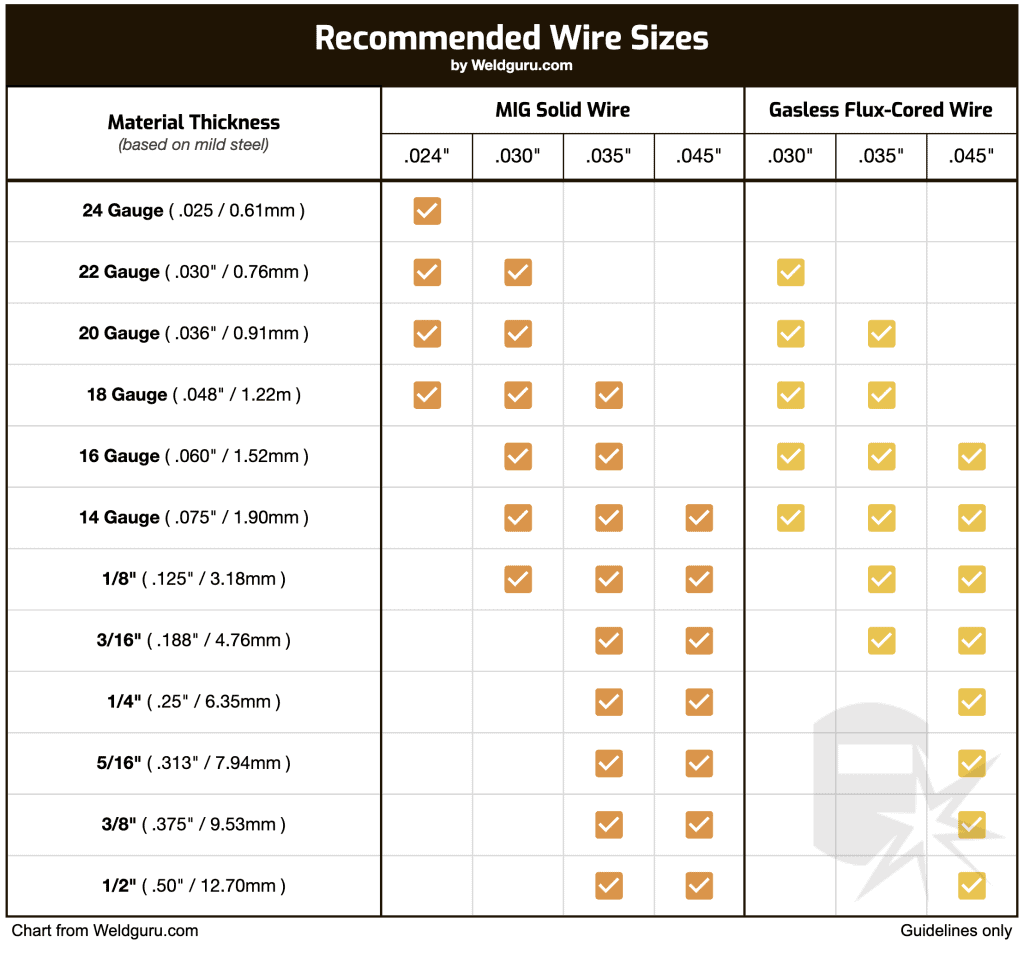
1. Metal Thickness
The most important factor is how thick the metal is. Thin metal melts fast, so a small wire gives better control. Thick metal needs more heat and a bigger wire.
| Metal Thickness | Recommended Wire Size | Example Use |
|---|---|---|
| Up to 1/8 inch (3.2 mm) | .030″ (0.8 mm) | Auto body, sheet metal |
| 1/8 – 1/4 inch (3.2-6.4 mm) | .035″ (0.9 mm) | General fabrication |
| Above 1/4 inch (6.4 mm+) | .045″ (1.2 mm) and up | Heavy equipment, structural steel |
If you use a large wire on thin metal, you risk burning holes. If you use a small wire on thick metal, you may not get a strong joint.
2. Welding Machine Power
Your welder must support the wire size you pick. Small machines often work best with. 030″ or. 035″ wire. Larger industrial welders can use. 045″ or thicker wires.
Check your machine’s specs. Most 110V welders are limited to. 030″ or. 035″ wire. 220V welders can handle thicker wires for higher output.
3. Welding Position
Position means how you hold the gun—flat, vertical, overhead, or horizontal. Thinner wire (. 030″) is easier to control in vertical or overhead positions. Thicker wire (. 045″) works well for flat welds, where gravity helps control the puddle.
4. Type Of Joint
Different joints need different wire sizes. Butt joints on thin sheet metal need small wires, while fillet or groove welds on thick sections need bigger wires. If you weld out-of-position, a small wire helps prevent drips and sags.
5. Welding Speed And Production Rate
A thicker wire deposits more metal, so you can weld faster. This matters in production work where speed is important. For home use or small projects, control is more important than speed.
6. Shielding Conditions
Flux core wires work well outdoors because the flux protects the weld. But wind can still blow some flux away. Smaller wires (. 030″) are more sensitive to wind, so use thicker wire (. 035″ or. 045″) if you must weld outside in strong wind.
7. Cost And Availability
Common sizes like. 030″ and. 035″ are cheaper and easy to find. Odd sizes or very thick wire may cost more and be harder to buy locally.
How Wire Size Affects Weld Quality
Weld quality means how strong, neat, and clean your weld looks and performs.
Penetration
Wire size controls how deep the weld goes into the metal. Thin wire (. 030″) gives shallow penetration, good for thin metal. Thick wire (. 045″) gives deep penetration, needed for thick metal.
Control
Thinner wire is easier to control, especially for beginners. You get a smaller bead and less spatter. Thicker wire is harder to control unless you have experience and the right settings.
Bead Appearance
The bead is the visible line of weld. Thin wire creates a narrow, smooth bead. Thick wire creates a wide, higher bead. If you want a nice-looking weld, match the wire size to the job.
Spatter
Too much current or wrong wire size causes spatter—tiny balls of metal that stick near your weld. This makes cleanup harder. The right wire size reduces spatter.
Matching Wire Size To Amperage
Each wire size needs a certain range of amperage (welding current) to melt properly.
| Wire Size | Amperage Range | Best Use |
|---|---|---|
| .030″ (0.8 mm) | 80–150A | Light gauge steel, auto body |
| .035″ (0.9 mm) | 100–180A | Most general work |
| .045″ (1.2 mm) | 180–250A | Heavy steel, thick sections |
Set your machine within the wire’s current range. Using too little current with thick wire makes cold welds—weak and ugly. Too much current with thin wire burns holes and causes too much spatter.
Practical Steps To Choose The Right Flux Core Wire Size
Follow these steps for a safe and strong weld.
Step 1: Measure Metal Thickness
Use a caliper or thickness gauge if you are not sure. Check the thickest part you will weld.
Step 2: Check Your Welder’s Manual
See what wire sizes your machine supports. Stick to the manufacturer’s advice for best results.
Step 3: Pick The Correct Wire Size
Match your metal thickness and welder’s power to the table above. For most hobbyists, .030″ or .035″ covers 90% of jobs.
Step 4: Test Settings On Scrap
Before you start, weld a small piece of scrap metal. Check for burn-through, poor fusion, or excessive spatter. Adjust settings or change wire size if needed.
Step 5: Adjust Feed Speed And Voltage
Fine-tune your wire feed speed and voltage for a smooth, stable arc. Too fast a feed causes stubbing and spatter; too slow causes gaps.
Step 6: Watch The Weld Pool
A good weld pool is stable and easy to control. If it’s too hot or cold, adjust your settings or consider a different wire size.
Examples: Wire Size For Common Welding Jobs
Many people get stuck when they try to match wire size to real jobs. Here are some common cases.
Automotive Bodywork
Car bodies are usually 18 to 22 gauge steel (about 0.8 to 1.2 mm thick). Use .030″ wire for best control. Thicker wire risks burning through.
Fencing And Gates
Most gates use 1/8-inch to 1/4-inch steel. .035″ wire gives good penetration and speed without being hard to control.
Trailer Frames
Trailer frames use thick steel—often 1/4 inch or more. .045″ wire lets you weld faster and deeper. Make sure your machine supports this size.
Home Repairs
For general home repairs, .030″ or .035″ wire handles most tasks, from brackets to shelves.
Structural Steel
Beams and columns use thick steel. Use .045″ or even 1/16″ wire. Only consider this if you have a powerful welder and experience.
Common Mistakes When Choosing Wire Size
Even experienced welders make these mistakes. Avoid them to get better results.
- Ignoring Metal Thickness: Some people pick wire size based on what’s loaded in the machine, not what the job needs.
- Using Large Wire on Small Machines: A .045″ wire in a small welder can cause poor arc and machine strain.
- Overlooking Position: Thick wire can sag or drip when welding overhead or vertical.
- Neglecting Test Welds: Always test on scrap before starting the real job.
- Focusing Only on Price: Cheaper wire is not always better. Using the wrong size will cost more in wasted material and time.
How Wire Type And Brand Affect Performance
Not all flux core wires are the same. Two wires of the same size can behave differently depending on the brand, the flux formula, and the core material. Try different brands if you are not happy with your welds.
Look for E71T-11 or E71T-GS wires for general use. These are common standards for mild steel.
Low-quality wire may cause feeding problems, excess spatter, and weak welds. Stick with well-known brands, especially for important projects.
Wire Size And Welding Gun Compatibility
Your welding gun must be able to feed the wire size you choose. Most hobby guns handle up to. 035″ wire. Guns for. 045″ wire are larger, with heavier feed mechanisms. Check your gun’s specs before buying wire.
If you try to use thick wire in a small gun, you may get jams, poor feeding, or even damage your gun.
Storage And Handling Of Flux Core Wire
Wire size does not change how you store wire, but thicker wire spools are heavier and need stronger racks. Always keep wire dry. Moisture causes rust, which leads to feeding problems and poor welds.
After opening a spool, cover it when not in use. If you live in a humid area, store wire in a sealed container with a drying agent.
Advanced Tips For Experienced Welders
If you weld often, try these non-obvious tips:
- Use .035″ wire for multi-purpose shops. It covers most jobs and reduces the need to change spools.
- Step up wire size for long welds. If you need to lay a long bead, thick wire (.045″) helps you finish faster with fewer stops.
- Try pulsed welding. Some advanced machines support pulsed mode, which allows thicker wire on thinner metal by reducing heat input.
How To Read Flux Core Wire Labels
Wire spools have labels with codes like E71T-11 or E71T-GS. The last number tells you the wire size in thousandths of an inch. For example,. 035″ wire is sometimes marked as 35.
The label also shows the wire’s strength, best positions (all-position or flat), and other features. Always double-check before buying.
Matching Flux Core Wire To Welding Projects
Different projects need different choices. Here are more examples to help you make quick decisions:
- Sheet metal art: Use .030″ wire for clean lines and small beads.
- Outdoor repairs: .035″ or .045″ wire resists wind better and gives a stronger weld.
- Farm equipment: Thick steel needs .045″ wire for strong joints.
- Furniture repair: Most pieces use 1/16″ to 1/8″ metal; .030″ or .035″ wire is best.
Safety Concerns With Wrong Wire Size
Choosing the wrong wire size is not just a technical mistake—it can be unsafe. Poor welds break under stress, which can lead to accidents.
- Thin wire on thick metal causes weak welds.
- Thick wire on thin metal makes holes and weakens the piece.
- Wrong settings with any wire size can cause arc instability, making welding unpredictable.
Always check your welds for cracks, lack of fusion, or burn-through.
Credit: weldguru.com
How To Switch Wire Sizes
If you need to switch from one wire size to another:
- Remove the old spool and wire from the gun.
- Clean the liner and drive rolls—old wire flakes can cause jams.
- Install the new spool. Make sure the drive roll matches the new wire size.
- Thread the wire through the gun slowly.
- Adjust the feed tension for smooth operation.
Never force thick wire through a gun made for thin wire.
Case Study: Repairing A Trailer With The Wrong Wire Size
A welder used. 030″ wire to repair a trailer frame made from 1/4-inch thick steel. The welds looked neat, but after a few months, the frame cracked. When checked, the welds showed poor penetration. The welder switched to. 045″ wire and increased amperage.
The new welds were stronger, and the trailer lasted much longer.
This shows why matching wire size to the job is critical—even if the weld looks good, it might not be strong enough.
Environmental Factors Affecting Wire Choice
Weather can affect your welds. If you work in a windy area, use thicker wire. Thin wire’s flux can blow away, causing porosity (holes) in the weld.
If you work in a cold shop, thicker wire helps because you can use higher amperage to get a stable arc.
Wire Size For Stainless And Special Steels
Most flux core wires are for mild steel. Stainless steel or special alloys need different wires—and sometimes different sizes.
For stainless steel, try to match the wire size to the base metal thickness, just as you do with mild steel. Use manufacturer recommendations for best results.
Wire Size And Welding Codes
Some jobs—like building stairs, bridges, or pressure vessels—must follow welding codes. These codes often specify the exact wire size and type. Always check the code before starting.
For home or small business work, follow the basic rules above. For structural or safety-critical work, consult an expert or inspector.
The Role Of Wire Feed Speed
Wire size and feed speed work together. If you increase wire size, you often need to increase feed speed to keep the arc stable. Too slow a feed with thick wire causes stubbing and poor welds. Too fast a feed causes spatter and jams.
Test different feed speeds on scrap before you start your real weld.
Credit: yeswelder.com
Do You Need To Change Wire Size Often?
For most home welders,. 030″ or. 035″ wire covers almost all jobs. Only switch to. 045″ or thicker wire for heavy steel or high-volume production. Frequent changes are not necessary unless you work on many types of metal each day.
How To Save Money On Wire
Buying the right size from a reliable supplier saves money in the long run. If you use the wrong size, you waste wire, electricity, and time fixing mistakes. Try to buy common sizes like. 035″ in bulk if you use them often.
Expert Insight: When To Use .023″ Wire
. 023″ wire is less common but useful for super-thin sheet metal. It gives maximum control and prevents burn-through. Use it for body panels and small repairs, but only if your machine supports it.
How To Store Leftover Wire
Always keep leftover wire in a dry place. Use a plastic bag or sealed container. If you use partial spools, label them with size and date for easy tracking.

Credit: www.millerwelds.com
Wire Size And Gasless Vs. Dual Shield
Most home welders use gasless flux core wire. Dual shield wires use both flux and external gas. Dual shield wires are usually thicker and require more powerful welders.
For gasless, stick to. 030″ or. 035″ for general use;. 045″ for heavy-duty jobs if your machine supports it.
The Impact Of Wire Size On Welding Cost
Thicker wire costs more per pound but may save time on big jobs. For small jobs, thinner wire is cheaper and less wasteful. Consider how much welding you do and the cost per foot of bead.
Common Questions To Ask Before Buying Wire
- What is the thickest metal I will weld?
- Does my welder support this wire size?
- Will I weld outside, inside, or both?
- Do I need a clean, neat weld or just a strong one?
- How often will I switch wire sizes?
Asking these questions helps you avoid mistakes and choose wisely.
How To Troubleshoot Wire Size Problems
If you have trouble with your welds, check these things:
- Too much spatter: Try a smaller wire or lower the current.
- Poor penetration: Try a thicker wire or increase the current.
- Burn-through: Use a smaller wire and move faster.
- Gun jams: Make sure your drive roll matches the wire size.
Test and adjust until you get a smooth, strong weld.
Where To Learn More
For deeper technical details, check resources like the Wikipedia page on flux-cored arc welding. This helps if you want to understand the process or compare wires from different makers.
Frequently Asked Questions
What Happens If I Use The Wrong Flux Core Wire Size?
If you use a wire that is too thick, you may burn holes in thin metal or have trouble controlling the weld. If the wire is too thin for thick metal, the weld may not penetrate fully, making it weak.
Always match wire size to metal thickness and your welder’s power.
Can I Use .035″ Wire For Everything?
. 035″ wire is the most versatile size for most home and light shop projects. It works for metal up to 1/4 inch thick. For thinner metal,. 030″ gives better control. For thicker metal, use. 045″ if your welder supports it.
How Do I Know What Wire Size My Welder Supports?
Check your welder’s manual or the label near the wire feed. Most small welders support up to. 035″. Larger machines can handle. 045″ or thicker wire. Never force a wire through if your machine is not designed for it.
Is Flux Core Wire Better Than Solid Wire?
Flux core wire works better outdoors and on dirty or rusty metal. Solid wire gives a neater weld indoors and with shielding gas. Both types come in different sizes, and the right size depends on your job and machine.
Does Brand Matter When Picking Wire Size?
Brand affects quality, consistency, and ease of use. Two wires of the same size can act differently. Well-known brands usually give better results, especially for important work. Always test a small amount before buying in bulk.
Choosing the right flux core wire size is not just a technical task—it shapes the strength, appearance, and safety of your welds. By understanding the main factors, matching wire size to your project, and avoiding common mistakes, you set yourself up for strong, reliable results. With practice and good choices, your welds will look better and last longer.