Disclosure: This post contains affiliate links and I will be compensated if you make a purchase after clicking through my links. Learn More
Yes, flux core wire can go bad when it soaks up moisture or rusts. Age by itself does little harm. Wire kept dry in its sealed bag can last for years, and Hobart says the wire’s strength rating doesn’t drop over time.
Wire left on the machine in a damp garage is a different story. The flux inside picks up water from the air, and that shows up as porosity, worm tracks and extra spatter. This guide covers the signs, a quick test, and how to store spools for flux core welding.
Does Flux Core Wire Go Bad? The Short Answer
Flux core wire goes bad when moisture gets into the flux or rust forms on the wire. Hobart Brothers states that mechanical properties don’t degrade with time: wire rated 70,000 psi tensile when bought should still meet that 10 years later, if it was stored well.
Hobart’s warranty covers wire in its original unopened package for 1 year after shipping. After that, shelf life depends on storage conditions.
What Makes Flux Core Wire Go Bad
| Cause | What happens | How common at home |
|---|---|---|
| Moisture pickup in the flux | Hydrogen in the weld: porosity, worm tracks, cracking | Common in humid garages |
| Rust on the wire surface | Poor feeding, erratic arc, spatter | Common on spools left open |
| Condensation from temperature swings | Water on the wire after a cold night | Common in unheated shops |
| Dust and dirt on the spool | Gums up the liner and tip, uneven feed | Common when the spool isn’t covered |
| Crushed or kinked wire | Jams in the drive rolls and liner | Less common, from drops or tight rolls |
Flux-cored wire is a thin steel tube packed with flux powder. On seamed wire, the seam lets humid air reach the flux, which is why flux core is more sensitive to damp storage than solid wire.
Signs Your Flux Core Wire Has Gone Bad
- Porosity: pinholes on the bead or inside the weld, even with good settings.
- Worm tracks or pock marks on the bead surface. Hobart lists these as signs of excess hydrogen in flux-cored welds.
- Orange or brown rust on the outer wraps of the spool.
- White spots on the wire. Hobart says to discard wire with heavy white spotting.
- More spatter and a rougher arc than the same wire gave when new.
- Feeding problems such as stutters or jams, from rust and dirt in the liner.
- Delayed cracking in the weld hours after welding (hydrogen cracking), on thicker or high-strength steel.
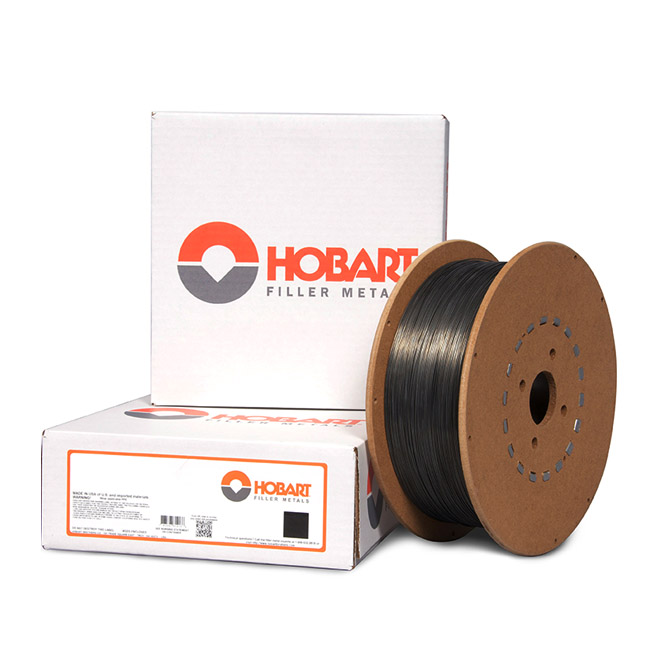
Credit: www.hobartbrothers.com
How to Test an Old Spool of Flux Core Wire
- Check the outer wraps. Look for rust, white spots or a dull, crusty surface.
- Strip the damaged layers. Hobart says that if only a layer or two is rusted, remove it and test-weld.
- Fit a clean contact tip and blow out the liner so old dirt doesn’t skew the test.
- Run a 3 to 4 inch bead on clean scrap at your normal settings.
- Chip the slag and look closely. A smooth bead with no pinholes means the wire is fine.
- Discard it if the bead shows porosity or worm tracks on clean steel, or the wire won’t feed smoothly.
If the wire feeds badly but the bead looks fine, the problem may be the feed path. Check for inconsistent wire feed before you throw the spool out.
Can You Dry Out Damp Flux Core Wire?
No. Hobart does not recommend rebaking flux-cored wire. Oven heat can damage the spooling lube and the plastic or fiberboard spool, and it can change how the wire welds. Stick rods such as 7018 can be rebaked by the maker’s rules, but wire can’t.
If a spool is damp or rusted deep into the wraps, replace it. For small 2 lb spools, that’s cheaper than chasing weld defects.
How to Store Flux Core Wire So It Lasts
Hobart’s storage guidance for its tubular (flux-cored) wire gives clear limits:
- Temperature: store between 40°F (4°C) and 120°F (49°C).
- Humidity: 80% maximum.
- Packaging: keep unused wire in its original sealed package, in a dry, enclosed space.
- Water: keep packages away from drips, condensation and standing water.
- Cold wire: let it warm to within 10°F (6°C) of the shop before you weld, so condensation doesn’t form.
For a spool you’re using:
- Put it back in its bag and box when you’re done for the day, or seal it in a plastic bag with a rubber band.
- In a dry shop, you can leave it on the welder with a plastic bag over it to keep dust off.
- In a humid garage, take it out of the welder and store it indoors.
- Some welders keep wire in an old refrigerator with a light bulb inside, which Hobart mentions as a way to keep it a little above room temperature.
- Buy 2 lb spools if you weld only a few times a year, so you use up each spool before it sits too long.
Does Solid MIG Wire Go Bad Too?
Solid MIG wire doesn’t absorb moisture, since it has no flux inside. It can still rust on the surface, which hurts feeding and arc stability. Copper-coated solid wire resists rust better, but the same dry storage rules apply.
Safety Note
Damp or rusty wire can make welds with hidden porosity and cracks. Don’t use questionable wire on trailer hitches, lifting gear or anything that carries a load. Flux core welding also makes heavy fumes, so weld with good ventilation or outdoors.
FAQs
How Long Does Flux Core Wire Last?
Flux core wire can last years if it stays sealed and dry. Hobart warranties wire for 1 year in the unopened package, and says strength doesn’t drop with age. An opened spool in a humid garage can show porosity within weeks or months, so bag it between uses.
Can Old Flux Core Wire Still Be Used?
Often yes. Strip any rusty outer wraps, fit a clean tip and run a test bead on clean scrap. If the bead is smooth with no pinholes or worm tracks, the wire is fine. If it shows porosity on clean steel, replace the spool.
Does Flux Core Wire Absorb Moisture?
Yes. The flux inside the tube picks up moisture from humid air, which adds hydrogen to the weld. Hydrogen causes porosity, worm tracks and sometimes cracking. That’s why flux core wire needs dry, sealed storage more than solid MIG wire does.
Should I Take the Wire Spool Out of My Welder?
In a dry shop, a spool can stay on the welder with a plastic bag over it. In a damp or unheated garage, take it out after each session, seal it in its bag and store it indoors. Temperature swings cause condensation on the wire.
Can You Bake Flux Core Wire Like 7018 Rods?
No. Hobart does not recommend rebaking flux-cored wire. Oven heat can damage the spooling lube and the spool, and it can change how the wire welds. Replace damp or rusty wire instead, and store new spools sealed between 40°F and 120°F.
Final Words
Flux core wire goes bad from moisture and rust. Watch for porosity, worm tracks, rust and white spots, and run a test bead on any spool that sat open for weeks.
Keep spools sealed, dry and between 40°F and 120°F, and bag the spool on your welder between jobs. That keeps a 10 lb spool welding like new until the last wrap.