Disclosure: This post contains affiliate links and I will be compensated if you make a purchase after clicking through my links. Learn More
Your MIG contact tip keeps burning back when the wire feeds too slowly for the voltage or the gun sits too close to the work. The arc climbs up the wire and fuses it to the tip. Raise the wire speed a little, hold about 3/8 to 1/2 inch of stickout, and put in a fresh tip.
If the settings look right, the cause is usually drag in the feed path: a kinked liner, loose drive rolls, a worn or wrong-size tip, or a weak ground. Burnback is one of the most common stoppages in MIG welding, and most fixes take 5 minutes and a spare tip.
Below you’ll find a quick-fix table, the steps to clear a fused tip, and every cause in the order we’d check it.
What Is MIG Contact Tip Burnback?
Contact tip burnback is when the welding wire melts back into the contact tip and welds itself to the tip face or inside the bore. The wire stops feeding, the arc goes out, and the drive rolls often keep pushing until the wire bunches up (a bird’s nest).
It happens when the arc burns the wire faster than the feeder pushes it out. Anything that slows the wire for even a split second, or puts the tip too close to the arc, can cause it.

Credit: www.bernardtregaskiss.com
Why Does My MIG Contact Tip Keep Burning Back? Quick-Fix Table
Your MIG contact tip keeps burning back for one of 9 reasons, and when it happens points to which one. Match your symptom to a row in this table, then go to the matching cause section for the full check.
| Symptom | Likely cause | Fix | DIY or pro |
|---|---|---|---|
| Burns back at the start of almost every weld | Gun too close to the work, stickout under 1/4 inch | Hold 3/8 to 1/2 inch of stickout | DIY |
| Burns back mid-bead with a long, hissing arc | Wire feed speed too low for the voltage | Raise wire speed or drop voltage one step | DIY |
| Wire stutters or surges, then burns back | Drive roll tension, kinked liner or tight spool brake | Set roll tension, straighten the cable, clean or replace the liner | DIY |
| Burns back right after you release the trigger | Burnback time set too high | Turn the burnback setting down | DIY |
| Wire drags or fuses inside the bore | Tip too small, worn or full of spatter | Match the tip to the wire size and replace it | DIY |
| Random burnbacks, arc cuts in and out | Poor ground clamp connection | Clamp to clean bare metal near the joint | DIY |
| Burnback with good settings and smooth feed | Faulty feed motor, gun or control board | Have the machine serviced | Pro |
How to Clear a Burned-Back Contact Tip
A burned-back tip is almost always scrap. Weld supply shops such as IOC and training schools such as UTI both advise replacing it instead of scraping out the bore and reusing it, since a damaged bore drags the wire and burns back again.
- Turn the welder off. The wire is electrically live whenever the trigger is pulled.
- Let the gun cool. The tip and nozzle stay hot for a few minutes after welding.
- Remove the nozzle by twisting it off the gun.
- Cut the wire flush at the tip face with welding pliers.
- Unscrew the tip. Use welding pliers if the fused wire makes it stiff.
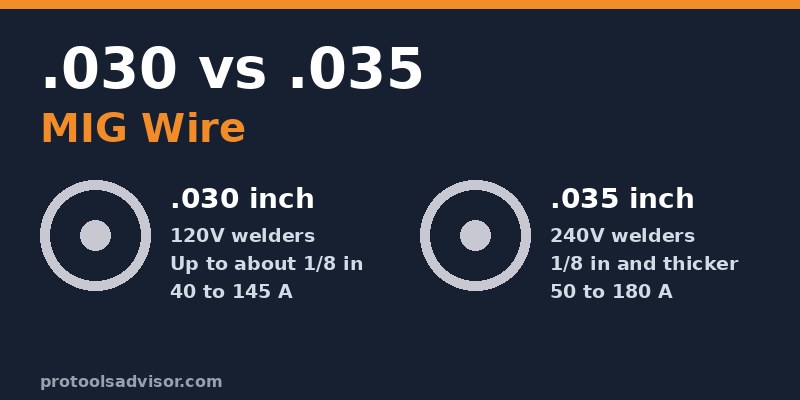
- Install a new tip that matches your wire size (a .030 tip for .030 wire).
- Feed and trim the wire so about 3/8 inch sticks out, then refit the nozzle.
Before you weld again, find the cause below. A new tip on the same settings will burn back the same way.
Causes of MIG Contact Tip Burnback (Most Common First)
1. Wire Feed Speed Too Low for the Voltage
Low wire feed speed is the most common cause. The arc length grows, the arc reaches the tip, and the wire fuses. You’ll often hear it first: a steady sizzle turns into a long, hissing arc just before the wire sticks.
Fix: Start from the chart inside your welder’s door or a MIG wire speed and voltage chart for your wire size and metal thickness. Raise wire speed in small steps, or drop voltage one tap, until the arc sounds steady.
2. Gun Held Too Close to the Work
A short wire stickout puts the tip right next to the arc and the hot puddle. Bernard, UNIMIG and UTI all list crowding the work as a top burnback cause, and it’s common on stainless steel and out-of-position welds.
Fix: For short circuit MIG on steel, UTI recommends about 3/8 to 1/2 inch from the tip to the work. Brace your gun hand so the distance stays the same through the whole bead.
3. Drive Roll Tension Set Wrong
Rolls that are too loose slip, so the wire pauses for a split second and the arc burns back. Rolls that are too tight flatten the wire, which then drags in the liner and the tip.
Fix: Set tension just past the point where the wire stops slipping. A common check is to feed the wire against a block of wood with the gun a few inches away: the wire should buckle, and the rolls should not slip. Also check the groove type. Solid steel wire uses a V-groove, flux core wire uses a knurled roll, and aluminum uses a U-groove.
4. Kinked, Dirty or Wrong-Size Liner
The liner guides the wire from the feeder to the tip. A sharp bend in the gun cable, dust and wire shavings inside it, or a liner cut too short all add drag. Bernard’s own contact tip guide tells welders to remove loops and kinks from the cable and to install the liner correctly.
Fix: Lay the gun cable as straight as you can. Blow the liner out with compressed air at each spool change, and replace it if the wire still drags. If the feed jumps around even with a clean liner, our guide on inconsistent wire feed covers the next checks.
5. Wrong-Size, Worn or Dirty Contact Tip
A tip bore that’s too small drags the wire. One that’s too big lets the wire rattle, so the current jumps across a gap and can arc inside the bore. Over time, the bore also wears oval (keyholing) and collects spatter on the face.

Credit: www.bernardtregaskiss.com
Fix: Use a tip stamped with your wire size (.023, .030, .035 or .045). Replace it when the hole looks oval, the face is caked with spatter, or the arc starts to wander. A dab of nozzle gel keeps spatter off the tip face.
6. Spool Brake Too Tight
The spool hub has a brake that stops the spool from overrunning when you release the trigger. Set too tight, it makes the drive rolls fight the spool, and the wire slows down mid-weld.
Fix: Loosen the hub nut until the spool turns with light hand pressure but stops when you let go of the trigger, with no loose loops of wire.
7. Burnback Time Set Too High
Many welders have a burnback control. It keeps the wire live for a moment after the feed stops, so the wire doesn’t freeze in the puddle. UNIMIG explains that a high setting burns the wire back into the tip, and a low setting leaves the wire stuck in the weld.
Fix: If the tip only burns back when you release the trigger, turn this setting down. UNIMIG suggests 5 on its 1 to 10 scale as a start. Machines without the knob have a fixed setting, so check the manual for your model.
8. Poor Ground Connection
A loose or dirty ground clamp causes voltage drops. The arc fades for an instant, the wire keeps feeding, then the arc flares back and can reach the tip.

Credit: unimig.directus.app
Fix: Grind a bare spot and clamp as close to the joint as you can. Check the ground cable lug for heat marks or loose strands.
9. Low-Quality or Rusty Wire
Cheap wire with an uneven coating or a bad curl (cast) drags through the liner and tip. Wire left uncovered in a damp garage rusts, and rust adds more drag.
Fix: Buy wire from a known brand, keep the spool covered when you’re done, and store spare spools in a sealed bag.
When to Call a Pro
Take the welder to a service center if the tip still burns back after you’ve checked every cause above. Signs of a machine fault:
- Wire speed changes on its own with the knob untouched
- The feed motor surges, hums or stops mid-weld
- The gun trigger works only when you bend the cable a certain way
- Burn marks or melted plastic on the gun connector at the feeder
If the welder is under warranty, contact the manufacturer first. Opening the case can void it.
How to Prevent MIG Contact Tip Burnback
- Start every new job from the settings chart, then fine-tune by sound.
- Know your MIG wire feed speed for the wire size and thickness before you strike an arc.
- Hold 3/8 to 1/2 inch of stickout for short circuit welds.
- Keep the gun cable straight and off sharp bends.
- Check drive roll tension and blow out the liner at every spool change.
- Keep 5 or more spare tips in your wire size on the cart.
- Dip or wipe the nozzle with anti-spatter gel.
- Cover the spool and store wire dry.
Safety Note
Turn the welder off before you touch the tip or cut the wire. The wire is live when the trigger is pulled, and the tip and nozzle stay hot after welding. Wear dry welding gloves, and weld with good ventilation to keep fumes out of your breathing zone.
FAQs
Can You Reuse a MIG Contact Tip After Burnback?
Usually no. Once wire fuses in the bore, the hole is damaged and drags the next wire, so it burns back again. Weld supply shops advise replacing the tip instead of drilling or scraping it. Tips are cheap, so keep spares in your wire size on the cart.
How Often Should You Change MIG Contact Tips?
Change the tip when the bore looks oval, spatter cakes the face, the arc starts to wander, or after any burnback. Hobby welders may go weeks on one tip. Heavy daily welding can wear through tips much faster, so check the tip at every spool change.
Does Flux Core Wire Burn Back Into the Tip Too?
Yes. Flux core wire burns back for the same reasons as solid wire: wire speed too low, the gun too close or drag in the feed path. Flux core wire is softer, so too much drive roll tension crushes it. Use knurled rolls and moderate tension.
Why Does My MIG Wire Stick to the Tip When I Start?
Wire that sticks at the start usually means the gun is too close or the stickout is too short when you pull the trigger. A ball on the wire end from the last weld can also cause it. Trim the wire to 3/8 inch before each start.
What Size Contact Tip Should I Use for .030 MIG Wire?
Use a tip stamped .030 for .030 wire. A tip one size larger lets the wire wander and can arc inside the bore, and a smaller one drags. Aluminum is the usual exception, since many welders run a tip one size up because aluminum wire expands with heat.
Final Words
When a MIG contact tip keeps burning back, start with the two quick checks: wire speed versus voltage, and stickout. Those two fix most cases in a few minutes.
If the burnback keeps coming back, trace the feed path from the spool to the tip: hub brake, drive rolls, liner, tip size and ground. Replace the burned tip every time, and keep spares on hand so a burnback costs you a minute instead of the afternoon.