Disclosure: This post contains affiliate links and I will be compensated if you make a purchase after clicking through my links. Learn More
Welding has shaped modern construction, manufacturing, and repair. Each weld relies on more than just skill and electricity. One key ingredient is often invisible: shielding gas. Many new welders ask why gases like argon or CO₂ matter so much. The answer lies in the science of metal, heat, and air.
When you strike an arc or melt metal, you create a small pool of liquid metal. This pool is hot and easily reacts with oxygen, nitrogen, and water vapor in the air. These reactions can weaken the weld, cause holes, or trap gas inside the metal.
Shielding gas forms a protective cover around the weld area. This barrier stops air from reaching the molten metal, giving you a cleaner and stronger weld.
This article explains the purpose of shielding gas in welding. You will learn how it works, which gases are used, and how to choose the right type for each job. We will also discuss mistakes beginners often make and answer common questions.
Why Shielding Gas Is Essential In Welding
Shielding gas is not optional in many welding methods. It plays a direct role in weld quality and strength. When the arc melts the metal, air can cause problems like:
- Porosity: Small holes inside the weld from trapped gas.
- Oxidation: Rust or discoloration from oxygen.
- Nitride and Carbide Formation: Weak or brittle welds from nitrogen or carbon.
- Spatter: Small droplets that land around the weld, making cleanup harder.
Shielding gas stops these problems by pushing air away. It creates a small, controlled atmosphere where the weld can cool slowly and evenly. This makes the joint stronger and gives a smoother finish.
Some beginners think shielding gas is only for looks. In fact, it protects the structure of the weld. Without it, even a weld that looks good can fail under pressure or load.
How Shielding Gas Works
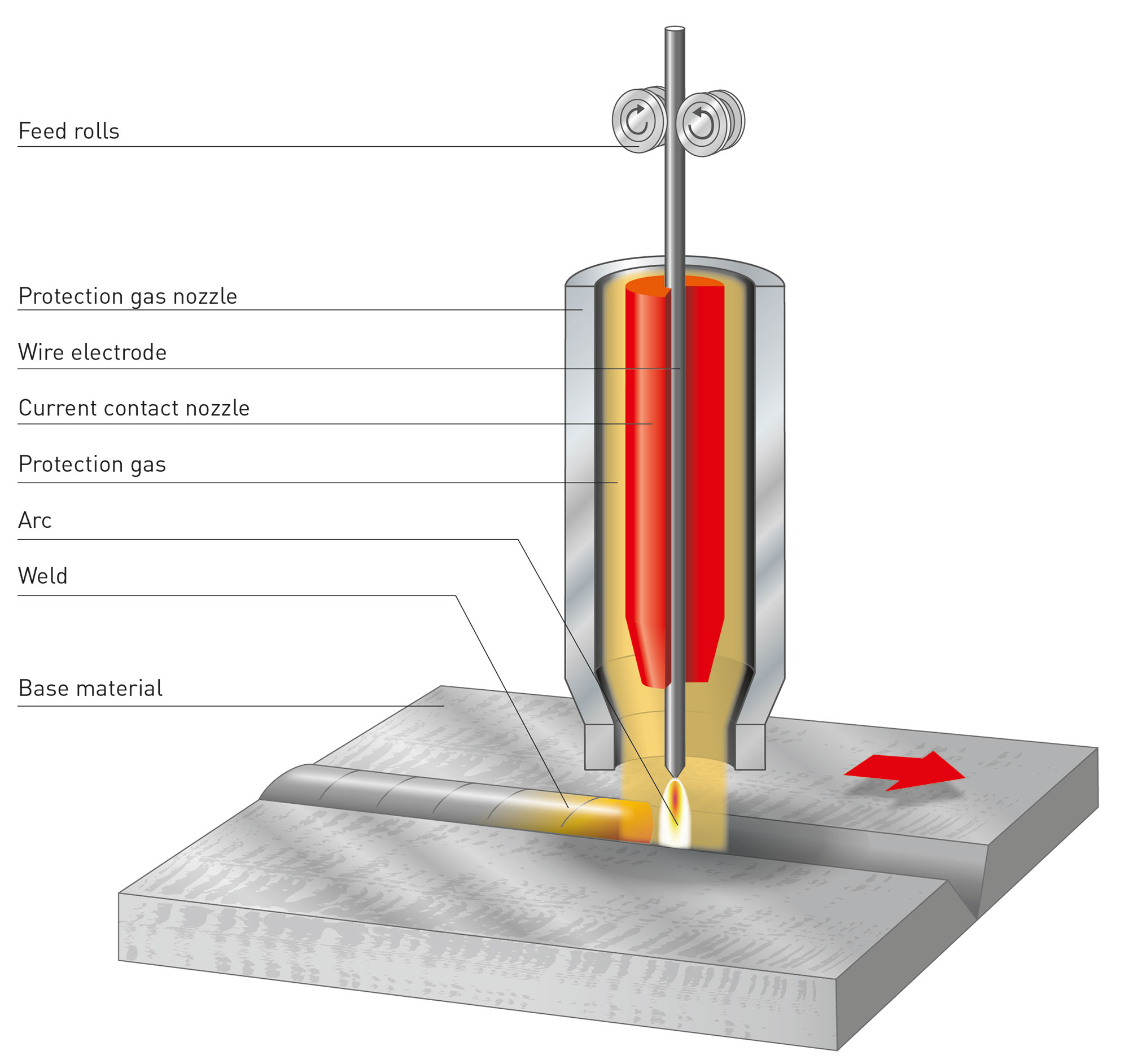
When you start welding, shielding gas flows out of the torch or gun. It forms a cloud around the arc and molten pool. This cloud acts as a shield, stopping air from touching the hot metal.
The gas is supplied from a cylinder under pressure. A regulator and hose control how much gas reaches the weld. The flow must be steady and strong enough to cover the area but not too much to waste gas or cause turbulence.
The type of gas and the amount used depend on:
- The welding process (MIG, TIG, etc.)
- The metal type (steel, stainless steel, aluminum)
- The environment (indoors, outdoors, drafty area)
If the shielding is lost for even a second, the weld can be ruined. That is why gas flow must be checked and kept consistent.
Main Types Of Shielding Gas
Different welding jobs need different shielding gases. The most common are argon, carbon dioxide (CO₂), helium, and oxygen. Sometimes, welders use mixtures for special needs.
| Gas | Main Use | Key Benefit | Common Process |
|---|---|---|---|
| Argon | Non-ferrous metals, stainless steel | Stable arc, clean welds | MIG, TIG |
| CO₂ | Carbon steel | Deep penetration, low cost | MIG |
| Helium | Aluminum, copper | High heat input, fast travel | TIG, MIG |
| Oxygen | Mixed with argon/CO₂ | Improved arc stability | MIG |
Argon
Argon is an inert gas. It does not react with hot metal. It gives a smooth, stable arc and clean welds. Argon is often used for aluminum, magnesium, and stainless steel. In TIG welding, pure argon is most common.
Carbon Dioxide (co₂)
CO₂ is active and can react slightly with the weld. It is cheaper than argon and gives deep penetration. This helps weld thick steel. CO₂ is used for structural steel, car bodies, and pipes. Sometimes, it is mixed with argon to get the best of both gases.
Helium
Helium is also inert. It gives a hotter arc than argon, which is useful for thick materials. Helium is often mixed with argon for aluminum and copper alloys. It helps when you need more heat for faster welding.
Oxygen
Oxygen is never used alone. It is added in small amounts (often 1-5%) to argon or argon/CO₂ mixes. It improves arc stability and makes the weld pool easier to control. Too much oxygen can cause rust or brittle welds.
Mixtures
Welders often use gas mixtures to get special results. For example, a common mix is 75% argon and 25% CO₂ for MIG welding steel. This gives a good balance of cost, weld quality, and speed.
Shielding Gas In Different Welding Processes
The choice and role of shielding gas depend on the welding process. The three main processes that use shielding gas are:
- GMAW (MIG/MAG)
- GTAW (TIG)
- FCAW (Flux-Cored Arc Welding)
Gas Metal Arc Welding (mig/mag)
MIG (Metal Inert Gas) and MAG (Metal Active Gas) welding both use a consumable wire and shielding gas. The main purpose is to protect the arc and the weld pool. The gas also affects how the arc starts, the amount of spatter, and the look of the bead.
MIG welding uses inert gases, usually argon or argon mixes. MAG welding uses active gases, like CO₂ or argon/CO₂ blends. The right choice depends on the metal and the job.
Gas Tungsten Arc Welding (tig)
TIG welding uses a non-consumable tungsten electrode. Shielding gas is even more critical here because TIG is often used for thin or reactive metals. Pure argon is most common, but sometimes helium or mixes are used for more heat.
TIG shielding gas must be very clean. Impurities can cause arc instability, weld defects, or tungsten contamination.
Flux-cored Arc Welding (fcaw)
Some flux-cored wires create their own shielding gas from the flux inside the wire. Others need extra shielding gas from a cylinder. For these, CO₂ or argon/CO₂ mixes are often used. The choice depends on the wire type and the job.

Credit: eg.airliquide.com
How Shielding Gas Affects Weld Quality
The right shielding gas does more than block air. It affects:
- Weld appearance: Smooth, clean, or rough and spattered.
- Penetration: How deep the weld joins the base metals.
- Arc stability: A steady arc is easier to control.
- Speed: Some gases allow faster welding.
- Spatter: Less spatter means less cleanup.
For example, pure argon makes a nice, smooth weld on aluminum. Pure CO₂ gives deeper penetration but more spatter on steel. A mix can balance both needs.
Using the wrong gas can cause defects. Common issues include:
- Porosity: Tiny holes from trapped gas.
- Oxidation: Rust or colored streaks.
- Cracking: Weak or brittle welds.
- Excess spatter: Rough surface needing grinding.
Choosing The Right Shielding Gas
Choosing the right shielding gas depends on:
- Base Metal: Different metals need different gases. For example, aluminum needs argon, while mild steel can use CO₂ or mixes.
- Welding Process: MIG, TIG, and FCAW each have ideal gases.
- Weld Position: Overhead, vertical, or flat welds react differently to gas flow.
- Cost: Pure argon is more expensive than CO₂.
- Desired Weld Properties: Strength, look, penetration, and speed.
| Metal | Process | Best Shielding Gas |
|---|---|---|
| Mild Steel | MIG | CO₂ or 75% Argon / 25% CO₂ |
| Stainless Steel | TIG | Argon |
| Aluminum | MIG/TIG | Argon or Argon/Helium |
| Copper Alloys | TIG | Helium/Argon Mix |
Mistakes To Avoid When Choosing Gas
- Using pure CO₂ on stainless steel (can cause rust)
- Using too much helium on thin metal (risk of burn-through)
- Using the wrong flow rate (can cause turbulence or lack of protection)
- Ignoring draft or wind (which can blow away the shielding gas)
Tip: Always check the manufacturer’s recommendations for wire and base metal. This avoids common mistakes and gives better results.
Practical Benefits Of Proper Shielding Gas
Welders often see shielding gas as an extra cost, but it saves money and time in the long run. Some practical benefits include:
- Less rework: Fewer weld defects mean less grinding, filling, or rewelding.
- Better appearance: Clean, smooth welds need less finishing.
- Stronger joints: Proper shielding leads to higher strength and reliability.
- Faster work: The right gas can increase travel speed.
For example, using an argon/CO₂ mix can reduce spatter by up to 50% compared to pure CO₂. This means less grinding and more time spent welding.
Common Problems With Shielding Gas And How To Fix Them
Even experienced welders face problems with shielding gas. Here are some common issues and solutions:
Gas Leaks
Leaking hoses, loose fittings, or broken regulators can waste gas and reduce protection. Always check for leaks with soapy water and replace damaged parts.
Wrong Flow Rate
Too much gas creates turbulence, pulling air into the weld. Too little gas leaves the pool unprotected. Use a flowmeter and set the rate according to the manufacturer’s advice (usually 15-25 cubic feet per hour).
Drafts Or Wind
Welding outdoors or near fans can blow away the gas shield. Use windbreaks, increase gas flow, or weld indoors when possible.
Dirty Nozzle
Spatter can clog the nozzle, blocking gas flow. Clean the nozzle regularly and use anti-spatter spray if needed.
Wrong Gas For Metal
Using the wrong gas can cause rust, weak welds, or high spatter. Always match the gas to the metal and process.
Environmental And Safety Considerations
Shielding gases are safe when handled correctly, but they can be dangerous if misused. Key points to remember:
- Gas cylinders are under high pressure. Always secure them upright and away from heat.
- Ventilation is important. Shielding gases can displace air in small spaces, creating a risk of suffocation.
- Some gases are heavier than air. CO₂ can collect near the ground in closed areas.
- Proper storage: Keep cylinders cool, dry, and labeled.
Always follow safety guidelines and local regulations. For more details, see resources like the OSHA Welding Safety page.
Advances In Shielding Gas Technology
New research and industry needs have led to better gas mixes and delivery systems. Some advances include:
- Micro-mixed gases: Special blends for high-performance welding.
- On-site gas generation: Machines that make argon or nitrogen from air, reducing cylinder use.
- Digital flow control: Automatic systems for precise gas delivery.
These advances help save gas, improve weld quality, and cut costs. Still, the basics of shielding remain the same.
Real-world Examples
Automotive Repair
In car body shops, welders often use a 75% argon/25% CO₂ mix for MIG welding. This balance gives enough penetration for steel panels but keeps spatter low. Using pure CO₂ would make cleanup harder and risk thinner metal burning through.
Pipeline Construction
Pipelines use TIG or root-pass MIG welding with pure argon. This gives a clean, strong weld that can pass pressure tests. Any air in the weld can cause leaks or weak spots.
Art And Sculpture
Artists working with stainless steel or aluminum use argon for TIG welding. This allows detailed, clean welds without discoloration, keeping the metal’s natural look.
The Science Behind Shielding Gas
Shielding gas protects the weld from air, but it also affects how the arc forms and how the metal reacts. For example:
- Inert gases (argon, helium) do not react with metal, so they give a clean weld.
- Active gases (CO₂, oxygen) can change the weld chemistry, sometimes for strength or speed.
The atomic weight of the gas affects how it covers the weld. Argon is heavier than air and forms a solid “blanket. ” Helium is lighter and can blow away more easily, so higher flow rates are needed.
Some gases, like CO₂, break down in the arc and release oxygen. This can increase penetration but also risk oxidation. That is why gas mixtures are carefully designed for each job.
Factors That Affect Gas Performance
Several things can change how well shielding gas works:
- Hose length: Long hoses can drop pressure and flow rate.
- Nozzle type: Wide or narrow nozzles change the coverage area.
- Weld speed: Fast welding needs more gas to keep up.
- Torch angle: Holding the torch too far from the work lets air in.
Careful setup and testing are needed for each job. It is smart to do test welds and check for defects before starting real work.
Cost Considerations
Shielding gas is an ongoing cost for most welding shops. Some data:
- Argon: Around $35–$50 per cylinder (in the US, as of 2023)
- CO₂: Around $15–$25 per cylinder
- Argon/CO₂ mix: Around $40–$60 per cylinder
Gas usage depends on flow rate and weld time. Wasting gas through leaks or high settings can add up fast. Investing in good regulators and checking for leaks saves money over time.
Bulk gas supply or on-site mixing can lower costs for large operations. For small shops, careful planning and regular checks are enough.

Credit: yeswelder.com
Myths About Shielding Gas
Many beginners believe myths about shielding gas. Here are some common ones:
- “Any gas will work.” Not true. Each metal and process needs the right gas.
- “More gas is always better.” Too much gas can cause turbulence and defects.
- “Gasless welding is just as good.” Some flux-cored wires do not need gas but often give lower quality welds.
- “Gas choice does not affect strength.” The wrong gas can ruin weld strength and cause failures.
Knowing the facts helps you avoid mistakes and get better results.
Tips For Best Results
- Always use the right gas for your metal and process.
- Check for leaks before starting.
- Set the flow rate to match the job and nozzle size.
- Avoid welding in windy areas, or use windbreaks.
- Keep your nozzle clean and replace worn parts.
- Store cylinders safely and label them clearly.
- Do test welds on scrap before the real job.
Insight: Many welders forget to adjust gas flow when changing from indoor to outdoor work. Even a small breeze can blow away the shield, so always check before starting.
Credit: www.kjellberg.de
Frequently Asked Questions
What Happens If I Weld Without Shielding Gas?
Welding without shielding gas exposes the molten pool to air. This causes porosity, oxidation, and weak welds. The joint may look fine but will likely fail under stress.
Can I Use The Same Shielding Gas For All Metals?
No. Each metal reacts differently. For example, aluminum needs pure argon, while mild steel can use CO₂ or argon/CO₂ mixes. Using the wrong gas can cause defects or rust.
Is Shielding Gas Dangerous?
Shielding gases are safe if handled correctly. They are stored under high pressure and can displace air in closed spaces, causing suffocation. Always store cylinders upright and work in well-ventilated areas.
How Do I Know If My Shielding Gas Is Working?
Look for a smooth, even arc and clean welds without holes or discoloration. If you see porosity, spatter, or rough surfaces, check your gas flow, nozzle, and for leaks.
Can Wind Or Drafts Affect Shielding Gas?
Yes. Wind or fans can blow away the gas, exposing the weld to air. Use windbreaks, increase the flow rate, or weld indoors if possible.
—
Every strong weld depends on proper shielding gas. It is as important as the wire or rod you choose. The right gas prevents defects, improves strength, and saves time. Careful selection, setup, and handling of shielding gas will help you achieve safer, cleaner, and longer-lasting welds. For more details on safe practices, you can check the OSHA Welding Safety page. Mastering this part of welding makes the difference between a joint that fails and one that lasts for years.