Disclosure: This post contains affiliate links and I will be compensated if you make a purchase after clicking through my links. Learn More
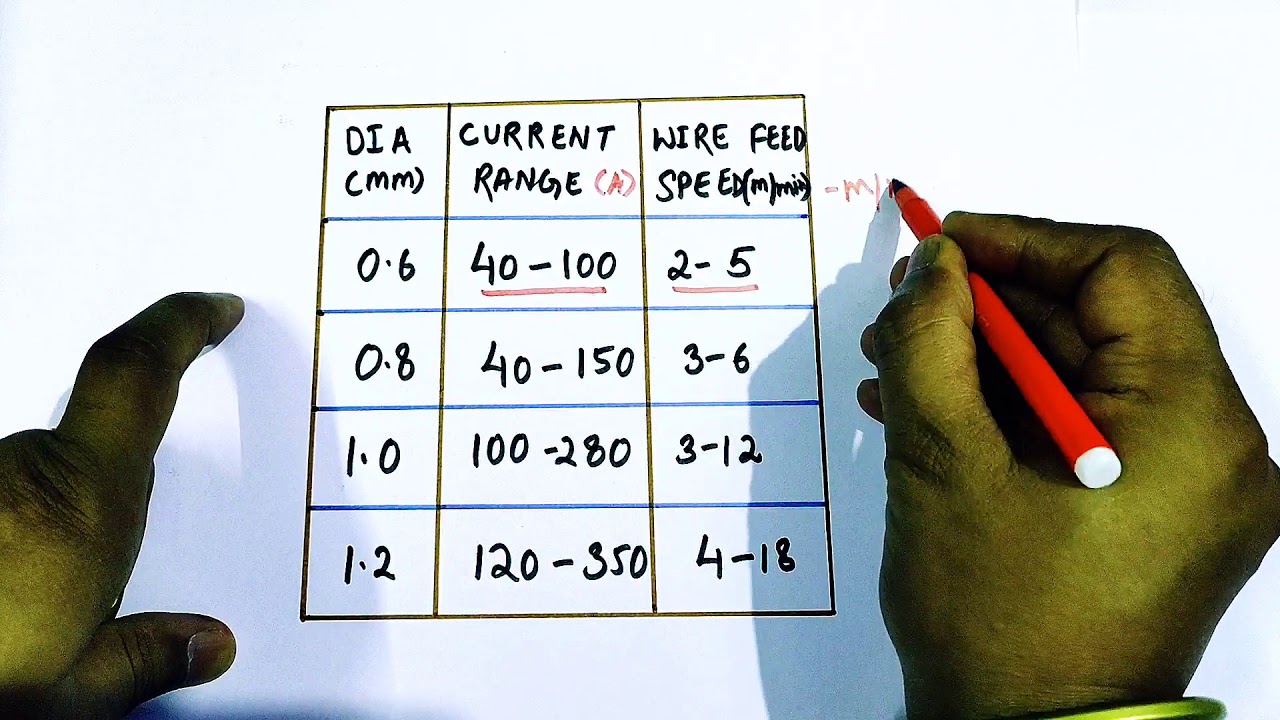
Mig welding is popular because it is fast, efficient, and works well for many metals. One key to good mig welding is setting the right wire feed speed. If you get this wrong, you may see poor welds, spatter, or even damage your machine. Many beginners struggle with the numbers and formulas. In this article, you will learn how to calculate wire feed speed in mig welding, why it matters, and how to use it to improve your welds. You will also see examples, tables, and answers to common questions, so you can weld with more confidence and accuracy.
What Is Wire Feed Speed In Mig Welding?
Wire feed speed (WFS) controls how fast the welding machine pushes the filler wire through the torch. The speed is usually measured in inches per minute (IPM) or millimeters per minute (mm/min). The wire melts into the weld pool, so wire feed speed directly affects how much filler metal you add to the weld.
If you set wire feed speed too slow, the weld will not have enough filler metal. You may see a weak, thin bead or burn-through on thin materials. If you set it too fast, the wire may pile up or push the torch away, making it hard to control the arc.
Both mistakes lead to poor results. That is why knowing how to calculate and set the correct wire feed speed is so important.
Why Wire Feed Speed Matters
Wire feed speed controls more than just how much wire you use. It also affects:
- Amperage: Higher wire feed speed means more current, because the machine must melt more wire.
- Penetration: Correct wire feed speed ensures the weld fuses deeply into the base metal.
- Bead shape: Too little or too much wire changes the size and appearance of the bead.
- Spatter: Wrong speeds create excess spatter, which makes cleanup harder.
The right wire feed speed helps you get stronger, cleaner welds and reduces wasted material.
Key Factors Affecting Wire Feed Speed Calculation
Several things change the correct wire feed speed for your job:
- Wire diameter: Thicker wire needs a different speed than thin wire.
- Type of metal: Steel, stainless steel, and aluminum all have different requirements.
- Shielding gas: Argon, CO2, or mixtures change how the arc melts the wire.
- Welding position: Flat, vertical, or overhead welding may need speed adjustments.
- Material thickness: Thicker metal needs more filler, so a higher wire feed speed.
Understanding these factors will help you pick the right settings for your project.
Understanding The Relationship Between Wire Feed Speed And Amperage
Mig welding machines use a constant voltage power source. This means when you adjust the wire feed speed, you also change the welding current (amperage). The faster the wire feeds, the more current is needed to melt it.
A common rule is: 1 ampere per 0.001 inch of wire diameter per 1 inch/min of wire feed speed. For example, if you use a 0.030-inch wire at 300 IPM, your current will be about 90 amps. This is a rough estimate, but it helps you understand why wire feed speed is so important to control.
How To Calculate Wire Feed Speed: The Core Formula
To find the right wire feed speed, you need to know two things:
- The desired welding current (amperage)
- The wire diameter
The general formula to calculate wire feed speed in inches per minute (IPM) is:
Wire Feed Speed (IPM) = (Amperage) / (Wire Feed Speed Constant)
The Wire Feed Speed Constant depends on the wire diameter and metal type. For mild steel wires, you can use these average numbers:
| Wire Diameter (inches) | Wire Feed Speed Constant (amps per IPM) |
|---|---|
| 0.023 | 0.035 |
| 0.030 | 0.045 |
| 0.035 | 0.060 |
| 0.045 | 0.078 |
For example, if you want to weld at 90 amps with 0.030-inch wire:
WFS = 90 / 0.045 = 200 IPM
This gives you a good starting point. You may need to adjust slightly based on your machine and job.
Step-by-step: Calculating Wire Feed Speed For Your Job
- Choose your wire diameter: Check your spool or packaging.
- Decide on desired amperage: Based on metal thickness and welding chart recommendations.
- Find the wire feed speed constant: Use the table above for mild steel.
- Use the formula: Divide amperage by the constant.
- Set your machine: Adjust the dial or digital display to the calculated IPM.
Let’s look at a real example for clarity.
Example Calculation
Suppose you want to weld 1/8 inch mild steel with 0. 035-inch wire.
- Recommended amperage: 130 amps
- Wire feed speed constant: 0.060
Wire Feed Speed = 130 / 0.060 = 2167 IPM
This number seems high, but most machines use a decimal or lower scale for thicker wires. Always check your machine’s manual for its display style.
Wire Feed Speed Settings For Common Wire Sizes
Here is a table with typical starting points for mild steel:
| Wire Diameter (in) | Material Thickness (in) | Amperage (A) | Wire Feed Speed (IPM) |
|---|---|---|---|
| 0.023 | 1/16 | 55–90 | 210–300 |
| 0.030 | 1/8 | 90–145 | 220–340 |
| 0.035 | 3/16 | 140–200 | 270–400 |
| 0.045 | 1/4 | 180–250 | 320–480 |
These are general starting points. Always fine-tune for your exact job.
Using Metric Units For Wire Feed Speed
Sometimes you see wire feed speed in millimeters per minute (mm/min) or meters per minute (m/min), especially outside the USA.
To convert IPM to mm/min:
- 1 IPM = 25.4 mm/min
To convert mm/min to IPM:
- 1 mm/min = 0.0394 IPM
For example, 200 IPM is:
- 200 × 25.4 = 5080 mm/min
Most machines let you choose the unit.
Adjusting Wire Feed Speed For Different Metals
The wire feed speed calculation changes with different metals because they melt at different rates.
- Aluminum needs higher wire feed speeds than steel for the same thickness.
- Stainless steel is similar to mild steel but may need slightly lower speeds.
Here are some typical numbers for aluminum:
| Wire Diameter (in) | Material Thickness (in) | Amperage (A) | Wire Feed Speed (IPM) |
|---|---|---|---|
| 0.030 | 1/8 | 100–130 | 300–400 |
| 0.035 | 3/16 | 130–200 | 400–540 |
Always use the wire manufacturer’s chart if available.
How Shielding Gas Changes Wire Feed Speed Needs
Shielding gas affects how the arc melts the wire. Pure CO2 gives deeper penetration but more spatter. Argon-CO2 mixes are smoother.
- With 100% CO2, you may need to lower wire feed speed by about 10% for the same amperage.
- With 75/25 Argon-CO2, use the standard chart values.
If you switch gases, always do a test weld and fine-tune your settings.
Practical Tips For Setting Wire Feed Speed
- Watch and listen: A good mig arc sounds like bacon frying. Too slow gives popping; too fast gives a harsh, erratic sound.
- Check the bead: A good bead is smooth, with a slight crown, and little spatter.
- Test on scrap: Before welding your part, always test on a similar piece of metal.
- Write down good settings: Keep a notebook with settings for different jobs.
- Check drive rollers: Worn rollers can slip, causing wrong wire speed even if the machine is set correctly.
Common Mistakes Beginners Make With Wire Feed Speed
- Guessing the speed: Many new welders skip the math and just turn the dial, leading to bad welds.
- Ignoring wire diameter: Settings for 0.023 wire will not work for 0.035 wire.
- Not adjusting for position: Vertical or overhead welds may need slightly lower speeds to prevent sagging.
- Forgetting to adjust for gas: Changing shielding gas without changing speed leads to poor results.
- Using dirty wire or liner: Dirt and rust slow the wire, making settings unreliable.
Credit: www.youtube.com
How To Fine-tune Wire Feed Speed
Once you have a starting value, adjust slightly while welding:
- If the wire stubs into the workpiece, increase the speed.
- If the wire burns back into the tip, decrease the speed.
- If the bead is too high, slow down slightly.
- If the arc is unstable, adjust both speed and voltage in small steps.
Small changes can make a big difference.
Example Calculations For Different Scenarios
Welding Thin Sheet Metal With 0.023-inch Wire
Suppose you have 18-gauge steel (0.047 inch thick):
- Recommended amperage: 70
- Wire feed speed constant: 0.035
Wfs = 70 / 0.035 ≈ 200 Ipm
Test on scrap, and adjust until you get a flat, even bead with no burn-through.
Welding Thick Plate With 0.045-inch Wire
For 1/4 inch steel:
- Recommended amperage: 200
- Wire feed speed constant: 0.078
Wfs = 200 / 0.078 ≈ 2564 Ipm
Most machines for thick plate use a digital display with preset programs, but the formula helps you double-check.
Aluminum Welding With 0.035-inch Wire
For 3/16 inch aluminum:
- Recommended amperage: 180
- Wire feed speed constant (aluminum): About 0.045
Wfs = 180 / 0.045 = 400 Ipm
This is higher than for steel, which matches the faster melting of aluminum wire.
Comparing Wire Feed Speed And Voltage Settings
Wire feed speed and voltage work together. Wire feed speed mainly sets the amperage; voltage affects arc length and bead profile.
| Setting | Effect on Weld |
|---|---|
| Higher Wire Feed Speed | More current, more penetration, bigger bead |
| Lower Wire Feed Speed | Less current, less penetration, smaller bead |
| Higher Voltage | Wider, flatter bead, more heat |
| Lower Voltage | Narrower bead, less heat, possible undercut |
Match voltage to wire feed speed for best results.
The Role Of Manufacturer’s Charts
Many wire manufacturers provide detailed welding parameter charts. These charts list recommended wire feed speed and voltage for each wire type, diameter, and metal thickness. Always check these charts if you have them. They save time and reduce mistakes.
You can find sample charts from companies like Lincoln Electric and Miller Electric, or check the Wikipedia page on Gas Metal Arc Welding for more details.
Using Digital Calculators And Apps
Some welding machine makers and app developers offer online calculators and smartphone apps. You enter wire diameter, metal type, and thickness, and the app suggests starting wire feed speed and voltage. These tools are helpful, but understanding the formulas lets you double-check and solve problems if the app gives odd results.
Advanced Considerations: Pulse Mig And Dual Shield
- Pulse mig welding uses a pulsing current, so wire feed speed may need to be set differently. Always use the machine’s recommended chart.
- Dual shield welding uses both gas and flux-cored wire. The feed speed is often higher than solid wire and depends on the flux composition.
If you work in a shop with these systems, always consult the machine’s manual or talk to an experienced welder.

Credit: mijanrahman.com
Wire Feed Speed Troubleshooting Guide
If your welds do not look right, use this quick guide to solve common problems:
- Excessive spatter: Reduce wire feed speed or increase voltage slightly.
- Thin, uneven bead: Increase wire feed speed or decrease voltage.
- Wire stubbing into work: Increase wire feed speed.
- Wire burning back into tip: Decrease wire feed speed, or check for a blocked tip.
- Poor penetration: Increase both wire feed speed and voltage in small steps.
Always change one setting at a time and test before making more changes.
Expert Tips For Consistent Results
- Maintain your machine: Clean the drive rollers and liner regularly.
- Use quality wire: Cheap wire often has inconsistent diameter or surface rust.
- Check tension: Make sure the drive roller tension is not too tight or too loose.
- Store wire properly: Moisture can cause rust, which leads to feeding problems.
- Keep notes: Write down what works and what does not for each job.
Many professionals keep a small welding logbook to save time when repeating projects.
Credit: www.mig-welding.co.uk
Frequently Asked Questions
What Happens If I Set The Wire Feed Speed Too High?
If the wire feed speed is too high, the wire will push into the weld pool faster than it can melt. This causes the torch to move away from the metal, creates large amounts of spatter, and produces a tall, uneven bead. In severe cases, the wire may tangle or jam in the feeder.
Can I Use The Same Wire Feed Speed For All Metals?
No, different metals melt at different rates. For example, aluminum needs a much higher wire feed speed than steel for the same thickness. Always check charts or use the formula for each metal and wire size.
How Does Wire Diameter Affect Wire Feed Speed?
Thicker wire melts slower than thin wire at the same amperage. So, you need a higher wire feed speed for thin wire and a lower speed for thick wire to get the same current. This is why charts list different speeds for each wire diameter.
Do I Need To Change Wire Feed Speed For Vertical Or Overhead Welding?
Yes. For vertical or overhead welding, lower the wire feed speed slightly. This helps control the weld pool and reduces sagging or dripping. Start about 10% lower than your flat weld speed and adjust as needed.
Why Does My Wire Feed Speed Feel Different On Two Machines Set To The Same Number?
Machines may have different calibration or display styles. One machine’s “200” setting may not match another’s. Always do a test weld and adjust by watching the arc and bead, not just the display number.
Mig welding is a skill where small changes make a big difference. Learning how to calculate and adjust wire feed speed gives you more control and better results. Use the formulas, charts, and tips in this article to make your next weld cleaner, stronger, and more professional. If you want to learn more, check out detailed charts and guides from trusted sources like Lincoln Electric and the Wikipedia page on Gas Metal Arc Welding. With practice, wire feed speed calculation will become a natural part of your welding setup, leading to consistent quality every time.