Disclosure: This post contains affiliate links and I will be compensated if you make a purchase after clicking through my links. Learn More
Welding thin metal can be tough. Many people face the problem of burn through—when the heat melts a hole right through the workpiece. This is frustrating and wastes both time and material. Knowing how to prevent burn through is essential if you want strong, clean welds.
This article will explain the main causes of burn through, why it matters, and how you can stop it. We will cover methods for different welding processes, tips for equipment setup, and practical advice for real projects. If you want to improve your welding and reduce mistakes, you will find clear steps and real examples here.
What Is Burn Through In Welding?
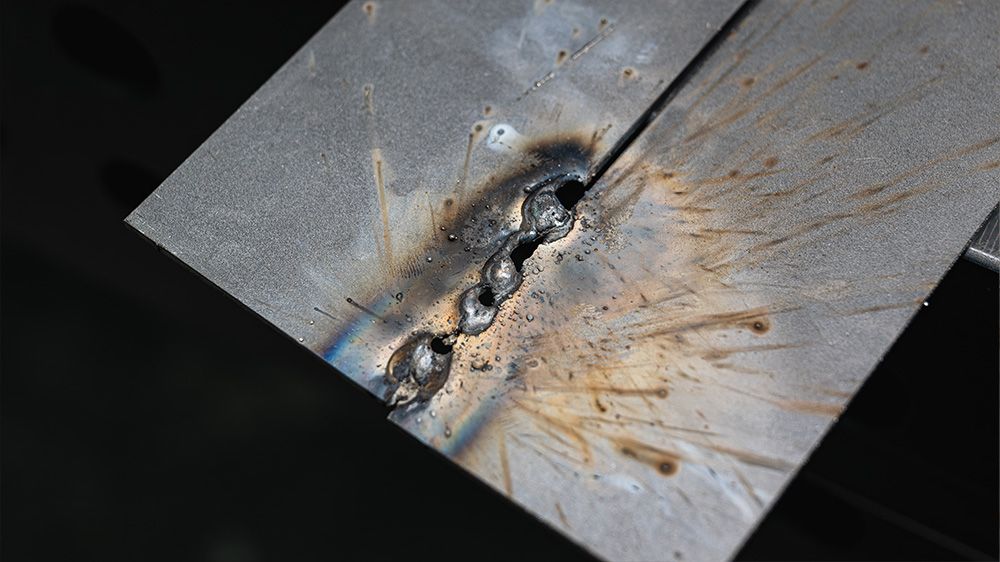
Burn through happens when the welding arc gets too hot for the base metal and melts a hole. This problem appears mostly with thin metals—like car body panels or sheet metal—but it can happen with any material if the settings are wrong. The hole ruins the weld, weakens the joint, and often means you have to start again.
Common signs of burn through:
- Visible hole in the weld area
- Melted or sagging edges around the weld
- Excessive spatter or rough surface
Burn through can also weaken the finished product. For example, a hole in a car’s body panel can lead to rust or lower crash resistance.
Why Does Burn Through Happen?
Several things can cause burn through. Knowing these reasons helps you avoid them.
- High amperage or voltage: Too much power melts the metal too fast.
- Slow travel speed: Staying too long in one spot adds heat and melts a hole.
- Thin base metal: Thin metals absorb less heat and burn through easily.
- Wrong filler material: Some rods or wires melt too quickly for thin material.
- Poor fit-up: Gaps between pieces concentrate heat and cause burn through.
- Bad technique: Holding the arc too close or using the wrong angle can overheat the area.
How To Prevent Burn Through: Core Methods
You can avoid burn through with careful setup and technique. The following sections will give you detailed methods for different situations.
1. Choose The Right Welding Process
Some welding processes are better for thin metals.
- TIG welding (GTAW): Offers the most control and is less likely to burn through.
- MIG welding (GMAW): Works well if you use low power and thin wire.
- Stick welding (SMAW): Harder to control on thin metal, but possible with practice.
- Spot welding: Useful for overlapping sheets; less chance of burn through.
For very thin metals (under 1.5 mm), TIG welding is the safest choice.
2. Select Proper Machine Settings
Using the correct settings is key.
| Metal Thickness | Amperage (TIG) | Wire Size (MIG) | Voltage (MIG) |
|---|---|---|---|
| 0.8 mm | 25-35 A | 0.6 mm | 14-16 V |
| 1.0 mm | 30-45 A | 0.8 mm | 15-17 V |
| 1.5 mm | 35-55 A | 0.8 mm | 16-18 V |
- For TIG, start at 1 amp per 0.025 mm of thickness.
- For MIG, choose the thinnest wire that feeds well.
- Lower the voltage and amperage if you see the metal start to sag or glow.
3. Use Thin Filler Materials
Thinner filler rods or wires melt faster and cool quickly, so they add less heat to the workpiece. For MIG welding, use 0.6 mm or 0.8 mm wire for thin sheet metal. For TIG, select 1.0 mm or 1.6 mm rods.
4. Move Quickly And Steadily
Travel speed is very important. If you move too slowly, heat builds up and causes burn through. Try to keep the torch or gun moving at a steady pace. Practice on scrap metal to find a good speed.
- On a 1 mm steel sheet, a travel speed of about 25–30 cm per minute works well.
- Watch the puddle—if it grows large, move faster.
5. Use A Backing Bar
A backing bar is a piece of copper or aluminum placed behind the weld. It absorbs heat and supports the metal, so you are less likely to burn through. Copper is best because it does not stick to the weld and conducts heat away.
- Clamp the backing bar tightly behind the joint.
- Remove the bar after welding.
6. Fit Metal Pieces Tightly
Gaps between pieces let the arc focus on a small area, which increases the chance of burn through. Make sure parts fit closely together. For gaps under 0. 5 mm, you can weld safely. If the gap is wider, use a filler strip or reduce the settings.
7. Use Short Welds (stitch Welding)
Instead of making one long weld, use short welds (also called stitch or skip welding). Weld for 1–2 seconds, then stop. Move to another spot, then return to fill in the gaps. This gives the metal time to cool and prevents overheating.
- For 1 mm sheet metal, weld about 20 mm at a time.
- Allow 10–15 seconds between welds.
8. Control Arc Length
Keep the arc length (distance from the tip to the metal) short. For TIG and stick welding, keep it around 1–2 mm. A longer arc adds heat and increases burn through risk.
9. Angle The Torch Correctly
The torch angle affects how heat spreads. Hold the torch or gun at about 10–15° from vertical, pointing in the direction of movement. Too much angle concentrates heat on the edge and can burn through.
10. Use Pulse Welding (if Available)
Some modern machines offer pulse welding. This setting sends short bursts of high current, followed by low current. It allows the weld to cool between pulses, reducing burn through risk.
- Use a pulse frequency of 1–10 Hz for thin sheet metal.
- Check your machine manual for exact settings.
11. Pre-tack Joints
Before making the full weld, add tack welds every 30–50 mm along the joint. Tacks hold the pieces together and limit movement. They also let you adjust fit-up before adding more heat.
12. Watch For Overheating
If you see the metal start to glow or sag, stop immediately. Let it cool before continuing. Overheating means you are close to burning through.
- Use your hand (with a glove) to feel the metal temperature.
- If it is too hot to touch, wait.
13. Use Lower Heat Input Techniques
Some welding techniques use less heat:
- Short circuit (MIG): The wire touches the metal and melts in short bursts.
- Autogenous welding (TIG): Weld without adding filler rod—use for very thin pieces.
14. Practice On Scrap
Every welder makes mistakes. Practicing on scrap metal helps you find the right settings and speed without damaging real parts. Try different wires, rods, and speeds until you get a smooth weld.
15. Clean The Metal
Dirty metal causes poor arc stability and can lead to burn through. Clean the joint with a wire brush or grinder before welding. Remove rust, paint, and oil.
Process-specific Tips For Preventing Burn Through
Each welding process has special tricks for thin metal.
Tig Welding
- Use a small tungsten electrode (1.0–1.6 mm).
- Set the machine to DCEN (direct current electrode negative).
- Start with low amperage, increase only if the arc does not start.
- Use a foot pedal or fingertip control to adjust heat as you weld.
Mig Welding
- Use CO2 or C25 shielding gas for mild steel.
- Set the wire feed to match the voltage—too fast creates spatter, too slow leads to burn through.
- Try stitch mode if your machine has it.
Stick Welding
- Use 6013 or 7014 rods for thin steel.
- Choose the smallest diameter rod possible (2.0–2.5 mm).
- Hold a short arc.
- Drag the rod at a steady pace.
Spot Welding
- Use for overlapping thin sheets.
- Clamp the pieces tightly.
- Hold the electrodes for 1–2 seconds per spot.
Common Burn Through Mistakes And How To Avoid Them
Many welders repeat the same errors. Here are some to watch for:
- Using too much power: Start low and increase only if the weld does not form.
- Ignoring fit-up: Check the joint before welding. Poor fit means more heat in one spot.
- Welding in one pass: Use short, controlled welds instead.
- Not practicing: Every material is different. Practice on scrap saves real parts.
- Skipping cleaning: Dirt or paint makes burn through more likely.
Comparing Burn Through Risks Across Welding Processes
You can compare the risk of burn through for different welding methods:
| Welding Process | Risk of Burn Through (Thin Metal) | Control Level |
|---|---|---|
| TIG (GTAW) | Low | High |
| MIG (GMAW) | Medium | Medium |
| Stick (SMAW) | High | Low |
| Spot Welding | Very Low | Medium |
TIG is the safest for thin metal. Stick welding is hardest to control and has the highest risk.
Effects Of Burn Through On Weld Quality
Burn through is not just a cosmetic problem. It weakens the joint and often makes the product unusable.
Structural Strength
A hole or melted area means less metal holding the joint. In safety-critical parts, like car frames, this can be dangerous.
Appearance
Burn through leaves rough holes and uneven welds. For visible parts—like car panels—this looks bad and is hard to repair.
Corrosion Resistance
Holes and thin spots collect water and rust quickly. This shortens the life of the part.
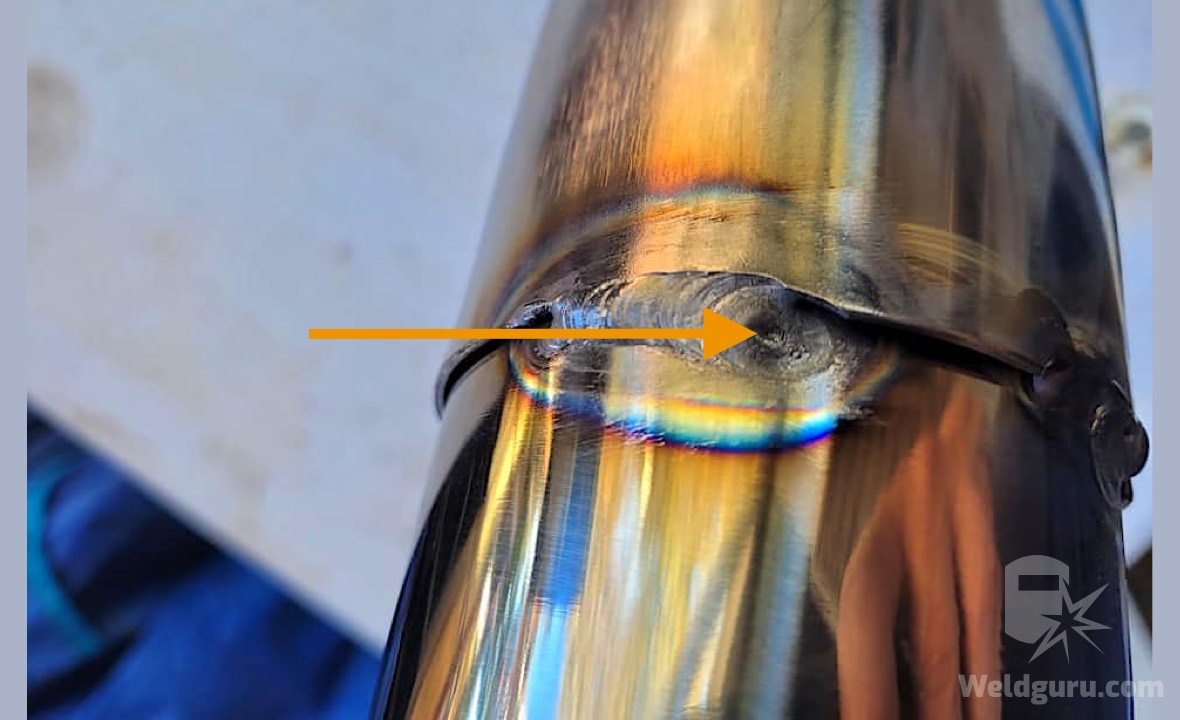
How To Repair Burn Through
Sometimes burn through happens, even with care. You can fix it, but it takes patience.
- Stop welding as soon as you see a hole.
- Let the metal cool.
- Grind the edges of the hole to clean them.
- Cut a small patch from similar metal.
- Fit the patch tightly in the hole.
- Tack weld the patch in place using low power and short bursts.
- Finish with small stitch welds, letting the metal cool between each one.
- Grind and smooth the repaired area.
Do not try to fill a large hole with weld alone—the edges will keep melting.
Credit: weldguru.com
Special Cases: Aluminum And Stainless Steel
Thin aluminum and stainless steel require special care.
Aluminum
- Conducts heat fast, but melts at a low temperature.
- Use a backing bar and keep travel speed high.
- Use pure argon for shielding.
Stainless Steel
- Holds heat, so it burns through easily.
- Use pulse TIG or MIG if possible.
- Clean the metal very well before welding.
How To Set Up Your Workspace For Burn Through Prevention
A good workspace helps you control heat.
- Use strong clamps to hold pieces together.
- Arrange the work so you can move the torch smoothly.
- Keep a fan or air mover to cool the area between welds (but do not blow shielding gas away).
- Keep spare backing bars and scrap metal ready for practice.
Training And Skill Development
Skill matters as much as equipment. Welding thin metal requires a steady hand and good timing. You can improve by:
- Practicing on different thicknesses and metals.
- Watching professional welders and copying their methods.
- Testing your welds for strength and quality.
- Keeping a notebook of settings and results.
Many welders find thin sheet metal harder than thick plates. With practice, you can master it.
The Role Of Technology In Preventing Burn Through
Modern welding machines have features that help avoid burn through.
- Inverter machines offer better control at low amperages.
- Digital displays make setting voltage and wire feed more precise.
- Pulse and stitch modes are built in on some MIG and TIG machines.
These features are helpful, but skill and setup are still most important.
Safety Tips When Working With Thin Metal
Burn through increases some safety risks.
- Wear gloves and a welding jacket to protect from spatter.
- Use eye protection at all times.
- Ventilate your workspace—burn through can create toxic fumes.
- Keep a fire extinguisher nearby.
Case Study: Preventing Burn Through In Auto Body Repair
Car body panels are usually 0. 8–1. 2 mm thick. Burn through is common in repairs.
A welder repairing a fender used these steps:
- Set MIG welder to 0.6 mm wire, 15 V, and low wire feed.
- Cleaned the area with a grinder.
- Used a copper backing bar behind the weld.
- Applied 15 mm tack welds, spaced 50 mm apart.
- Allowed 10 seconds to cool between welds.
- Used a fan to cool the panel faster.
The result: no burn through, smooth welds, and a strong repair.
Credit: unimig.com.au
Data: Weld Defects And Burn Through Frequency
Studies show that burn through is a common welding defect, especially in thin metal. In a survey of automotive welds, burn through accounted for about 12% of all defects in manual welding. Most cases happened with settings above 18 V or wire sizes over 1.0 mm.
Comparison: Cost Of Preventing Vs. Repairing Burn Through
It is cheaper to prevent burn through than repair it. Here is a simple cost comparison:
| Action | Average Time (min) | Material Cost (USD) |
|---|---|---|
| Setting up correct weld | 5 | 0.50 |
| Repairing burn through | 30 | 4.00 |
Spending a few minutes on setup saves time and money later.
Non-obvious Insights For Beginners
Many new welders miss these points:
- Even small gaps matter. A gap of 0.5 mm in thin sheet metal can double the risk of burn through.
- Backing bars are reusable. One copper bar can support hundreds of welds before it wears out.
- Shorter welds are almost always better for thin metal. Trying to make a long, smooth weld in one go nearly always leads to burn through.
Reliable Learning Resources
If you want to study more, Wikipedia’s page on welding defects offers a good overview of common problems and solutions.
Final Thoughts
Preventing burn through in welding is about careful setup, correct technique, and practice. Focus on the right process, low heat, tight fit-up, and short welds. Use backing bars and keep your workspace clean. Most mistakes come from rushing or ignoring small details.
With attention to the basics and steady practice, you can weld thin metal without holes or weak joints. Take time to learn your machine and watch how the metal reacts. This will improve your results and save material.
Frequently Asked Questions
What Causes Burn Through In Welding?
Burn through happens when the heat from welding melts a hole in the base metal. Main causes include high amperage, slow travel speed, thin metal, poor fit-up, and wrong filler material.
How Can I Fix Burn Through If It Happens?
Stop welding, let the area cool, clean the hole, and fit a patch. Weld the patch with low heat, using short bursts. Do not try to fill large holes with weld alone.
What Is The Best Welding Process To Avoid Burn Through?
TIG welding is best for thin metals because it allows precise heat control. MIG is also good if you use the right wire and settings.
How Do I Know If My Settings Are Too High?
If you see the metal sag, glow, or melt quickly, your settings are too high. Lower the amperage and voltage, or increase travel speed.
Is A Backing Bar Always Necessary?
A backing bar is not always needed, but it helps a lot with thin metal. It absorbs heat and supports the weld area, making burn through less likely.

Credit: www.youtube.com