Disclosure: This post contains affiliate links and I will be compensated if you make a purchase after clicking through my links. Learn More
How often to replace MIG contact tips depends on wear, not a calendar. Replace the tip as soon as its bore turns oval or you see an erratic arc, extra spatter or poor starts, and treat new tips as routine maintenance in place of a last-minute fix.
No major gun maker publishes a fixed hour count for contact tips. Tip life swings with amperage, wire quality, liner condition and how you hold the gun. Light hobby use wears a tip slowly. High-amperage production work wears it much faster.
How Often to Replace MIG Contact Tips
Replace a MIG contact tip when the hole is no longer round or weld quality starts to slip. Tweco advises changing tips often, and Bernard recommends regular visual checks with tip changes built into standard maintenance. A tip costs far less than the grinding and rework a worn one causes.
A simple rule works for most shops: check the tip every time you pull the nozzle to clean spatter. Bernard suggests checking the nozzle several times per day on spattery jobs, so that check costs you no extra time.
7 Signs Your MIG Contact Tip Is Worn Out
Most tip problems show up in the arc before you see them on the tip. Use this quick table, then read the details for each sign.
| Symptom | Likely cause | Fix | DIY or pro |
|---|---|---|---|
| Oval or keyhole bore | Normal wear from wire feeding | Replace the tip | DIY |
| Erratic, wandering arc | Poor electrical pickup in a worn bore | Replace the tip | DIY |
| More spatter than usual | Worn bore or spatter on the tip | Replace the tip, clean the nozzle | DIY |
| Hard or poor arc starts | Worn tip or loose connection | Replace and tighten the tip | DIY |
| Wire fuses to the tip | Burnback | New tip, check wire feed speed and stickout | DIY |
| Wire feed stutters | Worn tip or worn liner | Replace the tip, inspect the liner | DIY or shop |
| Welds land off the joint | Bore wear moving the wire | Replace the tip, recheck robot TCP | Shop or pro |
1. The Hole Looks Oval or Keyhole Shaped
Tweco says to change the tip once the orifice looks too large or oblong instead of round. Miller calls this keyholing. The wire wears one side of the bore into an oval, and that throws off where the wire exits.
2. The Arc Turns Erratic
A worn bore loses steady contact with the wire. Miller links keyholing to arc irregularities from poor electrical pickup. Bernard describes it as interruptions in the electrical current and poor arc control.
3. Spatter Jumps Up
Both Tweco and Miller connect worn tips to excess spatter. More spatter means more grinding after the weld and faster buildup inside the nozzle.
4. Arc Starts Get Worse
Poor arc starts are one of the burnback symptoms Bernard lists. If the arc stumbles on every pull of the trigger, check the tip first.
5. The Wire Burns Back Into the Tip
When the wire melts back and fuses to the tip, that tip is usually done. Contact tip burnback has its own list of causes, from slow wire feed speed to a short contact-tip-to-work distance.
6. Wire Feeding Turns Inconsistent
Bernard lists inconsistent wire feeding and full feed stoppages as burnback results. A worn or clogged liner can cause the same stick-slip feel, so check both parts.
7. Spatter Is Stuck to the Tip or Welds Drift
Tweco says to replace a tip once spatter sticks to it. On robotic cells without seam tracking, Bernard notes tip wear can shift the wire enough to cause offset welds.
What Shortens Contact Tip Life
Tips wear faster when they run hot or when the wire drags through the bore. These are the main causes, most common first.
Heat From High Amperage
Bernard names operating temperature as a main driver of tip wear. Higher amperage and longer arc-on time push more heat into the front of the gun. For steady work around 300 to 600 amps, Bernard points to water-cooled guns, which run cooler but cost more to maintain.
Short Stickout and Recessed Nozzles
A contact-tip-to-work distance that is too short puts the tip close to the arc and raises the risk of burnback. Tweco suggests about 1/4 to 3/8 in. of stickout for solid wire and 1/2 to 3/4 in. for gas-shielded cored wire.
Miller recommends the nozzle extend past the tip for spray transfer, which helps the tip run cooler. For short-circuit transfer, the tip sits flush or slightly past the nozzle.
Loose or Dirty Connections
Bernard warns that loose connections at the feeder, the neck or the diffuser-to-tip joint add electrical resistance and heat. Tighten tips to the gun maker’s spec with the recommended tool, and check them each time you change the nozzle.
Worn Liner and Wire Cast
A kinked or dirty liner makes the wire catch and feed unevenly, says Miller. Bernard adds that wire cast depends on the spool or drum, drive roll tension and gun neck angle. Wire that snakes through the bore wears it faster.
Wrong Tip Size
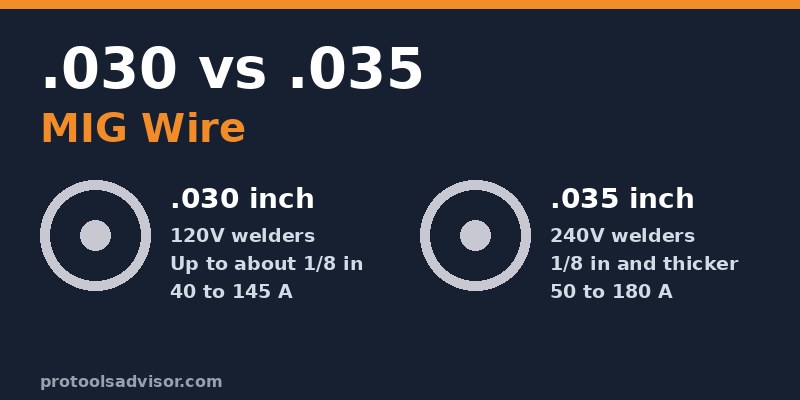
Miller matches tip size to wire size, such as a 0.035-inch tip for 0.035-inch wire. A tip that is too large lets the wire wander and lose contact. The same wire-match rule applies to flux core contact tip size.
Tip Material and Shape
Tweco sells threaded tips in pure copper for standard life and copper chromium zirconium for long life. Miller notes nontapered tips carry more mass up front, so they handle heat better and last longer.

Credit: www.youtube.com
How to Replace a MIG Contact Tip: Step by Step
Time: about 5 minutes. Difficulty: easy. Tools: welding pliers or the tool your gun maker recommends.
Safety: turn the welder off before you touch the front of the gun. The tip and nozzle stay hot after welding, so let them cool or wear welding gloves.
What You’ll Need
- A new contact tip sized to your wire diameter
- Welding pliers or a nozzle reamer
- Welding gloves
- Your gun’s manual for the tip tightening spec
Step 1: Power Down and Let the Gun Cool
Switch the machine off. Trigger pulls with the power on feed live wire through the tip.
Step 2: Remove the Nozzle
Twist or pull off the nozzle. With it off the gun, clean spatter from inside it using pliers or a reamer.
Step 3: Unscrew the Old Tip
Turn the tip counterclockwise and slide it off the wire. Check the bore. An oval hole confirms it was time.
Step 4: Inspect the Diffuser
Look for spatter in the gas ports and check the O-rings, as Tweco and Bernard both advise. Clogged ports hurt gas coverage.
Step 5: Install the New Tip
Slide the new tip over the wire and thread it on by hand. Snug it to the maker’s spec with the recommended tool. Coarse threads on some tips help prevent cross-threading.
Step 6: Refit the Nozzle and Trim the Wire
Put the nozzle back at the right tip recess for your process. Trim the wire to your normal stickout, then run a short test bead on scrap.

Credit: www.youtube.com
How to Make MIG Contact Tips Last Longer
- Set wire feed speed and voltage for the job, since slow wire feed speed is a common burnback cause.
- Hold a steady stickout and keep the nozzle within about 1/2 in. of the base metal, per Bernard.
- Keep tips, diffusers and neck connections tight to spec.
- Replace the liner when it wears. Tweco suggests a liner swap perhaps every 60 to 120 lbs. of wire.
- Use good wire and set drive roll tension so it feeds without crushing the wire.
- Clean the nozzle often, and never bang the gun on the table to knock spatter loose. Tweco warns that can loosen the front connections.
- Step up to chrome zirconium or heavy-duty tips for high-amperage or production work.
- Skip the cheapest tips. Bernard and Tweco both say low-cost tips often cost more in downtime.
Common Mistakes to Avoid
- Clipping or filing a fused tip to save it. Tweco says this usually destroys the tip anyway.
- Cranking up drive roll tension to push wire through a worn tip or liner, which crushes the wire.
- Running a tip one size too large for the wire.
- Waiting for a bad weld before you inspect the tip.
Frequently Asked Questions
Should I Change My MIG Tip Every Time I Change the Wire Spool?
Not always. Change the tip when you switch wire diameter, because the tip size has to match the wire, like a 0.035-inch tip for 0.035-inch wire. If the new spool is the same size and the old tip still has a round bore, you can keep using it.
Can You Clean and Reuse a MIG Contact Tip?
You can knock loose spatter off the outside with welding pliers or a reamer. Do not clip or file the tip itself, because that usually ruins it. If the bore has gone oval or spatter is stuck at the opening, a new tip is the better choice.
Why Do My MIG Contact Tips Wear Out So Fast?
Heat is the main driver. High amperage, a short tip-to-work distance, slow wire feed speed and loose gun connections all raise tip temperature. A worn or kinked liner and poor wire quality also cause snagging and burnback, which shorten tip life quickly.
Are Chrome Zirconium Contact Tips Worth It?
For heavy or high-amperage work, often yes. Tweco lists copper chromium zirconium tips as its long-life option against pure copper standard-life tips. Bernard notes plain copper has fairly low wear resistance. For light hobby welding, standard copper tips usually do the job fine.
How Do I Know What Size Contact Tip to Use?
Match the tip to the wire diameter printed on your spool. Miller gives the example of a 0.035-inch tip for 0.035-inch wire. Some industrial setups use a slightly larger tip to keep temperatures lower, so check your gun maker’s chart for your process.
Final Words
There is no fixed clock for MIG contact tips. Swap the tip when the bore turns oval, the arc gets erratic, spatter climbs or starts get rough.
Check the tip each time you clean the nozzle. Keep connections tight, match the tip to the wire and hold a steady stickout. Those habits stretch tip life and keep your welds consistent.
Keep a few spare tips in the welding cart, since rework and grinding cost far more than a tip.