Disclosure: This post contains affiliate links and I will be compensated if you make a purchase after clicking through my links. Learn More
Choosing between lanthanated and thoriated tungsten is a decision many welders face, especially when aiming for strong and clean welds. Both types of tungsten electrodes have earned their place in welding shops. Yet, each has its own strengths, best uses, safety factors, and technical details. Understanding these differences is the best way to pick the right electrode for your work, whether you are starting out or have years of experience. This article will guide you through each factor—breaking down the science, practical effects, and industry trends—to help you make a confident choice.
What Are Lanthanated And Thoriated Tungsten Electrodes?
Tungsten electrodes carry the arc in TIG (Tungsten Inert Gas) welding. They are made mostly from tungsten, a hard metal with a high melting point. Manufacturers add small amounts of other elements to change the electrode’s properties. The two most popular types are lanthanated and thoriated tungsten.
Thoriated tungsten contains thorium oxide, usually about 2%. It has been a standard for decades, especially for DC (Direct Current) welding.
Lanthanated tungsten contains lanthanum oxide, usually 1% or 2%. It was developed as a safer and more versatile alternative.
Both types look very similar, but their small differences in makeup have a big impact on welding performance. For example, the way they handle electrical current and how they shape their tips during welding can affect the quality of your welds and how easy the process feels.
Beginners often do not notice these subtle differences at first, but they become clear with experience.
Key Properties Of Lanthanated Vs Thoriated Tungsten
Chemical Composition
- Thoriated tungsten (WT20): 97.3% tungsten, 1.7–2.2% thorium oxide
- Lanthanated tungsten (WL15/WL20): 97.8% tungsten, 1.3–2.2% lanthanum oxide
This small change in composition leads to clear differences in how the electrodes work and how safe they are to use. The oxide additives are crucial. Thorium and lanthanum help with arc starting, but lanthanum’s effect is less hazardous.
Color Coding
To avoid confusion, manufacturers color the ends of each type:
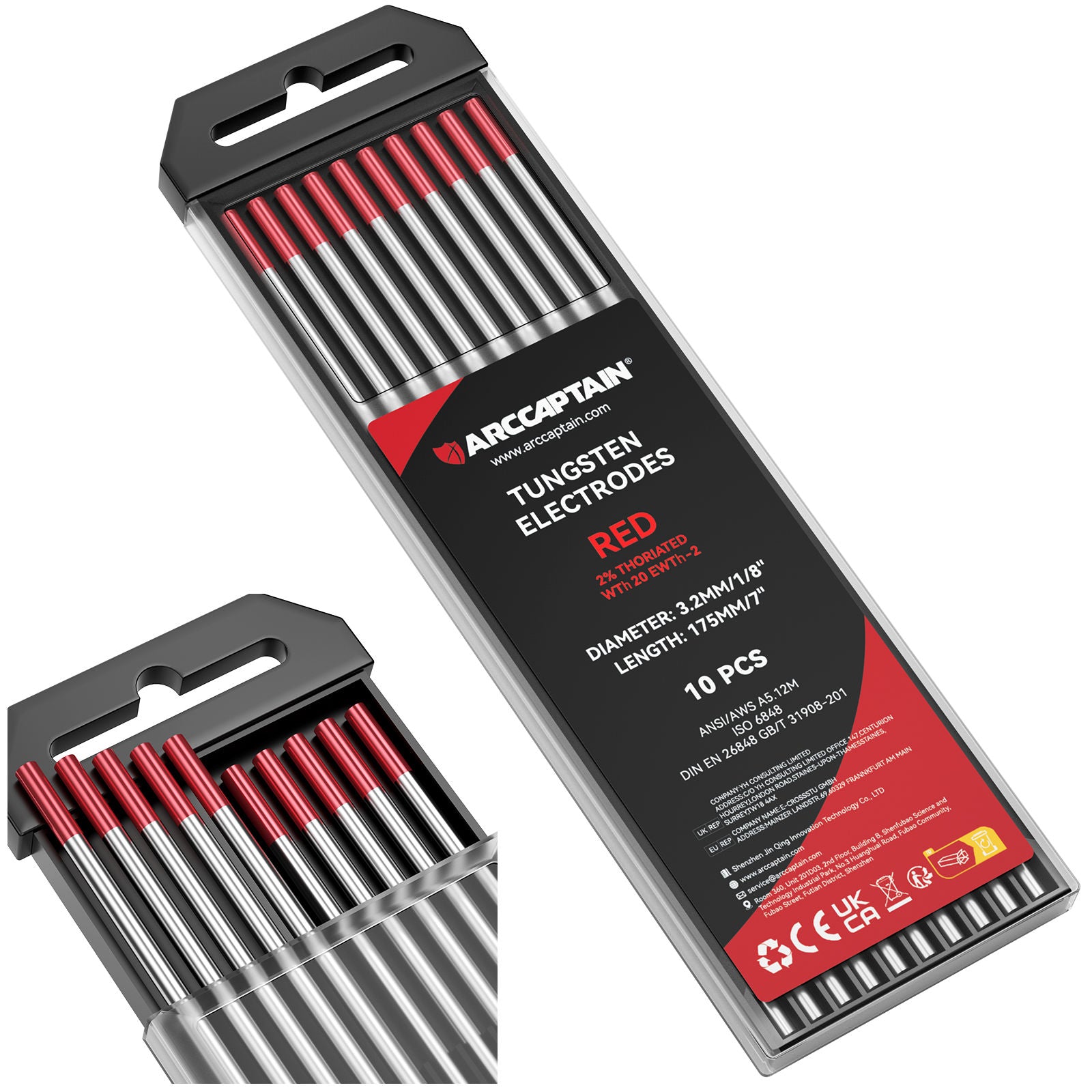
- Thoriated: Red tip
- 1.5% Lanthanated: Gold tip
- 2% Lanthanated: Blue tip
Always check the color before starting to weld. If you mix them up, you might not get the results you expect. Some welders even use a small magnifier to confirm the color in low light.
Melting Point And Electrical Conductivity
Both types have very high melting points (over 3,400°C). But lanthanated tungsten has slightly better electrical conductivity, which means it can carry more current without overheating. This is helpful for long welds, as the electrode keeps its shape and does not degrade as fast.
Welders who use high-frequency starts or pulsed current often notice this benefit. Lanthanated tungsten’s conductivity also means it can hold a tighter arc and create less spatter, which is important for clean welds.
Arc Starting And Stability
- Thoriated tungsten: Excellent for starting an arc and keeping it stable, especially with DC welding.
- Lanthanated tungsten: Also starts easily, with a stable arc for both AC and DC.
Some welders say lanthanated tungsten is more forgiving if your machine settings are not perfect. For example, on older machines or with less experience, you might find it easier to get a smooth start with lanthanated electrodes.

Credit: arc-zone.com
Performance Comparison: Welding Applications
Different welding jobs need different electrode qualities. Here is how both types perform in various situations:
Dc Welding
Thoriated tungsten is famous for DC welding, especially with steel and stainless steel. It gives a steady arc, handles high amperage, and has a long life. Many welders still choose it for these reasons. The arc is stable and strong, which helps with deeper penetration in thicker metals.
Lanthanated tungsten also works well for DC welding. It can handle high current and keeps its shape. Some users find it lasts even longer than thoriated tungsten, especially at lower amperages. When welding thinner metals, lanthanated tungsten can offer more control and reduce the risk of burning through the material.
Ac Welding
Lanthanated tungsten is more flexible. It works well with both AC (for aluminum and magnesium) and DC. Thoriated tungsten is not ideal for AC welding because it does not hold a round, balled tip as well as lanthanated electrodes.
This matters when welding metals like aluminum. With lanthanated tungsten, the arc stays centered and the tip stays round, making the weld bead smoother and cleaner. In contrast, thoriated tungsten can create an uneven arc, leading to more cleaning and finishing work after welding.
Arc Quality
Both offer smooth arcs. But lanthanated tungsten tends to start better at low amperage and can carry more current for its size. This makes it popular for thin materials and precision work. For example, when welding thin stainless tubing or making intricate repairs, the tighter arc of lanthanated tungsten makes it easier to see and control the weld pool.
Electrode Lifespan
Lanthanated tungsten usually lasts longer before it needs reshaping. Thoriated tungsten is tough, but it can lose its tip shape faster in certain jobs. If you weld for long periods, this means less downtime for sharpening and more consistent results.
A welder doing repetitive production work will especially appreciate the longer life of lanthanated tungsten. It also reduces the cost of replacement over time, as fewer electrodes are needed.
Radioactivity And Safety
Thorium in thoriated tungsten is radioactive. While the levels are low, grinding these electrodes can release radioactive dust. Long-term exposure increases health risks. Lanthanated tungsten does not have this issue, making it safer for regular use.
In fact, many new welding shops do not even allow thoriated tungsten because of strict workplace safety rules.
Table: Core Properties Comparison
Here is a summary of how lanthanated and thoriated tungsten compare in key areas:
| Property | Thoriated Tungsten | Lanthanated Tungsten |
|---|---|---|
| Color Code | Red (WT20) | Gold (WL15), Blue (WL20) |
| Oxide Additive | Thorium (2%) | Lanthanum (1.5% or 2%) |
| Radioactivity | Yes (Low) | No |
| Arc Stability | Excellent (DC) | Excellent (DC & AC) |
| Best For | DC Welding, Steel | AC & DC, Aluminum, Stainless |
| Electrode Life | Good | Very Good |
| Current Capacity | High | Very High |
Health And Safety: Why It Matters
Thoriated Tungsten Health Risks
Thoriated tungsten is slightly radioactive. The risk is low when the electrode is whole, but grinding or breaking it creates dust. Breathing in this dust over time can raise the risk of lung cancer and other health problems. Using proper ventilation and a mask is important, but some welders want to avoid any risk at all.
It is worth noting that regulations in some countries are becoming stricter. For example, in some European countries, thoriated tungsten is now classified as a hazardous material. If you plan to export welded products or work in regulated environments, this can limit your options.
Lanthanated Tungsten Safety
Lanthanated tungsten is not radioactive. It is considered safe for grinding and general use. This makes it a top pick in schools, hospitals, and companies with strict health rules.
Even when ground to a fine point or used in automated welding, there is no special risk to workers. This simplicity is valuable for managers and welders alike.
Industry Trends
Many industries are moving away from thoriated tungsten because of these health concerns. Some organizations now ban its use altogether. Lanthanated tungsten is growing in popularity because it matches or beats thoriated tungsten on performance—without the health risk.
For example, the aerospace and medical device industries almost always require non-radioactive electrodes. Some welding supply companies now only stock lanthanated tungsten by default.
Table: Safety Comparison
This table shows key differences in health and safety:
| Factor | Thoriated Tungsten | Lanthanated Tungsten |
|---|---|---|
| Radioactivity | Yes (Thorium) | No |
| Precautions Needed | Ventilation, Mask | Standard PPE |
| Legal Restrictions | Banned in Some Regions | None |
| Disposal Concerns | Special Handling | Normal Waste |
Credit: www.arccaptain.com
Choosing Based On Welding Materials
Steel And Stainless Steel
Both thoriated and lanthanated tungsten work well with steel and stainless steel. Thoriated is the traditional choice for DC welding on these metals. But many now choose lanthanated for the same job, especially where safety is a priority.
Some welders also notice that with advanced welding machines, the difference in performance is even smaller, making lanthanated tungsten a clear winner for most modern setups.
Aluminum And Magnesium
For aluminum and magnesium, AC welding is best. Lanthanated tungsten holds a round tip and a steady arc with AC, so it is often the better choice. Thoriated tungsten does not perform as well here.
In fact, welding aluminum for automotive or aerospace applications almost always uses lanthanated or zirconiated electrodes because of the need for a clean, stable arc and a smooth weld bead.
Exotic Or Thin Metals
Lanthanated tungsten’s high current capacity and stable arc at low amperage make it a strong choice for thin or exotic metals. It reduces the risk of burning through material or getting an uneven weld.
For example, when welding titanium bicycle frames or thin-walled tubing, a lanthanated electrode gives you more control and a cleaner finish with fewer defects.
Practical Factors: Cost, Availability, And Ease Of Use
Cost
Both types of electrodes are similarly priced, but lanthanated tungsten can last longer, especially if you weld at low to medium amperage. This can save money over time.
Over the life of a welding project, even a small increase in electrode lifespan reduces overall costs, not just for the electrodes themselves but also for labor and downtime.
Availability
Thoriated tungsten has been around longer, so it is widely available. But lanthanated tungsten is easy to find at welding suppliers and online stores.
As demand for safer products grows, more suppliers are increasing their stock of lanthanated tungsten. Some even offer bulk discounts to encourage the switch.
Sharpening And Tip Shape
Both types need regular sharpening for best performance. Lanthanated tungsten holds its shape better and does not split as easily when sharpened to a fine point. This is especially helpful for repeat precision work.
For robotic welding or automated processes, this property is a big advantage, as it reduces interruptions and improves quality. Welders doing delicate repairs or fine art metalwork also benefit from less frequent tip maintenance.
Switching Between Ac And Dc
If you weld both AC and DC, lanthanated tungsten is more flexible. You can use the same electrode for different jobs without swapping or reshaping as often.
For job shops or field work, this reduces the need to carry multiple types of electrodes, saving space and reducing confusion.
Table: Application Suitability
Here is a quick comparison to help you match the electrode to your job:
| Application | Thoriated Tungsten | Lanthanated Tungsten |
|---|---|---|
| Steel (DC) | Excellent | Excellent |
| Stainless Steel (DC) | Excellent | Excellent |
| Aluminum (AC) | Fair | Excellent |
| Magnesium (AC) | Fair | Excellent |
| Thin Metals | Good | Excellent |
| Precision Work | Good | Excellent |
Environmental Impact
Disposal
Thoriated tungsten needs special disposal because of its radioactive content. Some regions treat it as hazardous waste. This can make it harder and more costly to get rid of old electrodes.
Some welding shops have to pay extra fees to dispose of thoriated electrodes, or keep detailed records for legal compliance. This is rarely an issue with lanthanated tungsten.
Lanthanated tungsten can be thrown away with normal metal waste.
Manufacturing
Making thoriated tungsten includes handling thorium, a radioactive element. This can affect the environment and worker safety. Lanthanated tungsten uses safer materials.
In the long term, choosing safer materials helps protect both workers and the planet. Companies that care about their environmental footprint often prefer lanthanated tungsten for this reason.
Credit: benchmarkabrasives.com
Expert Opinions And Industry Recommendations
- The American Welding Society (AWS) recommends using lanthanated or other non-radioactive electrodes where possible.
- Many large companies now require lanthanated tungsten for new projects.
- Welding schools often teach with lanthanated electrodes for safety.
Some experienced welders still prefer thoriated tungsten for very specific tasks, but the industry trend is clear: non-radioactive electrodes are the future.
Common Mistakes When Choosing
- Ignoring Safety: Some welders stick with thoriated tungsten out of habit, not realizing the health risks.
- Not Matching the Electrode to the Job: Using thoriated tungsten for AC welding or thin materials can lead to poor results.
- Overlooking Versatility: Lanthanated tungsten works for both AC and DC. Many users do not know they can use one electrode for more tasks.
- Improper Storage: Both types must be kept dry and clean. Moisture or dirt can ruin the electrode and the weld.
- Wrong Sharpening Technique: Sharpening electrodes lengthwise, not crosswise, helps keep a stable arc and prevents splitting.
Another mistake is not keeping track of which electrode is which. Mixing up color codes can lead to confusion and inconsistent results, especially in busy workshops.
Practical Tips For Welders
- Always wear a mask and use dust control when grinding any tungsten electrode.
- Mark your electrodes by color and store them apart to prevent mix-ups.
- Use a dedicated grinding wheel for tungsten to avoid contamination.
- For AC welding, shape the tip with a small ball for a steadier arc.
- For DC welding, keep the tip sharp and pointed for better control.
If you work in a team, create a simple chart or guide to remind everyone which color means which electrode type. This helps new welders and prevents accidents.
Real-world Examples
Example 1:
A small shop welding stainless steel handrails switched from thoriated to lanthanated tungsten. The weld quality stayed the same, but workers reported less concern about dust and safety. The shop also used the same electrodes for occasional aluminum work, saving time and money.
Example 2:
A large aerospace company banned thoriated tungsten after a health review. Welders trained with lanthanated tungsten and found arc starts more reliable. They also needed to reshape the electrodes less often, cutting down on wasted time.
Example 3:
A hobbyist welding thin aluminum bike frames found that lanthanated tungsten gave smoother starts at low amperage. The tips lasted longer, reducing the number of electrodes used each month.
In another case, a school teaching welding to students switched to lanthanated tungsten and saw improved safety compliance and fewer concerns from parents.
Advanced Considerations: Beyond Lanthanated And Thoriated
While lanthanated and thoriated are the most popular, other types exist:
- Ceriated tungsten (gray tip): Good for low amperage and AC welding.
- Zirconiated tungsten (white tip): Best for AC welding on aluminum.
- Pure tungsten (green tip): Rarely used now; replaced by alloys for better performance.
Each has its own strengths, but for most welding shops, sticking to one or two types simplifies training and inventory.
Still, for most users, the choice comes down to thoriated vs lanthanated.
Data And Statistics
- Studies show lanthanated tungsten can last up to 30% longer than thoriated in some DC applications.
- In a survey, over 70% of welding schools in North America now use lanthanated or ceriated electrodes for training.
- The International Agency for Research on Cancer (IARC) lists thorium as a possible human carcinogen when inhaled as dust.
- Electrode sales data from 2023 show lanthanated tungsten use has grown by over 40% in industries with strict safety rules.
In addition, industry feedback shows that welders who switch to lanthanated tungsten often stay with it due to the convenience and performance.
Which Should You Choose?
If your work is mostly DC welding on steel and you already have good safety controls, thoriated tungsten is still an option. But if you want flexibility, better safety, and easier compliance with new rules, lanthanated tungsten is the better choice for most modern welding jobs.
Key points to consider:
- For AC and DC flexibility: Use lanthanated tungsten.
- For best health and safety: Use lanthanated tungsten.
- If you only weld steel with DC and safety is managed: Thoriated tungsten can still work.
- If your company or region has safety bans: You must use lanthanated or other non-radioactive types.
It is always wise to check your local regulations and talk with your supplier about the latest products, as new alloys are being developed to further improve performance and safety.
Non-obvious Insights Most Beginners Miss
- Grinding Direction Matters: Always grind the electrode lengthwise, not sideways. This keeps the arc stable and prevents splitting. Many new welders miss this detail and get poor arc performance.
- One Electrode for Multiple Jobs: Lanthanated tungsten can replace several types of electrodes, cutting down on inventory and mix-ups. Many shops still stock both types, not realizing they can simplify to one.
Additionally, many beginners do not realize that even a small amount of contamination on the electrode tip (such as from touching the weld pool) can ruin a weld. Cleanliness is just as important as electrode choice.
Where To Learn More
If you want more technical details, the AWS A5.12/A5.12M:2009 standard covers tungsten electrodes in depth. You can also read about the health effects of thorium at the Thorium Wikipedia page.
Frequently Asked Questions
What Is The Main Difference Between Lanthanated And Thoriated Tungsten?
Lanthanated tungsten uses lanthanum oxide and is not radioactive. Thoriated tungsten uses thorium oxide and is slightly radioactive. Lanthanated tungsten works for both AC and DC welding, while thoriated is best for DC.
Is It Safe To Grind Thoriated Tungsten Electrodes?
Grinding thoriated tungsten produces dust that can be harmful if inhaled. Always use a mask, good ventilation, and a dedicated grinding area. Consider switching to lanthanated tungsten to avoid this risk.
Can I Use Lanthanated Tungsten For All Welding Jobs?
Lanthanated tungsten is very flexible. It works well with steel, stainless steel, aluminum, and magnesium. It handles both AC and DC welding, making it a strong choice for most jobs.
Why Do Some Welders Still Use Thoriated Tungsten?
Many welders trust thoriated tungsten for its stable arc in DC welding and long history of use. Some jobs or old habits keep it in use, but safety and legal rules are causing a shift to lanthanated tungsten.
How Should I Store Tungsten Electrodes?
Keep all tungsten electrodes dry and clean. Store different types in clearly marked containers to avoid mix-ups. Use a dedicated holder or tube to prevent damage and contamination.
Choosing between lanthanated and thoriated tungsten is about more than just tradition. Today’s welding industry values both quality and safety. For most users, lanthanated tungsten offers the best mix of performance, health, and flexibility. Carefully consider your needs, your workplace rules, and the materials you weld most often, and you will make the right choice for your craft.