Disclosure: This post contains affiliate links and I will be compensated if you make a purchase after clicking through my links. Learn More
TIG welding, or Tungsten Inert Gas welding, is a popular method for joining metals, especially aluminum. One important setting in AC TIG welding is frequency. Many welders know they should adjust frequency, but few truly understand what it does, how it affects the weld, and why changing it can improve or ruin a job. This article explains the role of frequency in AC TIG welding, how it changes the arc, and how to use it to get the best results.
What Is Frequency In Ac Tig Welding?
AC TIG welding uses an alternating current. In this process, the current switches from positive to negative many times per second. The number of times it switches is called frequency. Most welding machines show frequency in Hertz (Hz). One Hertz means one cycle per second. In TIG welding, common frequency settings range from 20 Hz to 400 Hz, but most jobs use 60 Hz to 200 Hz.
Frequency control is only possible with newer, inverter-type TIG machines. Older machines often have a fixed frequency, usually 60 Hz, which matches the standard power supply in many countries.
How Frequency Changes The Welding Arc
Frequency directly changes the TIG welding arc. It does this in several ways:
- Arc Shape: Low frequency makes the arc wider and softer. High frequency makes the arc narrower and more focused.
- Arc Stability: Higher frequency improves arc stability, reducing wander and making it easier to control.
- Cleaning Action: Frequency affects how well the arc cleans the workpiece, especially for aluminum.
- Penetration: The width and focus of the arc change how deep and wide the weld penetrates.
- Heat Input: Arc shape and concentration affect how much heat goes into the workpiece.
Many beginners do not realize that frequency also changes how the arc sounds. A higher frequency produces a sharper, higher-pitched sound, while low frequency is deeper and softer.
Standard Frequency Settings For Ac Tig Welding
Most welders start with the default frequency of 60 Hz. This setting is good for general use and works for most jobs. Many welding schools teach 60 Hz as the base setting. Some machines default to 120 Hz, especially modern inverter models.
Here is a quick overview:
- Low frequency (20–60 Hz): Wide, soft arc. Good for thick material and when you need more cleaning action.
- Medium frequency (80–120 Hz): Balanced arc. Good for general welding.
- High frequency (150–400 Hz): Narrow, focused arc. Good for thin materials and detailed work.
How Frequency Affects Aluminum Tig Welding
Aluminum is a common metal for AC TIG welding. It has a layer of oxide on the surface that melts at a much higher temperature than the base metal. AC TIG removes this oxide layer using the cleaning action that comes from the positive half of the AC cycle.
Low Frequency On Aluminum
Low frequency (below 60 Hz) creates a wide arc. This helps clean a larger area of the workpiece. The cleaning action spreads out, which is helpful for dirty or heavily oxidized aluminum. The downside is that the arc is less focused, and it is harder to control the bead.
The weld may also be wider and less neat.
High Frequency On Aluminum
High frequency (120 Hz or more) creates a tight, focused arc. This is good for thin aluminum and for making precise, narrow welds. The cleaning action is more concentrated, so you need to make sure the workpiece is clean before welding.
High frequency also gives a smoother arc and less arc wander.
Example: Boat Hull Repair
A welder fixing a boat hull (thick, dirty aluminum) might use 60 Hz for more cleaning. If welding a thin aluminum frame for a bicycle, they might set the machine to 200 Hz for better control and a neater bead.

Credit: www.youtube.com
Frequency And Arc Control
Arc control is one of the biggest advantages of adjusting frequency. A focused arc lets you put the weld exactly where you want it. This is important for thin or delicate pieces, or when welding near edges and corners.
- Low frequency: Less control, wider bead, more cleaning
- High frequency: More control, narrower bead, less cleaning
Welders often find that increasing frequency helps when they need to keep the bead narrow and avoid burning through the metal.
Frequency And Weld Penetration
Frequency changes how deep the heat goes into the metal.
- Low frequency: More heat spreads out, deeper but wider penetration.
- High frequency: Heat is concentrated, shallower but more precise penetration.
In practice, this means you can use high frequency to weld thin sheet without blowing holes, and use low frequency to weld thick parts with strong joints.
Comparing Frequency Settings: A Practical Table
The table below shows how different frequency settings affect key welding factors.
| Frequency (Hz) | Arc Width | Arc Focus | Cleaning Action | Best For |
|---|---|---|---|---|
| 20–60 | Wide | Soft | Strong | Thick, dirty aluminum |
| 80–120 | Medium | Balanced | Moderate | General welding |
| 150–400 | Narrow | Very focused | Less | Thin, clean material |
How Frequency Impacts Weld Appearance
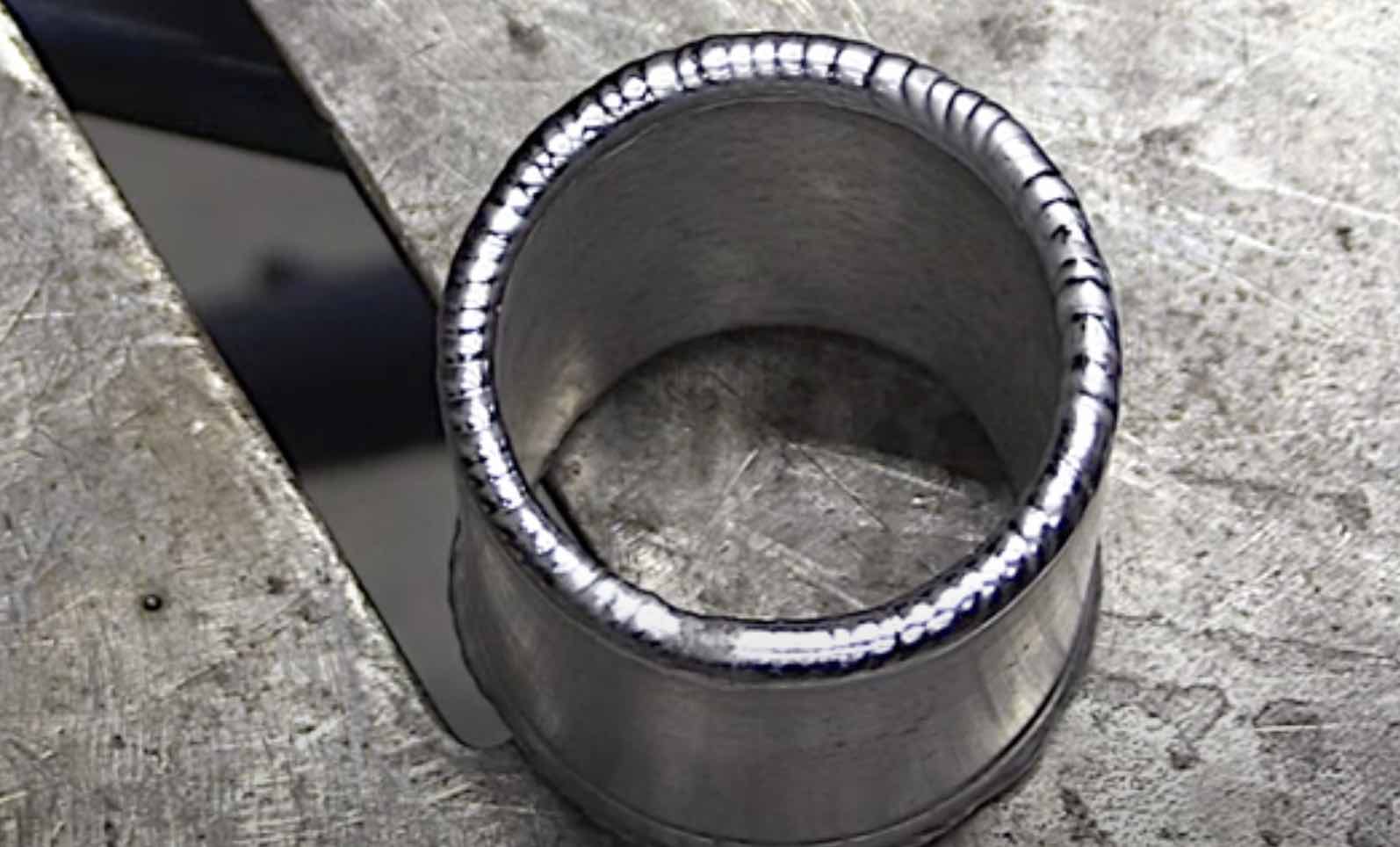
Many welders want a neat, even weld bead. Frequency plays a big role in how the bead looks.
- Low frequency: The bead is wider and flatter. Ripples are less visible.
- High frequency: The bead is narrow with sharp, clear ripples. The weld looks tighter and more professional.
A beginner might not realize that a simple change in frequency can make a weld look much better without changing any other settings.
Frequency And Welding Speed
Welders can often move faster at higher frequencies. Because the arc is focused, less heat spreads sideways. This means you can increase travel speed without losing arc control.
At low frequency, the wider arc means you must move slower to avoid undercutting or missing the joint.
Frequency And Heat Affected Zone (haz)
The heat affected zone is the area of metal changed by welding heat. High frequency keeps the HAZ narrow. This reduces distortion and warping, which is important for thin metals or parts that need to stay flat.
Low frequency spreads heat, making the HAZ wider. This can cause more warping and is not good for thin or sensitive pieces.
How To Choose The Right Frequency
Choosing the right frequency depends on the job. Here are some basic steps:
- Check the material type and thickness. Use low frequency for thick, dirty aluminum. Use high frequency for thin, clean pieces.
- Decide on weld bead shape. If you want a wide bead, use lower frequency. For a narrow bead, use higher frequency.
- Look at joint type. Joints with tight corners need more focused arcs, so use higher frequency.
- Test on scrap. Try different settings before welding the real part.
Welders often forget to test on scrap first. This is a simple way to avoid mistakes and wasted materials.
Common Frequency Mistakes In Ac Tig Welding
Many people set frequency once and never change it, missing out on better welds. Some common mistakes include:
- Using high frequency on dirty aluminum: The cleaning action may not be enough.
- Using low frequency on thin material: The arc is too wide, causing burn-through.
- Not adjusting frequency for joint type: Different joints need different arc focus.
Another mistake is ignoring the sound of the arc. A high-pitched, steady sound usually means the arc is stable. If the sound wobbles, the arc may be unstable or the frequency too low.
Frequency And Machine Types
Not all TIG welders allow frequency adjustment. Older transformer machines often have a fixed frequency (usually 60 Hz). Newer inverter machines let you set the frequency anywhere from 20 Hz up to 400 Hz.
Welders should check their machine’s manual to see if frequency is adjustable. Sometimes, a small knob or digital setting controls it.
Frequency And Tungsten Life
High frequency creates a more focused arc, which can reduce tungsten wear because the heat stays at the tip. This means the tungsten lasts longer and needs less grinding. At low frequencies, the arc spreads out, and the tungsten can ball up or erode faster.
A less obvious point: if you use too high a frequency, the arc can become unstable, and the tungsten may crack or split. Most welders find that 120–200 Hz is a good balance for tungsten life and arc quality.
Frequency And Filler Metal Control
A focused arc at high frequency makes it easier to add filler metal exactly where you want. The puddle is smaller and responds quickly. At low frequency, the puddle is larger, and it is harder to control where the filler goes.
For beginners, this can be a big help. If you struggle with filler control, try increasing frequency and see if it helps.
Frequency’s Effect On Welding Position
Welding position (flat, vertical, overhead) also matters. At high frequency, the arc is focused and does not wander as much, so it is easier to weld in tight spots or on vertical joints. At low frequency, the arc can wander, making overhead or vertical welds harder.
Frequency And Shielding Gas
While frequency does not directly change how much shielding gas you need, it changes the shape and focus of the arc. At high frequencies, you may use less gas because the arc is tighter. At low frequencies, a wider arc can blow away gas, so make sure your gas coverage is good enough.
A small tip: Always check your gas flow when you change frequency settings, especially on tricky welds.
How Frequency Affects Weld Sound
Welders often use sound to judge the arc. At 60 Hz, the arc makes a deep humming sound. At 200 Hz, it is much higher in pitch. An unstable arc makes crackling or popping noises. If the sound is strange, check your frequency setting.
Some welders find the high-pitched sound at high frequency uncomfortable. Ear protection can help, especially in a small shop.
Special Cases: Welding Magnesium And Other Metals
Magnesium, like aluminum, is often welded with AC TIG. Frequency control helps here too. Magnesium needs strong cleaning action, so lower frequency (60 Hz) is common. But for thin magnesium, higher frequency gives better control and a neater weld.
Other metals, like titanium, are almost always welded with DC. But if you do weld them with AC, frequency control works the same way.
Frequency And Power Supply Quality
Not all power sources give clean AC at all frequencies. Cheap machines may lose arc stability at very high or low settings. Always check the machine’s manual for recommended frequency ranges.
Some industrial welders have auto frequency compensation. This helps keep the arc stable even if the power supply changes.
Frequency And Distortion
High frequency helps reduce distortion because it keeps heat in a small area. This is useful for sheet metal or parts that must fit tightly. For example, when welding an aluminum car body panel, a high frequency (150–200 Hz) setting can help keep the panel flat.
On thick metal, distortion is less of a problem, so lower frequency works well.
Frequency And Operator Fatigue
A focused arc at high frequency is easier to control, which means the operator can weld longer without getting tired. The arc stays where it is pointed, and there is less need to adjust hand position. This can make a big difference during long welding jobs.

Credit: www.youtube.com
Frequency And Weld Strength
Weld strength depends on penetration and bead size. Low frequency gives deeper, wider penetration. High frequency gives narrower, shallower penetration but more control. The right frequency setting helps make strong, neat welds suited to the job.
Here is a simple comparison:
| Frequency (Hz) | Weld Penetration | Bead Width | Best Application |
|---|---|---|---|
| 60 | Deep | Wide | Heavy aluminum plate |
| 120 | Medium | Medium | General purpose |
| 200 | Shallow | Narrow | Thin aluminum sheet |
Real-world Example: Manufacturing Aluminum Parts
An aluminum boat factory uses TIG welding every day. When welding the thick hull, they use 60 Hz for deep penetration and cleaning. On thin seat frames, they switch to 180 Hz for a tight, neat bead and less distortion.
Changing frequency is a normal part of their process.
Summary Of Best Practices
- Start with the manufacturer’s recommended frequency.
- Adjust frequency for material thickness and cleanliness.
- Use high frequency for thin, clean parts and precise welds.
- Use low frequency for thick, dirty parts and strong cleaning.
- Test on scrap whenever possible.
- Listen to the arc sound for stability.
Advanced Tips For Experienced Welders
- Pulse and frequency: Some machines let you pulse the frequency for special effects. This is advanced, but can help on tricky joints.
- Watch for tungsten wear: If the tungsten wears too fast, try lowering the frequency.
- Fine-tune for fit: On tight-fitting joints, a higher frequency keeps the arc out of the gap.
- Use a foot pedal: Controlling amperage with a pedal works well with high frequency, giving even more control.
Some welders ignore these advanced features, but they can make a big difference in quality and speed.
Credit: www.weldingtipsandtricks.com
Common Myths About Frequency In Tig Welding
Many welders think frequency is only for aluminum. In fact, it works for any AC TIG welding. Another myth is that higher frequency is always better. Very high frequencies can cause arc instability, especially on older machines. The best frequency is the one that fits the job.
Some believe frequency changes the amount of cleaning action. This is only partly true. It changes the area cleaned, but not the strength of cleaning.
Frequency And Welding Safety
While frequency itself is not dangerous, the higher-pitched arc sound can be loud. Use ear protection if needed. Also, higher frequencies can create more UV light from the arc, so always wear proper eye and skin protection.
When To Change Frequency Settings
- Welding different thicknesses: Lower for thick, higher for thin
- Welding different materials: Adjust for cleaning needs
- Changing joint types: More focus for tight joints
- Switching from manual to automated welding: Set higher frequency for robots or positioners for more consistent welds
How Frequency Works With Other Tig Settings
Frequency is just one part of the AC TIG setup. It works together with:
- Balance: Ratio of cleaning to penetration
- Amperage: Overall heat
- Travel speed: How fast you move
- Gas flow: Shielding the weld
Changing frequency means you may need to adjust these other settings too. For example, at high frequency, you might use less cleaning balance, and at low frequency, you might slow down your travel speed.
Frequency And Weld Cracking
A focused arc at high frequency can help avoid weld cracking by controlling heat input. This is useful for sensitive alloys or thin parts. Too much heat from a wide arc can cause cracking, especially in aluminum.
Key Insights That Beginners Miss
- Frequency does not just change cleaning. It also changes bead size, arc control, and weld speed.
- The arc sound is a useful tool. A steady, high-pitched arc usually means good settings.
- Frequency interacts with every other setting. Changing one means checking the others.
- Test settings on scrap metal before welding the real part.
- Small changes can make a big difference. Adjust frequency in small steps for best results.
Table: How Frequency Affects Common Tig Welding Outcomes
| Outcome | Low Frequency (≤60 Hz) | High Frequency (≥120 Hz) |
|---|---|---|
| Arc Width | Wide | Narrow |
| Arc Stability | Lower | Higher |
| Cleaning Area | Wide | Narrow |
| Weld Appearance | Flat, wide bead | Tight, neat bead |
| Distortion | More | Less |
| Tungsten Life | Lower | Higher (up to a point) |
Frequently Asked Questions
What Is The Best Frequency For Aluminum Tig Welding?
Most welders start at 120 Hz for aluminum TIG welding. This gives a good balance of cleaning and arc focus. For thick or dirty aluminum, 60 Hz is better. For thin, clean aluminum, up to 200 Hz works well. Always test on scrap first.
Can I Adjust Frequency On All Tig Welders?
No. Only modern inverter TIG welders let you change frequency. Older transformer machines are usually fixed at 60 Hz. Check your machine’s manual to see if frequency adjustment is possible.
Does Frequency Affect Cleaning Action In Ac Tig Welding?
Yes. Frequency changes the area cleaned by the arc. Low frequency cleans a wider area. High frequency cleans a smaller, more focused area. For heavy oxidation, use lower frequency.
Is High Frequency Always Better For Tig Welding?
No. High frequency is good for thin materials and tight joints but can cause arc instability or tungsten splitting if set too high. For thick, dirty work, lower frequency is better.
Where Can I Learn More About Ac Tig Frequency?
You can read detailed information on AC TIG welding and frequency settings on the Wikipedia page on Gas Tungsten Arc Welding.
A good understanding of frequency in AC TIG welding helps you make better, stronger, and neater welds. Frequency is not just a number on the machine—it is a powerful tool that, when used right, improves almost every part of the welding process.
Adjust it with care, listen to the arc, and practice to see the difference in your welds.