Disclosure: This post contains affiliate links and I will be compensated if you make a purchase after clicking through my links. Learn More
TIG welding gives you strong, clean joints on many metals, but the right gas is key. If you use the wrong gas, you may see cracks, poor welds, or even equipment damage. Many people focus on the welder or the rod, but the shielding gas matters just as much.
This article explains which gas you should use for TIG welding, why it matters, and how to choose for your metal and job. You will find clear advice, real examples, and tips that help you avoid common mistakes.
Why Shielding Gas Matters In Tig Welding
Shielding gas protects the hot weld from air. Without this protection, the weld can react with oxygen and nitrogen, causing weak joints, porosity, and ugly finishes. TIG (Tungsten Inert Gas) welding needs a gas that is clean, stable, and does not react with the weld or the tungsten electrode.
Two main things happen if you use the wrong gas:
- The weld picks up impurities, so it becomes weak or brittle.
- The tungsten electrode wears out fast or forms a ball, which ruins arc control.
Many people think any “inert” gas will work, but the type and purity matter a lot. Even small mistakes in gas choice can mean wasted time or failed parts.
Main Types Of Shielding Gas For Tig Welding
TIG welding uses inert or nearly inert gases. Let’s look at the main types, how they behave, and what metals they suit.
Argon
Argon is the most common TIG welding gas. It makes a smooth, stable arc, which helps you control the weld pool. Argon is heavier than air, so it stays over the weld, giving strong protection.
- Purity: Use at least 99.995% pure argon for TIG welding.
- Metals: Steel, stainless steel, aluminum, titanium, copper, nickel, and most non-ferrous metals.
- Arc Start: Easy. High Frequency or Lift-Arc starts are smooth.
- Finish: Clean and shiny, with almost no spatter.
Argon is good for both AC and DC TIG welding. For beginners and most jobs, pure argon is the safest choice.
Helium
Helium gives a hotter arc than argon. It helps when welding thick metals or metals that conduct heat well, like copper and aluminum.
- Purity: 99.99% or higher.
- Metals: Aluminum, copper, magnesium, stainless steel (for thick sections).
- Arc Start: Harder than argon. Needs more skill.
- Gas Flow: Higher flow rates, as helium is lighter and escapes more easily.
Helium is more expensive than argon. It also needs higher flow rates, so you use more gas. But it can save time on thick work.
Argon-helium Mixes
Mixing argon and helium lets you adjust the arc’s heat. For example, 75% argon and 25% helium is common for thicker aluminum. More helium means a hotter, wider arc.
| Mix Ratio (Ar/He) | Arc Heat | Best Use |
|---|---|---|
| 100% Argon | Low-Medium | Thin to medium metals, general TIG |
| 75% Argon / 25% Helium | Medium-High | Thick aluminum, copper |
| 50% Argon / 50% Helium | High | Very thick aluminum or copper |
Mixes are useful for special jobs, but you must check the flow rate and adjust your technique.
Hydrogen Mixes
Small amounts of hydrogen (1–5%) are sometimes added to argon for welding austenitic stainless steel. Hydrogen makes the arc hotter and gives a cleaner finish.
- Warning: Never use hydrogen on carbon steel, aluminum, or magnesium. It causes cracking and weak welds.
- Best Use: Thin stainless steel sheets, especially for food or chemical equipment.
These mixes are less common and only for specific jobs.
Nitrogen
Nitrogen is not used alone for TIG welding, but sometimes a small amount is mixed with argon for welding duplex or super duplex stainless steel. It can help with corrosion resistance.
- Best Use: Duplex stainless steel, when the weld’s phase balance matters.
Nitrogen can cause porosity if you use too much.
Co₂ And Oxygen
You should never use pure CO₂ or oxygen as shielding gas for TIG welding. They are “active” gases, meaning they react with the weld and the tungsten. They will ruin the weld and eat away the tungsten tip.
How To Choose The Right Gas For Your Metal
The best gas depends on the type of metal, the weld thickness, and the finish you want. Here is a quick guide:
Carbon Steel
- Best Gas: 100% Argon
- Why: Gives a stable arc and clean weld.
- Note: Never add oxygen or CO₂.
Stainless Steel
- Best Gas: 100% Argon for most jobs.
- Special Mix: Argon with 1–5% hydrogen for thin sheets, only if the steel is austenitic.
- Caution: Do not use hydrogen on ferritic or martensitic stainless steel.
Aluminum
- Best Gas: 100% Argon for thin to medium thickness.
- Mix: Add helium for thick aluminum (over 6mm). Start with 25% helium and adjust.
- Arc Type: Use AC current.
Copper And Alloys
- Best Gas: Argon-Helium mix, especially for thick copper.
- Reason: Copper pulls heat away fast, so helium helps keep the weld pool hot.
Titanium
- Best Gas: 100% Argon, high purity (99.999% if possible).
- Trick: Use a trailing shield or “gas lens” for full coverage, as titanium reacts fast with air.
Nickel Alloys
- Best Gas: 100% Argon or Argon-Helium mix if thick.
Magnesium
- Best Gas: 100% Argon for thin, mix with helium for thick parts.
Duplex Stainless Steel
- Best Gas: Argon with a small % of nitrogen for correct phase balance.
Gas Purity: Why It Matters
The purity of the gas is just as important as the type. Impure gas can add oxygen, moisture, or other contaminants to the weld. This can cause:
- Porosity (tiny holes)
- Cracks
- Discoloration or dirty welds
- Reduced strength
Always buy welding-grade gas (sometimes called “5. 0” purity, meaning 99. 999%). Do not use industrial-grade gases for TIG welding, as they often have oil, water vapor, or other impurities.
Credit: weldguru.com
How Gas Flow Rate Affects Tig Welding
The gas flow rate controls how much gas leaves the torch. Too low, and air gets in. Too high, and you waste gas or even draw air into the weld. The right flow rate depends on:
- Cup size (smaller cup, lower flow)
- Welding position (overhead needs more)
- Wind or drafts (may need a curtain or higher flow)
- Type of gas (helium needs more flow)
A good starting point:
- Argon: 10–20 cubic feet per hour (CFH)
- Helium or mixes: 15–30 CFH
Watch the weld. If you see small holes or color changes, check for leaks or wrong flow rate.
Common Shielding Gas Setups For Tig Welding
Here are typical setups for TIG welding different metals:
| Metal Type | Shielding Gas | Flow Rate (CFH) | Arc Type |
|---|---|---|---|
| Carbon Steel | 100% Argon | 15–20 | DCEN |
| Stainless Steel | 100% Argon | 15–20 | DCEN |
| Stainless Steel (thin) | Argon + 2% Hydrogen | 15–20 | DCEN |
| Aluminum (thin) | 100% Argon | 15–20 | AC |
| Aluminum (thick) | 75% Argon / 25% Helium | 20–30 | AC |
| Copper (thick) | 50% Argon / 50% Helium | 20–30 | DCEN |
Dcen = Direct Current Electrode Negative
Ac = Alternating Current
Special Cases: Back Purging And Trailing Shields
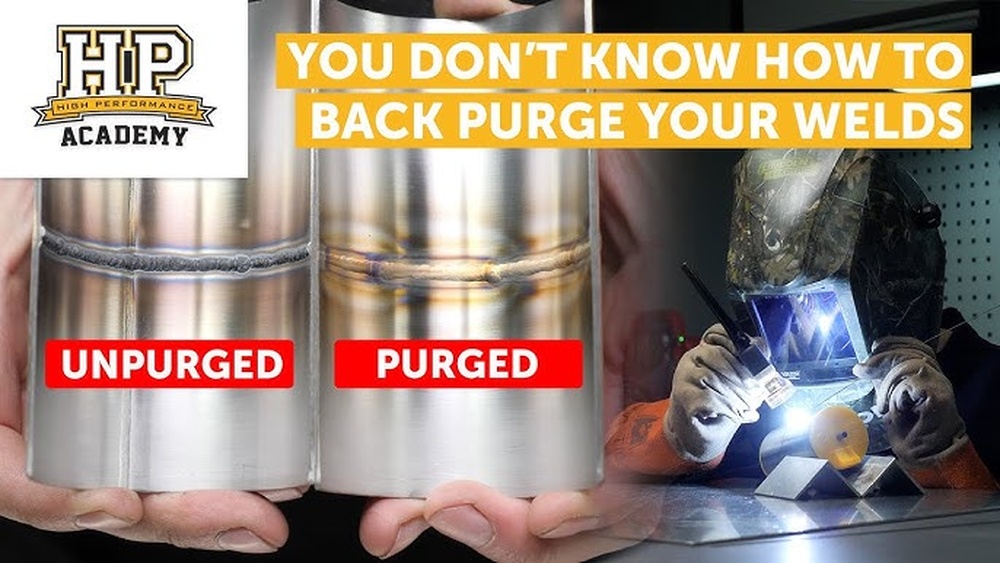
Some metals need extra gas shielding on the back side of the weld. This is called back purging. It is vital for stainless steel and titanium pipes. Without it, the inside of the weld turns black and weak.
- Back Purging Gas: Usually 100% argon.
- Flow Rate: Lower than the main torch, about 5–10 CFH.
- How: Seal the pipe ends and feed gas in until the air is gone.
Trailing shields are used on titanium or large welds. They keep a blanket of argon over the cooling weld, preventing oxidation.
Choosing The Right Gas Cylinder
Gas comes in steel or aluminum cylinders of different sizes. For most hobby or small shop TIG work:
- 80 cubic foot (CF) cylinder: Good for beginners; lasts for several hours of welding.
- 125 CF cylinder: Better for regular use.
- 300 CF cylinder: Used in shops or for long jobs.
Always store cylinders upright, away from heat, and secure them with a chain. Check for leaks with soapy water.
Cost And Availability
Argon is widely available and usually the cheapest. Helium costs more, sometimes double or triple the price. Mixed gases are sometimes only sold by specialty suppliers.
A beginner mistake is to buy cheap, low-purity gas to save money. This often leads to poor welds and wasted material. High-purity argon pays for itself by preventing rework and scrap.
Common Mistakes When Choosing Tig Welding Gas
Many new welders make the same errors. Here are some mistakes to avoid:
- Using the wrong gas: For example, using CO₂ or oxygen will ruin your weld.
- Low purity gas: Industrial argon may have impurities. Always get “welding grade.”
- Wrong mix ratio: Too much helium can make the arc unstable on thin metals.
- Wrong flow rate: Too high or too low flow wastes gas or lets air in.
- Poor gas coverage: Nozzle too far from the weld, or welding in a drafty area.
- Skipping back purge: For stainless or titanium, this ruins weld quality.

Credit: unimig.com.au
How To Test Your Shielding Gas Setup
You can test your gas setup with simple steps:
- Look for Porosity: Tiny holes mean air is getting in.
- Check Weld Color: A bright, shiny finish means good shielding. Blue, brown, or black means poor gas coverage.
- Tungsten Tip: If the tip turns black or balls up, the gas may be wrong or not pure.
- Sound: Argon makes a steady hissing sound. Sputtering means a leak or contamination.
Tips For Saving Gas And Getting The Best Weld
- Use the right cup size: Larger cups give more coverage but need more gas.
- Keep the nozzle close: Too far away, and air gets in.
- Weld indoors if possible: Wind blows away shielding gas.
- Purge gas lines: Before starting, let gas flow for a few seconds to clear air.
- Fix leaks: Check hoses, connectors, and torch for leaks with soapy water.
Environmental And Safety Concerns
Welding gases are usually safe, but they can displace air and cause suffocation if used in a small space. Always weld in a ventilated area.
- Argon and helium: Non-toxic, but can push out oxygen.
- Hydrogen: Flammable; use only in small percentages and with care.
- Cylinder safety: Secure cylinders upright and never drop or heat them.
Never weld near flammable materials or in a closed room without airflow.
Real-world Examples
- Automotive shops use 100% argon for welding thin steel and aluminum panels.
- Aerospace welders need high-purity argon and trailing shields for titanium parts.
- Food industry welders use argon-hydrogen mixes for stainless steel piping, with back purging for perfect inside welds.
- Home users often buy small argon cylinders and use a basic flowmeter for hobby projects.
Comparing Tig Gas Choices For Beginners
Here is a quick comparison to help you choose:
| Gas | Best For | Cost | Ease of Use | Finish Quality |
|---|---|---|---|---|
| 100% Argon | Most metals | Low-Medium | Easy | High |
| 75% Argon / 25% Helium | Thick aluminum, copper | High | Moderate | High |
| Argon + Hydrogen | Thin stainless steel | Medium | Difficult | Very high |
| Industrial Argon | Cutting (not welding) | Low | Easy | Poor |
Non-obvious Insights
- Argon’s weight matters: Because argon is heavier than air, it gives better coverage for flat welding. If you weld vertically or overhead, you might need to raise the flow rate.
- Helium changes arc shape: More helium means a wider, hotter arc, but also more spatter and a need for faster travel. Many beginners do not adjust their speed when switching gases, causing burn-through or poor fusion.
- Back purging is often skipped: Many new welders ignore the need for back purging on stainless and titanium, thinking it does not matter. This leads to rusty, weak welds inside pipes—sometimes only found after a failure.
Where To Learn More
If you want to see more details and technical data, the Wikipedia article on Gas Tungsten Arc Welding is a good place to check.
Frequently Asked Questions
What Is The Best Gas For Tig Welding Aluminum?
The best gas is 100% argon for most aluminum jobs, especially thin to medium thickness. For thick aluminum (over 6mm), you can add 25–50% helium to get more heat and a wider weld pool.
Can I Use Co₂ For Tig Welding?
No, never use CO₂ for TIG welding. It reacts with the tungsten and the weld, causing poor results, contamination, and damage to your torch.
What Happens If My Gas Flow Is Too High Or Too Low?
If the flow is too high, it can waste gas or even pull in air, causing contamination. If the flow is too low, air will mix with the weld, causing porosity, color changes, and weak joints.
How Do I Know If My Shielding Gas Is Pure Enough?
Use only welding-grade gas, usually marked as “5.0” or 99.999% purity. If your welds have small holes, discoloration, or your tungsten turns black, your gas may be impure or contaminated.
Why Do Some Jobs Need Back Purging?
Back purging protects the back side of the weld from air. This is needed for stainless steel and titanium pipes, where the inside of the weld must stay clean and strong. Without it, the inside surface turns black and weak.
Choosing the right gas for TIG welding makes your work cleaner, faster, and safer. Argon works for most jobs, but knowing when to use helium, hydrogen mixes, or back purging can set your work apart. Always use high-purity gas and check your flow rates.
Avoid shortcuts with low-grade gases—they cost more in the end. With the right gas, TIG welding becomes more predictable and your welds last longer. If you apply these guidelines, you will avoid common mistakes and get the best from your TIG welder every time.

Credit: yeswelder.com