Disclosure: This post contains affiliate links and I will be compensated if you make a purchase after clicking through my links. Learn More
TIG welding stands as one of the most precise and reliable welding processes available today. You might hear professionals call it GTAW (Gas Tungsten Arc Welding). This method uses a non-consumable tungsten electrode and a shielding gas, usually argon, to create clean, strong welds. TIG welding allows for high control over the weld and produces minimal spatter. Because of these qualities, TIG welding finds use across many fields, from art to aircraft manufacturing.
Many people want to know what TIG welding is actually used for. The answer covers a wide range, including both small repairs and major structural work. This article explains the common and specialized uses of TIG welding. It also covers why professionals choose TIG over other welding techniques, the types of materials it works best with, and what makes it unique.
If you want to understand where TIG welding fits in industry, construction, art, and repair, this guide will give you a clear picture.
How Tig Welding Works
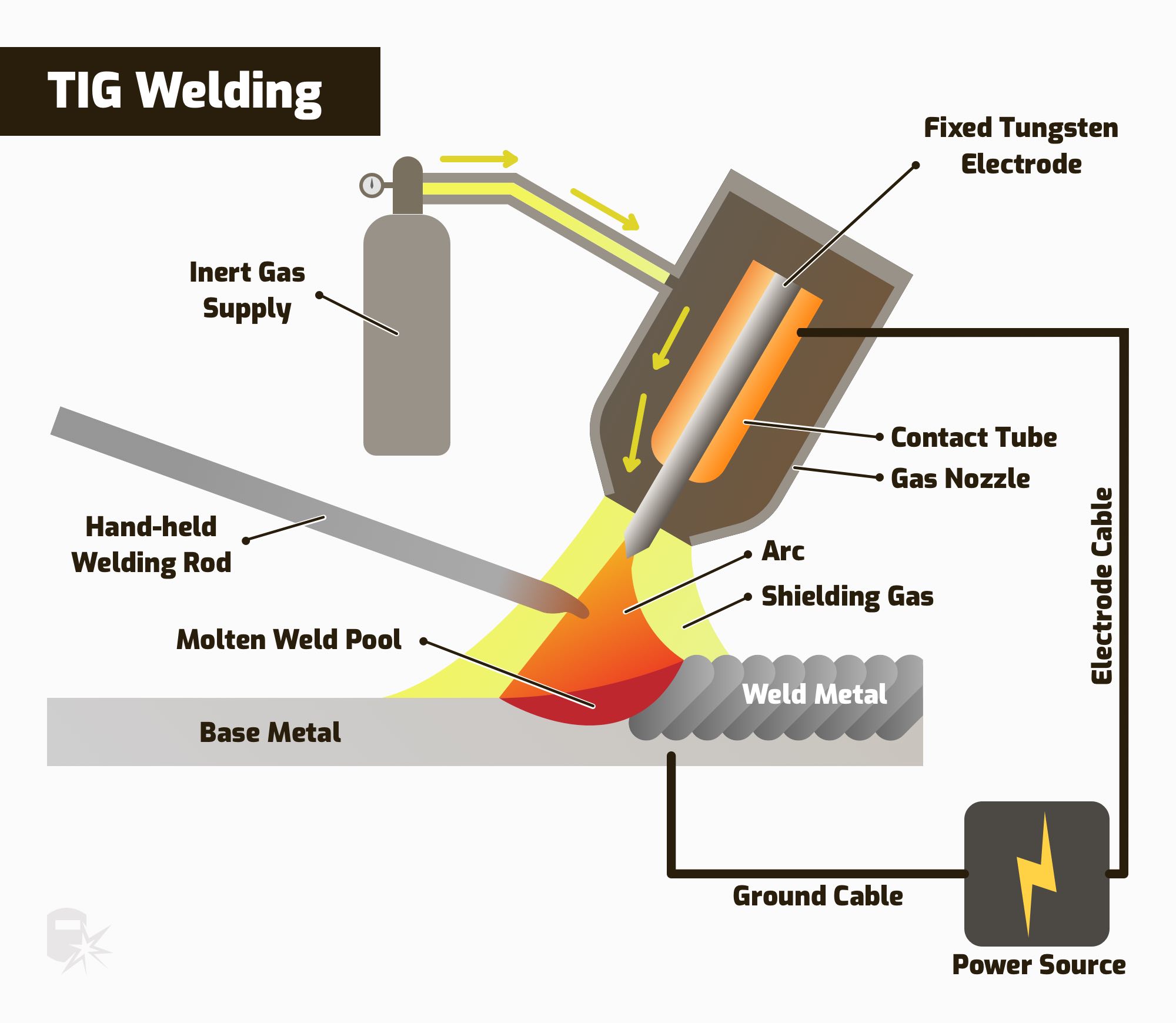
TIG welding creates heat with an electric arc between a tungsten electrode and the workpiece. The welder holds the torch in one hand and feeds filler metal with the other, though sometimes no filler is needed. A constant stream of shielding gas protects the molten weld pool from air, preventing contamination. This process results in clean, high-quality welds.
TIG welding is different from other types like MIG welding or stick welding. It gives the welder more control but requires more skill and steady hands. The focus on detail makes TIG welding slower but produces better results for certain applications.
Key Materials Used In Tig Welding
TIG welding is popular because it works with many metals. Here are the main materials professionals use:
- Stainless steel – Often used for its clean appearance and strength. TIG welding gives stainless steel a smooth, shiny finish.
- Aluminum – TIG is preferred for aluminum because it prevents the metal from oxidizing and keeps the weld clean.
- Mild steel – Used in many industries, from auto repair to construction.
- Magnesium – Used in aerospace and automotive parts, as magnesium is lightweight and strong.
- Copper and copper alloys – TIG welding gives accurate results for pipes and electrical equipment.
- Nickel alloys – Used in chemical plants and power stations for their resistance to corrosion.
- Titanium – Common in aerospace and medical devices, as it requires precise, contamination-free welds.
Each metal has its own challenges, but TIG welding adapts well to them. The method allows the welder to adjust heat and speed for the exact metal.
Main Industries That Use Tig Welding
TIG welding plays a vital role in several industries. Its versatility and quality make it a top choice for critical jobs.
Aerospace Industry
The aerospace industry relies on TIG welding for both aircraft frames and engine parts. Aerospace components often use aluminum and titanium, which need clean, precise welds. Even small defects can cause major problems in flight, so TIG welding is preferred for its accuracy.
Automotive Manufacturing And Repair
Car makers use TIG welding for exhaust systems, roll cages, and parts that face high stress. TIG welding is also popular in the custom car world, where appearance matters. Classic car restorers often choose TIG because it leaves neat welds that are easy to polish.
Food And Beverage Processing
Factories that process food and drink use TIG welding on their stainless steel equipment. Clean welds prevent bacteria from hiding in cracks. The smooth, polished finish is easy to clean, which is essential for food safety.
Chemical And Power Plants
TIG welding is common in chemical plants and power stations. It creates strong, corrosion-resistant welds on pipes and tanks. These industries often use metals like nickel alloys and stainless steel, which TIG welding handles well.
Art And Sculpture
Many artists and sculptors use TIG welding for metal art. The process allows for thin, delicate welds and works with a range of metals. TIG welding is also useful for jewelry making and small craft projects.
Shipbuilding
Shipbuilders use TIG welding for parts exposed to saltwater, like stainless steel handrails and aluminum hulls. The process creates strong, leak-free joints that resist corrosion.
Medical Device Manufacturing
Medical devices must meet strict hygiene and quality standards. TIG welding produces clean, precise welds in materials like stainless steel and titanium. This method is key for making surgical tools, implants, and hospital equipment.
Electronics
Manufacturers use TIG welding for electronic components that require small, accurate welds. TIG can join thin wires and delicate parts without overheating them.
Tig Welding In Construction
TIG welding has a role in construction, though it is not always the main method. Builders use TIG welding for architectural features, handrails, and details that require a smooth finish. It is also common in the fabrication of staircases and balconies.
Structural Fabrication
For buildings that need a modern look, TIG welding gives clean joints on visible metalwork. Stainless steel and aluminum handrails in offices, hotels, and homes often use TIG welds.
Custom Metalwork
Construction sometimes involves custom pieces like brackets, frames, and supports. TIG welding allows precise work on these parts, especially when looks matter.
Tig Welding For Repairs And Maintenance
Repair shops use TIG welding for fixing cracks, holes, and worn parts. It is popular for:
- Bicycle frames – Repairs to thin-walled tubes without damaging the frame.
- Boat hulls – Fixing aluminum or stainless steel boats.
- Machinery – Building up worn surfaces or repairing broken machine parts.
TIG welding can repair both large and small items. Its control and accuracy help avoid further damage during repairs.
Tig Welding In Motorsports
Race cars and motorcycles need strong, lightweight parts. TIG welding is used for:
- Roll cages – Safety structures inside race cars.
- Exhaust headers – Complex shapes made from thin stainless steel or titanium.
- Chassis components – Lightweight frames and brackets.
Motorsport teams trust TIG welding for its strength and neat finish. Welds are often visible, so appearance matters as much as safety.
Tig Welding For Home And Hobby Projects
Many hobbyists and DIY enthusiasts use TIG welding for small projects:
- Furniture – Metal chairs, tables, and shelves.
- Decorative items – Lamps, sculptures, and garden art.
- Vehicle restoration – Car and motorcycle repairs or upgrades.
TIG welding’s ability to join thin metal and create attractive welds makes it popular for creative work.
Comparison: Tig Welding Vs Other Methods
Choosing TIG welding often depends on the needs of the project. Below is a comparison between TIG, MIG, and Stick welding.
| Feature | TIG Welding | MIG Welding | Stick Welding |
|---|---|---|---|
| Weld Quality | High, very clean | Moderate | Basic, more spatter |
| Precision | Very high | Medium | Low to medium |
| Materials | Most metals | Mainly steel, aluminum | Mainly steel |
| Speed | Slow | Fast | Medium |
| Skill Level | High | Medium | Low to medium |
TIG welding is best for jobs where quality and appearance are more important than speed.
Credit: weldguru.com
Where Tig Welding Is Preferred
Certain tasks need TIG welding’s unique strengths. Here are some examples:
Thin Material Welding
Welding thin sheets or tubes can be tricky. TIG welding uses a small, focused arc and low heat, so it does not burn through thin metal. This makes it great for bicycle frames, food equipment, and artwork.
Critical Welds
Where safety and quality matter, TIG welding is the top choice. This includes aircraft parts, medical devices, and nuclear plant components. These welds must not fail, so the extra time and skill are worth it.
Exotic Metals
Some metals, like titanium and magnesium, are hard to weld with other methods. TIG welding handles these metals with ease and gives strong, clean joints.
Clean Appearance
Visible welds, such as sculptures, kitchen equipment, or car body panels, benefit from TIG’s neat, polished finish.
Tig Welding In Artistic And Creative Uses
TIG welding is not just for industry. Artists often choose TIG welding for its control and clean lines. Here is how it helps creative work:
Metal Sculptures
Artists can join thin rods and sheets without rough edges. TIG welding allows for detailed work, which is important for both small jewelry and large sculptures.
Jewelry Making
TIG welding’s precision works well for gold, silver, platinum, and other precious metals. Jewelers use it to make strong, neat joints that are almost invisible.
Furniture And Decor
Designers like TIG welding for custom furniture and decorative items. The welds look clean and can be polished to match modern styles.
Credit: americantorchtip.com
Tig Welding In Pipe And Tube Work
Pipes and tubes need strong, leak-free joints. TIG welding is common in:
- Food processing – Stainless steel pipes for clean water and food.
- Pharmaceutical production – Tubes for medicine factories.
- Chemical plants – Pipes that carry strong chemicals.
- Breweries – Welds that do not trap bacteria.
TIG welding creates smooth, clean welds inside and outside the pipe, which is important for hygiene and flow.
Tig Welding For High-pressure And High-temperature Applications
Some equipment runs under high pressure or heat. TIG welding is chosen for:
- Boilers
- Heat exchangers
- Pressure vessels
These items often use special alloys. TIG welding gives strong joints that do not crack under stress.
Tig Welding For Aerospace And Defense
Aerospace and military products need light, strong parts that can survive extreme conditions. TIG welding is used for:
- Jet engine parts
- Missile components
- Helicopter frames
Titanium and nickel alloys are common. TIG welding gives the accuracy and quality these parts require.
Tig Welding In The Renewable Energy Sector
Clean energy projects, like wind and solar power, also use TIG welding. Examples include:
- Wind turbine parts – Large, welded joints that must last for years.
- Solar panel frames – Lightweight aluminum structures.
TIG welding helps build reliable renewable energy equipment.
Tig Welding In Shipbuilding And Marine Applications
Marine environments are tough on metal. TIG welding is used for:
- Stainless steel rails
- Aluminum hulls
- Boat repairs
These welds resist rust and leaks, which is essential at sea.
Tig Welding For Large Structures
While TIG welding is slower, it is sometimes used for large projects:
- Bridges – Especially on stainless steel or aluminum parts.
- Monuments – When appearance and durability are important.
TIG welding’s clean finish and strong joints make it suitable for these uses.
Tig Welding In Research And Laboratory Settings
Scientists and engineers often need custom equipment. TIG welding is used to build:
- Vacuum chambers
- Experimental setups
- Precision instruments
The ability to weld special metals and create leak-free joints is important for research.
Tig Welding For Prototyping And Product Development
New products often require unique shapes and materials. TIG welding is ideal for building prototypes because it works with many metals and allows for careful, detailed work.
Tig Welding In Hvac And Plumbing
TIG welding is common in HVAC (heating, ventilation, air conditioning) and plumbing when joining thin-walled stainless steel pipes. It creates smooth, leak-proof joints that last.
Tig Welding And Quality Control
Many industries use TIG welding because it produces high-quality, reliable joints. Welds are inspected with:
- X-rays
- Ultrasonic testing
- Dye penetrant inspection
These checks ensure the welds are free of cracks and defects.
Tig Welding And Safety
TIG welding is safer for the material since it produces less heat and spatter. This reduces the risk of damaging the workpiece or starting fires. Welders still need to wear proper gear—gloves, helmets, and protective clothing—to guard against burns and UV light.
Costs And Limitations Of Tig Welding
While TIG welding offers many benefits, it does have some drawbacks:
- Slower speed – TIG welding takes more time than other methods.
- Higher skill needed – The process is harder to learn.
- More expensive equipment – TIG machines and gas cost more.
For large, simple welds, other methods may be faster or cheaper. But for high-quality, precise work, TIG welding is often the best choice.

Credit: www.lincolntech.edu
Real-world Examples Of Tig Welding
- Airplane manufacturing – TIG welding is used for jet engine blades and airframes.
- Craft breweries – Welders use TIG to join stainless steel pipes for beer production.
- Car restoration – Classic car builders use TIG for patch panels and bodywork.
- Art installations – Metal artists create public sculptures with TIG.
- Medical implants – Makers use TIG to weld titanium hip and knee replacements.
These examples show how TIG welding supports both industry and creativity.
Tig Welding In Numbers
Some statistics highlight TIG welding’s role in industry:
- TIG welding accounts for about 15% of all welding in the US, but nearly 50% of welding in the aerospace sector.
- Over 80% of stainless steel food processing equipment is joined using TIG welding.
- The average lifespan of TIG-welded joints in critical industries can exceed 20 years with proper maintenance.
These numbers show how important TIG welding is for quality and safety.
Tips For Choosing Tig Welding
If you are unsure whether TIG welding is right for your project, consider these questions:
- Is weld appearance important?
- Do you need to weld thin or special metals?
- Does the joint need to be very strong and clean?
- Are you working on a critical part, like a pressure vessel or medical device?
- Do you have time for a slower, high-quality process?
If you answer yes to any of these, TIG welding may be the best method.
Common Mistakes In Tig Welding Projects
Beginners and even some professionals sometimes make these errors:
- Using the wrong shielding gas – Always use pure argon unless the metal requires a mix.
- Contaminating the tungsten electrode – Touching the electrode to the workpiece can ruin the weld.
- Welding dirty metal – Clean the surface well before welding, or defects may appear.
- Incorrect settings – Too much or too little heat can cause burn-through or weak welds.
Paying attention to these points can improve results and reduce wasted time and materials.
Tig Welding Equipment Essentials
A standard TIG welding setup includes:
- TIG welding machine – Provides the power.
- Torch – Holds the tungsten electrode.
- Filler rods – Added to the joint if needed.
- Shielding gas supply – Usually argon.
- Protective gear – Gloves, helmet, and jacket.
Some welders add water cooling for heavy work or special torches for tight spaces.
Tig Welding Certification And Skills
Many jobs require welders to have certifications, especially in aerospace, medical, or power industries. These tests check both skill and knowledge of safety rules. The American Welding Society (AWS) is a major certifying body.
Even for hobbyists, practicing on scrap metal and learning to control the arc is important. TIG welding rewards patience and attention to detail.
Table: Common Tig Welding Applications By Industry
Here’s an overview of how TIG welding is used in different fields:
| Industry | Typical Uses | Key Metals |
|---|---|---|
| Aerospace | Aircraft frames, jet engines | Titanium, aluminum, magnesium |
| Automotive | Exhausts, roll cages, custom parts | Stainless steel, aluminum |
| Food Processing | Pipes, tanks, equipment | Stainless steel |
| Art & Jewelry | Sculptures, fine jewelry | Copper, silver, gold, steel |
| Medical | Implants, surgical tools | Titanium, stainless steel |
| Shipbuilding | Rails, hulls, repairs | Aluminum, stainless steel |
Non-obvious Insights About Tig Welding
Many beginners think TIG welding is only for professionals, but with patience, hobbyists can achieve high-quality welds at home. Another point: using the right filler rod is as important as the correct settings. The wrong filler metal can lead to weak or corroded joints, even if the weld looks good.
Also, many people overlook the importance of cleanliness. Even a small amount of oil or rust can cause weld problems. Taking extra time to clean parts pays off with fewer failures and better-looking welds.
External Resource For More Detail
For more technical details and standards, see the Wikipedia article on Gas Tungsten Arc Welding.
Frequently Asked Questions
What Is Tig Welding Best Used For?
TIG welding is best for jobs that need clean, strong welds and a neat finish. This includes aerospace parts, stainless steel food equipment, and metal art. It works well on thin metals and special alloys.
Can Tig Welding Be Used On All Metals?
TIG welding works with most metals, including aluminum, stainless steel, magnesium, copper, and titanium. Some metals, like cast iron, are harder to weld with TIG, but it is possible with the right technique.
Why Choose Tig Welding Over Mig Or Stick Welding?
People choose TIG welding when they need high precision, control, and a clean weld. It is slower and takes more skill, but the results are better for critical or visible joints.
Is Tig Welding Safe For Beginners?
TIG welding is safe if you use the correct gear and follow safety rules. Beginners should start with simple projects and practice on scrap metal. The process is harder to learn, but safety improves with experience.
What Are Common Mistakes In Tig Welding?
Common mistakes include using the wrong shielding gas, contaminating the tungsten electrode, welding dirty metal, and setting the wrong current. Careful preparation and attention to detail help avoid these problems.
TIG welding stands out for its quality, precision, and flexibility. Whether you are building a jet engine, repairing a bike, or creating a sculpture, TIG welding offers results that other processes cannot match. By understanding its uses, strengths, and challenges, you can decide if TIG welding is right for your project or career.