Disclosure: This post contains affiliate links and I will be compensated if you make a purchase after clicking through my links. Learn More
Welding thick steel with flux core wire is a skill that opens many possibilities for fabricators, mechanics, and hobbyists. If you want strong joints and safe structures, you need to understand more than just turning on the welder. You need to pick the right wire, set the correct parameters, and use proper techniques.
This guide covers every part of the process, from wire selection to finishing touches, giving you everything you need to create high-quality welds.
Most people start with thin steel. Thick steel—meaning anything over 6mm (about 1/4 inch)—brings new challenges. Heat control, penetration, and wire type become much more important. This article explains what makes welding thick steel different and how you can get reliable results with flux core wire.
Whether you work on heavy equipment or strong frames, the right approach makes a big difference.
Understanding Flux Core Wire Welding
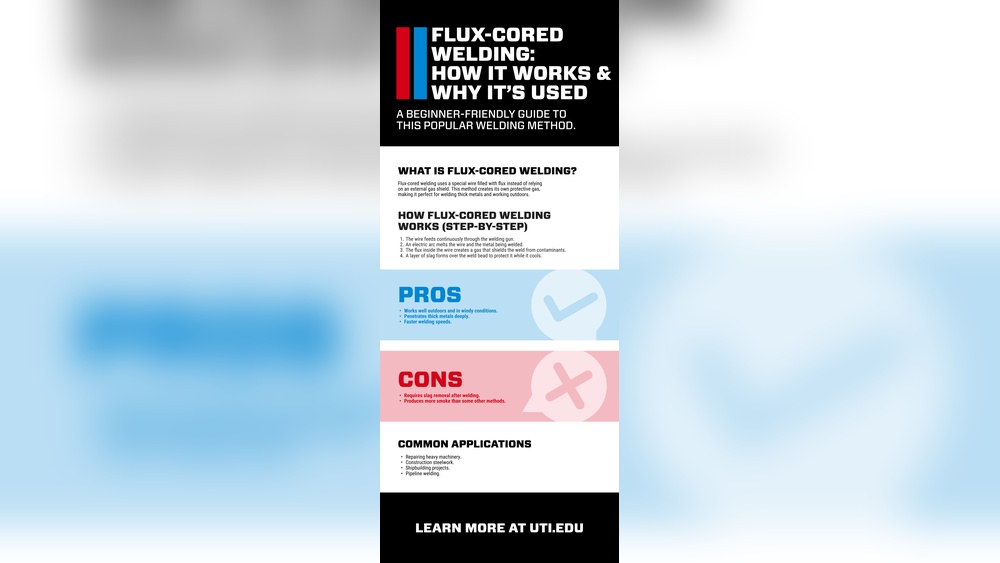
Flux core wire welding, often called FCAW (Flux-Cored Arc Welding), uses a special wire filled with flux. The flux helps protect the weld from air, which could cause weak spots or holes. There are two main types: self-shielded and gas-shielded. Self-shielded wire works without extra gas. Gas-shielded wire needs a tank of shielding gas. Both can work for thick steel, but self-shielded wires are more common for outdoor or field work.
Flux core welding works well for thick steel because it gives deep penetration and high deposition rates. This means the weld melts deep into the metal and fills the joint quickly. Many people use flux core wire to build trailers, repair heavy machinery, or join structural steel.
It is common in both small shops and large construction sites.
Key Differences: Thick Steel Vs Thin Steel Welding
Thick steel needs more heat to melt the base metal. If you use settings meant for thin steel, the weld will not penetrate enough and may break under stress. Here are the main differences you need to know:
- Higher amperage and voltage: Thick steel requires much higher settings.
- Slower travel speed: You move the gun more slowly to let the weld sink in.
- Multiple passes: One pass is not enough. You need to build up layers.
- Wire size matters more: Thicker wires carry more current and melt faster.
One common mistake is treating thick steel like thin sheet metal. If you do not adjust your process, the weld will look fine on the surface but will not hold up to heavy use.
Credit: www.youtube.com
Choosing The Right Flux Core Wire
The wire you choose affects everything from penetration to weld appearance. For thick steel, you should focus on these factors:
- Wire diameter: Most thick steel welding uses .045 inch (1.2mm) or .052 inch (1.3mm) wire. Smaller wires do not carry enough current.
- Wire type: E71T-1 (gas-shielded) and E71T-11 (self-shielded) are popular choices.
- Shielding needs: If you weld outside, use self-shielded wire. For cleaner welds indoors, gas-shielded wire often gives better results.
- Manufacturer recommendations: Always check the wire’s data sheet for suggested voltage, amperage, and polarity.
Here is a comparison of common wire types for thick steel:
| Wire Type | Diameter Range | Shielding | Best For |
|---|---|---|---|
| E71T-11 | 0.035″ – 0.045″ | Self-shielded | Outdoor, field repairs |
| E71T-1 | 0.045″ – 0.052″ | Gas-shielded | Indoor, structural steel |
| E70T-4 | 0.045″ – 1/16″ | Self-shielded | Heavy fabrication |
Many beginners miss that wire quality varies by brand. Low-quality wire leads to inconsistent arcs and more spatter. Always choose reputable brands for critical work.
Preparing Thick Steel For Welding
A strong weld starts with clean, properly prepared steel. Thick steel often has mill scale, rust, or oil that can ruin a weld. Follow these steps before you start:
- Clean the surface: Use a grinder or wire brush to remove rust, paint, oil, and mill scale. Clean at least 1 inch beyond where you plan to weld.
- Bevel the edges: For steel thicker than 1/4 inch, grind a 30-35 degree bevel on each piece. This creates a groove for the weld to fill and improves penetration.
- Fit-up and clamping: Align the pieces tightly with minimal gap. Use clamps to hold them in place. For long joints, tack weld at several points to prevent movement.
- Check joint design: Common joints for thick steel are single V-groove, double V-groove, or butt joints with a root opening. The right joint design helps the weld penetrate fully.
You should also preheat the steel if it is thicker than 1 inch or if you work in cold conditions. Preheating to 150-250°F (65-120°C) helps reduce cracking and improves weld quality.
Setting Up Your Welder
Proper machine setup is critical. If your settings are wrong, you will not get enough heat or control. Here is what you need to adjust:
- Voltage and amperage: Check the wire manufacturer’s chart. For 1/2 inch steel with .045″ wire, start with 26-28 volts and 250-300 amps.
- Wire feed speed: Higher feed speed gives more current and faster welds. Adjust to match your voltage.
- Polarity: Most flux core wires use DCEN (Direct Current Electrode Negative), also called straight polarity. Some special wires use DCEP, so always check your wire’s instructions.
- Shielding gas (if needed): If you use gas-shielded wire, connect the right gas mix. Most use 75% CO2/25% Argon, but some use 100% CO2.
- Ground clamp location: Attach the ground clamp to clean, bare metal as close as possible to the weld area.
Here is a quick reference for common flux core settings on thick steel:
| Steel Thickness | Wire Diameter | Voltage | Amperage | Wire Feed Speed (ipm) |
|---|---|---|---|---|
| 1/4″ | .045″ | 24-26V | 220-260A | 280-320 |
| 3/8″ | .045″ | 26-28V | 260-300A | 320-380 |
| 1/2″ | .052″ | 28-30V | 300-350A | 350-450 |
Make small test welds on scrap steel before working on your project. This helps you fine-tune the settings for your machine and wire.
Welding Techniques For Thick Steel
Welding thick steel is more than just making a bead. You need to control heat, angle, and travel speed for strong, clean welds.
Proper Welding Position
- Flat position (1G): Gives the best control and deepest penetration. Try to weld flat whenever possible.
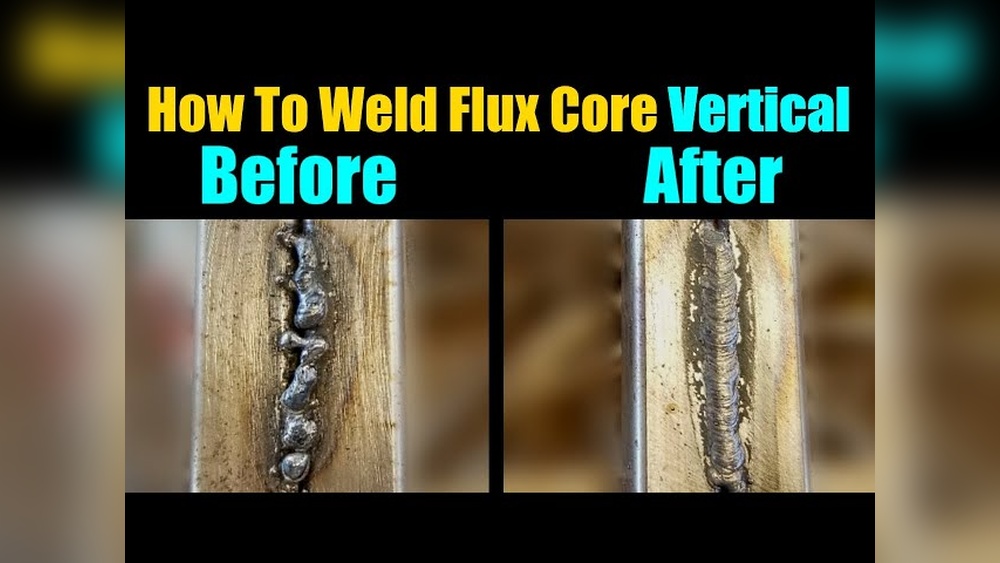
- Horizontal (2G), Vertical (3G), Overhead (4G): These are harder and need more skill. For thick steel, flat or horizontal is safest.
Gun Angle And Stickout
- Angle: Hold the gun at a 10-15 degree drag angle—pointing back in the direction you just welded.
- Stickout: Keep 3/4 inch (19mm) of wire sticking out from the contact tip. Too long stickout causes low heat, poor penetration, and more spatter.
Weaving And Stringer Beads
- Stringer beads: Straight, narrow beads are best for most passes. Move slowly to allow deep fusion.
- Weave beads: Use a side-to-side motion for wider joints or when filling a groove. Do not weave more than 2-3 times the wire diameter.
Multi-pass Welding
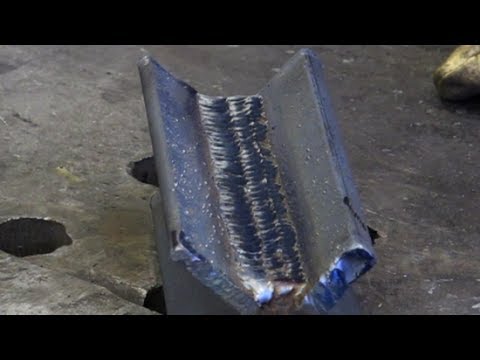
Thick steel needs more than one pass. The first pass (root pass) ensures penetration. The next passes (fill and cap passes) build up the joint.
- Root pass: Weld at the bottom of the joint to join both pieces.
- Hot pass: Removes any slag and fills the groove.
- Fill passes: Add more layers to reach the top of the joint.
- Cap pass: The final layer, which should be smooth and slightly convex.
Clean off slag between passes with a chipping hammer and wire brush. Slag left in the joint causes cracks and weak spots.
Travel Speed And Heat Control
Move the gun slowly but steadily. If you go too fast, the weld will not penetrate. If you go too slow, you risk burn-through or too much buildup. Listen for a smooth, steady crackling sound—like frying bacon. If the arc sounds erratic, adjust your settings.

Credit: www.youtube.com
Safety Considerations
Welding thick steel creates intense heat, strong light, and harmful fumes. Protect yourself and others with these steps:
- Wear protective gear: Use a welding helmet (shade 10–13), fire-resistant jacket, gloves, and steel-toed boots.
- Ventilation: Flux core welding produces more smoke than MIG or TIG. Work in a well-ventilated area or use fume extraction.
- Eye protection: Always wear safety glasses under your helmet.
- Fire safety: Keep flammable materials away. Hot sparks can travel several feet.
- Proper grounding: Good ground connections help prevent electric shock.
Many overlook the danger of fumes from flux core wire. Some wires release more manganese or other metals. Always read the safety data sheet for your wire.
Common Problems And How To Fix Them
Even with good preparation, you may face problems. Here are some typical issues and solutions:
Lack Of Penetration
- Causes: Low amperage, high travel speed, poor joint prep.
- Solutions: Raise voltage and amperage, slow down, grind a better bevel.
Excessive Spatter
- Causes: Wrong voltage, wire speed too high, dirty steel.
- Solutions: Adjust settings, clean the metal, use high-quality wire.
Porosity (holes In Weld)
- Causes: Contaminated steel, moisture, too long stickout.
- Solutions: Clean steel well, store wire properly, shorten stickout.
Cracking
- Causes: Cold steel, poor technique, wrong filler metal.
- Solutions: Preheat thick steel, use proper passes, check wire type.
Slag Inclusions
- Causes: Not cleaning between passes, wrong gun angle.
- Solutions: Chip and brush after every pass, keep a steady drag angle.

Credit: www.millerwelds.com
Finishing And Inspecting The Weld
A strong weld is not finished until you inspect it. Here is how to check your results:
- Visual inspection: Look for a smooth, even bead with no cracks, holes, or undercut.
- Slag removal: Chip away all slag to reveal the weld.
- Check for defects: Look for signs of porosity, lack of fusion, or excessive reinforcement.
- Non-destructive testing: For critical work, use magnetic particle or ultrasonic testing to check for hidden flaws.
If you find problems, grind out the bad weld and redo that section.
Practical Tips For Success
Many beginners focus only on settings and miss small details that matter. Here are two insights that can improve your results:
- Wire storage: Keep wire in a dry place. Moisture causes rust, which leads to porosity and weak welds.
- Short bead lengths: On thick steel, weld in 6-12 inch sections, then let the metal cool for a few minutes. This reduces warping and stress.
Also, always use the shortest, cleanest ground path possible. A poor ground can make the arc unstable and cause weld defects.
Cost And Productivity Considerations
Flux core welding is often chosen for speed and cost. Compared to stick welding, it is much faster for thick steel. The high deposition rate means you can lay down more metal in less time. This is important for jobs where time is money, such as construction or repair shops.
However, flux core wire is more expensive per pound than stick electrodes. You also use more electricity at higher settings. If you weld large volumes, compare costs for wire, gas (if used), and electricity to find the best option for your shop.
Here is a quick cost comparison for different welding methods on thick steel:
| Method | Wire/Electrode Cost | Deposition Rate (lbs/hr) | Typical Labor Time (per ft) |
|---|---|---|---|
| Flux Core | $2.50/lb | 8-10 | 3 min |
| Stick Welding | $1.50/lb | 2-4 | 8 min |
| MIG (Solid Wire) | $2.00/lb | 7-9 | 4 min |
Note: Prices and rates are estimates and vary by region.
Mistakes To Avoid
Many welders make the same errors when starting with thick steel and flux core wire. Avoid these common pitfalls:
- Using too small a wire: .030″ or .035″ is not enough for thick steel. Use .045″ or larger.
- Skipping joint prep: Dirty or un-beveled joints lead to weak welds.
- Welding in poor positions: Overhead and vertical are much harder. Weld flat or horizontal if possible.
- Ignoring machine limits: Not all welders can produce enough power for thick steel. Check your welder’s duty cycle and max output.
- Rushing between passes: Let the weld cool slightly between passes to avoid defects and warping.
Upgrading Your Equipment For Heavy Welding
If you plan to weld thick steel often, invest in a high-capacity welder. Entry-level machines may only go up to 180-200 amps, which is not enough for 1/2 inch steel. Look for these features:
- Output range: At least 250-350 amps for heavy work.
- Wire feed system: Smooth, reliable feed for large wire.
- Duty cycle: Higher duty cycle means you can weld longer without overheating.
- Voltage control: Fine adjustment helps get the perfect weld.
If you use gas-shielded flux core, get a good gas regulator and proper hoses. For very heavy sections, consider preheating equipment or a welding positioner to improve quality.
Learning Resources
Welding thick steel is a valuable skill, and ongoing practice helps you improve. Many community colleges and technical schools offer hands-on courses. You can also find useful videos and guides online. For more technical details, visit the Wikipedia FCAW page.
Frequently Asked Questions
How Thick Of Steel Can I Weld With Flux Core Wire?
You can weld steel up to about 1 inch (25mm) thick with flux core wire, but you need a powerful machine and proper technique. For steel over 1/2 inch, use multiple passes and consider preheating the metal to reduce cracking.
Is Flux Core Wire Strong Enough For Structural Welding?
Yes, flux core wire produces strong welds suitable for structural work, provided you use the right wire type, joint design, and welding technique. Many building codes accept flux core for bridges and buildings if done correctly.
Can I Use Flux Core Wire Without Shielding Gas On Thick Steel?
You can use self-shielded flux core wire without gas for outdoor or field work. It gives good results on thick steel but produces more slag and spatter than gas-shielded wire. For indoor work, gas-shielded wires often create cleaner, stronger welds.
Why Do I Get Lots Of Spatter When Welding Thick Steel?
Spatter happens if your voltage and wire speed are not balanced, or if the steel is dirty. Clean the metal well, use high-quality wire, and adjust your settings to get a stable arc.
What Is The Best Wire Size For Welding 1/2 Inch Steel?
For 1/2 inch steel, use at least. 045″ (1. 2mm) or. 052″ (1. 3mm) flux core wire. Larger wire gives deeper penetration and faster welds, which are critical for thick steel.
Welding thick steel with flux core wire is a challenge, but with the right approach, you can achieve strong, reliable joints. Proper preparation, the right wire, and careful machine setup are key. Take your time, check your work, and keep learning to improve your results.
Your projects will be safer and last longer with good welding habits.