Disclosure: This post contains affiliate links and I will be compensated if you make a purchase after clicking through my links. Learn More
Welding thin metal with an arc welder can seem difficult at first. Many beginners worry about burning holes or making weak joints. Thin metal heats up quickly, which means you need a different approach compared to welding thick steel. The good news is, with careful setup and technique, you can get clean, strong welds even on metal as thin as 1mm.
This guide explains the full process, from choosing the right electrode to fixing common problems. You’ll find tips that even experienced welders sometimes miss. Whether you’re repairing a car panel or making a metal box, these steps will help you work with confidence.
Understanding Thin Metal Welding
Thin metal usually means pieces under 3mm (about 1/8 inch) thick. Car bodies, ductwork, some furniture, and artistic metalwork often use these light materials. The biggest challenge is controlling heat. Too much heat melts through and leaves holes. Too little heat gives weak welds that can crack or break.
Arc welding (also called stick welding) is possible, but it needs special attention to technique and setup.
Why Welding Thin Metal Is Tricky
Thin metal does not absorb much heat. The arc can easily burn through, especially if you pause too long in one spot. Distortion is another problem. Heat can warp the metal, making the finished piece look uneven or twisted. Spatter, rough bead appearance, and poor fusion are common issues for beginners.
Understanding these risks helps you avoid them.
Arc Welding Vs Other Methods
Arc welding is popular for its low cost and portability. But for thin sheet metal, some welders prefer TIG (tungsten inert gas) or MIG (metal inert gas) welding. MIG is fast and produces less spatter, while TIG gives precise control.
Still, arc welding can work well if you set up correctly. It’s widely used for repairs and fabrication where other machines are not available.
Choosing The Right Equipment
The right tools make a big difference. Here’s what matters most for thin metal:
Selecting The Arc Welder
A standard arc welder works, but a model with adjustable amperage helps. Some newer inverter welders allow very low settings, which is perfect for thin metal. If possible, use a welder with a range starting as low as 20–40 amps.
Picking The Electrode
Electrode choice affects heat, bead shape, and penetration. For thin metal, use:
- E6013 electrodes: These start easily, run smoothly, and create less spatter. They work well at low amperage.
- Small diameter rods: 1.6mm (1/16 inch) or 2.0mm (5/64 inch) rods are best. Thicker rods need more current, which increases burn-through risk.
Setting Up The Work Area
Good preparation improves safety and quality.
- Clean the metal: Remove paint, oil, and rust with a wire brush or grinder.
- Clamp the work: Secure the pieces tightly to avoid movement.
- Use a strong ground: A poor ground connection makes the arc unstable.
- Ventilate: Thin metal often has coatings that can create fumes.
Protective Gear
Never skip safety. Wear a welding helmet with a clear lens, gloves, and long sleeves. Thin metal can spark a lot, so cover any exposed skin.

Credit: www.youtube.com
Preparing Thin Metal For Welding
Preparation is more important with thin materials than with thick. Small flaws can ruin the weld.
Cutting And Fitting
Cut the pieces so they fit closely. Large gaps make burn-through much more likely. A fine-tooth saw or metal snips help with precision. For longer seams, use clamps or magnets to keep the metal straight.
Cleaning The Edges
Dirt or paint at the joint will contaminate the weld. Scrub the edges with a wire brush. For best results, clean an area at least 1cm (1/2 inch) from the joint.
Tack Welding
Before running a full bead, make short tack welds every few centimeters. This holds the metal in place and reduces warping. For example, on a 30cm seam, place a tack every 5cm. Let the metal cool between tacks.
Setting The Right Amperage
Amperage controls the heat of the arc. Too much burns holes. Too little gives weak fusion. For thin steel (1–2mm), start at 30–50 amps using a 1. 6mm electrode. Always test on scrap metal first.
Here’s a quick reference:
| Metal Thickness | Electrode Size | Recommended Amperage |
|---|---|---|
| 1.0 mm | 1.6 mm | 25–35 A |
| 1.5 mm | 1.6 mm | 30–45 A |
| 2.0 mm | 2.0 mm | 35–50 A |
| 2.5 mm | 2.0 mm | 45–65 A |
Increase or decrease the amperage slightly based on your welder and the exact conditions. If you see holes or glowing red metal, lower the amps.
Welding Techniques For Thin Metal
Technique is the single most important part of welding thin material. Even if your setup is perfect, poor technique causes problems.
Short Arc And Fast Movement
Hold the electrode just above the metal—about 2–3mm away. Use a short arc to focus the heat. Move the rod quickly along the joint. If you pause, you risk burning through.
Stitch Welding
Weld in short bursts instead of one long bead. For example, weld for 1–2 seconds, then stop. Move forward a bit and repeat. This gives the metal time to cool and reduces warping.
Backstep Welding
This method helps control heat buildup. Start your weld a few centimeters ahead of the last weld, then move the arc backward over the previous spot. Repeat along the seam. This spreads the heat instead of concentrating it.
Spot Welding
For extra-thin sheets, you can make a series of spot welds along the joint, letting each cool before the next. This method is slower but very safe for avoiding burn-through.
Use Of Copper Backing
Place a piece of copper behind the joint. The arc will not stick to copper, and it absorbs heat, preventing holes. This is a favorite trick for bodywork and artistic welding.
Controlling Distortion And Warping
Thin metal warps easily. Heat expands the metal, and when it cools, it shrinks in odd ways. To minimize this:
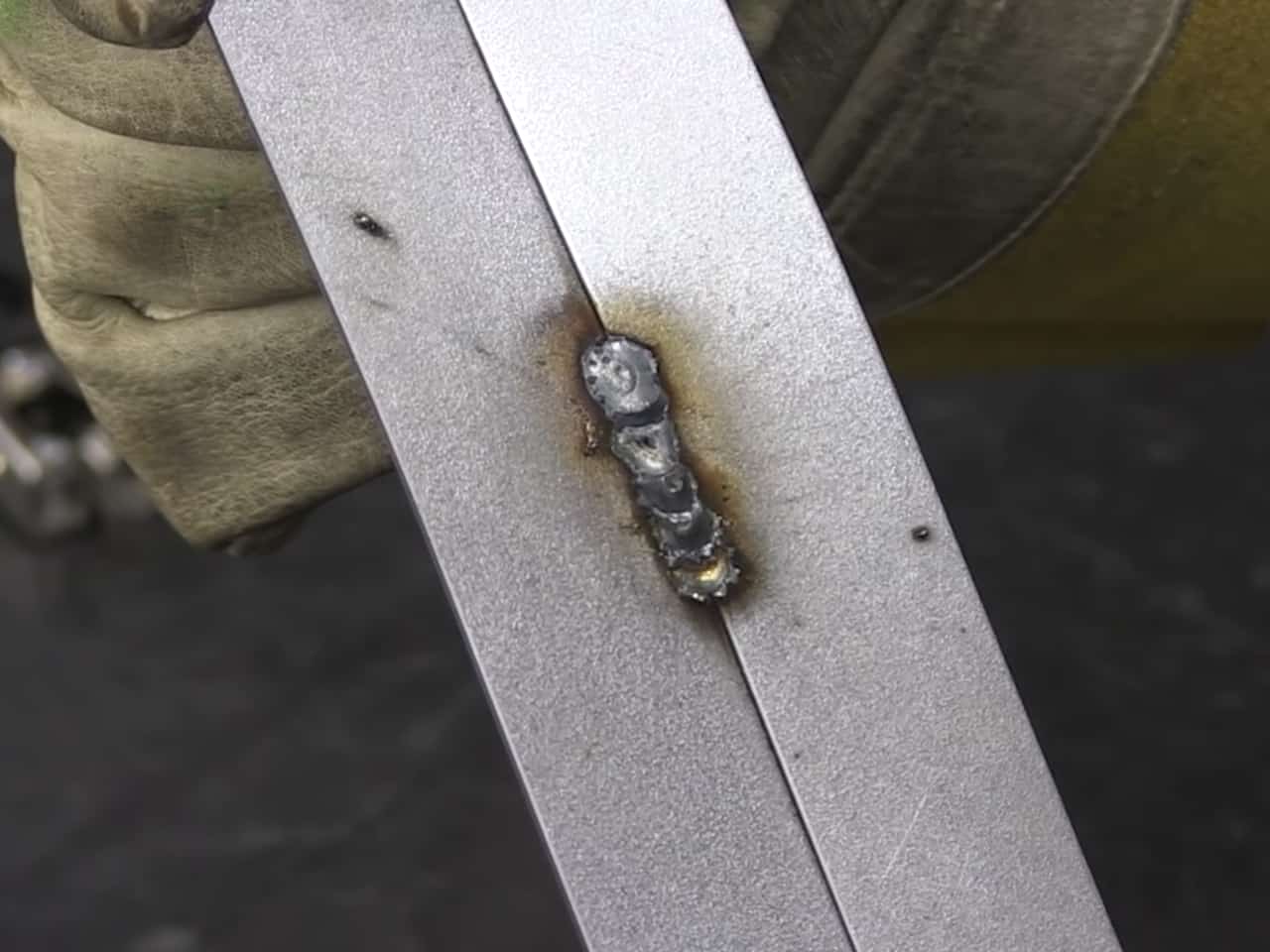
- Tack Weld First: Place tacks along the joint to keep the metal aligned.
- Weld in Short Sections: Don’t run a long bead. Alternate sides if possible.
- Let the Metal Cool: Pause between welds, or use a damp cloth to cool the area.
- Clamp Everything Securely: Use strong clamps, magnets, or even a jig.
- Plan the Weld Sequence: Work from the center outward, or alternate ends, to balance heat.
Credit: weldguru.com
Common Mistakes And How To Avoid Them
Many beginners face similar problems. Here’s how to fix them:
Burn-through
If you see holes, lower the amperage or move faster. Try a smaller rod, use stitch or spot welding, and keep the arc short.
Poor Fusion
If the weld bead sits on top without melting into the base metal, increase the amps slightly or slow down your travel speed.
Excessive Spatter
Clean the surface well and keep the arc steady. E6013 rods create less spatter than E6011 or E6010.
Warping
Use more tacks and allow time for cooling. If possible, clamp a piece of angle iron or copper along the seam for support.
Uneven Bead
Practice on scrap metal. Hold the electrode at a 10–15° angle and keep a consistent speed.
Practical Example: Welding A 1mm Steel Sheet
Imagine you want to weld two 1mm thick steel sheets edge-to-edge. Here’s a step-by-step example:
- Clean the edges with a wire brush.
- Clamp the sheets so they fit tightly together.
- Set the welder to 25–30 amps with a 1.6mm E6013 rod.
- Place tack welds every 5cm along the seam, letting each cool.
- Weld in short bursts (1–2 seconds), then move forward 2–3cm.
- Use a copper backing if you have one.
- Check for warping after each section and adjust your clamps if needed.
- After finishing, grind the weld smooth if needed for appearance.
Tips For Better Welds On Thin Metal
Welders often discover small tricks over time. Here are some that make a difference:
- Preheat the metal only if it’s very cold, but don’t overheat.
- Use a smaller electrode for better control.
- Keep your hands steady; resting your arm or using a support helps.
- Use both hands: One hand holds the rod, the other guides or supports.
- Keep a damp cloth nearby to cool the joint quickly after each weld.
- Practice on scrap pieces before welding your real project.
Electrode Types And Their Effects
Different electrodes give different results. Here’s a quick comparison:
| Electrode | Arc Start | Spatter | Best Use |
|---|---|---|---|
| E6013 | Easy | Low | Thin sheet, clean metal |
| E6011 | Medium | High | Dirty/rusty metal |
| E7014 | Easy | Low | Sheet metal, smooth bead |
| E7018 | Hard | Low | Structural, thicker metal |
For thin, clean steel, E6013 or E7014 are your best options. Avoid E7018 unless you have experience.
Safety Tips Specific To Thin Metal Welding
Safety is always important, but thin metal adds special risks:
- Metal edges are sharp: Wear gloves even when not welding.
- Fumes can be stronger: Thin metal coatings (paint, zinc) burn quickly. Weld in a well-ventilated area.
- Eye protection: Thin metal reflects light. Use a proper welding helmet and safety glasses.
- Fire risk: Thin pieces heat up fast. Clear the area of flammable items.
When To Use Arc Welding On Thin Metal
Arc welding is not always the first choice, but it’s useful when:
- You don’t have a MIG or TIG welder.
- The job is outdoors (wind can blow away shielding gas in MIG/TIG).
- You need a strong, portable setup.
- The metal is not clean enough for other processes.
It’s not ideal for aluminum or very thin stainless steel, but works well on carbon steel sheets.

Credit: www.reddit.com
Comparison: Arc Welding Vs Mig Vs Tig For Thin Metal
Here’s a side-by-side look at the pros and cons:
| Process | Setup Cost | Skill Needed | Best For | Common Issues |
|---|---|---|---|---|
| Arc Welding | Low | Medium | Repairs, outdoors | Burn-through, spatter |
| MIG Welding | Medium | Easy | Auto body, fast work | Wire feed problems |
| TIG Welding | High | High | Precision, thin aluminum | Slow, needs skill |
Arc welding is a good balance for many hobbyists and repair shops. It is less expensive and works in more conditions.
Maintenance And Care After Welding
Once you finish welding, good maintenance keeps your work strong:
- Grind and clean the weld if needed for appearance.
- Paint or coat the joint to prevent rust.
- Check for cracks: Tap the weld with a hammer. A sharp sound means solid fusion; a dull sound may mean a weak spot.
- Store your electrodes in a dry place to avoid moisture.
Non-obvious Insights For Beginners
Some details often go unnoticed:
- Electrode angle matters: A small change in angle (10–15° from vertical) can reduce spatter and help penetration.
- Arc length is critical: Most beginners hold the rod too far from the metal. A long arc overheats the metal and makes the weld rough. Keep the arc as short as possible.
- Cooling speed: Too fast cooling (using water spray) can make the weld brittle. Let the metal cool in air when possible, unless warping is a big risk.
Practical Troubleshooting Guide
If your welds are not working, try these fixes:
- Weld bead too high: Lower your travel speed or increase amperage slightly.
- Weld bead too flat or sunken: Lower amperage or move a bit slower.
- Arc keeps sticking: Increase amperage slightly, or check the ground clamp.
- Metal warping badly: Use more tacks, shorter welds, and clamp tightly.
Real-world Examples
- Car body repair: Many hobbyists repair rust holes with arc welding. They use copper backing and E6013 rods for best results.
- Ductwork: Welders often use spot welds for HVAC metal, keeping beads short and clean.
- Furniture: Thin legs or frames need careful control—small rods and low amps prevent burn-through.
Resources For Further Learning
If you want to see videos or advanced techniques, the Arc Welding Wikipedia page covers many types of welding and includes helpful diagrams.
Frequently Asked Questions
How Thin Can I Weld With An Arc Welder?
You can weld steel as thin as 1mm with careful technique, low amperage, and small electrodes. Some experts manage 0. 8mm, but it is much harder and requires practice.
What Size Electrode Is Best For Thin Metal?
Use 1. 6mm (1/16 inch) or 2. 0mm (5/64 inch) electrodes. Thinner rods help control heat and reduce burn-through risk.
Can I Weld Aluminum Or Stainless Steel With Arc Welding?
Arc welding is not ideal for aluminum, especially thin sheets. Stainless steel is possible, but MIG or TIG welding gives better results on thin pieces.
Why Does My Weld Keep Burning Holes?
Too much amperage, large electrodes, or moving too slowly can cause burn-through. Lower the amps, use smaller rods, and weld in short bursts or spots.
Is It Safe To Weld Thin Metal Indoors?
Yes, but always ventilate the area well. Thin metal often has coatings that produce fumes. Use fans or open windows for safety.
Working with thin metal using an arc welder is a skill you can learn with practice. Focus on clean preparation, careful setup, and steady technique. Start with small projects and scrap pieces. Soon, you’ll make neat, strong joints with less trouble.
Always keep safety first and check your work for quality. With patience, even thin metal welding becomes a reliable part of your skill set.