Disclosure: This post contains affiliate links and I will be compensated if you make a purchase after clicking through my links. Learn More
Why Is My Arc Sputtering Or Sounding Unstable?
If your welding arc sputters or sounds unstable, the root cause usually links to issues with power supply, gas flow, electrode condition, or workpiece contamination. Fixing these problems improves arc stability, weld quality, and overall safety during welding.
What Does Arc Sputtering Or Unstable Sound Mean?
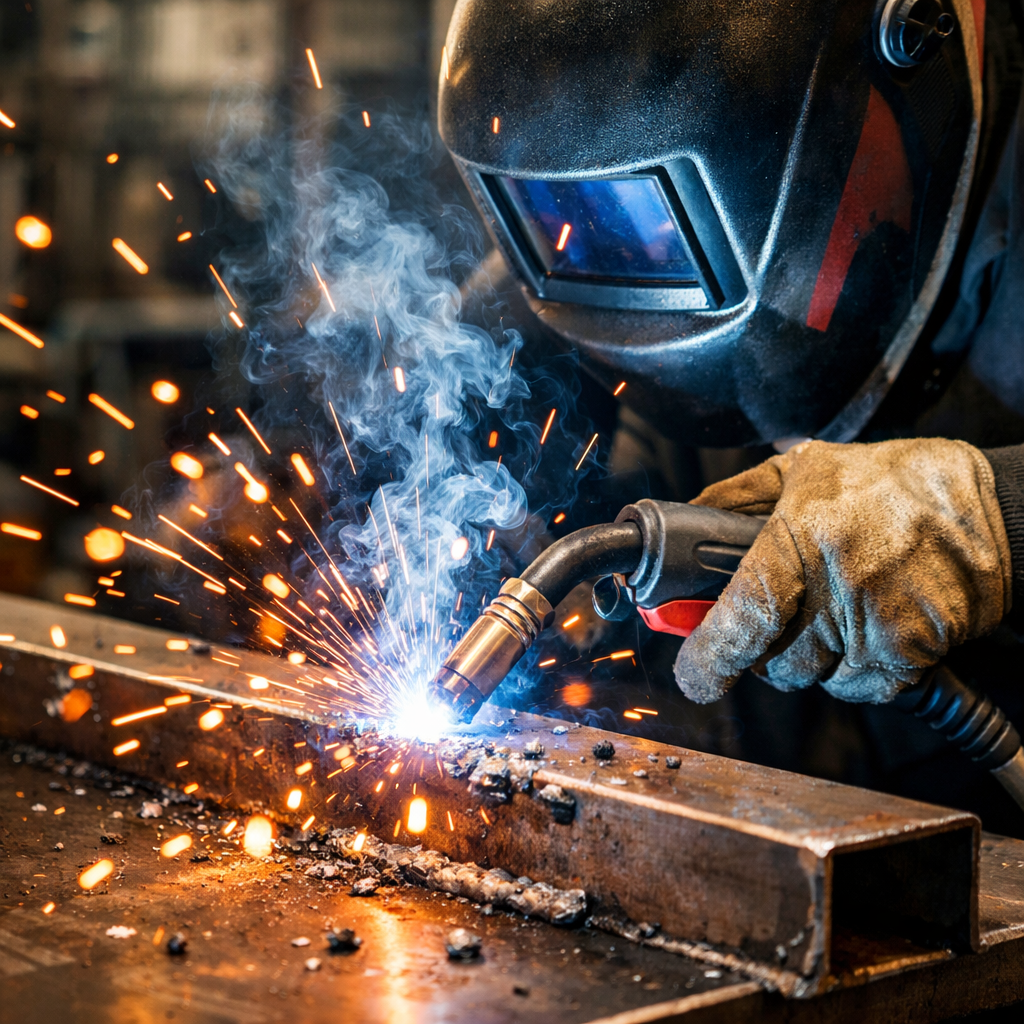
Arc sputtering means the arc makes popping, crackling, or hissing sounds instead of a steady buzzing. You may see the arc flicker or jump, and the weld bead might look uneven or porous. This instability signals something is wrong with your welding setup, technique, or materials.
Ignoring these signs can lead to weak welds, more spatter, and costly rework.
Most welders expect a constant, smooth arc. When you hear irregular sounds or see erratic arc behavior, it’s a warning to stop and troubleshoot. Understanding the causes helps prevent poor welds, wasted materials, and safety hazards.
Key Causes Of Arc Sputtering Or Unstable Sound
Welding arc instability can come from many sources. Here are the most common reasons:
1. Incorrect Power Settings
Every welding process—MIG, TIG, Stick—needs the right voltage and amperage. If your settings are too low, the arc won’t stay lit. Too high, and it may roar or pop. Double-check your machine’s manual, and set your parameters based on material thickness and wire size.
For example, welding 1/8” mild steel with MIG usually takes 18–20 volts and 180–200 amps. If you use only 12 volts, the arc will sputter and struggle to melt the base metal. Always match your settings to your job.
2. Poor Electrical Connections
Loose or corroded connections at the ground clamp, electrode holder, or cable ends disrupt the electrical flow. This interruption causes the arc to flicker or sputter. Even a small amount of rust or paint under the ground clamp can cause major problems.
Clean all contact points before welding. Tighten cable lugs and clamp jaws. Replace damaged cables or connectors right away. Reliable electrical flow is essential for a stable arc.
3. Dirty Or Contaminated Workpiece
If the metal has rust, oil, paint, or dirt, the arc can’t stay stable. Contamination blocks the electrical path and creates uneven heating. The arc may wander, pop, or burn irregularly. Welds done on dirty surfaces often show porosity and lack fusion.
Always clean your work area with a wire brush or grinder. Remove oils with a solvent. Even a thin layer of mill scale can hurt arc stability, especially in TIG welding.
4. Faulty Or Dirty Electrode/wire
Old, wet, or oily electrodes cause sputtering. In MIG or FCAW, rusty or kinked wire can jam the feeder, creating a start-stop arc. For Stick welding, damp rods lose their flux coating properties, making the arc unstable.
Store electrodes and wire spools in a dry place. Use fresh consumables. Inspect and clean your wire feeder and gun liner regularly.
5. Gas Flow Problems
Shielding gas protects the arc from air. Too little gas means oxygen enters the weld, causing spatter and instability. Too much gas disturbs the arc and pulls in air. Leaks or wrong gas mixtures also create trouble.
For MIG, a flow rate of 20–30 cubic feet per hour (CFH) is typical. TIG may use 15–25 CFH. Listen for hissing sounds or bubbles. Check hoses, regulators, and fittings for leaks.
6. Wrong Type Or Size Of Electrode
Using the wrong electrode for your process or material makes the arc unpredictable. For example, E6013 rods give a smooth arc on clean steel, but sputter badly on rusty metal. Thin wire on thick plate can’t carry enough current.
Choose electrodes and wires that match your base metal and welding position. Stick to recommended sizes for your amperage range.
7. Bad Work Lead/grounding
Poor grounding causes uneven current flow. A loose, dirty, or undersized ground clamp will make the arc sputter, especially at the start of the weld. You might even see sparks or feel heat at the clamp.
Use a ground clamp rated for your amperage. Attach it to clean, bare metal as close to your weld as possible.
8. Faulty Or Worn-out Equipment
Welding machines, torches, and cables wear out over time. Inside the machine, relays or contacts can fail. In the torch, liners, tips, or nozzles can get clogged or burned out, choking gas flow and electrical contact.
Regular maintenance and inspection catch these issues before they cause arc instability. Replace worn parts promptly and keep your gear clean.
9. Wrong Polarity
Different welding processes and electrodes require specific polarity. For example, most MIG welding uses DC Electrode Positive (DCEP), while some flux-cored wires need DC Electrode Negative (DCEN). Wrong polarity creates a weak, sputtering arc and poor weld shape.
Check your machine’s settings and your electrode’s recommendations before you start.
10. Technique Problems
Arc length, torch angle, travel speed, and wire stick-out all affect stability. Holding the torch too far away, moving too fast, or angling it incorrectly disrupts the arc. If your wire stick-out is too long in MIG, voltage drops and the arc becomes unstable.
Practice keeping a steady hand, correct arc length, and smooth motion.
How Do You Identify Arc Sputtering In Different Welding Processes?
Arc instability shows up differently in MIG, TIG, and Stick welding. Understanding these signs helps you diagnose and fix the problem faster.
Mig Welding
A healthy MIG arc sounds like bacon frying. Sputtering, popping, or irregular hissing means trouble. The bead may look rough or have excessive spatter. Common causes include low voltage, poor wire feed, or gas issues.
Tig Welding
The TIG arc should be a quiet, steady hum. Sputtering means the tungsten is contaminated, gas flow is off, or the workpiece is dirty. You might see black marks or craters on the weld.
Stick Welding
Stick arcs naturally make some noise, but constant popping or flame-outs are a sign of trouble. Damp rods, poor grounding, or wrong polarity often cause these issues.
How To Fix Arc Sputtering And Achieve A Stable Arc
Solving arc sputtering is usually straightforward if you follow a systematic checklist. Here’s a step-by-step approach:
1. Inspect And Clean All Connections
Start with the electrical path. Remove your ground clamp and electrode holder. Clean contact surfaces with a wire brush or file. Tighten all connections. Check for loose or frayed wires.
2. Check Power Settings And Polarity
Set your voltage and amperage according to your machine’s chart or manual. Confirm you’re using the correct polarity for your process and electrode. Even experienced welders sometimes overlook this step.
3. Clean The Workpiece
Use a grinder or wire brush to expose clean metal. Wipe off oil or grease with a solvent. Pay extra attention to edges and tight spots where contamination hides.
4. Replace Or Dry Electrodes And Wire
Switch to a fresh electrode or wire spool. If you suspect moisture, dry rods in an oven at 250°F for a few hours. For MIG, check the wire liner and replace if clogged.
5. Adjust Gas Flow And Mixture
Use a flowmeter to set the correct gas rate. Listen for leaks or excessive hissing. For outdoor work, use wind shields or a higher flow rate to protect the arc.
6. Improve Your Technique
Keep a consistent arc length—about 1/8” for Stick, 3/8” wire stick-out for MIG. Maintain a steady hand and even travel speed. Practice helps build muscle memory.
7. Service Or Replace Faulty Equipment
If you’ve tried everything and the arc still sputters, check your machine and torch for worn or damaged parts. Replace tips, nozzles, or liners as needed. If the machine is old, have it serviced by a professional.
Data Table: Common Causes And Fixes For Arc Sputtering
Here’s a quick reference to match symptoms with solutions.
| Symptom | Likely Cause | Recommended Fix |
|---|---|---|
| Arc pops, crackles | Low voltage, dirty electrode | Increase voltage, use fresh electrode |
| Arc flickers, goes out | Poor ground or loose cable | Clean and tighten connections |
| Excessive spatter | Wrong gas flow or mixture | Adjust gas, check for leaks |
| Porous weld bead | Contaminated workpiece | Clean base metal thoroughly |
| Erratic arc in MIG | Wire feed issues | Check drive rolls, replace liner |
How Different Gases And Mixtures Affect Arc Stability
Shielding gas choice directly impacts arc sound and stability. For MIG welding, 100% CO2 produces a rougher, more aggressive arc, while 75% Argon / 25% CO2 gives a smoother, quieter arc with less spatter. TIG welding always uses pure argon for a calm, steady arc.
Gas Comparison Table For Mig Welding
| Gas Type | Arc Sound | Spatter Level | Best For |
|---|---|---|---|
| 100% CO2 | Loud, harsh | High | Thick steel, cost-saving |
| 75% Argon / 25% CO2 | Smooth, soft | Low | General steel fabrication |
| 90% Argon / 10% CO2 | Very smooth | Very low | Thin sheet metal |
| 100% Argon | Very quiet | Minimal | Aluminum |
Choosing the right gas for your process is one of the quickest ways to improve arc stability and reduce sputtering.
How Wire Feed Speed And Voltage Affect Arc Sound
In MIG welding, wire feed speed (WFS) and voltage work together. If the WFS is too high for your voltage, the wire pushes into the puddle and causes the arc to stutter. If WFS is too low, the arc becomes unstable and the weld bead thins out.
Example Settings For 0.035” Mig Wire On Mild Steel
| Voltage (V) | Wire Feed Speed (IPM) | Expected Arc Quality |
|---|---|---|
| 18 | 180 | Smooth, minimal spatter |
| 16 | 230 | Sputtering, excessive spatter |
| 20 | 140 | Thin bead, unstable arc |
Matching WFS and voltage to your wire size and material thickness ensures a stable, predictable arc.
Non-obvious Insights That Improve Arc Stability
Most beginners focus on obvious fixes, but there are deeper tricks the pros use:
- Keep cables untangled and straight. Coiled or kinked cables restrict current flow. Lay them out flat, and avoid wrapping them tightly around your machine.
- Preheat thick or cold workpieces. Cold steel pulls heat from the arc, making it unstable. A quick preheat with a torch helps maintain a steady arc, especially for heavy plate or in winter.
- Watch humidity. High moisture in the air or in your consumables (like stick electrodes) can cause arc instability and porosity. Store rods and wire in dry, sealed containers.
- Check for magnetic arc blow. When welding with DC, strong magnetic fields in the workpiece can deflect the arc, causing sputtering. Change your ground clamp location or switch to AC if you suspect this problem.
- Replace worn contact tips often. A worn tip in MIG welding causes poor wire-to-tip contact, leading to arc instability. Tips are cheap; change them regularly for best results.

Credit: www.vem-co.com
Safety Risks Of Welding With A Sputtering Arc
Working with an unstable arc isn’t just frustrating—it’s dangerous.
- Increased spatter raises the risk of burns and fire.
- Porous or weak welds can fail under stress, leading to accidents.
- Electrical shorts from loose connections may damage your equipment or cause electric shocks.
Always stop and fix arc sputtering before continuing. Safe welding is quality welding.
How To Prevent Arc Sputtering Before It Starts
The best way to handle arc instability is to prevent it:
- Store electrodes and wires in dry, sealed containers.
- Clean your work area and materials before welding.
- Set up your machine with the right parameters for your job.
- Inspect and replace worn parts on your torch, gun, and cables.
- Use the correct shielding gas and flow rate.
- Practice good technique and hand control.
By building these habits, you’ll avoid 90% of arc sputtering problems before they even start.
Real-world Example: Diagnosing Arc Sputtering
A fabricator working on a steel trailer notices constant arc popping and lots of spatter. He checks his MIG machine—settings are correct, and the wire is fresh. After inspecting further, he finds the ground clamp is attached to a painted surface, not bare metal.
Moving the clamp to a clean spot fixes the arc instantly.
Another welder sees black marks and unstable arcs in TIG welding. Cleaning the tungsten electrode and adjusting the gas flow solves the problem right away.
These cases show that small details—like clean contact points and correct gas—make a huge difference.
When Should You Call For Professional Help?
Most arc sputtering issues are easy to fix with basic troubleshooting. But if you:
- Hear loud popping no matter what you try
- See electrical sparks or smoke from your machine
- Cannot achieve a stable arc after checking all settings and connections
…it’s time to call a professional or consult your welder’s manual. Internal machine faults, like blown relays or damaged boards, need trained technicians.
Credit: hsseworld.com
How Arc Stability Impacts Weld Quality And Cost
Unstable arcs lead to:
- Poor weld penetration
- Excessive spatter
- Porous welds
- More grinding and cleanup
- Increased material waste
These issues cost time and money. Stable arcs mean faster, cleaner work, better weld strength, and less rework. For production shops, this directly improves profits and customer satisfaction.
Trusted Resources For More Information
For deeper technical guidance on arc stability and troubleshooting, the American Welding Society (AWS) provides best practices and troubleshooting guides. Their resources help both beginners and advanced welders. You can access their materials at American Welding Society.
Frequently Asked Questions
Why Does My Welding Arc Make A Popping Sound?
A popping sound usually means low voltage, dirty electrodes, or poor ground connection. Check your power settings, clean all connections, and use fresh welding rods or wire to fix the issue.
Can Wrong Shielding Gas Cause Arc Sputtering?
Yes. Using the wrong gas or incorrect flow rate lets air contaminate the arc, causing sputtering and poor welds. Always select the right shielding gas for your process and set the flow rate as recommended.
What Happens If I Ignore Arc Instability?
Ignoring arc instability leads to weak, porous, or cracked welds. You may also create safety hazards and need costly repairs. Always stop and fix the cause before continuing your welding project.
How Do I Know If My Electrode Is The Problem?
If you use old, damp, or oily electrodes, the arc will sputter and the bead will look rough. Try a new, dry electrode or fresh wire to see if the arc becomes stable and smooth.
Does Weather Affect Arc Stability?
Yes, especially humidity. High moisture can make electrodes or wire damp, causing instability and porosity. Wind can blow away shielding gas, leading to arc sputtering. Always store consumables dry and shield your weld from wind.
Final Thoughts
A stable, smooth arc is the foundation of quality welding. If your arc sputters or sounds unstable, you’re being warned about a problem—don’t ignore it. Check your equipment, materials, settings, and technique. Fix small issues before they become big repairs.
By following these expert steps, you’ll weld safer, faster, and with results you can trust.
Credit: oceanplayer.com