Disclosure: This post contains affiliate links and I will be compensated if you make a purchase after clicking through my links. Learn More
A 120V welder usually needs a 20-amp breaker for safe, consistent operation. But the right breaker size depends on your welder’s input amperage and duty cycle. Always check the welder’s manual and local electrical codes before installation.
Why Breaker Size Matters For Your 120v Welder
Choosing the correct breaker size is not just about following rules. It’s a key step for safe welding, protecting your shop, tools, and yourself. If you pick a breaker that’s too small, the circuit trips all the time and interrupts your work. Too large, and you risk dangerous overheating or fire.
Many beginners think, “Just plug it in and weld. ” But this shortcut can cost you. Electrical fires, damaged welders, and even voided warranties are common with the wrong breaker. Reliable power means better welds, longer tool life, and fewer headaches.
Understanding 120v Welder Electrical Requirements
Every 120V welder has its own input current rating. You’ll find this information on the nameplate or in the manual. Most common home and hobby welders draw between 15 and 20 amps at full power. But there are exceptions.
The duty cycle also affects your breaker choice. This is how long the welder can run at a set amperage in a 10-minute period before it needs to cool. For example, a 20% duty cycle at 90 amps means you can weld for 2 minutes, then rest for 8 minutes.
Many small welders run on a standard household outlet, but not all outlets and breakers can handle continuous welding loads. Running a welder on an underrated breaker is a recipe for constant tripping and frustration.
How To Find The Correct Breaker Size For A 120v Welder
Selecting the proper breaker isn’t guesswork. Here’s a step-by-step approach that works for any 120V welder:
- Check the input current (in amps) on your welder’s label.
- If the input current is 15 amps or less, a 20-amp breaker is standard.
- For input currents above 15 amps (up to 20 amps), a 30-amp breaker may be required, but only if the wiring and outlet support it.
- Always use the next standard breaker size above your welder’s input current, per the National Electrical Code (NEC).
- Use wire gauge that matches the breaker size (usually 12 AWG for 20 amps, 10 AWG for 30 amps).
- Never install a larger breaker than your wires and outlet are rated for.
Example: If your welder’s input is 16 amps, use a 20-amp breaker with 12 AWG wire. If it’s 22 amps, a 30-amp breaker with 10 AWG wire is safer, but only if the plug and outlet support 30 amps.
Common Breaker Sizes For 120v Welders
Most 120V welders for home or light workshop use fall into one of three categories:
- 15-amp input: Works on a 20-amp breaker
- 16–20-amp input: Needs a 20-amp breaker (minimum)
- 21–24-amp input: Needs a 30-amp breaker (if wiring and outlet allow)
| Welder Input Amps | Recommended Breaker | Wire Gauge | Typical Outlet |
|---|---|---|---|
| Up to 15A | 20A | 12 AWG | Standard 5-20R |
| 16–20A | 20A | 12 AWG | Standard 5-20R |
| 21–24A | 30A | 10 AWG | T-Blade or 5-30R |
Don’t just match the plug type. Always check your specific welder’s current needs.
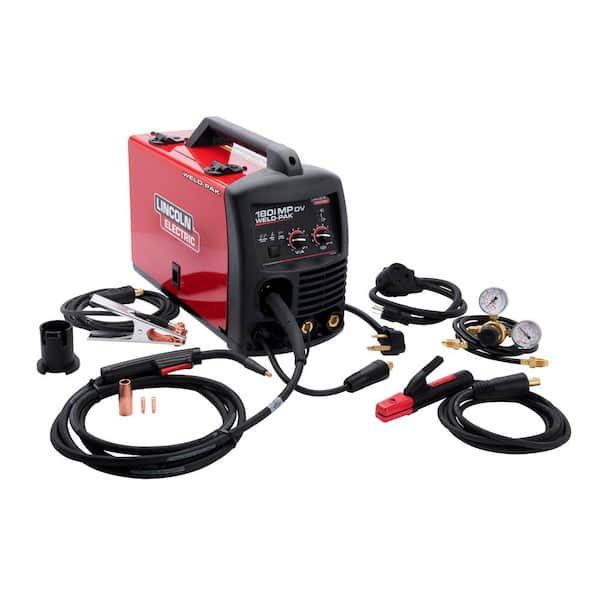
Credit: www.homedepot.com
Examples Of Popular 120v Welders And Breaker Size
Let’s look at real-world examples of popular 120V welders and the breaker sizes they require.
- Lincoln Electric Handy MIG: Input – 20A, needs a 20-amp breaker.
- Hobart Handler 140: Input – 20A, works with a 20-amp breaker, 12 AWG wire.
- Forney Easy Weld 140 FC-i: Input – 20A, 20-amp breaker.
- Miller Millermatic 141: Input – 20A, 20-amp breaker.
- Chicago Electric 90 Amp Flux Core: Input – 20A, 20-amp breaker.
If your welder is not on this list, check the manual or label for the input amps.
Why Not Use A Standard 15-amp Breaker?
Most wall outlets in homes have a 15-amp breaker. This works for lights and small appliances, not welders. Welding draws a constant, high load. A 15-amp breaker trips often, overheats, and can even cause wiring damage.
Welders need a dedicated circuit with the right breaker to prevent nuisance trips and safety risks. Using a 20-amp breaker for a 15-amp welder adds a safety margin for startup surges.
The Role Of Duty Cycle In Breaker Sizing
Many DIY welders miss the importance of duty cycle. If you weld continuously, the circuit draws more power and heats up faster. A welder with a low duty cycle (like 20%) should never be run longer than rated, or you risk tripping the breaker.
Some welders “cheat” by listing a lower input amp at a short duty cycle. If you push the welder at its max setting for longer welds, you’ll trip the breaker or overheat the wiring.
Always size your breaker for the maximum input amps at the highest setting, not just the average.
Wire Gauge And Outlet Type: Why They Matter
Breaker size is only part of the equation. The wire gauge and outlet type must match. Using undersized wire with a large breaker risks melting and fire.
- For a 20-amp breaker, use 12 AWG wire minimum.
- For a 30-amp breaker, use 10 AWG wire minimum.
- Do not use extension cords unless they are heavy-duty and short.
The outlet must match the breaker and plug. Most 20-amp welders use a NEMA 5-20R outlet. Higher-amp welders may need a special T-blade or 5-30R outlet.
Single-pole Vs. Double-pole Breakers For 120v Welders
A single-pole breaker is used for all 120V welders. Double-pole breakers are for 240V welders. Don’t confuse the two. Installing a double-pole breaker for a 120V welder will damage the tool and create a shock hazard.
Gfci And Afci Protection: Do You Need Them?
GFCI (Ground Fault Circuit Interrupter) and AFCI (Arc Fault Circuit Interrupter) breakers add safety. GFCI is often required in garages and basements by code. AFCI protects against wiring faults that can cause fires.
But GFCI breakers can trip from welding current. If your code requires GFCI, choose a breaker rated for “non-linear loads. ” Otherwise, use a standard breaker for fewer nuisance trips.
Installing The Breaker And Outlet: Key Steps And Safety Tips
Wiring a circuit for a 120V welder is not a basic DIY job. If you’re not experienced, hire a licensed electrician. Here are the standard steps:
- Turn off main power at the panel.
- Install the correct breaker (20A or 30A, as needed).
- Run the right wire gauge from panel to outlet.
- Use a matching receptacle (e.g., NEMA 5-20R for 20A).
- Label the breaker and outlet “Welder Only.”
- Test the circuit before plugging in the welder.
Never “upsize” the breaker to stop trips. Fix the real problem—either wiring, breaker, or welder overload.
Breaker Sizing For Different Welding Applications
Different uses need different setups. Here’s how breaker sizing changes for common 120V welding jobs:
Home And Hobby Welding
Most hobby welders run under 20 amps input. A 20-amp breaker, 12 AWG wire, and a dedicated outlet work well for car repairs, art, and general projects.
Small Business Or Light Fabrication
If you weld daily or use higher power settings, a 20-amp breaker may trip. Step up to a 30-amp breaker and 10 AWG wire if your welder supports it. This setup handles longer welds and higher duty cycles.
Mobile Welding Setups
If you use a generator, match the generator’s output to your welder’s input and breaker size. Most small 120V welders need at least 3000 running watts. Use only heavy-duty cords and plugs rated for the breaker size.
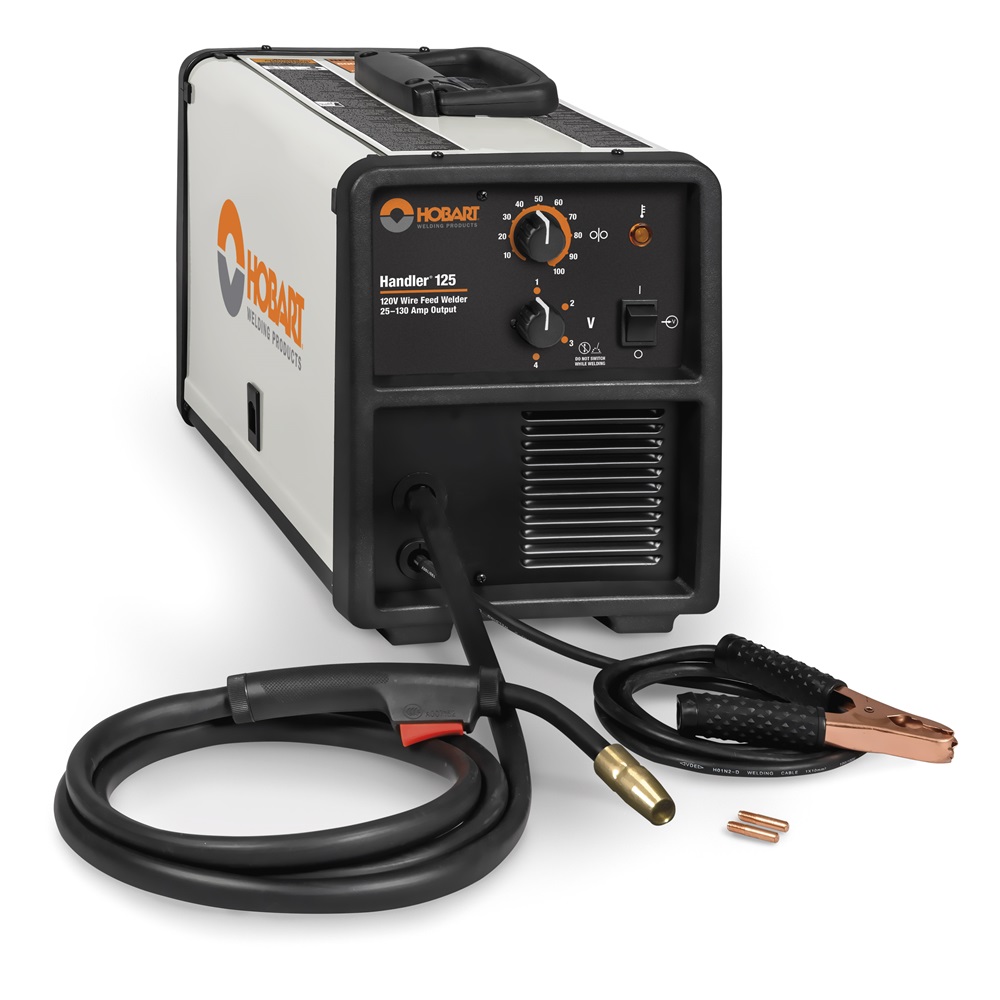
Credit: www.hobartwelders.com
Common Mistakes People Make When Choosing Breaker Size
Even experienced welders make these errors:
- Using a 15-amp breaker because “it’s already there”
- Ignoring wire gauge—using old 14 AWG wire with a 20-amp breaker
- Failing to check the welder’s actual input amps
- Not using a dedicated circuit—sharing with other tools or outlets
- Installing a breaker larger than the wiring allows
- Choosing a GFCI breaker, then blaming the welder for nuisance trips
- Using long, light-duty extension cords
Each mistake leads to breaker trips, poor weld quality, or fire risk. Take a few extra minutes to do it right.
Upgrading Your Electrical Panel For Welding
If your home’s panel is full or outdated, you may need to upgrade to add a dedicated circuit. Modern panels make it easy to add a 20- or 30-amp breaker. If you have an old fuse box, consider a full replacement for safety.
A panel upgrade is a good investment for anyone serious about welding or shop tools. It adds value to your home and peace of mind.
Nec Code And Local Requirements
The National Electrical Code (NEC) gives clear rules for breaker sizing, wire gauge, and outlets. But your local code may be stricter. Always check with your city or county inspector before wiring.
- NEC requires the breaker to be sized at 125% of the welder’s full-load input amps.
- Wire gauge must match or exceed breaker rating.
- GFCI may be required in garages, basements, or outdoor shops.
Following code isn’t just about passing inspection—it keeps your insurance valid and your shop safe.
For more on national code, check the NFPA’s official NEC resource.
What To Do If Your Breaker Keeps Tripping
If your breaker trips, don’t just reset it. Find out why:
- Check for overloaded circuit—are you using other tools on the same outlet?
- Is your wire gauge too small?
- Is the breaker worn out or faulty?
- Are you exceeding the welder’s duty cycle?
- Is there a short circuit or wiring fault?
If you can’t find the cause, call an electrician before using the welder again.
Comparing Breaker, Wire, And Outlet Combinations
Here’s a quick comparison to show what works together for 120V welders:
| Breaker Size | Wire Gauge | Outlet Type | Welder Input Amps |
|---|---|---|---|
| 15A | 14 AWG | 5-15R | Up to 12A |
| 20A | 12 AWG | 5-20R | 13–20A |
| 30A | 10 AWG | 5-30R | 21–24A |
Never mix and match components. The weakest part sets the safe limit.
What If Your Welder Says “120/240v”?
Some welders are dual voltage. They can run on 120V or 240V, depending on the plug and wiring. These machines often perform better on 240V, but you can use 120V if that’s all you have.
Check the input amps for 120V mode. Often, it’s close to 20A, so a 20-amp breaker works. For 240V operation, a double-pole breaker is required.
Dual-voltage welders give flexibility, but always wire the circuit for the voltage you use.
How Breaker Size Affects Weld Quality
Breaker size doesn’t just protect your wiring. It also affects your welding. If the breaker is too small and trips often, your welds will be inconsistent. Power interruptions cause cold starts, poor penetration, and spatter.
A properly sized breaker means you can weld smoothly without worrying about losing power mid-bead.
Real-world Scenarios: Choosing The Right Breaker
Scenario 1: Garage Hobbyist
You have a Forney Easy Weld 140. Input amps: 20A. You should install a dedicated 20-amp breaker with 12 AWG wire and a NEMA 5-20R outlet.
Scenario 2: Light Fabrication Shop
Your Miller welder draws 22A at max output. Upgrade to a 30-amp breaker, 10 AWG wire, and a 5-30R outlet.
Scenario 3: Vintage Home
Your panel only has 15-amp breakers and old 14 AWG wire. Do not use a 120V welder here. Upgrade wiring and breaker before welding.
How To Tell If Your Circuit Is Safe For Welding
- Use a circuit tester to check voltage at the outlet.
- Inspect the breaker’s label—don’t guess amperage.
- Verify the wire gauge by opening the outlet box.
- Make sure nothing else is on the circuit.
- Plug in the welder and check for warm wires or breakers after use.
If in doubt, call a qualified electrician.
Tips For Safe And Reliable Welding Power
- Always use a dedicated circuit for your welder.
- Upgrade wiring and outlet if your welder needs more than 15 amps.
- Never use household extension cords for welding.
- Test the circuit before each session.
- Keep your panel and outlets in good repair.
A small investment in proper wiring pays off with years of safe, trouble-free welding.

Credit: www.homedepot.com
Frequently Asked Questions
What Size Breaker Do I Need For A 120v Welder?
Most 120V welders need a 20-amp breaker with 12 AWG wire and a dedicated outlet. Always check your specific welder’s input amps before choosing a breaker.
Can I Use A 15-amp Breaker For My 120v Welder?
A 15-amp breaker is usually too small for welding. Most welders draw more power and will trip a 15-amp breaker. Use a 20-amp breaker for safe, continuous operation.
Do I Need A Dedicated Circuit For My Welder?
Yes, a dedicated circuit prevents breaker trips and reduces fire risk. Sharing a circuit with other tools or outlets can overload wiring and cause safety problems.
What Happens If I Use A Larger Breaker Than Recommended?
Using an oversized breaker is dangerous. It can overheat wires and outlets, increasing fire risk. Always match breaker size to wire gauge and welder requirements.
Can I Run A 120v Welder On An Extension Cord?
It’s best to avoid extension cords. If needed, use a short, heavy-duty cord (12 AWG or thicker) rated for 20 amps. Long or light-duty cords cause voltage drop and poor welds.
Choosing the right breaker size for your 120V welder is simple but critical. Use the correct breaker, wire, and outlet for your specific welder. Don’t cut corners—safe wiring means better welds, longer tool life, and peace of mind every time you strike an arc.