Disclosure: This post contains affiliate links and I will be compensated if you make a purchase after clicking through my links. Learn More
Plasma Arc Welding (PAW) and Tungsten Inert Gas (TIG) welding are two advanced methods for joining metals. Both offer strong, clean welds and are popular for critical projects. But their differences can confuse many—even those who work with metal regularly.
If you want to pick the best process for your needs, you must understand what sets them apart.
This article looks closely at plasma arc welding vs TIG. You will learn how each process works, what tools they use, their strengths and weaknesses, and how they compare in real-world jobs. We also discuss safety, skill level, costs, and future trends. Whether you are new to welding or want to improve your choices, you will find clear answers and practical advice here.
What Is Plasma Arc Welding?
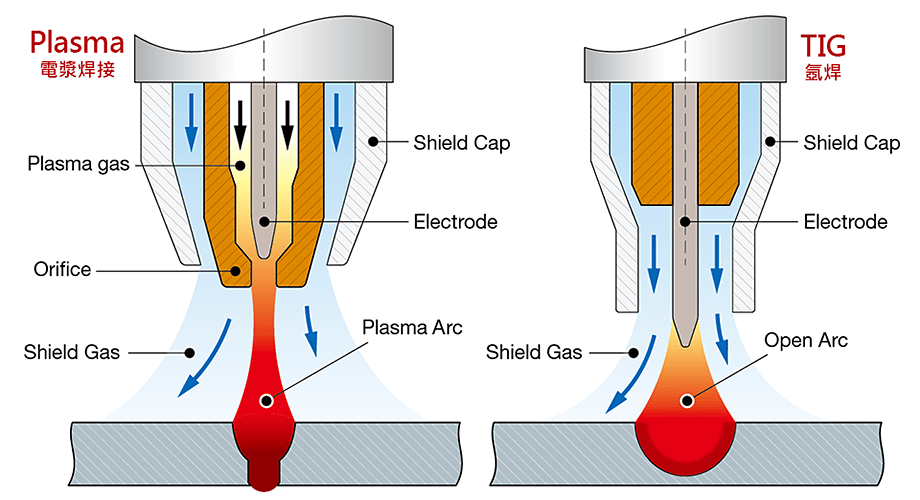
Plasma Arc Welding (PAW) is a high-precision welding process. It uses a plasma torch to create an electric arc between an electrode (usually tungsten) and the workpiece. The arc ionizes a gas (often argon), turning it into plasma—a hot, electrically charged gas. This plasma melts the metal and forms the weld.
The process is similar to TIG welding, but there are key differences. In PAW, the plasma arc is more focused and hotter. The torch design allows for a smaller, more precise weld. PAW works best for thin metals and applications that require fine detail.
How Plasma Arc Welding Works
- The torch sends an electric arc through a small opening (nozzle).
- Argon or another gas flows around the arc, turning into plasma.
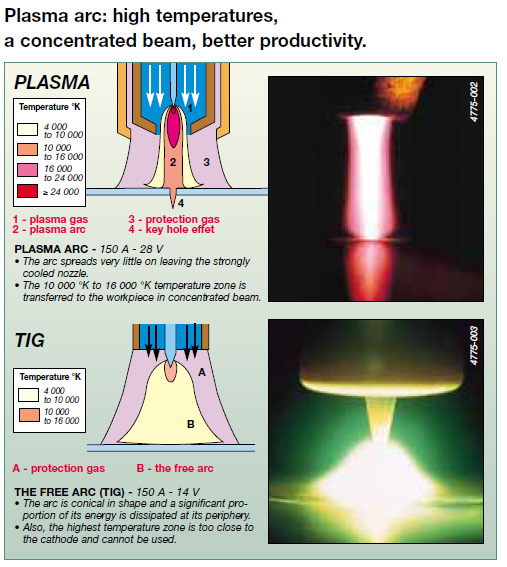
- The plasma reaches temperatures up to 28,000°C.
- The hot plasma melts the metal edges.
- The welder may add filler material for stronger joints.
There are two main methods:
- Transferred arc: The arc passes from the electrode to the workpiece. It is hotter and used for welding.
- Non-transferred arc: The arc stays between the electrode and the nozzle. It is used for cutting or spot welding.
Key Features Of Plasma Arc Welding
- Very high temperature
- Precise, narrow welds
- Low distortion in the metal
- Good for thin or delicate materials
Typical Uses
- Aerospace parts
- Medical equipment
- Precision tools
- Thin stainless steel and titanium
What Is Tig Welding?
TIG stands for Tungsten Inert Gas welding. Some people call it Gas Tungsten Arc Welding (GTAW). In TIG, a tungsten electrode creates an electric arc. An inert gas (often argon) shields the weld from air. The welder can use a filler rod or melt the base metal alone.
TIG welding is known for clean, strong, and high-quality welds. It does not create much smoke or spatter. Welders use foot pedals or hand controls to adjust the heat. This gives them great control over the weld.
How Tig Welding Works
- The welder holds a torch with a tungsten electrode.
- An electric arc forms between the electrode and the workpiece.
- Argon or helium gas flows around the weld area.
- The metal melts and joins together.
- The welder adds filler rod by hand (if needed).
Key Features Of Tig Welding
- Very clean welds, with little spatter
- Works on many metals (steel, aluminum, copper, etc.)
- Fine control over the welding process
- Requires high skill
Typical Uses
- Bike frames
- Food industry equipment
- Automotive and race car parts
- Art and custom metalwork
Key Differences Between Plasma Arc Welding And Tig
Both PAW and TIG use a tungsten electrode and shielding gas. But their differences matter for real jobs. The following comparison covers all main points.
Process And Equipment
PAW uses a plasma torch with a small nozzle. It creates a narrow, focused arc. This needs special equipment with careful gas control and a pilot arc system.
TIG uses a torch without a constricting nozzle. The arc is wider and less focused. The equipment is simpler and more common.
Temperature And Arc Focus
The plasma arc reaches much higher temperatures—up to 28,000°C. TIG arcs are hot (up to 20,000°C) but not as intense. PAW’s arc is also more focused, which means less heat spreads to the rest of the metal.
Weld Quality
Both methods make high-quality welds. PAW gives more precise, consistent welds with less distortion. TIG welds are also clean but can be wider and sometimes less uniform, especially with thick metals.
Speed
PAW usually works faster, especially on thin metals. The focused arc melts metal quickly. TIG is slower, but gives more control over the weld shape and size.
Cost
PAW equipment costs more and needs expert setup. TIG is cheaper to buy and maintain. TIG is also more widely available.
Skill Level
TIG welding needs steady hands and practice. Controlling the arc, filler rod, and foot pedal at the same time is not easy. PAW is easier for some tasks, but the equipment setup is more complex.
Safety
Both methods need good safety practices. PAW creates a brighter, hotter arc, so better eye and skin protection is a must. TIG is safer but still requires shields and gloves.
Table: Quick Comparison
Here is a table that compares major points.
| Feature | Plasma Arc Welding (PAW) | TIG Welding (GTAW) |
|---|---|---|
| Arc Temperature | Up to 28,000°C | Up to 20,000°C |
| Arc Focus | Very narrow, precise | Wider, less focused |
| Weld Speed | Faster on thin metal | Slower, but more control |
| Equipment Cost | High | Medium to low |
| Skill Required | High (setup, use) | High (manual control) |
| Common Use | Aerospace, precision | General, automotive, art |
Plasma Arc Welding: In-depth
PAW stands out for its precision. Its main advantage is the focused, high-temperature arc. This lets welders join very thin metals without burning through or causing warping. The process also works in tight spaces where a large torch would not fit.
Equipment Details
A PAW setup has:
- Power supply: High-voltage, steady current
- Plasma torch: With a copper nozzle and water cooling
- Shielding gas: Usually argon, sometimes mixed with hydrogen or helium
- Control panel: For fine-tuning current and gas flow
PAW also uses a pilot arc. This arc starts inside the torch before the main arc jumps to the workpiece. This means the welder can start the weld without touching the metal—a big advantage for delicate jobs.
Types Of Plasma Arc Welding
- Micro-plasma: For very thin metals (as thin as 0.1 mm)
- Medium current: For sheet metal up to 8 mm thick
- Keyhole plasma: For thick plates; the arc melts a hole (keyhole) through the metal, and the filler fills it as the torch moves
Strengths
- Welds are narrow, deep, and neat
- Little heat spreads to the rest of the workpiece
- Works well on metals like stainless steel, titanium, nickel alloys
Weaknesses
- Equipment is expensive
- More complicated setup and maintenance
- Not needed for most simple welds
Practical Example
Aerospace companies use PAW to weld thin titanium sheets for jet engines. The high heat and focus prevent cracks and weak spots.
Tig Welding: In-depth
TIG is known for its flexibility. It works on almost any metal—steel, aluminum, copper, magnesium, and more. Welders like TIG because it gives full control over the weld pool. The process is slow but produces clean, good-looking welds.
Equipment Details
- Power supply: AC or DC, depending on the metal
- TIG torch: Holds a tungsten electrode
- Shielding gas: Often pure argon, sometimes helium for deeper penetration
- Foot pedal or hand control: Adjusts heat during welding
- Filler rod: Used for some joints
TIG does not use a pilot arc. The welder must strike the arc by touching the electrode to the workpiece, then pulling back. This needs skill to avoid contamination.
Strengths
- Works on many metals and alloys
- Very clean welds with no slag
- Good for tricky shapes and positions
- Cheaper and easier to set up than PAW
Weaknesses
- Slow process, especially for long welds
- Needs a skilled welder—hard for beginners
- Not as precise as PAW for very thin metal
Practical Example
Food equipment makers use TIG for stainless steel tanks and pipes. The welds must be clean, smooth, and strong to meet health rules.
Where Each Process Excels
Plasma Arc Welding
- Thin, delicate metals: PAW can weld foil or thin sheets without burn-through.
- Precision jobs: Aerospace, electronics, and medical devices need the accuracy PAW offers.
- Automated welding: PAW works well with robots and CNC machines for repeatable, high-quality welds.
Tig Welding
- Varied metals: TIG handles steel, aluminum, copper, and even exotic metals.
- Artistic or custom work: The welder can shape the weld bead as they want.
- Field repairs: TIG equipment is portable and simple, good for on-site fixes.
Credit: www.csy-tech.com
Key Factors When Choosing Between Paw And Tig
1. Material Type And Thickness
Choose PAW for thin or sensitive metals (less than 2 mm). For thicker materials or mixed metals, TIG is usually better.
2. Weld Quality Needed
If you need a very clean, narrow, and deep weld (no cracks or distortion), PAW is the best. TIG also gives strong, clean welds, but the bead is wider.
3. Speed
PAW is faster on thin metals. For longer welds or heavy parts, TIG may take more time but gives more control.
4. Cost And Equipment
PAW costs more up front. The equipment needs more maintenance and care. TIG is cheaper and easier to find.
5. Skill Level
TIG welding is hard to master but widely taught. PAW requires training to set up and adjust the machine, but once running, it can be easier to handle for some tasks.
6. Production Environment
Factories often use PAW for automated lines. For small shops, TIG is a better fit due to its flexibility.
Table: When To Use Each Process
| Situation | Best Choice | Reason |
|---|---|---|
| Thin metal ( | PAW | Precise, no burn-through |
| Mixed metal types | TIG | Works on most alloys |
| Automated production | PAW | Consistent, repeatable welds |
| Field repair | TIG | Portable, simple setup |
| Budget project | TIG | Lower equipment cost |

Credit: www.youtube.com
Common Mistakes And How To Avoid Them
Plasma Arc Welding
- Wrong gas flow: Too much or too little shielding gas can ruin the weld. Always check the gas rate before starting.
- Nozzle wear: The nozzle gets hot and wears out fast. Replace it often for best results.
- Incorrect pilot arc settings: If the pilot arc is weak, the main arc will not start cleanly.
Tig Welding
- Touching the tungsten to the metal: This contaminates the electrode. Use a steady hand to avoid contact.
- Wrong filler rod: Using the wrong rod can cause weak welds or cracks. Match the rod to your base metal.
- Gas leaks: Leaks in the gas line cause porosity. Always check connections and hoses.
Real-world Examples
Paw In Aerospace
An aerospace company uses PAW to weld titanium parts only 1 mm thick. They need joints with no cracks or porosity. PAW’s focused heat makes this possible. The company reports fewer rejects and less rework compared to TIG.
Tig In Custom Car Building
A custom car shop uses TIG to weld roll cages and exhaust pipes. The welder changes settings often to match different metals and thicknesses. TIG gives the flexibility and control needed for these custom jobs.
Data Snapshot
- PAW: Welds metals as thin as 0.1 mm with a heat-affected zone as little as 0.5 mm wide.
- TIG: Can weld up to 20 mm thick steel, but best for 0.5–6 mm range.
- PAW: Equipment costs $8,000–$20,000.
- TIG: Equipment costs $1,000–$4,000.
Safety Aspects
Eye And Skin Protection
Both PAW and TIG emit bright ultraviolet (UV) light that can burn skin and eyes. Use a welding helmet with the right shade (at least shade 10 for TIG, 12 or higher for PAW). Wear gloves, jackets, and long sleeves.
Ventilation
Both methods can produce harmful fumes, especially with metals like stainless steel or nickel. Always weld in a well-ventilated area or use fume extraction.
Electrical Safety
The power supplies can deliver high voltages. Never touch the electrode or workpiece with bare skin while the machine is on.
Fire Risk
Welding creates sparks and hot metal. Keep flammable items away and have an extinguisher nearby.
Future Trends
Welding technology is always improving. Here are some trends:
- Automation: More factories use robots with PAW for high-speed, precise welding.
- Smarter controls: Both PAW and TIG machines now have computer controls for better consistency.
- Better training: Virtual welding simulators help new welders learn faster and safer.
- More material choices: New alloys and composites need welding methods that can handle special properties.
Non-obvious Insights
- Gas purity matters more in PAW. Even small traces of moisture or air can cause arc instability. Always use high-purity gas and keep lines dry.
- Electrode shape changes weld quality. In TIG, a sharp point gives a narrow arc, while a rounded tip spreads the heat. In PAW, the nozzle shape controls arc focus, but the electrode tip still matters for stability.
Which Process Should You Choose?
If you need high-speed, precise, and repeatable welds on thin or delicate metals, plasma arc welding is often best. The higher cost pays off in demanding industries like aerospace or electronics.
For flexible, clean, and reliable welds on various metals—especially if you work in a small shop or do custom work—TIG welding is the top choice. It is easier to learn, cheaper, and supports many jobs.
No one process is always better. The right choice depends on your project, budget, and skill level.
For further reading, you may check the Wikipedia article on plasma arc welding.
Credit: www.euroshl.com
Frequently Asked Questions
What Metals Can Paw And Tig Weld?
Both can weld steel, stainless steel, titanium, and nickel alloys. TIG also works well on aluminum, magnesium, copper, and brass. PAW is best for thin or sensitive metals.
Which Process Is Easier For Beginners?
TIG is easier to find training for and is more forgiving in setup. PAW requires more technical knowledge and expensive equipment, so it is less common for new welders.
Is Paw Safer Than Tig?
Both need strong safety practices. PAW’s arc is hotter and brighter, so it needs stricter eye and skin protection. Proper training reduces risks in both.
Why Is Paw Used In Aerospace?
Aerospace companies choose PAW for its precise, narrow welds on thin metals. The process reduces distortion and creates strong, defect-free joints.
How Does The Cost Compare?
PAW equipment is much more expensive than TIG. For most small shops and general welding, TIG is the more affordable and flexible choice.
Both plasma arc welding and TIG offer unique strengths. By understanding their differences, you can choose the right process and achieve better results in your work.