Disclosure: This post contains affiliate links and I will be compensated if you make a purchase after clicking through my links. Learn More
Pipe welding is a skill that builds bridges, pipelines, and factories. But every welding job depends on using the right welding consumables. These materials—like rods, wires, and gas—are the “fuel” for your welds. If you buy too little, you waste time. If you buy too much, you lose money. Many welders, project managers, and engineers use a pipe welding consumable calculator to solve this problem.
This tool helps you estimate how much welding material you need for a job. It can save time, reduce waste, and keep your budget on track. But how does it work? What do you need to know before using it?
And how do you get the most accurate results? This article answers all these questions, with clear examples and expert advice. If you plan a pipe welding project, or want to improve your current process, this guide will help you make confident decisions.
What Is A Pipe Welding Consumable Calculator?
A pipe welding consumable calculator is a tool that estimates how much welding material you will use for a specific pipe welding job. It uses key information like pipe size, joint type, and welding method to give you a clear number. Some calculators are online tools, while others are simple spreadsheets or charts.
These calculators help you plan better. They show how much filler metal, shielding gas, flux, and electrodes you need. This reduces guesswork and avoids running out of supplies halfway through a project.
Why Do You Need One?
Pipe welding costs add up quickly. If you order too much, you tie up money in unused materials. If you order too little, you face delays and extra shipping fees. A calculator helps you:
- Estimate costs before starting
- Reduce waste
- Avoid project delays
- Improve job planning
Many companies now require an estimate before signing off on purchase orders. A good calculator gives you confidence in your numbers.
Key Consumables In Pipe Welding
Before using a calculator, you should know what materials you are estimating. Each consumable plays a special role in the welding process.
1. Filler Metal
Filler metal is the material that melts and joins the pipes together. Common types include welding rods and wires. The type and amount depend on the welding process (like SMAW, TIG, or MIG) and the pipe material (carbon steel, stainless steel, etc.).
2. Shielding Gas
Many welding processes, such as TIG and MIG, use shielding gas. This gas protects the weld from air, which can cause defects. Popular gases are argon, carbon dioxide, and mixes. The amount needed depends on the welding process and the length of your welds.
3. Flux
Some welding methods, like flux-cored arc welding (FCAW), use flux. This is a powder or coating that shields the weld and improves its quality. You need to estimate flux for these processes.
4. Electrodes
In methods like stick welding (SMAW), the electrode acts as both the filler and the shield. You must estimate how many electrodes you need, based on the pipe size and joint type.
5. Backing Rings, Inserts, Or Consumable Inserts
Some pipe welding jobs use backing rings or inserts. These provide support and shape to the weld root. If your job needs them, include them in your estimate.
6. Purge Gas
When welding stainless steel or special alloys, you may use a purge gas (like argon) to protect the inside of the pipe. This is common in industries like food, pharma, and oil & gas.
How Does A Pipe Welding Consumable Calculator Work?
A calculator uses formulas and data to estimate consumable needs. It asks for some basic information, then does the math for you. Here’s how it works in simple steps:
- Enter Pipe Details: You input pipe diameter, wall thickness, and length.
- Select Weld Type: Choose the joint (butt, fillet, socket, etc. ).
- Pick the Welding Process: SMAW, TIG, MIG, FCAW, etc.
- Set Your Welding Parameters: Amperage, voltage, and travel speed.
- Get Results: The calculator estimates how much filler metal, gas, flux, or electrodes you need.
Some advanced calculators also factor in welding position (flat, horizontal, vertical, overhead), which affects efficiency.
Example
Imagine you need to weld 10 meters of 6-inch, Schedule 40 carbon steel pipe using TIG welding. The calculator would consider:
- Pipe diameter and wall thickness
- Joint preparation (single bevel, double bevel, etc.)
- Filler rod diameter (say, 2.4 mm)
- Welding speed and number of passes
The result might say you need about 6 kg of filler rod, 2 cubic meters of argon, and 8 hours of welding time.
Main Inputs Needed For Accurate Calculation
A calculator is only as accurate as the information you give it. Here are the main details you should prepare:
Pipe Dimensions
- Diameter (outside and inside)
- Wall thickness
- Length of pipe or weld joint
These numbers help the calculator figure out how much weld metal you need.
Joint Type
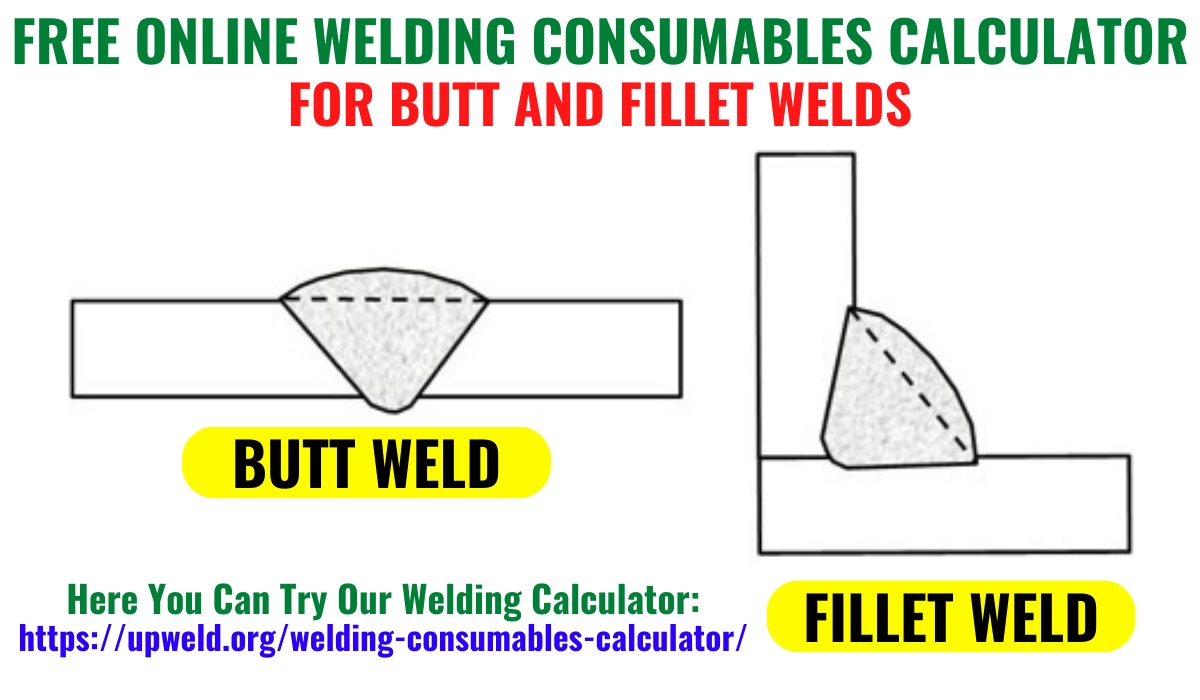
- Butt joint (pipes end-to-end)
- Fillet joint (pipes at an angle)
- Socket joint (one pipe fits inside another)
Each joint type uses different amounts of material.
Welding Process
- SMAW (Stick)
- TIG (GTAW)
- MIG (GMAW)
- FCAW
Each process has its own efficiency and material use.
Filler Metal Size And Type
- Rod or wire diameter (e.g., 1.6 mm, 2.4 mm, 3.2 mm)
- Material (carbon steel, stainless steel, etc.)
Welding Parameters
- Current (amperage)
- Voltage
- Travel speed
- Number of passes
These affect how fast you use material.
Efficiency Factor
Not all the filler metal ends up in the weld. Some gets lost (stub loss, spatter, etc.). Most calculators use an efficiency factor—usually 75% to 90% depending on process and skill.
Number Of Welders
If you have a large project, knowing how many welders will work at once helps plan material deliveries and shift schedules.

Credit: www.youtube.com
Manual Calculation Vs. Using A Calculator
You can do these calculations by hand, but it takes time and skill. Here’s a comparison:
| Feature | Manual Calculation | Calculator Tool |
|---|---|---|
| Speed | Slow, needs many steps | Fast, just enter values |
| Accuracy | Can be high, but prone to errors | Consistent and reliable |
| Skill Needed | High (math and welding knowledge) | Low to medium |
| Flexibility | High, but time-consuming | Good, easy to change inputs |
Manual calculation makes sense for small or unique jobs. For big projects, a calculator saves time and avoids errors.
Types Of Pipe Welding Consumable Calculators
There are different types of calculators. Each type suits different users and situations.
1. Online Calculators
Many websites offer free pipe welding consumable calculators. You enter your details, and the site gives you a quick result. These work well for simple jobs and quick estimates.
2. Spreadsheet Calculators
Some companies use spreadsheets (Excel, Google Sheets) with built-in formulas. These let you save your data, tweak numbers, and track changes.
3. Mobile Apps
A few welding equipment makers offer mobile apps. These apps let you estimate on the go, right at the job site.
4. Custom Software
Large companies or EPC contractors may use custom software. These tools connect with project management systems and ordering platforms.
5. Printed Charts
Printed charts or tables still help in the field, especially where internet access is poor. These give rough estimates based on pipe size and weld type.
How To Use A Pipe Welding Consumable Calculator: Step-by-step
Here is a clear example using a typical online calculator.
Step 1: Gather Your Job Information
Write down all needed details:
- Pipe size and wall thickness
- Length of welds
- Welding process and parameters
Step 2: Enter The Data
Open the calculator tool. Enter each value carefully.
Step 3: Review The Results
The calculator shows:
- Amount of filler metal (kg or lb)
- Shielding gas (cubic meters or cubic feet)
- Number of electrodes or rods
Step 4: Adjust For Waste And Efficiency
Check the efficiency factor. Most calculators let you set this. If your welders are less experienced, use a lower efficiency (like 75%). For skilled teams, use a higher number (85-90%).
Step 5: Finalize Your Order
Add a small safety margin (usually 5-10%) to allow for mistakes, weather, or rework.
Example Calculation
Suppose you need to weld 50 meters of 8-inch, Schedule 40 pipe using MIG welding.
- Pipe circumference: 8 in × 3.1416 ≈ 25.13 in (≈ 0.638 m)
- Total weld length: 50 m × number of passes (let’s say 3 passes)
- Total weld volume: Calculator uses joint geometry to estimate
- Filler wire needed: About 16 kg (calculator result)
- Shielding gas: About 7 cubic meters
This estimate helps you order supplies with confidence.
Advanced Features In Modern Calculators
Some calculators offer advanced features. These are useful for big projects or special jobs.
Welding Position Adjustment
Some jobs are mostly overhead or vertical. These positions use more material. Advanced calculators adjust for this.
Multiple Weld Types
Some calculators let you estimate for butt welds, fillet welds, socket welds, and even branch connections—all in one place.
Cost Estimation
A few tools also include cost estimation. You set the price per kg of wire or per cubic meter of gas. The tool gives you both quantity and cost.
Batch Calculations
Some calculators let you enter a list of welds for a whole project. This is great for long pipelines or big plants.
Export And Reporting
Advanced tools let you export results as PDFs or spreadsheets to share with your team or purchasing department.
Common Mistakes When Estimating Welding Consumables
Many people make mistakes when estimating. Avoid these common errors:
- Ignoring Joint Preparation: Bad joint fit-up or too much bevel means more filler metal needed.
- Forgetting Waste: Some material always gets lost. Stub loss, spatter, and mistakes add up.
- Wrong Welding Parameters: Using the wrong current, voltage, or speed gives wrong estimates.
- Ignoring Welder Skill: Less experienced welders use more material.
- Not Including All Welds: Don’t forget small joints, tacks, or repairs.
- Not Rounding Up: Always add a safety margin for unexpected events.
Important Factors That Affect Consumable Estimates
Calculators help, but you should also understand what changes your numbers.
Pipe Size And Wall Thickness
Bigger, thicker pipes need more material. Always measure carefully.
Weld Joint Design
A single bevel joint uses less filler than a double bevel. Pipe-to-flange welds can use more metal. Know your joint types.
Number Of Passes
Thicker pipes need more passes. Each pass adds to your total.
Welding Position
Overhead and vertical welds use more filler due to gravity and spatter.
Welder Skill
Experienced welders waste less material.
Weather And Site Conditions
Wind, rain, and cold affect efficiency and gas use, especially outdoors.
Project Scale
Big projects usually need higher safety margins due to complexity.
Credit: upweld.org
Choosing The Right Calculator For Your Project
Not all calculators fit every job. Here’s how to choose:
For Small Jobs
Online calculators or printed charts work well for repair jobs or one-off welds.
For Medium Projects
Spreadsheets offer flexibility and let you track usage.
For Large Or Complex Projects
Custom software and batch calculators save time and reduce errors.
For Field Work
Mobile apps are handy for quick estimates on site.
When Data Security Matters
Custom, in-house tools ensure your project data stays private.
Example Comparison Of Calculator Types
Here’s how different calculator types stack up:
| Calculator Type | Best For | Pros | Cons |
|---|---|---|---|
| Online Tool | Quick estimates | Easy, fast, free | Needs internet, basic features |
| Spreadsheet | Small/medium jobs | Customizable, can save data | Needs setup, manual updates |
| Mobile App | Field use | Portable, convenient | Limited features |
| Custom Software | Big projects | Advanced features, integration | Expensive, needs training |
Practical Tips For More Accurate Estimates
Accurate estimates save money and time. Here’s how to get better results:
- Measure Twice: Double-check all pipe sizes and lengths before entering data.
- Understand Your Process: Use the right welding parameters and joint details.
- Use Recent Data: Update prices and material specs often.
- Talk to Your Team: Ask welders and supervisors for feedback on past jobs.
- Track Actual Usage: Compare estimates to real use. Adjust your process if needed.
- Include All Joints: Count tacks, repairs, and small joints.
- Adjust for Site Issues: Add extra if working outdoors or in hard conditions.
Real-world Example: Estimating For A Pipeline Project
A pipeline contractor needs to weld 500 meters of 12-inch, Schedule 80 pipe. They use SMAW (stick welding). Here’s how they might estimate:
- Pipe circumference: 12 in × 3.1416 ≈ 37.7 in (≈ 0.958 m)
- Total weld length: 500 m × 3 passes = 1,500 m
- Filler rod type: E7018, 4 mm rods
- Efficiency: 80% (due to site conditions and less skilled welders)
Using a calculator, they input these numbers. The tool says they need about 180 kg of electrodes. Based on past jobs, they add a 10% safety margin, so they order 200 kg. They also estimate shielding gas (if needed) and flux.
The result: The project finishes on time, with only a small surplus of electrodes. This reduces cost and waste.
Non-obvious Insights Most Beginners Miss
Many new users of calculators miss these details:
- Consumable Packaging Matters: Filler wire and electrodes come in standard package sizes. Buy whole boxes to avoid leftover partial packs.
- Jobsite Delivery Schedules: For big jobs, order in stages. This reduces storage issues and keeps material fresh.
- Different Welders, Different Use: One team may use 10% more or less material than another. Track individual performance for better estimates.
- Gas Cylinder Size Affects Use: Gas is sold in different cylinder sizes. Check if your estimate matches what suppliers offer.
- Special Alloys Need Special Care: Stainless and exotic alloys often have higher waste and gas use due to strict quality needs.
How To Improve Your Consumable Planning Over Time
A calculator is a starting point, not the final answer. To improve, always compare estimates to real usage. After each project:
- Review actual material used
- Note any surprises (bad fit-up, extra repairs, weather delays)
- Adjust your future estimates
Some companies keep a welding logbook to track this data. Over time, your estimates get more accurate, saving money and stress.
Useful Resources
If you want to try an online calculator, or learn more about welding estimates, visit the TWI (The Welding Institute) for practical guides and tools.
Frequently Asked Questions
How Accurate Are Pipe Welding Consumable Calculators?
Most calculators give results within 10-15% of real usage, if you enter the right data. Accuracy depends on joint prep, welding skill, and site conditions. Always add a safety margin for best results.
What Is The Difference Between Filler Metal And Electrode?
Filler metal is the material added to make the weld. In stick welding, the electrode is also the filler. In TIG or MIG, you use a separate filler wire or rod.
Can I Use A Calculator For Exotic Alloys Like Titanium Or Inconel?
Yes, but check the calculator’s settings. Special alloys often need different parameters and higher waste factors. Ask your supplier for advice if you are unsure.
How Do I Know Which Calculator To Use?
For small jobs, free online tools work well. For big projects, use a spreadsheet or custom software. Choose based on your project size and how much detail you need.
Do Calculators Include Labor Or Only Materials?
Most calculators estimate only materials (wire, rods, gas). Some advanced tools let you add labor, but you may need a separate system for full job costing.
Pipe welding is a job where planning saves time and money. A pipe welding consumable calculator is a simple but powerful tool. Use it for your next project, and you will see fewer delays, less waste, and a smoother workflow. Welding is both art and science—accurate estimates make both sides easier.

Credit: metalfusionpro.com