Disclosure: This post contains affiliate links and I will be compensated if you make a purchase after clicking through my links. Learn More
Repairing aluminum is a common challenge in many workshops and homes. Aluminum is strong and lightweight, but it can crack, develop holes, or break under stress. Many people think only welding machines can fix these problems. But JB Weld gives a simple and effective way to repair aluminum without special tools or advanced skills. This article explains how to use JB Weld for aluminum repairs, the best practices, and mistakes to avoid. You will also find answers to common questions, helpful tables, and practical advice from real experience.
Why Use Jb Weld For Aluminum Repairs?
People choose JB Weld for aluminum because it gives a strong bond, is easy to use, and does not require expensive welding equipment. JB Weld is a two-part epoxy. When mixed, it forms a hard material that sticks well to metal.
It works on cracks, holes, and even broken pieces. You can use it on car parts, boats, household items, and machinery.
JB Weld is heat-resistant, waterproof, and can be sanded or painted after it cures. This makes it suitable for many jobs. It is also safe for non-professionals if you follow the instructions.
Understanding Aluminum And Epoxy Bonding
Aluminum has a thin oxide layer that protects it from rust but also makes gluing difficult. Many glues do not stick well to this surface. JB Weld is designed to bond with aluminum if you prepare the surface properly.
Many people skip surface preparation and wonder why the repair fails. The key is to remove dirt, grease, and the oxide layer before applying JB Weld. This step improves the bond strength and makes the repair last longer.
Types Of Jb Weld Products For Aluminum
JB Weld has several products. Choosing the right one is important for a good repair. Here is a comparison of popular JB Weld products for aluminum:
| Product Name | Strength | Set Time | Temperature Resistance | Best Use |
|---|---|---|---|---|
| JB Weld Original | 3960 PSI | 4-6 Hours | Up to 550°F (288°C) | General Repairs |
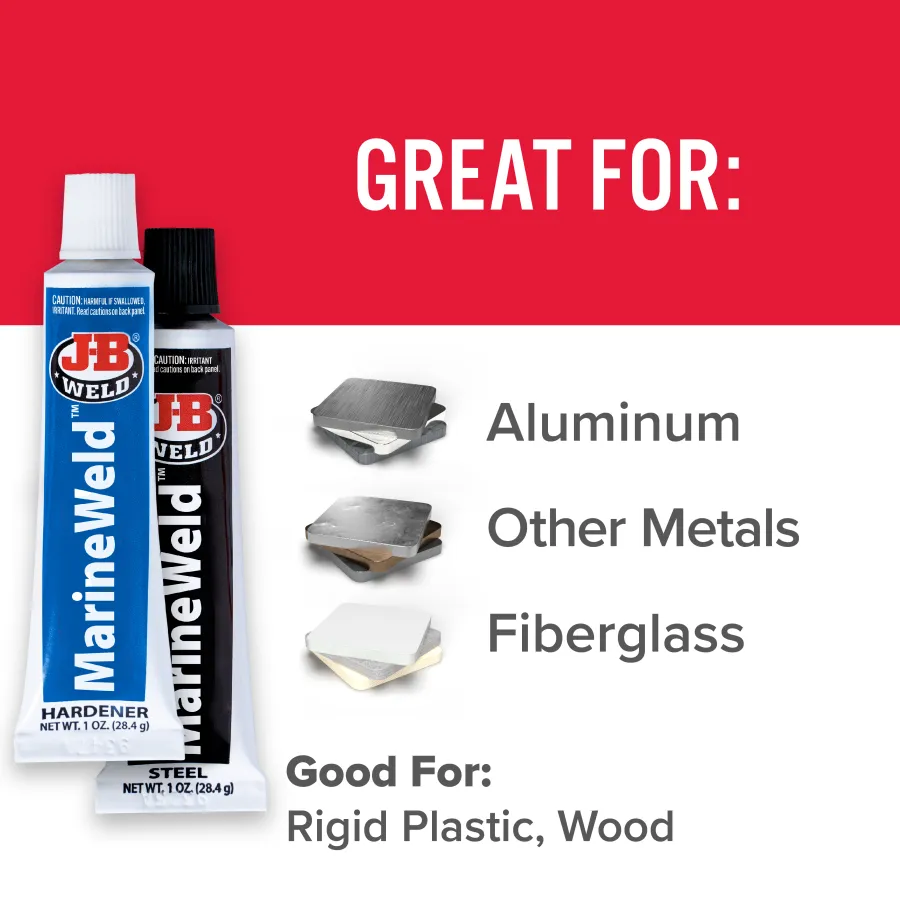
| JB Weld MarineWeld | 5020 PSI | 4-6 Hours | Up to 550°F (288°C) | Wet Environments |
| JB Weld KwikWeld | 3127 PSI | 6 Minutes | Up to 300°F (149°C) | Quick Fixes |
| JB Weld SteelStik | 900 PSI | 5 Minutes | Up to 350°F (177°C) | Small Holes/Pipes |
Choose the product based on your needs. For most aluminum repairs, JB Weld Original or JB Weld MarineWeld work best. Use KwikWeld for fast jobs, and SteelStik for small leaks or filling holes.
Tools And Materials Needed
Before starting, collect all the tools and materials:
- JB Weld (choose the right type)
- Sandpaper (80-120 grit)
- Wire brush or steel wool
- Clean cloth or paper towel
- Isopropyl alcohol or acetone (for cleaning)
- Mixing stick (wood or plastic)
- Disposable mixing surface (old plastic, cardboard, etc.)
- Gloves (nitrile or latex)
- Masking tape (optional)
- File (optional for smoothing after cure)
- Clamp or weight (for holding pieces together, if needed)
Having all tools ready saves time and helps you work efficiently.
Credit: www.jbweld.com
Step-by-step: How To Repair Aluminum With Jb Weld
1. Clean The Aluminum Surface
Dirt, oil, and grease can stop JB Weld from sticking. Wash the area with soap and water first. Dry it completely. Then, use isopropyl alcohol or acetone to remove any remaining oil or residue. Wipe with a clean cloth. If you skip this, the repair will not last.
2. Roughen The Surface
Aluminum has a smooth oxide layer that JB Weld cannot bond to easily. Use sandpaper (80-120 grit) or a wire brush to roughen the area around the damage. Sand at least one inch (2.5 cm) past the edges of the crack or hole. This step gives JB Weld more grip and makes the bond much stronger.
Many beginners do not sand enough. A smooth surface is not your friend here—the rougher, the better. After sanding, wipe off dust with a clean, dry cloth.
3. Prepare The Jb Weld
JB Weld comes in two tubes: resin and hardener. Squeeze equal parts onto a mixing surface. Mix well with a stick for at least one minute. The color should be uniform (usually gray or black). If you see streaks, mix longer.
Do not mix until you are ready to use it. JB Weld starts to set in 4-6 minutes (KwikWeld in 3-4 minutes). Work quickly but carefully.
4. Apply Jb Weld To The Aluminum
Use the mixing stick to spread JB Weld onto the damaged area. Press it into cracks, holes, or breaks. Build up a layer at least 1/8 inch (3 mm) thick. If fixing a hole, apply JB Weld on both sides if possible.
For larger holes, place a piece of aluminum tape or mesh behind the hole. This gives JB Weld something to hold onto and prevents sagging.
Use masking tape to keep the epoxy in place if working on a vertical surface. Remove the tape after 30-60 minutes, before the epoxy fully hardens.
5. Clamp Or Hold Parts Together
If fixing a broken joint, use a clamp or a weight to hold parts in place. This keeps the repair tight and helps JB Weld set properly. Do not move the parts for at least 4-6 hours.
6. Let Jb Weld Cure
JB Weld needs time to reach full strength. The initial set takes 4-6 hours. Full cure happens in 15-24 hours at room temperature. Do not sand, drill, or stress the repair before it fully cures.
Curing times depend on temperature and humidity. Warmer temperatures speed up the process. If possible, keep the part in a warm, dry place.
7. Finish The Repair
Once JB Weld is hard, you can sand, file, or paint it. Sand the surface smooth if needed. Use a file for rough edges. Paint over JB Weld if you want it to match the aluminum.
Do not use the repaired part under high stress until you test the strength. Try pressing or tapping gently to check the bond.
Common Repairs: Examples And Tips
Aluminum is used in many things. Here are some common repairs:
Fixing A Cracked Aluminum Pipe
Clean and sand the crack area. Mix JB Weld and press it into the crack. Apply a thick layer on top. Use tape to hold it in place. Let it cure overnight. For pressure pipes, test with low pressure first before full use.
Repairing An Aluminum Radiator
Drain the radiator. Clean and sand the hole. Mix JB Weld and apply to the hole, pressing it in. Add a patch of aluminum mesh if the hole is big. Let cure 24 hours before adding coolant.
Mending Broken Aluminum Parts (brackets, Handles)
Align the broken pieces. Sand and clean both sides. Apply JB Weld to both surfaces. Press together and clamp. Remove extra epoxy with a cloth before it hardens. Let cure for at least 24 hours.
Sealing Small Holes In Aluminum Boats
Sand around the hole. Place aluminum tape under the hole if possible. Press JB Weld into the hole and smooth it flat. Cure overnight before water contact.
Filling Pits Or Gouges
Sand and clean the area. Mix JB Weld and press into the pit. Build up slightly more than needed. After curing, sand flat for a smooth finish.
How Jb Weld Compares To Traditional Aluminum Welding
Many wonder if JB Weld is as strong as welding. Here is a simple comparison:
| Method | Strength | Skill Needed | Tools | Time | Cost |
|---|---|---|---|---|---|
| JB Weld | Up to 5020 PSI | Beginner | Basic | 1 Day (Cure) | Low |
| TIG Welding | Up to 40,000 PSI | Advanced | Welding Machine | Minutes | High |
| Aluminum Brazing | 10,000-20,000 PSI | Intermediate | Torch, Rod | 30 Minutes | Medium |
JB Weld is not as strong as real welding but is strong enough for many jobs. It is much easier and safer for most people.
Mistakes To Avoid When Using Jb Weld On Aluminum
Many repairs fail because of simple mistakes. Here are the most common ones:
1. Skipping Surface Preparation
Not cleaning and sanding will cause the bond to fail quickly.
2. Mixing Wrong Ratios
Mixing more resin or hardener leads to weak or sticky results.
3. Applying To Wet Or Oily Surfaces
Even a little moisture or oil blocks the bond.
4. Using Too Little Epoxy
A thin layer may crack or break under stress.
5. Not Allowing Full Cure
Using the part too soon can ruin the repair.
6. Ignoring Temperature Limits
JB Weld has a maximum temperature. Hot engine parts may exceed this and cause the repair to fail.
7. Wrong Product Choice
Each JB Weld product has a best use. Check the packaging before starting.
8. Not Using A Support Patch For Large Holes
Epoxy alone can sag or break if the hole is too big.
How To Get The Strongest Bond
If you want the best possible result, follow these extra tips:
- Double-Sand: Sand the area, clean, then sand again before applying JB Weld.
- Warm the Surface: Aluminum at room temperature or slightly warm helps the epoxy flow and bond better. Do not heat above 40°C (104°F).
- Apply Pressure: Clamp or press the pieces together during curing for a tighter bond.
- Layering: For deep holes or gaps, apply in layers, letting each layer set before adding more.
- Test Before Use: Once cured, gently test the repair with increasing pressure to make sure it holds.
When Not To Use Jb Weld For Aluminum
JB Weld is great, but not for every situation. Avoid using JB Weld if:
- The part must hold high pressure or weight (like a load-bearing frame)
- The repair area gets hotter than the epoxy’s limit
- The aluminum is thin and flexes a lot (epoxy is rigid and can crack)
- Food or drinking water will touch the repair (unless JB Weld states it is food-safe)
- You need a seamless, invisible repair (epoxy is visible)
In these cases, consider real welding or replacement.

Credit: www.youtube.com
Real-world Examples
Many people have success stories using JB Weld on aluminum. For example, car owners often fix radiators and oil pans. Boaters repair hulls and fuel tanks. In factories, workers patch machine covers. Homeowners use JB Weld for gutters, frames, and outdoor furniture.
These repairs can last for years if done correctly.
But some users report failures when they skip cleaning or use the wrong JB Weld type. One key lesson: Patience and preparation matter more than speed.
Cost And Availability
JB Weld is affordable. A small tube costs around $6–$10 in the US. One pack is enough for several repairs. You can buy it at hardware stores, auto parts shops, and online. Make sure to buy from a trusted seller to avoid expired or fake products.
Safety Tips
JB Weld is safe if you use it as directed. But always:
- Wear gloves to avoid skin contact
- Use in a well-ventilated area
- Avoid breathing fumes or dust from sanding cured epoxy
- Wash hands after use
- Keep away from children and pets
If you get JB Weld on your skin, wash with soap and water. If you get it in your eyes, rinse with water and see a doctor.
Environmental And Longevity Factors
JB Weld resists water, oil, and most chemicals. It does not rust or shrink. Outdoor repairs can last many years, but sunlight (UV light) can cause yellowing or slight weakening over time. Painting over the cured epoxy gives extra protection.
For parts that move or flex, check the repair every few months. Epoxy is strong but not flexible.
Comparing Jb Weld To Other Metal Epoxies
Not all metal epoxies are the same. Here is a comparison with other popular brands:
| Brand | Bond Strength | Set Time | Max Temp | Best For |
|---|---|---|---|---|
| JB Weld | Up to 5020 PSI | 4-6 Hours | Up to 550°F | General Aluminum Repairs |
| Loctite Epoxy Metal/Concrete | 2500 PSI | 5-10 Minutes | 300°F | Quick Fixes |
| Permatex Cold Weld | 3500 PSI | 30 Minutes | 300°F | Medium Repairs |
| Devcon Aluminum Putty | 2000 PSI | 1 Hour | 250°F | Large Fills |
JB Weld stands out for its strength and temperature resistance. But if you need a fast fix, other epoxies may work better.
How To Store Jb Weld
Store unopened JB Weld tubes in a cool, dry place. Do not freeze. Once opened, close the cap tightly. If the epoxy hardens in the tube, it cannot be used. Most tubes last 2–3 years if sealed well.
Troubleshooting: If Your Repair Fails
If the repair did not work, check these points:
- Was the surface clean and sanded?
- Did you mix equal parts?
- Did you wait for full cure?
- Was the area too hot, cold, or wet?
- Did you use the right JB Weld product?
If you answer “no” to any, redo the repair using the correct steps.
Extra Tips From Experience
- Use a toothpick for tiny cracks.
- Wrap sandpaper around a pencil for sanding narrow spots.
- Apply JB Weld slightly past the repair for better grip.
- For underwater repairs, use MarineWeld and let it cure for 48 hours.
- Paint over with metal paint for UV protection.
Where To Learn More
For detailed guides, safety sheets, and support, visit the official JB Weld site or check trusted sources like the Epoxy Wikipedia page.
Frequently Asked Questions
How Strong Is Jb Weld On Aluminum?
JB Weld can reach up to 5020 PSI with the right product and proper preparation. This is strong enough for most repairs but not as strong as welding. It works best on non-structural or medium-duty repairs.
Can You Drill Or Tap Jb Weld After It Cures?
Yes, you can drill, sand, or tap cured JB Weld. Wait for full cure (usually 24 hours). Use sharp bits and go slow to avoid cracking the epoxy.
Is Jb Weld Waterproof On Aluminum?
Once cured, JB Weld is waterproof and resists most chemicals. It is safe for outdoor, marine, or wet repairs. For underwater repairs, use JB Weld MarineWeld.
Does Jb Weld Work On Painted Or Anodized Aluminum?
No, JB Weld bonds best to bare, clean aluminum. Remove all paint, anodizing, or coatings before use. Sand to bare metal for the strongest bond.
How Long Does Jb Weld Last On Aluminum?
With good surface prep and normal use, JB Weld repairs can last many years. Outdoor and low-stress repairs often last as long as the original part. Check the repair every few months for cracks or wear.
—
Repairing aluminum with JB Weld is simple if you follow the right steps. Clean, sand, and use the correct product for your repair. Be patient and let it cure. With care, your repair can be strong, long-lasting, and cost-effective. Whether you fix a car, boat, or household item, JB Weld gives you a reliable solution without the need for welding.

Credit: www.alphaweld.com.au