Disclosure: This post contains affiliate links and I will be compensated if you make a purchase after clicking through my links. Learn More
Choosing the right tungsten electrode size can make a big difference in TIG welding. Many welders, especially beginners, struggle with this choice. They may not know how electrode size affects the arc, penetration, and weld quality. If you use the wrong size, you can face problems like unstable arcs, overheating, or even damage to the workpiece.
This guide explains everything you need to know about tungsten electrode sizes, so you can make confident decisions for your welding projects.
Why Tungsten Electrode Size Matters
The tungsten electrode size is not just a technical detail. It directly affects how your arc behaves, how much current you can use, and what kind of weld you get. If your electrode is too thin, it can melt back or break. If it is too thick, you may struggle to start the arc or control it for fine work. The right size gives you a stable arc, good penetration, and a smooth finish. It also helps your electrode last longer, saving you money and time.
Many professionals say that selecting the correct size is one of the first steps to becoming a skilled TIG welder. Small mistakes here can create bigger issues later, such as poor weld quality, unnecessary rework, or wasted materials.
Understanding Tungsten Electrode Sizes
Tungsten electrodes come in many sizes. The most common diameters are:
- 1/16″ (1.6 mm)
- 3/32″ (2.4 mm)
- 1/8″ (3.2 mm)
- 5/32″ (4.0 mm)
- 3/16″ (4.8 mm)
- 1/4″ (6.4 mm)
Most TIG welding jobs use sizes between 1/16″ and 1/8″. Larger sizes are rare and used for very high current or thick materials.
How Sizes Are Labeled
Manufacturers usually mark tungsten electrodes by diameter in inches or millimeters. For example, “1/16″ means 1/16 of an inch, which is about 1. 6 mm. The length is usually 7″ (175 mm) or 6” (150 mm).
Common Size Applications
- 1/16″ (1.6 mm): Thin materials, light current, precision work
- 3/32″ (2.4 mm): Most common size, good for general use
- 1/8″ (3.2 mm): Thicker materials, higher current
Some beginners think that “bigger is always better,” but this is not true. Oversized electrodes can make it hard to control the arc, especially for small jobs.
How Electrode Size Affects Welding
The diameter of your tungsten electrode affects several key factors:
- Maximum Amperage: Larger electrodes can carry more current without overheating.
- Arc Stability: The right size gives a stable arc, which is important for quality welds.
- Penetration: If the electrode is too small, it may not give enough penetration for thick materials.
- Arc Starting: Thin electrodes start arcs easily, but may not last long at high current.
Choosing the right size means balancing these factors for your specific job.
Example: Welding Thin Stainless Steel
If you want to weld 1 mm stainless steel sheet, a 1/16″ (1. 6 mm) tungsten works well. It gives a narrow, focused arc and good control at low current (20-60 amps).
Example: Welding Thick Aluminum Plate
For a 6 mm aluminum plate, you need more current (120-200 amps). A 3/32″ (2. 4 mm) or 1/8″ (3. 2 mm) electrode handles the heat without melting back.
Main Factors When Choosing Tungsten Electrode Size
You should consider several things before picking an electrode size. These factors help you match the electrode to your welding needs.
1. Material Thickness
The thicker the metal, the more current you need. More current means a larger electrode size.
- Thin materials (up to 2 mm): Use 1/16″ (1.6 mm)
- Medium thickness (2-6 mm): Use 3/32″ (2.4 mm)
- Thick materials (over 6 mm): Use 1/8″ (3.2 mm) or larger
2. Welding Current
Check the recommended amperage range for each electrode size. Using too much current for a small electrode can melt it or make the arc unstable.
| Electrode Size | DC Amps (Range) | AC Amps (Range) |
|---|---|---|
| 1/16″ (1.6 mm) | 20–90 | 30–70 |
| 3/32″ (2.4 mm) | 80–150 | 60–130 |
| 1/8″ (3.2 mm) | 130–250 | 100–180 |
| 5/32″ (4.0 mm) | 225–400 | 160–250 |
3. Type Of Material
Different metals conduct heat differently. For example, aluminum requires more current than steel for the same thickness, so you may need a larger electrode.
- Aluminum: Needs higher current, larger electrode
- Stainless Steel: Medium current, medium electrode
- Mild Steel: Lower current, smaller or medium electrode
4. Welding Position
Vertical or overhead welding often uses lower current to avoid gravity pulling the molten pool. In these cases, choose a size that handles lower amperage well.
5. Power Source (ac Or Dc)
AC welding (often for aluminum) heats the electrode more than DC. You may need a larger size for the same current.
- AC welding: Use one size larger than you would for DC at the same amperage.
6. Type Of Joint And Detail Level
Tight joints or detailed work need a smaller electrode for better control. Open or large joints can use larger sizes.
7. Tip Shape And Preparation
A sharp tip focuses the arc, while a rounded tip spreads it. Very sharp tips are best for thin material. Larger, rounded tips suit heavy-duty welding.
Common Tungsten Electrode Sizes And Their Uses
Most welders use a few standard sizes for most projects. Here is a summary of where each size works best.
1/16″ (1.6 Mm)
- Best for: Thin sheet metal, auto body, precision parts
- Amperage range: 20-90A (DC), 30-70A (AC)
- Notes: Easy arc starting, but melts back if overused
3/32″ (2.4 Mm)
- Best for: General fabrication, pipes, frames
- Amperage range: 80-150A (DC), 60-130A (AC)
- Notes: Good all-rounder, stable at medium currents
1/8″ (3.2 Mm)
- Best for: Structural work, thick plate
- Amperage range: 130-250A (DC), 100-180A (AC)
- Notes: Handles high current, harder to control on thin work
5/32″ (4.0 Mm) And Above
- Best for: Heavy-duty, industrial welding, thick aluminum or steel
- Amperage range: 225A and above
- Notes: Rare in small shops, mostly for large-scale jobs
Matching Electrode Size To Amperage
It is important to stay inside the safe amperage range for each size. Running too high can cause the electrode to melt or ball up. Running too low can make starting difficult.
Here is a practical guide:
- If you see the tip glowing bright orange: Amperage is too high. Move to a larger size.
- If the arc is hard to start or wanders: Electrode may be too large for the current.
Some beginners think they should always use the largest electrode that fits. In fact, using the smallest size that does the job often gives better control and a neater weld.

Credit: www.millerwelds.com
How Electrode Size Affects Arc Shape
The arc shape depends on electrode diameter and tip preparation. Thin electrodes with sharp points give a focused, narrow arc. Thick electrodes with blunt ends give a wide, soft arc.
| Electrode Size | Tip Shape | Arc Profile | Best Use |
|---|---|---|---|
| 1/16″ (1.6 mm) | Sharp | Narrow | Thin sheet, detail work |
| 3/32″ (2.4 mm) | Slightly rounded | Medium width | General welding |
| 1/8″ (3.2 mm) | Blunt | Wide | Thick plate, heavy welds |
Mistakes To Avoid When Choosing Electrode Size
Many new welders repeat the same errors. Avoiding these mistakes saves time and gives better results.
- Using one size for all jobs: This leads to poor welds or short electrode life.
- Exceeding amperage limits: This causes melting, contamination, or dangerous fumes.
- Choosing by guesswork: Always check material thickness and amperage.
- Ignoring power source: AC welding needs larger electrodes than DC for the same current.
- Not considering position: Overhead or vertical welds need more control; smaller electrodes may help.
Practical Examples For Common Welding Jobs
You may find it helpful to see real-world examples of size selection.
Example 1: Welding Thin Stainless Tubing (food Equipment)
- Material: 1 mm stainless steel tube
- Electrode: 1/16″ (1.6 mm), pointed tip
- Current: 25-45A DC
- Why: This size and shape give a focused arc for clean, tight joints.
Example 2: Aluminum Boat Hull Repair
- Material: 4 mm aluminum plate
- Electrode: 3/32″ (2.4 mm), balled tip
- Current: 120A AC
- Why: The larger size handles the heat of aluminum, and the balled tip spreads the arc for better cleaning.
Example 3: Building A Steel Frame
- Material: 6 mm mild steel
- Electrode: 1/8″ (3.2 mm), slight taper
- Current: 160A DC
- Why: The thick electrode does not melt back, even at high current.
Special Cases: Micro-tig And Heavy Industry
Welders sometimes need very small or very large electrodes.
Micro-tig (precision Work)
- Electrodes: 0.020″ (0.5 mm) or 0.040″ (1.0 mm)
- Use: Medical tools, jewelry, thin wires
- Note: Needs special torches and careful current control
Heavy Industry
- Electrodes: 5/32″ (4.0 mm) or larger
- Use: Shipbuilding, pressure vessels, thick aluminum
- Note: Needs large machines, high current, and strong cooling
Most hobbyists and small shops will not use these extremes, but it helps to know when they are needed.
How To Change Electrode Size Safely
Switching between electrode sizes is easy if you follow these steps:
- Turn off the welder.
- Remove the collet and back cap.
- Insert the new electrode. The collet must match the new size.
- Check tip shape. Grind or ball as needed for your job.
- Reassemble and test arc. Start with lower current and adjust up if needed.
Many new welders forget to change the collet when switching sizes. This can cause poor contact or arcing inside the torch.
How Electrode Size Affects Cost And Efficiency
Smaller electrodes are cheaper but wear out faster at high current. Larger electrodes cost more, but last longer on big jobs. Using the right size saves money in the long run.
Wasting electrodes by melting or contaminating them is common. Sticking to the recommended size and amperage improves efficiency.
Credit: www.axxair.com
Other Factors: Electrode Composition And Color Codes
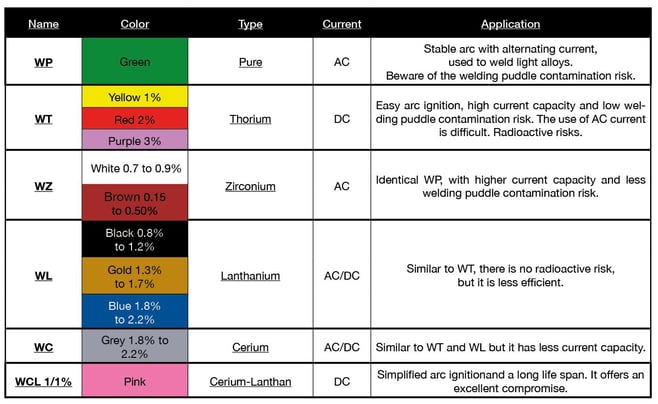
Tungsten electrodes come in several types, each with a color code:
- Red (2% Thoriated): General use, DC welding
- Green (Pure Tungsten): AC welding, mainly aluminum
- Blue (2% Lanthanated): Good for AC and DC
- Gold (1.5% Lanthanated): Similar to blue, longer life
The size rules above apply to all types, but some materials let you use a slightly smaller size at the same current because they handle heat better.
Tips For Beginners Choosing Electrode Size
- Start with 3/32″ (2.4 mm): This is the most versatile size for most jobs.
- Keep a range of sizes: Have 1/16″, 3/32″, and 1/8″ on hand.
- Check your machine’s manual: Most give recommended sizes for each current.
- Watch for tip color: If the tip turns blue, you are overheating it.
- Ask experienced welders: They often know the best size for local materials and power.
Advanced Insights: What Many Welders Miss
Two points often surprise new TIG welders:
- Electrode length matters. If you grind your electrode down until it is too short, the heat can travel into the torch and damage parts. Always leave at least 1.5″ (38 mm) sticking out.
- Humidity and contamination. Dirty or wet electrodes will not perform well, even if the size is correct. Store them in a dry box and grind them clean before use.
Troubleshooting Problems Related To Electrode Size
If you have trouble with your welds, check the electrode size first. Common problems include:
- Arc instability: Too small or too large electrode for the current.
- Excessive balling or melting: Current too high for the electrode.
- Arc wandering: Electrode tip too blunt or too large for fine work.
- Frequent contamination: Wrong size or poor tip preparation.
Solving these issues often starts with selecting the right electrode size and preparing the tip properly.

Credit: weldingadvise.com
How To Test If Your Electrode Size Is Right
You can do a simple test:
- Set your welder to the desired current.
- Start the arc on a scrap piece of metal.
- Check the tip after a few seconds:
- If it keeps its shape, the size is right.
- If it melts, balls up, or turns blue, try a larger size.
- If it is hard to start or the arc is unstable, try a smaller size or sharpen the tip.
Testing on scrap before your real project prevents wasted time and material.
Comparison: Electrode Size Vs. Other Factors
Many welders focus only on electrode size, but other factors also matter. Here is a quick comparison.
| Factor | Main Effect | When to Change |
|---|---|---|
| Electrode Size | Arc stability, max current | Change for material thickness, amperage |
| Electrode Type | Arc start, contamination resistance | Change for AC/DC, material type |
| Tip Shape | Arc focus, weld width | Change for detail or wide welds |
If you are unsure, start by checking size, then type, then tip shape.
Where To Find Reliable Electrode Size Information
For most welding jobs, the machine manual or electrode box gives good recommendations. Welding standards from the American Welding Society (AWS) are also a trustworthy guide. You can find more details at the Wikipedia Tungsten Electrode page.
Final Thoughts
Choosing the right tungsten electrode size is one of the most important decisions in TIG welding. It affects arc stability, weld appearance, and efficiency. By considering your material, current, power source, and weld position, you can pick the best size for each job.
Avoid common mistakes, keep a few sizes on hand, and always prepare your tip properly. With practice, you will quickly see better welds and fewer problems.
Frequently Asked Questions
What Happens If I Use The Wrong Tungsten Electrode Size?
Using the wrong size can cause problems like unstable arcs, melted tips, or poor welds. If the electrode is too small, it may overheat and melt. If it is too large, the arc may be hard to control or start.
How Do I Know Which Tungsten Electrode Size To Use For Aluminum?
Aluminum usually needs higher current. Start with a 3/32″ (2. 4 mm) for medium thickness (3-6 mm) and move to 1/8″ (3. 2 mm) for thicker plates. Use AC welding and check your machine’s amperage rating.
Can I Use The Same Tungsten Size For All Metals?
No. Different metals need different currents, so you may need to change electrode size. For example, stainless steel uses lower current than aluminum of the same thickness.
Do I Need To Change The Collet When I Change Electrode Size?
Yes. The collet must match the electrode diameter. If you use the wrong collet, you may get poor electrical contact or damage the torch.
How Long Should A Tungsten Electrode Last?
If you use the correct size and current, a tungsten electrode can last for many welds. Overheating, contamination, or grinding it too short will reduce its life. Store electrodes in a dry place to avoid rust and dirt.