Disclosure: This post contains affiliate links and I will be compensated if you make a purchase after clicking through my links. Learn More
Aluminum TIG welding requires the right technique, and one small detail can make a big difference: how you prepare your tungsten electrode. Balling tungsten is an essential step for welding aluminum with alternating current (AC). If you skip it or do it wrong, your welds can suffer from poor arc stability, dirty beads, and even electrode failure. But if you learn the right way, you can get smooth welds and a clean arc every time.
Many beginners think balling tungsten is only about making the tip round. In reality, there is much more to it. Each step matters, from choosing the right tungsten type to setting the welding machine correctly. You also need to avoid some common mistakes that can waste time and ruin your work.
In this guide, you will learn how to ball tungsten for aluminum TIG welding, why it matters, and how to do it safely and effectively. You will also find practical tips, troubleshooting advice, and answers to common questions.
Why Balling Tungsten Is Important For Aluminum Tig Welding
TIG welding uses a non-consumable tungsten electrode to create an arc. When you weld aluminum, you use AC instead of DC. This AC current cleans the oxide layer on the aluminum and allows the metal to flow together. But AC also puts stress on the tungsten tip.
A sharp tip breaks down quickly in AC. The tip can split, melt, or even stick to your workpiece. A small, round ball at the end of the tungsten helps maintain a stable arc, reduces contamination, and makes the electrode last longer.
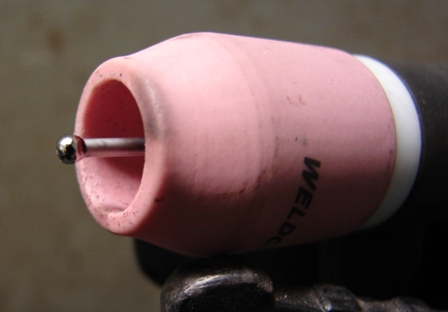
A good ball size is about the same as the diameter of the tungsten rod. A ball that is too big causes the arc to wander and lose focus, while a ball that is too small or uneven can lead to arc instability and contamination.
Choosing The Right Tungsten For Balling
You must use the right type of tungsten electrode for aluminum TIG welding. Not all tungsten types work well with balling and AC welding.
Common Tungsten Types For Aluminum
- Pure Tungsten (Green, AWS EWP)
- This is the traditional choice for aluminum TIG welding.
- Pure tungsten forms a smooth, round ball easily.
- It is affordable, but it does not last as long as other types.
- 2% Thoriated Tungsten (Red, AWS EWTh-2)
- Thoriated tungsten works better with DC welding and is not recommended for AC on aluminum.
- It does not form a proper ball and contains radioactive material.
- 2% Ceriated Tungsten (Gray, AWS EWCe-2)
- Ceriated tungsten can work for AC aluminum, but it forms a smaller ball.
- It is more common for DC welding on thin materials.
- 2% Lanthanated Tungsten (Blue, AWS EWLa-2)
- Lanthanated tungsten works well with AC and is becoming more popular.
- It forms a stable, controlled ball and lasts longer than pure tungsten.
- Zirconiated Tungsten (White, AWS EWZr)
- This is the preferred alternative to pure tungsten.
- It resists contamination and keeps a small, round ball.
- It is more expensive but lasts longer.
Quick Comparison Table
Here is a comparison of the most common tungsten types for aluminum TIG welding:
| Tungsten Type | Color Code | Balling Ability | Best For | Relative Price |
|---|---|---|---|---|
| Pure Tungsten | Green | Excellent | General AC Aluminum | Low |
| Zirconiated | White | Very Good | Critical Aluminum Jobs | Medium |
| Lanthanated | Blue | Good | Both AC & DC | Medium-High |
| Ceriated | Gray | Fair | Thin Aluminum/General Use | Medium |
| Thoriated | Red | Poor | DC Only | Medium |
Key Insight: Many new welders try to use red thoriated tungsten for everything, but it does not work well for aluminum AC welding and does not form a proper ball.
Tools And Safety Equipment Needed
Balling tungsten is simple, but you need some basic tools and safety gear:
- TIG welding machine with AC output
- Tungsten electrode (typically 1/16″, 3/32″, or 1/8″ diameter)
- Proper collet and torch for your electrode size
- Protective gear (welding helmet, gloves, cotton jacket)
- Grinding wheel (for cleaning tungsten, if needed)
- Clean aluminum scrap (to help start the balling process)
- Wire brush (dedicated for aluminum)
Important: Never use the same wire brush for steel and aluminum. This prevents contamination.
How To Ball Tungsten For Aluminum Tig Welding: Step-by-step
This section will walk you through the whole process, from setup to checking your results.
1. Prepare The Tungsten Electrode
Start with a clean tungsten rod. If the tip is damaged or dirty, use a dedicated grinding wheel to grind off any contamination. Always grind lengthwise, not around the rod, to avoid grooves that can trap impurities.
You do not need to sharpen the tip to a point for aluminum. A flat end works better and is easier to ball.
2. Insert Tungsten Into The Torch
Insert the tungsten electrode into the collet, making sure about 1/4 inch (6 mm) sticks out from the gas cup. Tighten the back cap and check that the electrode is secure.
Tip: If you stick out too much tungsten, you can get a weak or wandering arc.
3. Set The Welding Machine
Switch your welding machine to AC mode. Set the amperage to 1.5 to 2 times the maximum recommended for your tungsten size. This higher setting helps form a ball quickly.
Refer to this basic guideline:
| Tungsten Diameter | Starting Amperage (AC) | Ball Size Goal |
|---|---|---|
| 1/16″ (1.6 mm) | 80-100 amps | 1.6 mm |
| 3/32″ (2.4 mm) | 120-150 amps | 2.4 mm |
| 1/8″ (3.2 mm) | 180-220 amps | 3.2 mm |
Note: These values are for balling only, not for welding. Drop the amperage back down before you start welding.
4. Prepare The Work Area
Clean a piece of aluminum scrap with a dedicated wire brush. Remove any oxide layer, oil, or dirt. Clamp the workpiece to the table and connect the ground clamp.
Tip: Clean aluminum gives a more stable arc and a cleaner ball.
5. Form The Ball
Hold the torch above the aluminum scrap, about 1/8 inch (3 mm) from the surface. Press the foot pedal or start the arc. Hold the arc for 3-5 seconds. Watch the tip of the tungsten glow and start to round off.
If you see a large, uneven blob, your amperage is too high. If the tip just melts without forming a ball, your amperage is too low.
A perfect ball should be round, shiny, and not bigger than the tungsten rod itself.
Non-Obvious Insight: Some people try to ball the tungsten by touching it to the aluminum. This contaminates the tip. Always keep a small gap to avoid this mistake.
6. Inspect The Ball
Turn off the arc and let the electrode cool. Look at the tungsten tip under good light. It should have a small, even, and round ball. If the ball is too big, grind off the excess and repeat the process with less amperage.
Tip: Never use a ball that is larger than the tungsten diameter. It makes the arc unstable and hard to control.
7. Set The Welding Amperage
Once you have a good ball, turn the amperage down to the correct setting for your actual weld. Use the manufacturer’s chart or a basic rule: about 1 amp per 0.001 inch of material thickness (for aluminum).
Credit: www.weldingtipsandtricks.com
Common Mistakes When Balling Tungsten
Many beginners run into the same problems. Here’s how to avoid them:
1. Too Much Amperage
This causes a huge, misshapen ball. It makes the arc wander and can even cause the ball to drop into your weld pool.
2. Too Little Amperage
The tip just gets dull or melts unevenly, but does not form a proper ball.
3. Touching The Workpiece
This contaminates the tungsten with aluminum and ruins the tip. Always keep a small gap.
4. Using The Wrong Tungsten Type
Using thoriated or ceriated tungsten can lead to poor ball formation and arc instability.
5. Over-grinding Or Over-sharpening
Balling works best on a flat or slightly rounded tip, not a sharp point.
6. Not Cleaning The Tungsten
Dirt, grease, or old material can contaminate the ball and produce a dirty arc.
Non-Obvious Insight: Many welders ignore the cooling step. If you shape the ball and start welding while the tungsten is still hot, it can deform quickly. Always let it cool before welding.
Advanced Tips For Consistent Balling
Once you master the basics, these advanced tips can help you get more reliable results:
- Use a Dedicated Balling Setting: Some modern TIG machines have a “pre-ball” or “electrode conditioning” function. This automatically sets the right amperage and time.
- Balance Control: Machines with AC balance let you adjust cleaning versus penetration. More cleaning (higher balance) makes the ball form faster, but too much can make the ball too large.
- Start Each Day With a New Ball: If you weld a lot, re-ball your tungsten at the start of each day for consistent results.
- Store Tungsten Properly: Keep your electrodes in a clean, dry case. Moisture and oil can cause contamination.
- Try Zirconiated Tungsten: If you weld thick aluminum or need the cleanest arc, white zirconiated tungsten is more stable and resists contamination.
Troubleshooting Balling Problems
Sometimes, even if you follow all the steps, you run into problems. Here’s how to solve the most common issues:
Ball Too Big Or Misshapen
- Cause: Too much amperage or holding the arc too long.
- Solution: Reduce amperage, ball for a shorter time, and grind off any excess.
Ball Not Forming
- Cause: Too little amperage or using thoriated tungsten.
- Solution: Increase amperage or switch to pure or zirconiated tungsten.
Arc Wanders Or Is Unstable
- Cause: Ball is too big, tip is dirty, or tungsten sticks out too far.
- Solution: Shape a new ball, clean the tungsten, and check your torch setup.
Electrode Contamination
- Cause: Touching tungsten to aluminum or using a dirty brush.
- Solution: Grind the tip, use a dedicated aluminum brush, and keep a small gap.
Electrode Splitting Or Melting
- Cause: Cheap tungsten, improper balling, or AC balance is set too high.
- Solution: Use better quality tungsten, ball properly, and check machine settings.
How Balling Tungsten Affects Arc Performance
The shape and size of the tungsten ball control how the arc behaves. Here’s what changes:
- Small, even ball: Produces a narrow, focused arc. This is best for precise welds and thin aluminum.
- Large ball: Makes the arc wide and unstable. This can cause dirty welds and poor penetration.
- Uneven or dirty ball: The arc jumps around, causing inconsistent welds and contamination.
Example: If you weld a thin aluminum sheet with a large, uneven ball, you might burn through the metal or get a rough bead. With a small, clean ball, you can make a neat, even weld.
Differences Between Ac And Dc Tig Welding With Tungsten
You ball tungsten only for AC welding, which is used for aluminum and magnesium. For DC welding (steel, stainless steel, copper), you sharpen the tungsten to a point.
Here’s a quick comparison:
| Welding Mode | Tungsten Tip Shape | Best For |
|---|---|---|
| AC (Aluminum) | Small Ball | Aluminum, Magnesium |
| DC (Steel) | Sharp Point | Steel, Stainless, Copper |
Key Point: Using a ball tip for DC welding causes arc wandering and contamination. Always match the tip shape to the welding mode.
How Often Should You Re-ball Tungsten?
You do not need to ball your tungsten before every weld, but you should check it often. Re-ball the electrode if:
- The ball becomes uneven or grows larger than the tungsten diameter
- The arc becomes unstable or drifts
- The tip gets contaminated or splits
For most hobbyists, balling once per welding session is enough. For critical or production work, check and re-ball before each new weld.

Credit: www.youtube.com
How To Ball Tungsten On Inverter Tig Machines
Older machines use a pure sine wave AC, which makes it easy to form a ball. Newer inverter-based TIG machines use square wave AC, which can form a smaller, more controlled ball.
Steps for inverter machines:
- Use lanthanated or zirconiated tungsten. Pure tungsten may not last as long.
- Set the machine to a higher amperage (as above) for a short time to form the ball.
- Use the AC balance control to fine-tune the ball size.
Non-Obvious Insight: On some inverters, pure tungsten can spit or split under high amperage. Lanthanated or zirconiated is more stable for these machines.
Safety Tips For Balling Tungsten
- Always wear a proper welding helmet. AC arcs are bright and can damage your eyes.
- Wear gloves and a long-sleeve shirt. Protect your skin from UV radiation.
- Keep your work area ventilated. AC welding produces ozone and fumes.
- Never use thoriated tungsten for balling. It is radioactive and not safe for AC.
- Use a dedicated grinding wheel. This prevents cross-contamination from other metals.

Credit: yeswelder.com
Expert Tips For Beginners
- Start with pure or zirconiated tungsten. These are easiest to ball and most forgiving.
- If you have trouble forming a ball, check your machine settings first.
- Cleanliness is essential. Always clean both the tungsten and the workpiece.
- Practice on scrap aluminum until you can form a small, even ball every time.
- If the arc jumps or wanders, check the ball size and re-ball if needed.
Real-world Example: Balling Tungsten For A Simple Aluminum Project
Imagine you need to weld a 1/8″ thick aluminum bracket. Here’s how to prepare the tungsten:
- Select a 3/32″ pure tungsten rod.
- Grind off the old tip so it is flat.
- Insert the rod into your torch, with about 1/4″ sticking out.
- Set your AC amperage to 130 amps.
- Clean a piece of scrap aluminum.
- Start the arc and hold it for 3-5 seconds.
- Inspect the tip. If the ball is the same size as the tungsten, you are ready to weld.
- Set your amperage to about 125 amps for welding.
- Proceed to weld your bracket.
If you notice the arc moving or the weld looking dirty, check the ball and re-ball if needed.
Summary Table: Balling Tungsten Steps
| Step | Action | Purpose |
|---|---|---|
| 1 | Clean & flatten tip | Remove contamination |
| 2 | Insert into torch | Set correct stick-out |
| 3 | Set AC & high amperage | Form the ball quickly |
| 4 | Start arc on clean scrap | Shape the ball |
| 5 | Inspect & adjust ball | Ensure correct size |
| 6 | Let cool before welding | Maintain ball integrity |
Frequently Asked Questions
What Size Should The Tungsten Ball Be For Aluminum Tig Welding?
The ball should be about the same size as the diameter of the tungsten rod. For example, if you use a 3/32″ electrode, the ball should be about 3/32″ wide. A larger ball can cause the arc to wander and create dirty welds.
Can I Use Thoriated Tungsten For Aluminum Tig Welding?
No, thoriated tungsten is not recommended for AC welding on aluminum. It does not form a good ball, can create an unstable arc, and is slightly radioactive. Use pure or zirconiated tungsten instead.
How Often Do I Need To Re-ball My Tungsten?
Re-ball your tungsten whenever the arc becomes unstable, the tip gets contaminated, or the ball grows too large. For most users, this means checking and re-balling before every major project or after several welds.
Why Does My Tungsten Tip Keep Splitting Or Melting?
This usually happens if you use too much amperage, the wrong type of tungsten, or if your AC balance is set too high. Try lowering the amperage, switching to zirconiated tungsten, or adjusting your machine’s AC balance.
Is There A Difference In Balling Tungsten With Inverter Versus Transformer Tig Machines?
Yes. Inverter machines use a square wave and may form a smaller, more controlled ball. Pure tungsten sometimes splits on inverters, so lanthanated or zirconiated types are better. Transformer machines (older) work well with pure tungsten.
If you want to learn more about tungsten electrodes, you can find detailed information on the Wikipedia tungsten electrode page.
Balling tungsten for aluminum TIG welding is a simple process, but it takes practice to perfect. With the right electrode, proper technique, and attention to detail, you will get stable arcs and clean welds every time. Always focus on cleanliness, use the correct amperage, and inspect your electrode often.
This small step can make a big difference in the quality of your aluminum welds.