Disclosure: This post contains affiliate links and I will be compensated if you make a purchase after clicking through my links. Learn More
JB Weld High Heat is popular for fixing and bonding metals and other tough materials. People often use it for exhaust systems, grills, engines, and other parts that face high temperatures. Many choose this epoxy for its strong bond and resistance to heat, but they often ask one key question: How long does JB Weld High Heat take to dry? Knowing the drying time is important for a safe and strong repair. If you use the product before it has dried and cured fully, the bond may not hold.
Drying and curing times can change based on temperature, humidity, and the materials you use. This article will give a clear answer on JB Weld High Heat drying time and explain all factors that affect the process. It will also offer tips for faster drying, mistakes to avoid, and answers to common questions.
Whether you are new to JB Weld or have used it before, you will find useful advice here.
What Is Jb Weld High Heat?
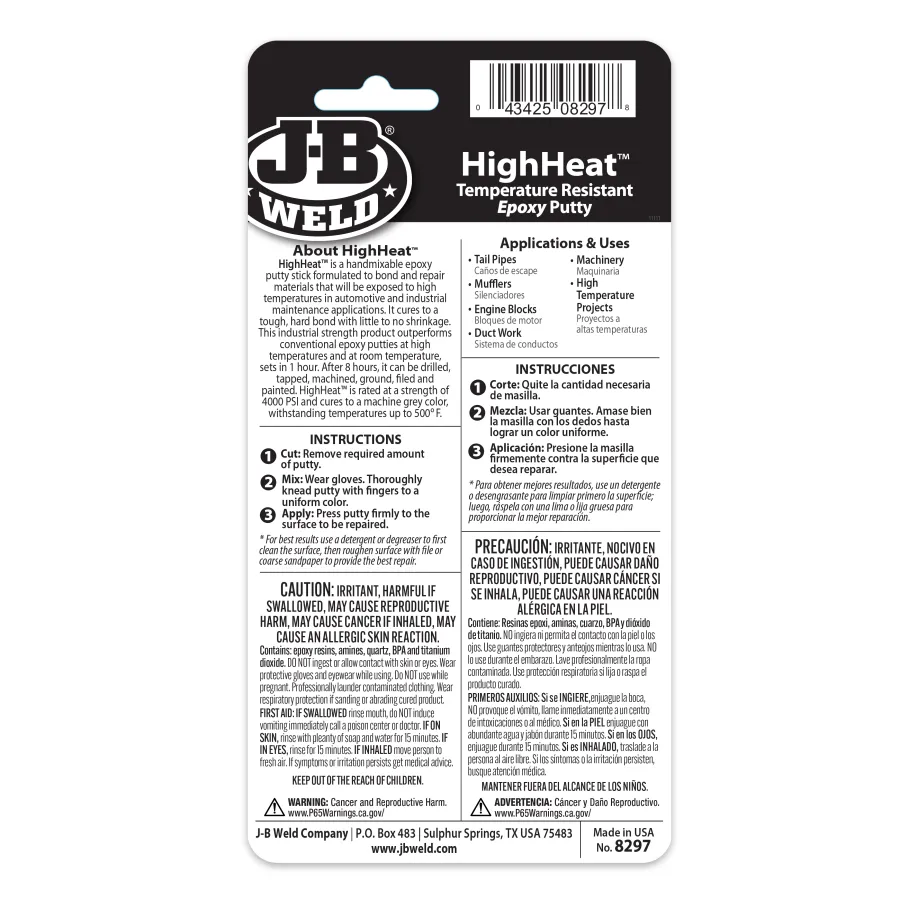
JB Weld High Heat is a two-part epoxy adhesive. It can handle very high temperatures, up to 500°F (260°C) when cured. The product comes in two tubes: one with resin and one with hardener. You mix them in equal parts before applying. This creates a chemical reaction that forms a strong bond.
People use JB Weld High Heat for automotive repairs, home projects, and industrial fixes. It works well on steel, iron, copper, and many other metals. It can also bond some ceramics and stones. This flexibility makes it a go-to option for people who need a tough, heat-resistant fix but do not have access to welding tools or want a simpler solution.
For example, if your exhaust manifold develops a crack, welding might not be possible or safe at home. JB Weld High Heat can be applied in place, and after curing, it holds up under the same high temperatures. Many DIYers also use it to repair barbecue grills, fire pits, and even to fill gaps in metal stoves, saving money on costly replacements.
Key Features
- Heat resistance: Up to 500°F (260°C) continuous, 600°F (316°C) for short bursts. This means it can handle not just standard use, but also momentary spikes in temperature, such as when a car engine gets especially hot.
- Strength: Up to 5020 PSI. This is strong enough for most metal repairs where welding would otherwise be needed.
- Versatility: Bonds metals, ceramics, and some stones. It will not work on flexible materials or most plastics, but for metals and stone, it is very reliable.
- Waterproof: Once cured, it resists water, oil, and many chemicals. This makes it useful in environments like car engines and grills, which can be exposed to both heat and liquids.
Drying Vs. Curing: What’s The Difference?
Many people mix up drying and curing. But they are not the same.
- Drying means the surface feels hard or not sticky. This happens when the solvent or moisture in the epoxy evaporates, so it is safe to touch without getting sticky residue on your fingers.
- Curing means the epoxy has reached full strength and heat resistance. This is a chemical process that takes more time, where the epoxy hardens all the way through, not just on the outside.
JB Weld High Heat may feel dry in a few hours, but it needs more time to fully cure. Using the repaired part too early can lead to failure. For example, if you glue an exhaust pipe and start your car after just a few hours, the bond could soften or break, leading to leaks or even safety hazards.
How Long Does Jb Weld High Heat Take To Dry?
JB Weld High Heat usually dries to the touch in 1 hour. This means you can gently touch the surface, and it will not be sticky. But this is just the first stage. The product will not reach full strength or heat resistance for much longer.
- Set time: 1 hour (surface dry)
- Cure time: 24 hours (full strength and heat resistance)
You should wait at least 24 hours before putting the part back into use, especially if it will face heat or stress. In some cases, curing can take up to 48 hours if the temperature is low or humidity is high.
A common mistake is to test the repair after just a few hours. Even though the surface feels solid, the inside may still be soft. This is especially true with thicker applications. When the inside is not fully cured, it cannot handle heat or pressure, and the repair may fail.
Example Timeline
- 0–1 hour: The epoxy is soft and sticky. If you touch it, it may stick to your finger or move out of place.
- 1 hour: The surface is dry to the touch. You can gently touch it, but do not apply force or heat.
- 6–8 hours: The bond is stronger, but not cured. Light handling may be possible, but do not use or stress the part.
- 24 hours: Full cure for most uses. The epoxy has reached its rated strength and heat resistance.
- 48 hours: Maximum cure in cold or damp areas. If you are unsure, waiting longer is better than rushing.
It is always safer to wait a little longer than to risk a weak repair.
Factors That Affect Drying And Curing Time
Drying and curing times are not always the same. Different conditions can speed up or slow down the process. Here are the main factors:
1. Temperature
JB Weld High Heat cures faster in warm conditions. The ideal temperature is above 50°F (10°C). If it is colder, the process slows down.
- At 70°F (21°C): Full cure in 24 hours.
- Below 50°F (10°C): May need up to 48 hours.
For example, if you repair something in your garage during winter, it may take two days or more to fully cure. If you try to use the repaired part too soon, the bond can break under stress or heat. In contrast, repairs done in warm, dry weather will usually cure faster and stronger.
2. Humidity
High humidity can slow down curing. Epoxies do not cure as well when the air is damp. Try to use JB Weld High Heat in a dry place.
If you live in a humid area or it is raining outside, consider using a dehumidifier or running a fan to keep the air dry. Excess moisture can also cause the surface to look cloudy or sticky, even after several hours.
3. Thickness Of Application
A thicker layer of epoxy takes longer to cure. If you apply a large amount, the center may stay soft for longer, even if the surface feels dry. Try to use thin, even layers for best results.
For example, if you are filling a deep gap, apply the epoxy in several thin layers instead of one thick blob. This way, each layer cures fully and the repair is stronger.
4. Surface Material
The type of material can change the drying time. Metal surfaces usually help the epoxy cure faster. Non-porous materials like glass or glazed ceramics may slow the process.
If you are bonding two different materials, like metal to stone, expect the curing time to be closer to the slower side. The bond will still be strong, but patience is important.
5. Air Flow
Good air flow helps the epoxy cure. If you use it in a closed space, curing may take longer.
Even placing a small fan near the repair can help the fumes escape and speed up the chemical reaction. Just make sure not to blow dust or debris onto the wet epoxy.
6. Mixing Ratio
Always mix equal parts of resin and hardener. If you use too much of one, the epoxy may not cure at all.
Some people try to “eyeball” the amounts, but this often leads to sticky, weak repairs. Use a disposable tray or card with markings, and mix until the color is uniform with no streaks.
Official Data From Jb Weld
According to JB Weld’s official technical data sheet, JB Weld High Heat has the following times:
- Set time: 1 hour
- Handling time: 4–6 hours
- Cure time: 24 hours at room temperature (70°F/21°C)
They recommend waiting at least 24 hours before exposing the repair to high heat or heavy loads. For best results, allow up to 48 hours in cooler conditions.
Also, JB Weld notes that the bond reaches its highest strength and temperature resistance only after full cure. If your repair is critical, like a car exhaust or stove, it is always safer to wait the maximum recommended time.
How To Use Jb Weld High Heat For Best Results
Using JB Weld High Heat is simple, but small mistakes can cause weak bonds. Follow these steps for the strongest repair.
1. Clean The Surface
Remove all dirt, oil, paint, and rust. Use sandpaper or a wire brush. The cleaner the surface, the better the bond.
For best results, wipe the area with isopropyl alcohol after sanding. This removes fine dust and oil that can weaken the bond. Even fingerprints can cause problems, so handle the cleaned area as little as possible.
2. Mix Equal Parts
Squeeze equal amounts from each tube. Mix them well on a disposable surface. Mix for at least one minute until the color is even.
If the mixture looks streaky or has unmixed spots, keep stirring. Incomplete mixing leads to soft spots and weak bonds.
3. Apply Thin, Even Layers
Spread the epoxy in a thin, even layer. If you need more thickness, build it up in stages. Thick blobs may stay soft in the middle.
Use a small putty knife, popsicle stick, or even a stiff piece of cardboard to spread the epoxy. Try to push the epoxy into cracks or gaps so it makes full contact with the surfaces.
4. Clamp Or Hold In Place
If possible, clamp the parts together. This helps the bond form tightly and reduces air bubbles.
If you cannot use a clamp, use tape, rubber bands, or even weights to hold the pieces in place. The less movement during curing, the stronger the final result.
5. Wait For Full Cure
Do not move or stress the repair for at least 24 hours. If it is cold or humid, wait 48 hours.
Resist the urge to “test” the repair early. Even light pressure can weaken a bond before it is fully cured.
6. Check The Bond
After curing, check the bond by tapping or pressing gently. If it still feels soft, give it more time.
A fully cured bond should feel solid and should not move or flex under normal pressure.
Practical Tips For Faster Drying
Sometimes you need the repair done quickly. Here are ways to speed up drying and curing:
- Use a small space heater to warm the area (do not overheat or place it too close).
- Place the part in a warm, dry room.
- Use a fan to improve air flow.
If you are repairing something outside, consider bringing it indoors overnight to help curing. Just make sure the area is well-ventilated, as epoxy fumes can be strong.
Never use an open flame or oven. Epoxy gives off fumes that can be harmful if heated too much.
Also, do not try to “bake” the epoxy to speed things up. Rapid heating can cause the bond to weaken or even make the epoxy bubble.
Common Mistakes And How To Avoid Them
Many users make small errors when using JB Weld High Heat. Here are mistakes to watch for:
- Not cleaning the surface well. Dirt and oil stop the epoxy from bonding.
- Mixing the wrong ratio. Uneven parts of resin and hardener stop curing.
- Applying too thick. Thick layers stay soft inside.
- Moving the repair too soon. Wait for full cure before using.
- Using in cold or damp conditions. This slows curing or stops it.
Another common mistake is using JB Weld High Heat on the wrong materials, like flexible plastics or rubber. This epoxy is made for rigid, heat-resistant surfaces. Always check the label or manufacturer’s website if you are unsure.

Credit: knowhow.napaonline.com
How Jb Weld High Heat Compares To Other Epoxies
JB Weld makes several products. Some cure faster, but most are not as heat resistant.
Here is a comparison of common JB Weld products:
| Product | Set Time | Cure Time | Max Temp | Strength |
|---|---|---|---|---|
| High Heat | 1 hour | 24 hours | 500°F (260°C) | 5020 PSI |
| Original | 4-6 hours | 15-24 hours | 550°F (288°C) | 3960 PSI |
| KwikWeld | 6 minutes | 4-6 hours | 300°F (149°C) | 3127 PSI |
As you can see, JB Weld High Heat is not the fastest, but it is the best for high-temperature repairs.
Also, note that while JB Weld Original can handle slightly higher temperatures in short bursts, High Heat is designed to handle repeated and constant heat better. KwikWeld is great for fast fixes but not for extreme heat.
Real-world Examples
Many users have shared their experiences with JB Weld High Heat. Here are a few examples:
- Exhaust pipe repair: After applying JB Weld High Heat to a small hole, the repair held up for over a year. The user waited 24 hours before starting the engine. They noted that even after driving in hot weather, the fix stayed solid.
- Wood stove crack: A homeowner used JB Weld High Heat to seal a crack. They let it cure for 48 hours before lighting the stove. The repair lasted through several winter seasons. The user also sanded and painted the area after curing, with no problems.
- Car engine block: A mechanic used JB Weld High Heat on a pinhole leak. He let it sit for 36 hours due to cool weather. The bond remained strong even after long drives. The mechanic mentioned that proper cleaning and thin layers were key to success.
These examples show the importance of waiting for full cure before using the repaired part.
Credit: www.jbweld.com
How To Tell If Jb Weld High Heat Is Fully Cured
It can be hard to know when the epoxy is fully cured. Here are signs to look for:
- The color is even and solid. There should be no streaks or glossy wet spots.
- The surface is hard and not sticky. Touch with a finger; there should be no tackiness.
- There is no flex or movement when pressed. Press gently and see if the bond feels rigid.
- A metal tool will not leave a mark when tapped gently. The bond should feel as hard as the metal it covers.
If you are unsure, wait a few more hours. Extra time will not hurt the repair.
One extra check: if you can smell the epoxy, it may not be fully cured. Most of the odor disappears after curing.
How To Remove Uncured Jb Weld High Heat
Sometimes you need to remove JB Weld High Heat before it cures. Use these steps:
- Wipe with acetone or isopropyl alcohol. This will dissolve uncured epoxy.
- Scrape gently with a plastic tool.
- Clean with a rag.
Once the epoxy is cured, you cannot remove it with solvents. You must sand or grind it off.
If you need to remove cured epoxy from metal, start with a coarse file or sandpaper, then finish with a finer grit. For small parts, a rotary tool with a sanding attachment can help.
Safety Tips When Using Jb Weld High Heat
Epoxies can be safe if used correctly. Follow these tips:
- Wear gloves to avoid skin contact.
- Work in a well-ventilated area to avoid fumes.
- Avoid food contact. Do not use on items that touch food.
- Keep away from children and pets.
If epoxy gets on your skin, wash with soap and water.
Also, avoid touching your face or eyes while working with epoxy. If you get epoxy in your eyes, rinse immediately with clean water and seek medical help.
Frequently Overlooked Insights
Many guides skip these important points:
- Thin layers cure stronger: Thick blobs may look solid, but the inside can stay soft. Multiple thin layers give a stronger, safer repair. This is a reason why professionals often take more time for better results.
- Cure time matters more than dry time: Many users rush after the surface feels dry. True strength and heat resistance only come after full cure.
- Surface prep is the most important step: Even the best epoxy will fail if you do not clean and roughen the surface first.
- Mixing for at least a minute: Rushing the mixing stage leads to weak spots. Take your time to mix until the blend is perfectly uniform.
Jb Weld High Heat: Quick Facts
- Full cure time: 24 hours at room temperature
- Heat resistance: 500°F (260°C) continuous
- Set time: 1 hour (surface dry)
- Best for: High temperature metal repairs
- Mix ratio: 1:1 by volume
If you remember these facts, you can quickly decide if JB Weld High Heat is the right choice for your repair.
Jb Weld High Heat In Extreme Conditions
Some users apply JB Weld High Heat in less-than-ideal conditions. Here is how it performs:
| Condition | Effect on Cure Time | Tips |
|---|---|---|
| Cold (below 50°F/10°C) | Slows curing, up to 48 hours | Use space heater, allow more time |
| High humidity | Slower cure, possible weak bond | Work in dry area, use fan |
| Thick application | Surface may dry, inside stays soft | Apply in thin layers |
This table shows how important it is to control your work environment.
Even if you follow every other step, ignoring temperature or humidity can lead to disappointing results. Many failed repairs can be traced back to rushing the process or working in poor conditions.

Credit: www.jbweld.com
When To Use Jb Weld High Heat
Choose JB Weld High Heat for repairs that face regular or high heat, such as:
- Exhaust pipes
- Engine blocks
- Grills and smokers
- Boilers
- Ovens (non-food areas)
- Fireplaces (outer metal parts)
Do not use it for plastic repairs, items that touch food, or items that face constant water pressure.
For example, do not use it to repair a water pipe under your kitchen sink or a coffee maker. The heat and water resistance are excellent, but not meant for constant water pressure or food contact.
Alternative Products
If you need a faster cure and do not need high heat resistance, JB Weld KwikWeld or other quick-set epoxies might work better. For plastic or wood, use a special epoxy made for those materials.
Check the product label for the best choice. For more technical info, see the official JB Weld website.
Other alternatives for plastic include plastic-specific epoxies, which bond flexible materials better. For wood, look for wood repair epoxies that can expand and contract with the material.
Frequently Asked Questions
How Long Before I Can Use The Repaired Part?
Wait at least 24 hours before using the repaired part. For best results, wait 48 hours if the area is cold or humid.
Can I Use Heat To Speed Up Curing?
Mild heat (70–90°F or 21–32°C) can speed curing. Do not use an open flame or oven. A small space heater or warm room is safe.
What If I Mixed The Wrong Ratio?
If you do not mix equal parts resin and hardener, the epoxy may not cure. It may stay sticky or never harden. Remove and try again with the correct ratio.
Is Jb Weld High Heat Food Safe?
No. Do not use JB Weld High Heat on surfaces that will touch food or drink.
Can I Sand Or Paint Jb Weld High Heat?
Yes. After full cure (24 hours), you can sand, drill, or paint the surface.
Final Thoughts
JB Weld High Heat is reliable for tough, high-temperature repairs. The drying time is about 1 hour, but full cure takes 24 hours at room temperature. For best strength and heat resistance, wait for a full cure before using the part. Clean surfaces, mix well, and apply in thin layers for the strongest bond. Avoid the common mistakes listed here, and you will get results that last. Use the tips and tables above to plan your repair and avoid surprises. With patience and care, your repair will hold up under heat and stress.
If you are fixing something important or expensive, always double-check your work area and follow the steps closely. Good preparation and patience often make the difference between a quick fix and a long-lasting repair. Remember, with JB Weld High Heat, a little extra time and care go a long way.