Disclosure: This post contains affiliate links and I will be compensated if you make a purchase after clicking through my links. Learn More
An arc welder generates temperatures between 6,500°F and 10,000°F (3,600°C to 5,500°C) at the arc tip. This extreme heat melts metal in seconds, making arc welding one of the hottest and fastest methods for joining metals.
Why Does An Arc Welder Get So Hot?
Arc welders use electricity to make an electric arc between an electrode and the workpiece. When the arc forms, it creates a superheated plasma channel. The reason arc welders reach such high temperatures is simple: the electric arc forces a strong flow of electrical energy through a small area, instantly heating it. Metals like steel, aluminum, and stainless steel melt at much lower temperatures than the arc. For example, steel melts at about 2,500°F (1,370°C), but the welding arc is much hotter, so the metal melts very quickly.
The Science Behind Arc Welding Temperatures
When two electrical contacts come close together but do not touch, the electricity jumps the gap, forming an arc. This arc is a plasma—a mix of ionized gas and electrons. The energy here is intense. In fact, arc welding temperatures can reach levels hotter than the surface of the sun (the sun’s surface is about 10,000°F or 5,500°C). That’s why arc welding can melt even tough metals in seconds.
How Arc Heat Melts Metal
The arc’s high temperature rapidly brings the surface of the metal and the electrode to their melting points. This creates a molten weld pool. As the pool cools, it solidifies, fusing the metals together. The electrode also melts, adding more metal to fill the joint.
Types Of Arc Welding And Their Temperature Ranges
Different arc welding processes generate slightly different temperatures. Here’s a comparison:
| Welding Type | Arc Temperature (°F) | Arc Temperature (°C) |
|---|---|---|
| SMAW (Stick Welding) | 6,500 – 8,000 | 3,600 – 4,400 |
| MIG (GMAW) | 6,500 – 8,500 | 3,600 – 4,700 |
| TIG (GTAW) | 7,000 – 11,000 | 3,800 – 6,100 |
| Plasma Arc Welding | up to 50,000 | up to 28,000 |
Why Extreme Heat Matters In Arc Welding
The high temperature is not just for show. It’s critical for:
- Melting base metals quickly and efficiently
- Ensuring strong welds by fusing materials deeply
- Melting electrode material to fill the joint
Without enough heat, the metals would not melt properly. Welds would be weak, incomplete, or full of defects.
Key Insight: Not All Metals Need The Same Heat
Each metal has a unique melting point. For example, aluminum melts at 1,220°F (660°C), while cast iron melts at about 2,060°F (1,127°C). Arc welders always provide more heat than needed, so there’s enough energy to melt the base and filler metals, even when conditions aren’t perfect.
Factors Affecting Arc Welder Heat
Several variables control how hot the arc actually gets. Understanding these helps you get better welds and stay safe.
1. Welding Current (amperage)
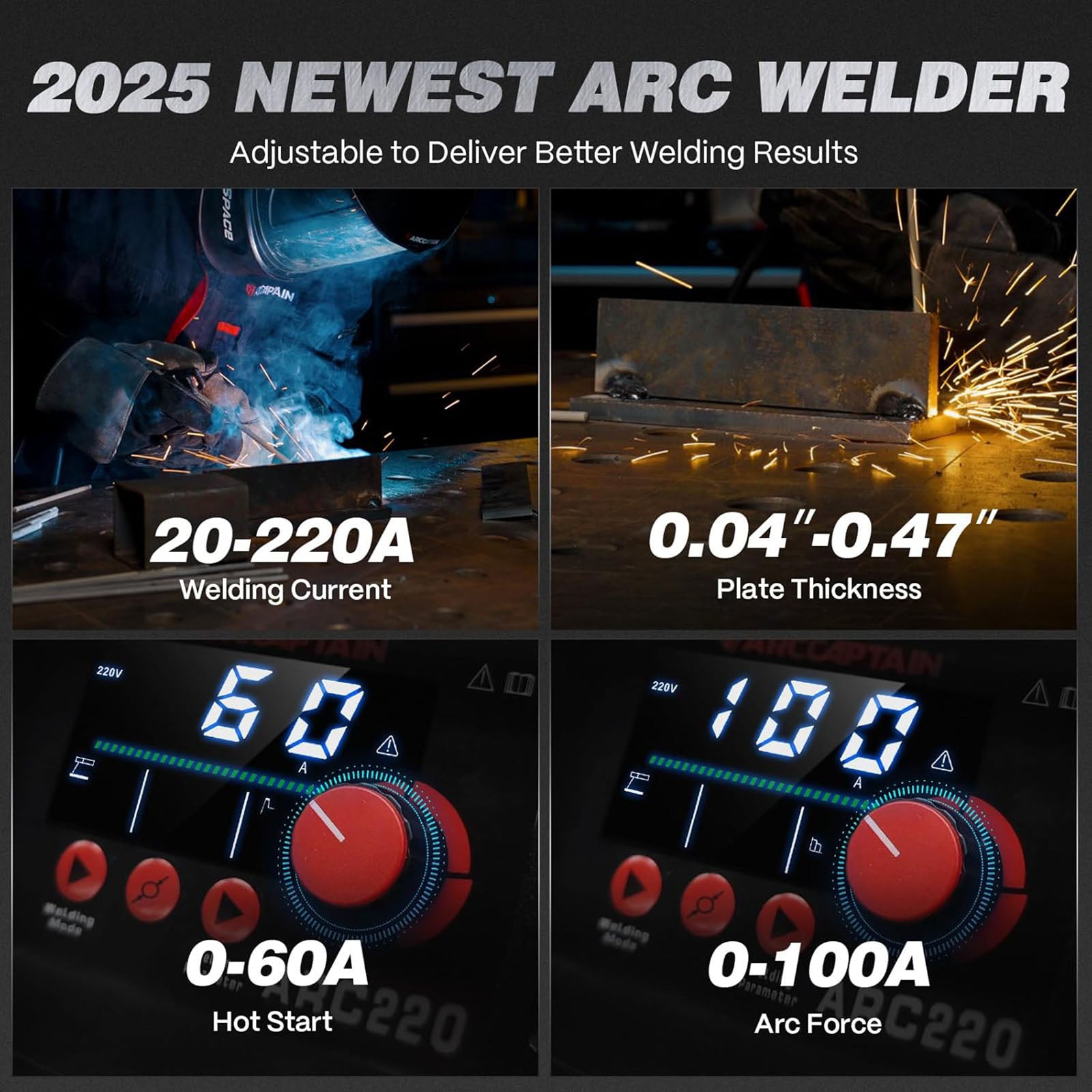
Amperage is the main driver of heat. Higher amps mean more heat. For example, stick welding steel at 90 amps creates much less heat than welding at 200 amps. Most home welders range from 60 to 200 amps, while industrial machines can go much higher.
2. Voltage
Voltage affects the arc’s length and stability. Higher voltage can make the arc hotter, but too much voltage can cause excessive spatter or poor weld control.
3. Electrode Type
Different electrodes melt at different rates and can handle various heat levels. For example, tungsten electrodes in TIG welding can handle higher temperatures than standard stick electrodes.
4. Shielding Gas
The type of shielding gas changes the arc’s temperature. For example, pure argon produces a hotter, more focused arc, while mixes of argon and CO2 are cooler but offer more penetration for steel.
5. Arc Length
A longer arc means higher voltage and more heat at the arc, but it can be unstable. A short arc is cooler and more stable, but may not penetrate as deeply.
Arc Welder Heat Compared To Other Welding Methods
Arc welders are not the only machines that get hot. But they are among the hottest.
| Welding Method | Max Temperature (°F) | How Heat is Produced |
|---|---|---|
| Arc Welding | 6,500 – 11,000 | Electric arc |
| Oxy-Acetylene Welding | 5,600 | Gas flame |
| Laser Welding | up to 20,000 | Laser beam |
| Friction Welding | 2,500 – 3,000 | Mechanical friction |
| Resistance Spot Welding | 2,500 – 3,000 | Electrical resistance |
Arc welding stands out for its combination of high temperature and precise control. This is why it’s the top choice for construction, automotive, shipbuilding, and pipeline projects.
What Happens To Metal At Arc Welder Temperatures?
When metal reaches the arc’s temperature, it:
- Melts quickly at the weld joint
- Vaporizes if the temperature is too high or the arc is left in one spot too long
- Changes structure (microstructure changes, which can affect strength and hardness)
Extreme heat causes thermal expansion. When the metal cools, it contracts, which can cause warping or stress. That’s why welders use controlled techniques to manage heat input.
Heat-affected Zone (haz)
The heat-affected zone is the area around the weld that does not melt but gets very hot. The size and properties of the HAZ depend on welding temperature, speed, and the type of metal. A large HAZ can make the metal brittle or weak if not managed properly.
How To Control Heat In Arc Welding
Good welders know how to manage heat. Too much heat causes burn-through, warping, and weak welds. Too little heat gives poor penetration and weak joints.
Here’s how pros control heat during welding:
- Adjust Amperage – Use the lowest amp setting that gives good penetration for the metal thickness.
- Control Travel Speed – Moving faster puts less heat into the metal.
- Use Proper Arc Length – Keep the arc as short as possible for better control.
- Choose the Right Electrode – Match electrode size and type to the job.
- Pause and Cool – For thin metals, stop and let the work cool to avoid overheating.
Pro Tip: Watch For Color Changes
Red-hot, orange, or even white-hot metal shows that you’re putting in a lot of heat. On thin metals, this can be a warning sign. On thick steel, it’s normal. Always use a welding helmet to protect your eyes from the arc.
Dangers Of Arc Welder Heat
The extreme heat of arc welding creates several risks:
- Burns – Direct contact or even radiant heat from the arc can cause severe burns instantly.
- Fire – Sparks and molten metal can ignite clothing or nearby materials.
- UV Radiation – The arc emits intense ultraviolet light, which can cause “arc eye” (a painful eye burn) and sunburn-like skin damage.
- Metal Fumes – High heat vaporizes metal, creating toxic fumes.
Safety Gear You Must Use
Never weld without:
- A welding helmet with proper shade
- Flame-resistant gloves and jacket
- Safety glasses under the helmet
- Closed-toe boots
- Respirator for jobs with poor ventilation
Arc welding is safe only if you respect the heat and use the right gear.
Common Mistakes When Dealing With Arc Welder Temperatures
Even experienced welders sometimes make heat-related mistakes. Here are some to avoid:
1. Using Too Much Amperage
This overheats the work, causing burn-through, excess spatter, or even vaporizing the metal.
2. Not Controlling Travel Speed
Moving too slowly puts too much heat in one place, making the weld weak or causing warping.
3. Ignoring Preheat Or Post-heat
Some metals, like high-carbon steel or cast iron, need to be preheated before welding and cooled slowly after. Skipping this step causes cracks.
4. Welding Thin Metals Like Thick Ones
Thin sheet metal melts fast. Use lower heat, smaller electrodes, and fast movement.
5. Poor Heat Management In Multi-pass Welds
On thick metal, welders often use several passes. They must let the work cool between passes, or the part can overheat and fail.
How Arc Welder Temperature Affects Weld Quality
Weld quality depends directly on the heat applied. Too much or too little heat causes problems.
Signs Of Good Heat Control
- Smooth, even weld bead
- Proper penetration (not too shallow or too deep)
- Minimal warping
- Small, controlled heat-affected zone
Signs Of Poor Heat Control
- Burn-through holes in the metal
- Brittle, cracked, or porous welds
- Large, discolored areas around the weld
- Distorted or warped workpieces

Credit: www.youtube.com
How To Measure Arc Welder Temperatures
Most welders never measure arc temperature directly. Instead, they control amperage and watch the weld pool. But some advanced tools can measure or estimate temperature:
- Infrared thermometers – For surface temperature after welding
- Pyrometers – Specialized tools for high temperatures
- Thermocouples – Sensors placed near the weld to record heat
Still, in most cases, experience and visual cues guide welders. The color and behavior of the weld pool tell you if the temperature is right.
Arc Welder Temperature In Different Industries
Arc welding is used in many industries, each with its own needs for heat control.
Construction
Welders join structural steel beams and supports. They use high amps for deep penetration and strong joints.
Automotive
Thin body panels and thick frames both need welding, but with very different heat input. Cars and trucks rely on precise arc welding for safety.
Shipbuilding
Ships use massive steel plates. Arc welding must provide enough heat for deep, reliable welds, but also control to avoid distortion.
Pipeline
Pipelines carry oil, gas, and water. Welds must be strong and leak-proof, often done outdoors with stick or MIG welding at high heat.
Aerospace
Aircraft parts use exotic metals like titanium and must avoid overheating. TIG welding gives the most temperature control.

Credit: www.reddit.com
Arc Welder Heat And Metal Types
Not all metals handle arc welder heat the same way. Here’s how the most common metals respond:
Steel
Most common for arc welding. Melts at 2,500°F (1,370°C). Can handle high heat, but must watch for warping on thin sheets.
Stainless Steel
Melts at about 2,750°F (1,510°C). Sensitive to heat—too much can damage corrosion resistance.
Aluminum
Low melting point (1,220°F or 660°C). Needs careful heat control to avoid burn-through.
Cast Iron
Melts at 2,060°F (1,127°C). Prone to cracking if heated or cooled too fast.
Titanium
Melts at 3,034°F (1,668°C). Needs very clean, controlled welding to avoid contamination.
How Arc Welder Heat Is Used In Cutting And Gouging
The same heat that fuses metal can also cut or gouge it. With a special electrode and technique, arc welders can cut through thick steel easily.
- Arc cutting uses a carbon electrode and high amps to melt and blow away metal.
- Air carbon arc gouging uses compressed air to blow molten metal away, cleaning up welds or removing old joints.
These processes use the extreme heat of the arc for fast, precise metal removal.
How To Reduce Heat Damage In Arc Welding
Experienced welders use several tricks to avoid overheating and damaging the work:
- Stitch welding – Short welds with breaks in between allow cooling.
- Backstepping – Weld in small sections, working back toward the start.
- Heat sinks – Clamp copper or aluminum bars near the weld to absorb excess heat.
- Interpass cooling – Let the work cool between weld passes.
These techniques keep the workpiece strong and the weld clean.
Comparing Arc Welding Heat To Other Industrial Processes
Is arc welding really hotter than other industrial processes? Here’s a final comparison:
| Process | Max Temperature (°F) | Main Use |
|---|---|---|
| Arc Welding | 11,000 | Joining metals |
| Blast Furnace | 3,000 | Iron production |
| Gas Welding | 5,600 | Sheet metal repair |
| Industrial Oven | 2,400 | Heat treating |
| Laser Cutting | 20,000 | Precision cutting |
Arc welding is one of the hottest processes in the industry, second only to laser cutting in temperature, but far more common for fabrication and repair.
Practical Tips For Managing Arc Welder Heat
- Always match your settings to the metal thickness.
- Watch the color of the weld pool—dull red is usually safe for most steels.
- Use tack welds to hold pieces before making long welds—this prevents warping.
- For thin metals, use lower amps and move quickly.
- Don’t touch hot metal with bare hands—it stays hot long after welding.
Real-world Example: Building A Steel Frame
Suppose you’re welding a 1/4-inch steel frame for a trailer. You set your stick welder to 125 amps. The arc instantly heats the steel to over 6,500°F, melting the edges of the plates and the electrode. As you move the arc along the seam, molten steel fills the joint.
If you go too slowly, the frame will warp from excess heat. If you go too fast, the weld will be weak and shallow. The right balance makes a strong, straight, and reliable frame.
How Arc Welder Heat Impacts Energy Consumption
Arc welding uses a lot of electricity. The higher the amps, the more power you use. For example, a 200-amp welder running at full power can use up to 9,000 watts. That’s more than an electric oven or central air conditioner.
For large projects, this energy adds up, so efficient welding saves both time and money.
Environmental Effects Of Extreme Welding Heat
Extreme arc temperatures can produce ozone, nitrogen oxides, and metal fumes. These are hazards for both welders and the environment. Always weld in a well-ventilated area and use fume extraction whenever possible. The fumes are especially dangerous when welding coated or galvanized metals.
Credit: www.arccaptain.net
Key Takeaways: How Hot Is An Arc Welder?
- The arc can reach 6,500°F to 11,000°F, hotter than the surface of the sun.
- This heat melts most metals instantly, making welding fast and strong.
- Heat control is the key to good welds and safety.
- Different metals and welding methods need different heat management.
- Use proper settings, safety gear, and techniques to master arc welding.
For more technical details on arc welding temperatures and safety, you can visit the official Arc Welding Wikipedia page.
Frequently Asked Questions
How Hot Does An Arc Welder Actually Get?
An arc welder generates temperatures between 6,500°F and 11,000°F at the arc tip. This extreme heat melts almost any metal quickly, allowing strong and efficient welds in industries like construction, automotive, and shipbuilding.
Can Arc Welders Melt Any Type Of Metal?
Yes, arc welders can melt most common metals, including steel, aluminum, stainless steel, and titanium. Some metals need special techniques to prevent warping or cracking, but the arc’s heat is enough to melt almost anything.
Is Arc Welding Hotter Than Gas Welding?
Arc welding is much hotter than gas welding. The arc reaches up to 11,000°F, while oxy-acetylene gas flames peak at about 5,600°F. That’s why arc welding is better for thick metals and structural work.
How Can You Control The Heat Of An Arc Welder?
Control heat by adjusting amperage, using the right electrode, keeping a short arc, and moving at the correct speed. For thin metals, use lower amps and faster movement; for thick steel, increase amps for deep penetration.
Is Arc Welder Heat Dangerous?
Yes, arc welder heat can cause severe burns, fires, and health hazards like eye damage and toxic fumes. Always use proper safety gear, weld in a safe area, and watch for signs of overheating or poor ventilation.