Disclosure: This post contains affiliate links and I will be compensated if you make a purchase after clicking through my links. Learn More
If you want to become a welder without school, focus on hands-on practice, self-study, and learning directly from working welders. You can enter this skilled trade by building experience, gaining certifications, and using real-world projects to prove your ability. This approach is practical, and it’s possible to succeed if you are determined and willing to learn by doing.
Why Many Choose Welding Without School
Many people skip welding school for practical reasons. Tuition can be expensive and not everyone can spend months in a classroom. Some prefer learning by doing, working with their hands, and earning money as soon as possible. Welding is a trade where skills matter more than diplomas. Employers want to see your welds, not your GPA.
Choosing to learn welding outside of school is common. According to the American Welding Society, there are over 400,000 welding jobs in the U.S., and thousands of welders start their careers through on-the-job training or apprenticeships, not college. This path works for people who are motivated, practical, and want to build their careers from the ground up.
Some people also want to avoid student debt or need to support their family right away. Welding offers a way to do both. If you are willing to hustle, you can start earning quickly and gain new skills as you go.
Others might live in rural areas where there are no welding schools nearby, so learning on the job makes more sense. Some even start welding on family farms or in auto repair shops, where they see the value of the skill every day.
Another reason is the flexibility. When you learn outside of school, you set your own pace. You can learn on weekends, evenings, or whenever you have time. There’s no need to wait for semesters to begin. This is especially helpful for adults changing careers or people with busy schedules.
Understanding What Welding Involves
Welding is joining metal pieces by heating them until they melt and fuse together. The work can be simple or complex—building fences, fixing machinery, or working on pipelines. Most welding jobs require good hand-eye coordination, attention to safety, and physical strength.
Here’s why welding is a solid career choice:
- Job security: Welders are needed everywhere—construction, manufacturing, repair shops, and shipyards.
- Good pay: Median pay is around $48,940 per year (Bureau of Labor Statistics, 2023).
- Room to grow: Skilled welders can move into inspection, supervision, or their own business.
Welding is not just about joining metal. It’s also about understanding the properties of steel, aluminum, stainless steel, and other metals. Each material reacts differently to heat and requires different techniques. For example, welding thin sheet metal for cars is a different skill than repairing a heavy steel beam on a bridge.
Many welders enjoy the variety—one day you might fix a tractor, the next you could help build a custom trailer or repair a broken handrail.
Some jobs involve working outdoors in all weather, while others are inside factories or workshops. You might be standing, kneeling, or working overhead. Flexibility and a willingness to learn new methods are important. You also need to understand welding symbols, which are used on blueprints and plans.
These symbols show you where and how to weld, so being able to read them will help you get better jobs.
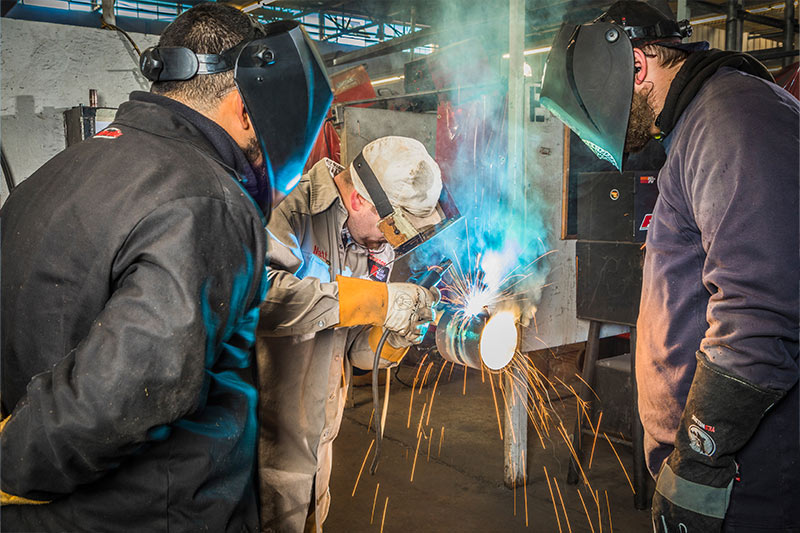
Safety is a big part of welding. You deal with high heat, sparks, and sometimes dangerous fumes. Good welders protect themselves and those around them by following safety rules every time.
Credit: www.tws.edu
Skills You Need To Become A Welder
Before you start, understand what skills matter in welding. You don’t need a degree, but you do need to master these:
- Hand-eye coordination: Steady hands make strong, clean welds.
- Mechanical skills: Know your tools and machines.
- Math basics: Measure, cut, and read blueprints accurately.
- Attention to detail: Small mistakes can cause big problems.
- Physical strength: Welders lift, hold, and move heavy materials.
- Stamina: Long shifts, sometimes in hot or cramped spaces.
- Safety awareness: Welding can be dangerous—burns, fumes, and electric shock.
You also need good problem-solving skills. Not every job is the same. Sometimes you’ll need to fix a mistake or find a new way to join pieces. Being creative and willing to try again is important.
Communication is another skill that’s often overlooked. Welders work with other trades, like electricians, plumbers, or fabricators. Being able to explain your work, ask for help, or follow instructions makes every job go smoother.
Finally, patience and discipline are important. Your first welds won’t be perfect. It takes time and practice to create welds that are both strong and good-looking. Keeping a positive attitude and being open to feedback will help you improve faster.
Step-by-step: How To Become A Welder Without School
You can break into welding without a classroom. Here’s the proven path:
1. Decide Which Welding You Want To Learn
Not all welding is the same. Choose a type that fits your goals.
- MIG welding: Good for beginners and general use.
- TIG welding: Precise, used for thin metals and aluminum.
- Stick welding: Popular for outdoor and repair work.
- Flux-cored welding: Great for heavy-duty jobs.
Check job boards or local companies to see what type is in demand in your area.
If you want to work on cars or light metal projects, MIG welding is a strong choice. For artistic projects or thin metals, TIG welding gives you the most control. If you plan to work on farms, construction sites, or outdoors, stick welding is very useful because it works well in windy or dirty conditions.
Many beginners start with MIG or stick welding because the equipment is less expensive and easier to find. As you gain skill, you can try TIG or flux-cored welding. This step-by-step approach lets you build a strong foundation before moving to more advanced methods.
2. Get The Right Equipment
You’ll need basic gear to practice at home or in a friend’s shop. Here’s a comparison:
| Item | Purpose | Estimated Cost |
|---|---|---|
| Welding Machine (MIG/Stick) | Main tool for joining metal | $200–$700 |
| Auto-Darkening Helmet | Protects eyes and face | $40–$120 |
| Welding Gloves | Hand protection | $10–$30 |
| Jacket or Apron | Protects body from sparks | $20–$60 |
| Basic Tools (pliers, wire brush) | Cleaning, handling metal | $20–$50 |
You can buy used gear to save money. Always choose quality over price for safety equipment.
It’s also smart to invest in safety glasses, ear protection, and steel-toe boots if you plan to weld often. Some shops might require a fire extinguisher nearby. When buying a welding machine, read reviews or ask experienced welders for advice.
A reliable machine makes learning easier and reduces frustration from faulty equipment.
If money is tight, check for local tool libraries, community workshops, or even online marketplaces for deals on gently used gear. Don’t skip safety gear—even small burns or eye injuries can end a promising welding career.
3. Learn Welding Theory On Your Own
You don’t need school to learn welding basics. Use these resources:
- YouTube channels: “Welding Tips and Tricks,” “ChuckE2009,” and “The Fabrication Series” are trusted by working welders.
- Welding books: “Welding For Dummies” and the “Hobart Welding Guide” offer clear, step-by-step instructions.
- Online forums: WeldingWeb and Reddit’s r/Welding let you ask questions and see real projects.
- Manufacturer manuals: Always read the manual for your welding machine.
Spend at least 1–2 weeks studying safety, types of welds, and machine setup before striking your first arc.
As you study, focus on understanding how heat, travel speed, and angles affect the finished weld. Watch slow-motion videos to see exactly how the molten puddle forms. Study common welding defects, like porosity or undercut, and learn how to avoid them.
It’s also helpful to learn the reasons behind each safety rule. For example, knowing why certain fumes are dangerous will make you more careful about ventilation. Don’t just copy what you see in videos—try to understand the “why” behind each technique.
If you have access to welding magazines or trade publications, read about the latest trends and technologies. This will help you keep up as the industry changes.
4. Start Practicing At Home Or Local Shops
Hands-on practice is the fastest way to build welding skills. Use scrap metal and start with simple joints—flat, fillet, and butt welds.
Practice these basics:
- Striking an arc: Learn to start the weld cleanly.
- Controlling the puddle: The molten metal “puddle” is the heart of every weld.
- Moving at the right speed: Too fast, and you get weak welds; too slow, and you burn through.
Document your progress. Take photos of your best welds. Keep a notebook of what works and what fails.
Try to practice regularly, even if it’s just 30 minutes a day. Start with basic materials like mild steel, which is forgiving for beginners. Once you’re comfortable, try joining thicker or thinner pieces, or changing the welding position (horizontal, vertical, overhead).
Experiment with different settings on your machine. If your welds look poor, change one thing at a time and see what improves. This methodical approach helps you learn faster.
Working with scrap metal is also useful because you can test your welds by bending or breaking them. This shows you if your welds are strong enough for real-world use.
5. Find A Mentor Or Helper
Learning from a working welder can save you months of mistakes. Ask if you can watch or help at a local shop, farm, or body shop. Many welders are happy to share their knowledge if you show respect and work hard.
Pro insight: Most beginner mistakes—like poor joint prep, wrong heat settings, or bad angles—are easier to fix with expert feedback. A mentor might even let you practice on real jobs under close supervision.
You don’t need a formal apprenticeship. Sometimes just asking questions during a repair job or helping clean up a shop can lead to valuable lessons. Offer to help with setup, cleanup, or basic tasks. The more you help, the more likely you are to get hands-on experience.
If you don’t know any welders, try visiting local repair shops, construction sites, or agricultural supply stores. Many professionals are willing to help someone who’s serious about learning. Be polite, show up on time, and listen carefully.
Some communities have welding clubs or local meetups. These can be great places to find mentors and see live demonstrations.
6. Build A Portfolio Of Your Work
A portfolio proves you can weld, even without a diploma. It’s your ticket to paid work.
Here’s what to include:
- Clear photos of different welds (MIG, TIG, stick, etc.)
- Before-and-after shots of repairs or builds
- Notes on the materials, methods, and machines you used
- Any letters of recommendation from welders or employers
Store your portfolio online (Google Drive, Dropbox) or print it for job interviews.
Add a short description for each photo—explain what you welded, what challenges you faced, and how you solved them. If you helped with a large project, explain your role. Employers want to see that you can handle real tasks, not just practice coupons.
A digital portfolio is easy to update and share. If you plan to freelance or start your own business, a strong portfolio will help you attract clients.
7. Get Industry Certifications
You don’t need school to get certified. Many testing centers offer welding tests to anyone, for a fee.
Popular certifications:
- AWS Certified Welder (American Welding Society)
- ASME Section IX (for pipe welders)
- State welding cards (required in some states)
You will take a hands-on welding test. If you pass, you get a card or certificate that proves your skill.
Pro tip: Certifications open doors to better jobs and higher pay. Most employers care more about these than where you learned.
Before your test, practice the required welds under similar conditions. Some tests require specific positions (like overhead or vertical) or certain materials. Ask the testing center for details ahead of time.
If you don’t pass the first time, don’t give up. Many great welders had to try more than once. Use feedback from the test to improve your technique.
8. Apply For Entry-level Welding Jobs
With experience and a solid portfolio, you can start applying for jobs.
Typical entry-level positions:
- Welder helper/laborer
- Fabricator assistant
- Maintenance welder
- Production line welder
Use your network—ask your mentor, friends, or local shops if they know of open positions.
Don’t be afraid to start small. Many top welders began as helpers and worked their way up.
When applying, highlight your hands-on experience, portfolio, and certifications. If you have worked on personal or community projects, mention them. Some companies will give you a trial or test weld before hiring, so be ready to demonstrate your skills.
Persistence matters. If you don’t get a job right away, keep applying and improving your technique. Many welding jobs are filled through word-of-mouth, so keep asking around.
9. Learn On The Job And Keep Improving
The best welders never stop learning. Each new job will teach you something—different metals, weld positions, or repair techniques.
Ways to keep growing:
- Ask questions on the job
- Try new welding types
- Attend industry events or open houses
- Practice after hours on your own projects
Industry fact: Skilled welders with a strong work ethic can double their pay in just a few years.
In addition to technical skills, learn about related trades like metal cutting, grinding, or fabrication. The more you know, the more valuable you become to employers.
Keep a notebook of what you learn. If you make a mistake, write down what happened and how you fixed it. This habit helps you avoid repeating errors and shows future employers your dedication.
Many companies offer training or pay for new certifications. Take advantage of these opportunities to keep moving forward.
10. Stay Safe—always
Welding can be dangerous if you ignore safety. You must protect yourself and those around you.
Key rules:
- Always wear the right gear—helmet, gloves, jacket.
- Work in a well-ventilated area to avoid fumes.
- Never weld near flammable materials.
- Check all equipment before every use.
Non-obvious insight: Many injuries come from simple mistakes—like not checking your helmet battery or using the wrong gloves for hot work. Small details keep you safe.
Pay attention to your surroundings. Remove clutter and keep a fire extinguisher nearby. Learn first aid for burns and eye injuries. If you feel tired or rushed, take a short break—most accidents happen when people are not focused.
Some metals, like galvanized steel, create toxic fumes when welded. Always research what you’re working on and wear the right respiratory protection if needed.

Credit: resume.io
Comparing The No-school Path Vs. Welding School
Some people wonder if skipping school will hurt their chances. Here’s a side-by-side look:
| Path | Pros | Cons | Best For |
|---|---|---|---|
| No-School (Self-Taught/On-the-Job) | Lower cost, faster start, real-world experience | No formal diploma, must find your own mentor | Hands-on learners, those needing to work quickly |
| Welding School | Structured learning, access to advanced tools, job placement | High cost, time investment, classroom focus | Those who prefer guided study, need a diploma for certain jobs |
A no-school path builds independence and real-world skills. However, some jobs—especially in large companies or government contracts—may require a diploma or formal training. Welding schools often have job placement services, which can make finding your first job easier.
But many employers care most about your ability, attitude, and work ethic. If you can show you’re reliable, skilled, and safety-minded, you can succeed without a degree.
Common Mistakes When Becoming A Welder Without School
You can avoid most beginner errors if you know what to watch for:
- Skipping safety: Accidents are common if you ignore gear or safe practices.
- Buying cheap equipment: Low-quality machines or helmets can fail or cause injury.
- Not learning the basics: Rushing into welding before understanding theory leads to bad habits.
- No mentor or feedback: Working alone is slower and mistakes go unnoticed.
- Weak portfolio: Without proof, employers may pass you over.
- Ignoring certifications: Many jobs require at least one certification.
- Not networking: Most welding jobs come from word-of-mouth, not job boards.
Expert insight: Some welders spend years stuck in low-paying roles because they never ask for advice or try new techniques.
Another common mistake is not reading the manual for your specific welding machine. Small differences in setup or controls can make a big difference in weld quality. Always start with the manufacturer’s instructions.
Failing to practice regularly is also a problem. Welding is a skill that improves with repetition. Even 10–15 minutes a day will make a difference over time.

Credit: www.tws.edu
Where To Practice Welding Without School
Finding a place to practice is a challenge, but you have options:
- Home garage: If allowed, set up a safe welding space in your garage or shed.
- Local repair shops: Offer to help with simple tasks in exchange for practice time.
- Community maker spaces: Many cities have shared workshops with welding stations.
- Farm/ranch work: Rural areas often need help with equipment repairs.
- Scrapyards: Some allow welders to practice on scrap metal for a small fee.
Non-obvious tip: Insurance and safety are important. Always ask about shop rules and insurance before starting.
Before setting up in your home garage, check local laws and fire codes. Make sure you have good ventilation and a clear, non-flammable area. If you’re working in a shared space, be respectful and clean up after yourself.
Some community colleges or adult education centers offer open lab hours even if you’re not enrolled in a full course. This can be a good way to access better equipment and meet other welders.
How To Prove Your Welding Skills Without A Diploma
Employers want to see results, not paperwork. Here’s how to stand out:
- Bring your portfolio: Show your best welds, repairs, and projects.
- Offer to weld on the spot: Many bosses will give you a short test.
- Explain your process: Show that you understand safety and setup.
- Show certifications: Even a single AWS card can make a difference.
- Share references: Past mentors or shop owners can vouch for your skills.
Example: A welder who started at 18 without school landed a job at a fabrication shop by showing a binder of project photos and passing an in-person weld test.
If you’re asked to do a test weld, stay calm. Set up carefully, check your safety gear, and take your time. It’s better to go slow and get it right than to rush and make mistakes.
If you have worked on community projects, like building a fence or fixing equipment for a neighbor, include those stories. Real-world results matter more than perfect test pieces.
How To Build A Welding Career Without School
Success in welding comes from attitude, not your education. Here’s the roadmap:
- Work your way up: Start as a helper, prove your reliability, and take on more tasks.
- Learn from everyone: Each welder and project will teach you something new.
- Keep certifications current: Renew cards as needed for better jobs.
- Specialize: Pipe welding, underwater welding, or custom fabrication pay more.
- Consider self-employment: Many welders start their own repair or fabrication businesses after a few years.
Stat: Over 15% of welders in the U.S. are self-employed, offering mobile welding or repair services.
As you gain experience, look for areas where demand is high. For example, pipeline welders, shipbuilders, and industrial maintenance welders often earn more. If you like variety, consider mobile welding—traveling to job sites and fixing equipment.
Building strong relationships with clients and employers helps your reputation. Good welders are remembered and recommended for new opportunities.
Resources For Self-taught Welders
You have more learning tools than ever before. Use these to your advantage:
- YouTube: Free, step-by-step welding videos from real tradespeople.
- American Welding Society: Offers test guides, job boards, and standards.
- Reddit r/Welding: Active community for advice and project ideas.
- Local libraries: Many have welding books and DVDs.
- WeldingWeb.com: Forum for sharing projects and getting feedback.
For official testing and certification info, visit the American Welding Society.
In addition, look for local trade shows, open houses, or welding expos. These events let you see new tools, watch demonstrations, and meet employers. Some even have competitions or workshops where you can test your skills.
How To Stay Motivated And Stand Out
Welding is challenging—burns, long hours, and sometimes boring work. Here’s how to keep going:
- Set small goals (weld a perfect bead, fix a trailer, pass a test)
- Track your progress with photos and notes
- Work on real projects (help family or neighbors with repairs)
- Compete in local welding contests
- Keep learning new techniques and metals
Personal growth is visible: Your welds get cleaner, your speed improves, and your confidence grows with every project.
Find a community of other welders, online or in person, to share your wins and struggles. Celebrate milestones, like your first certification or successful repair. If you hit a wall, take a break, watch a new video, or try a different welding method.
Keep your passion alive by building things you care about.
The Future Of Welding For Self-taught Pros
The demand for welders is steady, with thousands of jobs open every year due to retirements and new projects. Robotics and automation are growing, but skilled humans are still needed for repairs, custom builds, and specialty work.
Tip: Learning to read blueprints, operate CNC machines, or use 3D modeling software can make you even more valuable.
Welding isn’t just about joining metal anymore. Technology is changing the field. Some welders program robotic arms or use computers to design parts. The more you learn, the more doors open.
Many companies need welders who can adapt to new equipment and methods. If you keep learning and improving, you can build a career that lasts for decades.
Companies want welders who show up on time, work safely, and deliver quality. If you prove your skills, you can go far—no degree required.
Frequently Asked Questions
How Long Does It Take To Become A Welder Without School?
Most self-taught welders reach entry-level skill in 3–6 months of steady practice. It depends on how often you train and your access to real welding projects. Getting certified can speed up your job search.
If you practice daily and have access to a mentor, you can become job-ready even faster. Some people take longer if they practice part-time or need to balance other responsibilities.
Do I Need Certification To Get A Welding Job Without School?
While not always required, certification like the AWS Certified Welder card greatly improves your job chances. Many employers use it to prove you can do the work, even if you learned outside of a classroom.
Some small shops may hire you without a certificate if you show good skills. For larger companies or specialized work, certification is almost always required.
Can I Teach Myself Welding Just By Watching Videos?
Videos and books can teach theory, but hands-on practice is essential. Combine online learning with real-world welding on scrap metal. Feedback from experienced welders helps you avoid mistakes and build good habits.
Try to find someone who can watch your work and give tips. Small adjustments in technique make a big difference.
What Is The Starting Pay For Welders Without School?
Entry-level welders usually earn $16–$22 per hour, depending on location and industry. Pay goes up with experience, certifications, and specialty skills. Some self-taught welders earn over $30 per hour after a few years.
If you specialize or start your own business, your earning potential is even higher. Union jobs or industrial welding jobs tend to pay more.
Is Welding A Good Long-term Career For Self-taught Workers?
Yes, welding offers job security, good pay, and room to advance without a college degree. Self-taught welders succeed by proving their skills, staying safe, and always learning on the job.
With the right attitude and willingness to improve, you can build a rewarding, lifelong career.
If you’re ready to put in the work, welding can be your path to a solid career—no school required. Employers want results, not just diplomas. Start practicing, get certified, and let your work speak for itself.