Disclosure: This post contains affiliate links and I will be compensated if you make a purchase after clicking through my links. Learn More
Many welders know that storing welding rods correctly makes a big difference. But not everyone understands which welding rods need to stay in an oven or why this matters so much. Improper storage can cause weak welds, wasted materials, and even project failures.
The rules are not random. They connect directly to the rod’s materials and the way moisture affects them.
This article explains which welding rods must stay in an oven, why, and how this practice protects weld quality. You will find clear examples, practical details, and answers to common questions. Whether you are a beginner or have years of experience, you will learn something useful about rod care and safe welding.
Why Welding Rod Storage Matters
Welding rods, also called electrodes, have coatings that help the welding process. Some coatings absorb moisture from the air. This moisture can cause serious problems during welding, like hydrogen cracking or porosity. If you keep certain rods in a hot oven, you stop moisture from entering the coating.
The American Welding Society (AWS) and other standards organizations have strict rules for rod storage. Some rods can sit on a shelf, but others must stay warm and dry to work well. Understanding these differences is important for safety and quality.
You might not see the effect of moisture right away, but the damage can appear later. For example, a weld may look perfect at first but crack under stress weeks or months down the line. This is especially dangerous in construction or pressure vessels, where a failure could be costly—or even life-threatening.
Another reason storage matters is cost. Replacing failed welds, buying new rods, or facing rejected inspections can quickly add up. Good storage is a simple way to avoid these problems.
Which Welding Rods Need To Be Kept In An Oven?
Not every welding rod needs oven storage. The main group that does is called low hydrogen electrodes. These rods have a special coating that keeps hydrogen out of the weld. But if the rods get wet, hydrogen enters and can cause cracks.
The most common low hydrogen rods are:
- E7018
- E7016
- E7015
- E7048
- E7028
- E8018 and higher strength versions
Other rods, like cellulosic (E6010, E6011) and rutile (E6013), do not need oven storage.
Low Hydrogen Electrodes
Low hydrogen rods use coatings that control hydrogen levels in the weld. These rods are essential for structural steel, bridges, pressure vessels, and pipelines—any job where safety and strength matter.
- E7018 is the most common. It creates strong, ductile welds with low risk of cracking.
- E7016 and E7015 also need dry storage for similar reasons.
- E7028 and E7048 are less common but also require oven storage.
These rods often have “H4,” “H8,” or “H16” in their AWS code. The number shows the maximum amount of diffusible hydrogen allowed in the weld (measured in milliliters per 100g of weld metal).
Many new welders do not realize that diffusible hydrogen is invisible. You cannot see or feel when a rod has absorbed too much moisture, so following storage rules is the only safe way.
Other Rods
E6010, E6011, and E6013 are not low hydrogen rods. Their coatings do not absorb moisture in the same way, so oven storage is not needed. Still, they should be kept clean and dry to avoid rust or contamination.
For example, if you leave E6013 rods in a damp shop, the coating might break down or flake off, making the rods hard to use. While this does not cause hydrogen cracking, it can affect your arc and bead quality.
Stainless Steel And Specialty Electrodes
Some stainless steel electrodes (like E308L-16, E309L-16, E316L-16) also benefit from dry storage. Moisture can cause porosity or cracking in stainless welds, though the risk is lower than with carbon steel low hydrogen rods. For critical jobs, many shops keep these rods in a warm oven as an extra safety step.
For example, in food processing or chemical plants, welds must be free from cracks and holes to prevent leaks or contamination. Even small amounts of moisture in stainless rods can cause problems, so careful storage is wise.
Why Do Low Hydrogen Rods Need Oven Storage?
Low hydrogen rods lose their special properties if they absorb moisture. Even a small amount of water in the coating can add hydrogen to the weld. This hydrogen moves into the weld metal and can cause cracks, sometimes hours or days later. This is called hydrogen-induced cracking or cold cracking.
Oven storage keeps the rod’s coating dry, so it cannot absorb moisture from the air. Typical oven temperatures for storage are between 120°F and 300°F (50°C and 150°C), depending on the rod type and the manufacturer’s instructions.
If you open a new box of low hydrogen rods, you should move them to a storage oven right away. If the rods sit in open air, they can absorb moisture in a few hours, especially in humid climates.
Many welders do not realize that even a few minutes in a damp environment can make a difference. For example, carrying rods out to a job site on a rainy day without a quiver can cause enough moisture pickup to risk cracking.
Another hidden risk is condensation. If rods move from a cold area to a warm shop, water can condense on the coating, and this moisture is quickly absorbed. That’s why experienced welders avoid sudden temperature changes for stored rods.
How Do Welding Rod Ovens Work?
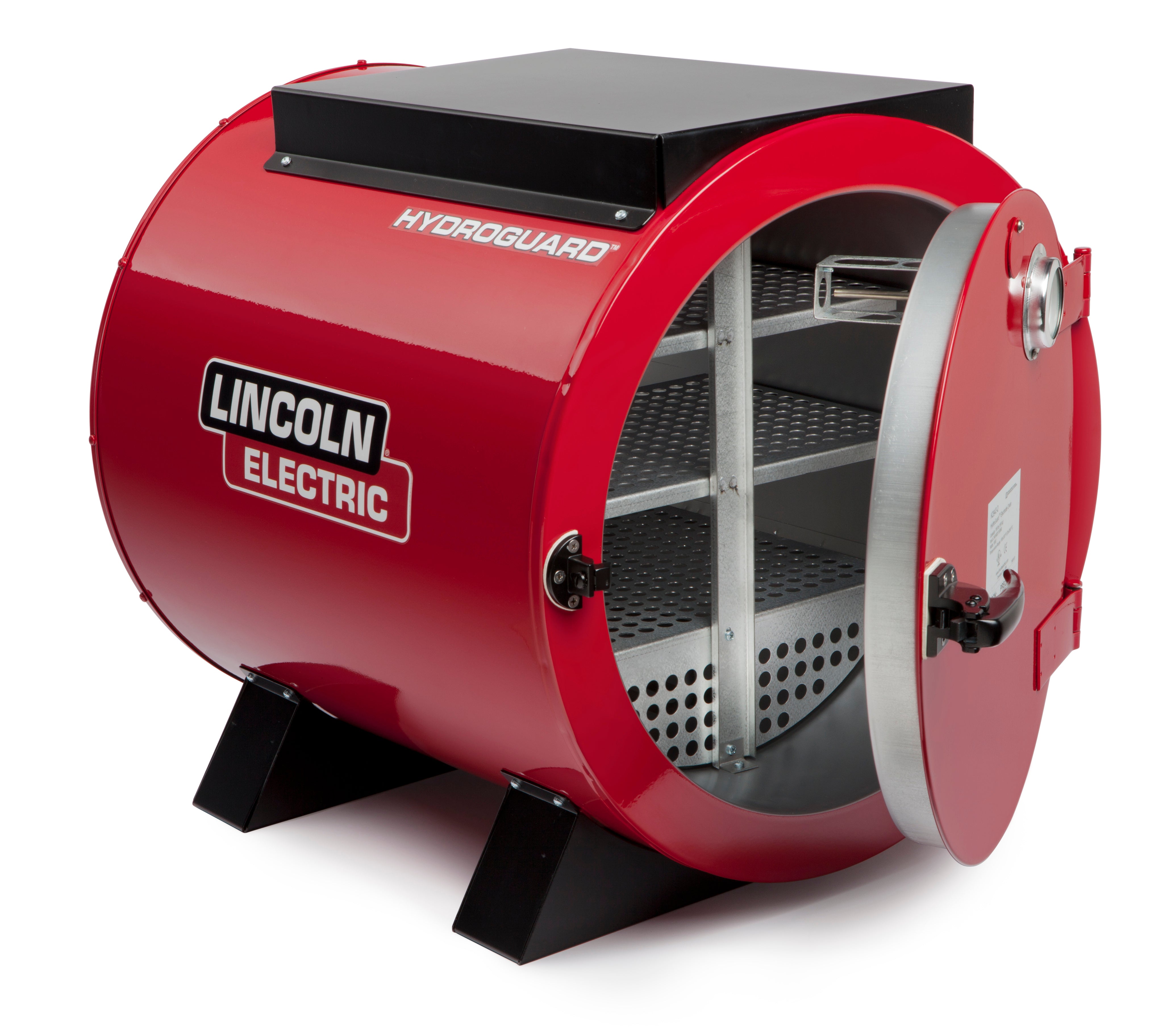
A welding rod oven is a heated box that holds rods at a set temperature. Ovens come in many sizes, from small bench-top units to large cabinets holding hundreds of pounds of rods. The goal is simple: keep the rods warm enough so water cannot enter the coating.
There are two main types of ovens:
- Holding ovens: Keep rods dry after baking. Temperature is usually 250°F (120°C) to 300°F (150°C).
- Baking ovens: Remove moisture from rods that have already been exposed. Baking is hotter—often 500°F (260°C) to 600°F (315°C)—and lasts 1-2 hours.
Most shops use a holding oven for daily storage and a baking oven if rods need reconditioning.
It is important to load rods into the oven in small layers, not all packed together. Air flow around each rod helps keep temperatures even. Some advanced ovens have fans or racks for this reason.
For job sites, portable “quiver” ovens can be plugged in near the work area. They are lighter and can hold a small batch of rods for a shift. This prevents rods from cooling and picking up moisture between welds.
How Long Can You Leave Rods Out Before They Need Baking?
The safe time outside the oven depends on humidity, temperature, and the rod’s coating. AWS and most manufacturers give these guidelines:
- E7018 rods can be left out for less than 4 hours before they may need rebaking.
- In humid areas, this time can drop to 1-2 hours.
- Stainless rods or special types may have their own time limits.
If you are not sure, check the rod’s box or the manufacturer’s website.
Remember, even if a rod looks dry, it may have absorbed enough moisture to cause problems. Some welders use a color-changing “humidity indicator” or small moisture test kits to check for moisture, but these are not common in every shop.
If you work on a large site with inspectors, you may need to write down the “out-of-oven” time for each batch. This tracking is required by some codes.
What Happens If You Use Moist Rods?
Using rods that have absorbed moisture can cause:
- Porosity: Tiny holes in the weld from steam bubbles.
- Hydrogen-induced cracking: Cracks form in the weld after cooling.
- Weak welds: Welds may not meet code or pass inspection.
- Increased spatter and bad arc stability.
Many welders have seen a “popcorn” effect or bubbles in the weld bead. These are clear signs the rod’s coating is wet. Welds made with wet rods often fail tests and may need to be cut out and redone.
In critical jobs, using wet rods can also lead to liability problems or even legal claims if the structure fails. Even for non-critical work, poor welds mean more grinding, repairs, and wasted time.
One less obvious effect is that wet rods make it harder to control the arc. This can cause undercut, uneven beads, or excessive spatter, making clean-up slower and reducing the appearance of your finished welds.
How To Store Welding Rods Properly
For Low Hydrogen Rods
- Keep rods in their sealed package until use.
- Move opened rods to a holding oven right away.
- Set the oven temperature according to the rod’s instructions (usually 250°F–300°F).
- Use a baking oven if rods have been exposed too long (follow manufacturer’s baking temperature and time).
It is also a good idea to use a logbook to track when each batch was opened and moved to the oven. This helps with inspections and reduces mistakes.
For Other Rods
- Store in a dry room, away from water and humidity.
- Keep in a rod canister with a tight lid for extra protection.
- Do not expose to direct rain or condensation.
If you live in a very humid place, you can add silica gel packs or other desiccants to rod containers for extra moisture control. Always check that containers are completely sealed after each use.
Table: Storage Temperatures For Common Rod Types
| Rod Type | Storage Temperature | Baking Temperature | Time Limit Out of Oven |
|---|---|---|---|
| E7018 | 250–300°F (120–150°C) | 500–600°F (260–315°C) | 2–4 hours |
| E6010/E6011 | Room temp, dry | Not needed | No strict limit |
| Stainless E308L-16 | 200–300°F (90–150°C) | 450–500°F (230–260°C) | 4–6 hours |
Which Environments Need Strict Rod Storage?
Critical construction sites always follow strict rod storage. Examples include:
- Bridge building
- Boiler or pressure vessel fabrication
- Pipeline welding
- Nuclear plant work
On these jobs, inspectors check rod ovens and may reject welds if storage rules are not followed. Even small shops can benefit from these practices, especially if they want strong, safe welds.
Military contracts, large factories, and transport infrastructure projects often require written procedures for rod handling. This ensures everyone follows the same rules, no matter who is on shift.
Hospitals and food plants are two more examples. Any place where safety and cleanliness matter will expect top-quality welds, and that starts with rod storage.
What About Rods For Home Or Farm Use?
Many home welders use E6011 or E6013 rods. These do not need oven storage, just a dry shelf or rod tube. But if you use E7018 for a tougher job, keep the rods in a small rod oven or use them soon after opening.
Some hobby welders buy rods in small packs and use them quickly. This reduces the risk of moisture problems, but you should always watch for signs like a “pop” or bubbles in the weld.
If you weld outside or in an unheated shop, rods can pick up moisture overnight. Store rods in a plastic bag or sealed tube with a little desiccant if you do not have an oven.
For those who weld only a few times a year, buying rods in small amounts and storing them in their original, sealed packaging is best. Avoid buying large boxes unless you will use them up quickly.
How To Tell If Your Rods Got Wet
It is not always easy to see if rods have picked up moisture. Here are a few ways to check:
- Physical feel: The coating feels soft, sticky, or crumbly.
- Appearance: The coating may look darker or have a whitish film.
- Welding test: The arc is noisy, and the weld bead has bubbles or cracks.
Some shops use an “oven test”: bake a few rods, then try welding. If the bead improves and the arc is smoother, the rods were probably wet.
A more advanced method is to weigh a rod before and after baking. If it loses weight, it had moisture inside. This method is not common but shows how even small amounts of water can hide in the coating.
If you suspect your rods are wet, bake them (if allowed by the manufacturer) before use.
Credit: www.weldingstore.com
Can You Re-dry Wet Low Hydrogen Rods?
Yes, but you must follow the manufacturer’s baking instructions. Overheating or repeated baking can damage the coating. Most brands allow one bake cycle after rods are exposed.
- Baking temperature: 500–600°F (260–315°C)
- Baking time: 1–2 hours
Never bake rods in a kitchen oven, as the fumes can be dangerous.
If the rods turn brown, cracked, or the coating flakes after baking, do not use them. Damaged rods can create weak or dangerous welds, even if they look dry.
Practical Tips For Rod Storage And Handling
- Label your rod containers with the date they were opened.
- Do not mix different rod types in one oven.
- Use rod quivers (small portable ovens) at the job site to keep rods hot.
- Keep oven doors closed to prevent heat loss.
- Check oven temperature with a thermometer, not just the dial.
If you share rod storage with others, color-code your rod cans or add clear labels to avoid mix-ups.
Another good habit is to check your oven’s power supply regularly. Unnoticed power cuts can leave rods cold for hours, letting moisture in.

Credit: metalfusionpro.com
Non-obvious Insights For Beginners
- Oven temperature accuracy matters. Many cheap ovens have inaccurate thermostats. Always use a separate thermometer to check.
- Moisture can enter rods during shipping. Even new boxes can have wet rods if they were stored poorly at the supplier.
- Oven size is important. If the oven is too small for your rod supply, rods may not heat evenly, causing some to stay wet.
- Rod storage affects certification. On code jobs, poor storage can cause you to lose your welding certification, even if your weld looks good.
Many beginners do not realize that storing rods directly on concrete can attract moisture, especially in humid weather. Always use a shelf or rack off the floor.
Another missed detail: sometimes, a rod’s package may look sealed, but it has been opened and resealed at the store. Always check for factory seals.
Common Mistakes To Avoid
- Leaving the oven unplugged. A cold oven does nothing.
- Storing rods near open doors or windows. Moist air will get in.
- Ignoring manufacturer instructions. Not all rods use the same temperatures or times.
- Using wet rods “just for tacking.” Even small welds can crack if the rod is wet.
Another mistake is trusting your memory for “out-of-oven” time. Always use a timer or write it down to avoid risky guesswork.
Do not store rods in the original box after opening unless the box can be tightly sealed. Most cardboard boxes are not moisture-proof.

Credit: www.weldingoutfitter.com
Table: Comparison Of Rod Storage Needs
| Rod | Oven Needed? | Typical Use | Moisture Risk |
|---|---|---|---|
| E7018 | Yes | Structural, pressure vessels | High |
| E6010 | No | Pipelines, repair | Low |
| E7014 | No | General purpose | Medium |
| Stainless E309L-16 | Recommended | Stainless fabrication | Medium |
How To Choose A Welding Rod Oven
If you weld often with low hydrogen rods, you need a reliable oven. Here is what matters:
- Capacity: Choose an oven that fits your daily rod use.
- Temperature control: Accurate thermostats are important.
- Portability: Small “quiver” ovens are easy to carry to the work site.
- Power supply: Some ovens run on 120V, others need 240V.
For home use, you can buy a small oven that holds 5-10 pounds of rods. For larger shops, a cabinet holding 100 pounds or more makes sense.
Also, look for ovens with good insulation. This saves electricity and keeps the temperature steady, even if the shop is cold. Some models have alarms or lights that warn if the oven cools down.
If you move between job sites, a portable oven with a sturdy handle and low weight will make your work much easier.
Data: Failure Rates Linked To Rod Storage
Studies show that up to 70% of weld failures in structural steel projects come from improper rod storage or handling. Many inspectors find that even experienced welders sometimes skip oven use, leading to expensive repairs and delays.
AWS codes (like AWS D1. 1 for structural steel) require low hydrogen rod ovens for certified work. Welding with wet rods can mean failed x-rays, loss of certification, or even rejected projects.
In one real-world example, a bridge project was delayed by weeks because welds failed inspection due to rod storage errors. The cost of rework was much higher than simply using proper ovens from the start.
External Reference
The American Welding Society gives clear guidelines for rod storage, baking, and use. You can read more about their standards at AWS D1.1 Structural Welding Code.
Frequently Asked Questions
Why Do Only Low Hydrogen Rods Need Oven Storage?
Low hydrogen rods have special coatings that keep hydrogen out of the weld. If these rods absorb moisture, they lose this property and can cause cracks. Other rods, like E6010 or E6013, do not use these coatings and are less affected by moisture.
How Hot Should The Oven Be For E7018 Rods?
The storage oven should be set at 250–300°F (120–150°C). If rods need to be re-dried after exposure to air, use a baking oven at 500–600°F (260–315°C) for 1–2 hours.
Can You Use Wet Rods If You Are Just Making Quick Welds?
No. Even small welds can crack if you use wet rods. Moisture in the rod coating can cause porosity, weak welds, and hydrogen-induced cracking. Always use dry rods for every weld.
Do Stainless Steel Rods Need To Be Kept In An Oven?
Some stainless steel rods benefit from oven storage, especially for critical work. They are less sensitive than low hydrogen rods, but keeping them dry reduces the risk of porosity and cracking.
What Is The Best Way To Store Rods If You Do Not Have An Oven?
For rods that do not need oven storage, keep them in a dry, sealed container. Store them off the ground and away from damp air. For low hydrogen rods, try to use small packages and keep them sealed until use.
Final Thoughts
Understanding which welding rods need to be kept in an oven—and why—can prevent failures and save time. Low hydrogen rods like E7018 must stay in a hot oven to protect their special coatings. This practice is not just a rule. It directly affects weld quality, safety, and the success of your projects. Always check your rod type, follow the manufacturer’s instructions, and treat rod storage as an important step in your welding process. Careful storage separates good welders from great ones.
Even if you do not work on critical projects, building good storage habits now will help you later if you move to bigger jobs. Think of oven storage as a simple insurance policy for your welding success.