Disclosure: This post contains affiliate links and I will be compensated if you make a purchase after clicking through my links. Learn More
E solid MIG wire without gas—it will not give you safe or strong welds. Always check your machine settings and wire type before you start.
But remember, even in these cases, gasless welding is not the best for every project. For example, if you need a weld that looks perfect and is very strong, using shielding gas with MIG is usually the better choice. Many professionals only use gasless welding when they have no other option or when portability is more important than appearance.
How To Switch Your Mig Welder For Gasless Welding
If you decide to try gasless welding with flux-cored wire, you must adjust your MIG welder. Not all machines are ready for this, so check your manual first. Here’s what you should do:
- Buy the correct wire. Use flux-cored wire labeled “for gasless welding.” The most common type is E71T-GS for mild steel.
- Reverse the polarity. Most MIG welders set up for gas use “DC Electrode Positive” (DCEP). Flux-cored wire needs “DC Electrode Negative” (DCEN). This means you switch the work clamp (ground) and the gun’s leads inside the machine.
- Turn off the gas flow. You do not need to open your gas tank or regulator.
- Set the right wire speed and voltage. Flux-cored wire usually needs a bit more voltage and slower wire speed than solid wire. Start with the settings on your welder’s chart for flux-cored wire.
- Prepare your metal. Even with flux-cored wire, clean the metal surface. Remove rust, oil, or paint for best results.
- Use proper technique. Hold the gun at a slight drag angle (pulling, not pushing) for most joints. This helps the flux shield the weld pool.
If you forget to reverse polarity, your weld will be very poor—often with more spatter and less penetration. This is a common mistake for beginners who switch between gas and gasless welding.
Tips For Better Gasless Mig Welds
Gasless welding can be challenging, especially if you are used to clean MIG welds with gas. Here are some tips to help you get better results:
- Weld in small sections. Flux-cored wire can get very hot and cause warping. Welding in short bursts helps control heat.
- Watch your stick-out. Keep the wire about 1/2 inch (12 mm) from the tip to the workpiece. Too long or too short can cause porosity.
- Chip off the slag. After each weld pass, use a chipping hammer and wire brush to remove the flux crust. If you weld over slag, you’ll get weak welds.
- Work in a ventilated area. Flux-cored welding makes more fumes than MIG with gas. Good airflow will keep you safe.
- Practice on scrap metal. Flux-cored welds look different from gas MIG welds. Practice to learn what a good bead looks like.
One extra insight: flux-cored wire often comes in smaller spools (1 or 2 lbs). Larger spools are available but may not fit small DIY machines. Always check your welder’s spool size before buying wire.

Credit: www.youtube.com
How Gas Types Affect Your Welds
If you return to using gas, you might wonder which gas is best for your work. Different gases change how the weld behaves and looks:
- 100% Argon: Used for aluminum and non-ferrous metals. Not good for steel.
- 75% Argon / 25% CO₂ (“C25”): Most common for mild steel. Gives smooth, clean welds.
- 100% CO₂: Cheaper, gives deeper penetration, but more spatter and rougher welds.
- Helium or Helium mixes: Used for copper or thick aluminum. Expensive but gives a hot, fluid weld pool.
Choosing the right gas matters, especially if you want a professional-looking result. Many welding supply shops can help you pick the best gas for your project.
It’s also worth noting that some welders try to “cheat” by using air or nitrogen instead of proper shielding gas. This never works. Only use the gases recommended by the wire and machine manufacturer.
The Cost Of Skipping Gas
Many people try to weld without gas to save money. But what are the real costs?
- Wasted wire and materials. Poor welds may break, and you’ll need to redo your work.
- Damaged tools. Spatter and arc instability can shorten your machine’s life.
- Failed projects. If your welds break, you may need to start over or pay for repairs.
- Safety risks. Weak welds can cause accidents and injuries.
- Failed inspections. If you’re building anything that needs to pass a safety check, welds made without the right shielding will not be accepted.
In almost every case, the small amount saved by not buying gas is lost in other problems. For most welders, using the right gas is an investment in quality and safety.

Credit: www.youtube.com
How To Tell If Your Weld Is Bad
If you tried MIG welding without gas and wonder if your weld is strong, look for these signs:
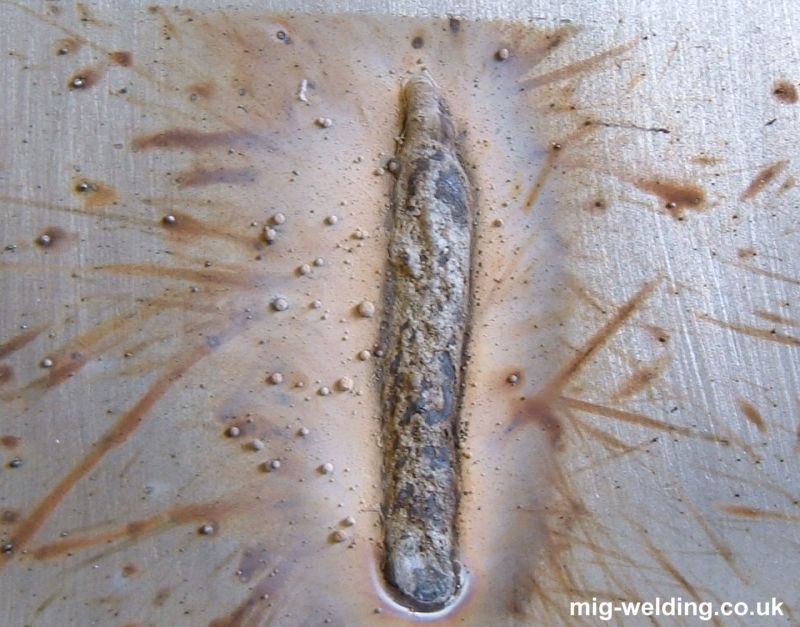
- Holes or bubbles in the bead (porosity)
- Black, sooty surface
- Cracks along the weld or at the ends
- Weld bead breaks easily with a hammer
- Rust forming quickly on or near the weld
- Excessive spatter on the workpiece
Any of these signs mean the weld is not safe or strong. Do not trust it for any load-bearing job.
A good weld should have a smooth, shiny bead, with no holes or cracks. The metal should be fused together with no gaps. If you have doubts, cut the weld open or ask a pro to check your work.
Learning More And Getting Help
If you’re serious about welding, there are many ways to learn:
- Take a class. Local trade schools or community colleges often offer welding classes.
- Watch videos from trusted welding channels. See real-world examples of good and bad welds.
- Read the American Welding Society’s beginner guides. They offer free and paid resources for all skill levels. You can visit [aws.org](https: //www.aws.org) for more information.
- Ask at your welding supply store. Staff often know common problems and can recommend the right products.
Learning from others’ experience saves time and money—and helps you avoid dangerous mistakes.
Credit: www.mig-welding.co.uk
Final Thoughts
MIG welding is popular because it is fast, easy, and creates strong, clean welds—when done correctly. The shielding gas is not an optional part of the process; it is essential for making good welds with solid wire. Welding without gas leads to weak, contaminated, and unsafe joints, unless you switch to flux-cored wire and adjust your machine for gasless welding.
If you need to weld outside, in wind, or in a spot where gas is not practical, try flux-cored wire with the right settings. For most projects, especially anything structural or safety-related, always use the recommended shielding gas and wire type.
Remember, the right setup and technique keep you safe, save you money, and give you results you can trust. If you’re not sure, get advice from a pro or your local supplier. Good welding is about more than just sticking metal together—it’s about making something that lasts.