Disclosure: This post contains affiliate links and I will be compensated if you make a purchase after clicking through my links. Learn More
Welding thin sheet metal with stick welding is one of the hardest jobs for new and experienced welders. Thin metal burns through easily, and most stick welding rods produce lots of heat and spatter. Still, there are good reasons to learn this skill.
Many car body parts, HVAC ducts, and repair jobs need you to weld thin metal, and sometimes stick welding is the only tool you have. If you use the right techniques, choose the right settings, and pay close attention, you can get strong, neat welds without wrecking your workpiece.
This guide explains how to stick weld thin sheet metal step by step. You will learn how to prepare your metal, set up your machine, pick the best rods, and use special welding tricks. The advice here comes from real job sites and experienced welders, not from a textbook.
By the end, you will know how to avoid common problems like burn-through and warping. You will also see how to fix mistakes and judge your weld quality. If you want to master stick welding for thin metals, this is the place to start.
What Is Stick Welding And Why Use It On Thin Metal?
Stick welding, or Shielded Metal Arc Welding (SMAW), uses a flux-coated rod (electrode) to join pieces of metal. An electric arc melts both the rod and the metal, fusing them together. The flux coating creates a gas shield and slag to protect the weld from air.
Most people use stick welding on thick steel for construction, repairs, or pipelines. But sometimes, you must use it on metal that is less than 3 mm (1/8 inch) thick. This is called thin sheet metal. Common examples are car panels, metal cabinets, and toolboxes.
Stick welding is not the first choice for thin sheet metal. MIG and TIG welding are easier because they give better control and less heat. But stick welding has its place because:
- The equipment is simple and portable.
- It works well outdoors, even in wind or rain.
- It does not need shielding gas bottles.
- It can weld rusty or painted metal in emergencies.
You may have only a stick welder on hand, or you may need to repair something outside. In these cases, knowing how to stick weld thin sheet metal is very useful.
Challenges Of Stick Welding Thin Sheet Metal
Thin metal brings special problems when you stick weld it. You need to understand these problems to avoid mistakes.
Burn-through
The most common problem is burn-through. This means the arc melts a hole in the metal instead of joining it. Thin sheet metal heats up fast and melts easily, especially if you hold the arc too long in one spot.
Warping
Thin metal bends out of shape when heated. This is called warping. If you put too much heat in one area, your workpiece may twist, ripple, or buckle.
Spatter
Stick welding creates spatter—tiny bits of molten metal that land on your work. On thin metal, these can stick, burn holes, or make the weld look messy.
Lack Of Fusion
If you use too low a heat to avoid burn-through, you may get cold welds or lack of fusion. This means the weld is weak and will crack or break.
Porosity And Slag Inclusion
If the flux coating does not protect the weld well, or if slag gets trapped inside, you can get porosity (tiny holes) or slag inclusion (trapped bits of flux).
Preparing Thin Sheet Metal For Stick Welding
Good results start before you strike an arc. Careful preparation is more important with thin metal than with thick.
Clean The Metal
Welds do not stick well to dirt, rust, oil, or paint. Use a wire brush, grinder, or sandpaper to clean the surface. Clean both sides, even if you only weld on one. Oil and dirt on the back can burn and ruin the weld.
Remove Galvanizing Or Coatings
If your sheet metal is galvanized (zinc-coated) or painted, grind off the coating where you plan to weld. Burning these coatings can cause toxic fumes and poor welds.
Fit Up And Clamp
Thin metal moves when heated. Clamp your pieces tightly together to keep them lined up. If possible, use copper or aluminum backing bars under the joint. These metals will not fuse to the steel but help absorb heat and prevent burn-through.
Set The Gap
Leave a small gap between the pieces—about the thickness of the metal. This helps the weld pool flow and avoids trapped slag. If the gap is too big, you risk burn-through.
Tack Weld First
Add tack welds every few centimeters along the joint. Tack welds hold the pieces together and reduce movement from heat. Use small, quick tacks to avoid overheating the metal.
Choosing The Right Stick Welding Rod For Thin Metal
The choice of electrode is key. Most stick rods are designed for thick metal and high heat. For sheet metal, pick a rod that melts at a lower temperature and gives a soft, stable arc.
Best Rod Size
Use the smallest rod you can, usually 1.6 mm (1/16 inch) or 2.0 mm (5/64 inch) diameter. Bigger rods need more amps and make it easy to burn through the metal.
Best Rod Type
The best rods for thin sheet metal are:
- 6013: Soft arc, easy to strike, low spatter, smooth bead. Very good for beginners.
- 7014: Runs smooth, easy slag removal, less likely to burn through.
- 6011: Good for dirty or rusty metal, deeper penetration, but more spatter and risk of burn-through.
Rod Recommendations By Metal Thickness
| Sheet Metal Thickness | Recommended Rod Diameter | Rod Type |
|---|---|---|
| 1.0–1.5 mm (18–16 gauge) | 1.6 mm (1/16″) | 6013 |
| 1.6–2.0 mm (16–14 gauge) | 2.0 mm (5/64″) | 6013 or 7014 |
| 2.0–3.0 mm (14–1/8″) | 2.0 mm (5/64″) or 2.5 mm (3/32″) | 6013, 7014, or 6011 |
Why Rod Selection Matters
Using the wrong rod makes it almost impossible to get a good weld. Large rods need more amperage and make big weld pools that thin metal cannot handle. Fast-freeze rods like 6011 help on dirty metal but are harder to control. For most jobs, 6013 in a small size is the best starting point.
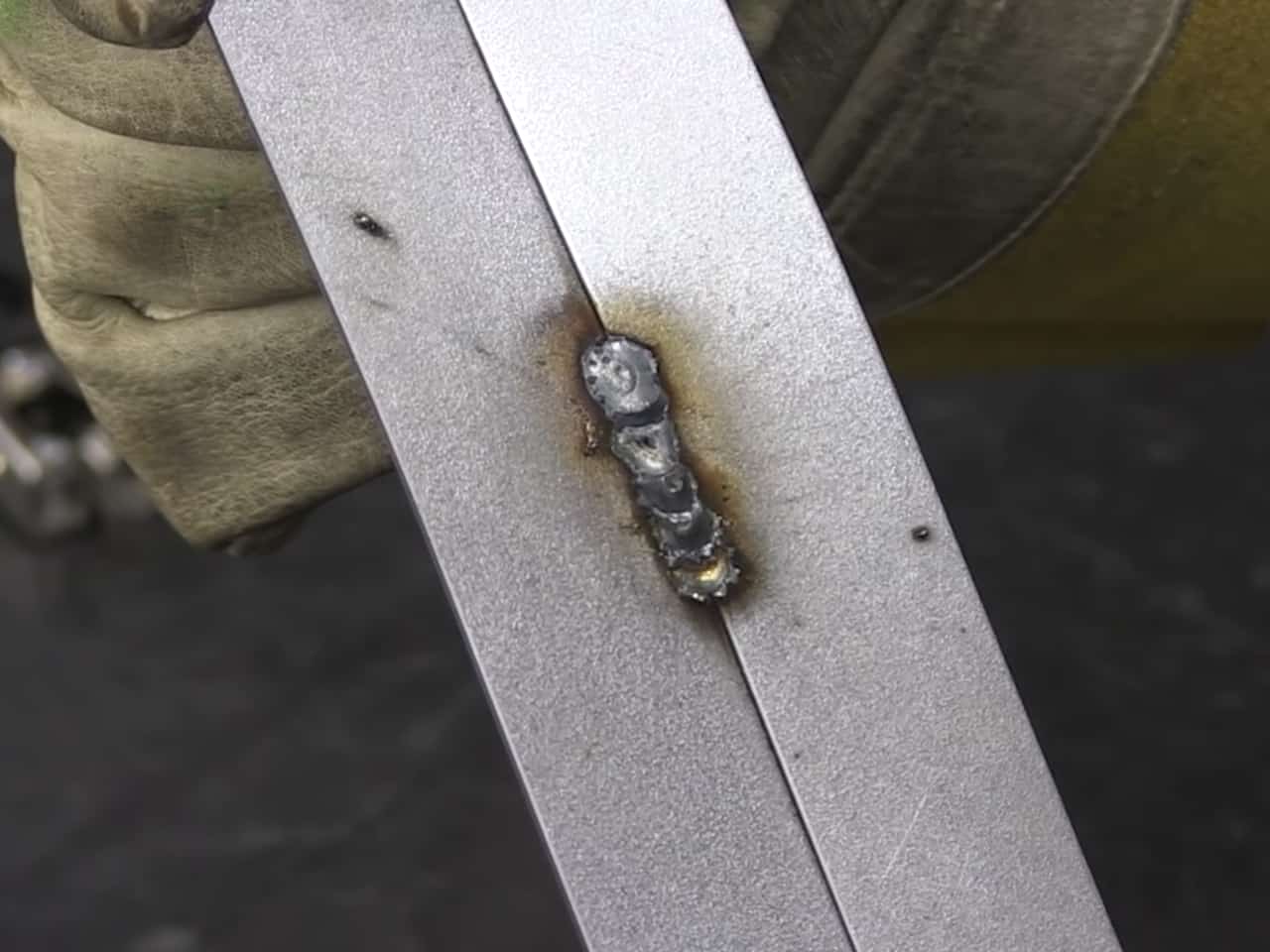
Credit: weldguru.com
Setting Up Your Stick Welder For Thin Sheet Metal
Your welder settings are as important as your rod choice. Too much power burns holes. Too little makes weak welds.
Adjust The Amperage
Set your welder to the lowest amperage that gives a stable arc. For 1.6 mm (1/16″) rods, start at 30–50 amps. For 2.0 mm (5/64″) rods, use 40–70 amps. Always test on a scrap piece first.
| Rod Diameter | Recommended Amperage Range |
|---|---|
| 1.6 mm (1/16″) | 30–50 A |
| 2.0 mm (5/64″) | 40–70 A |
| 2.5 mm (3/32″) | 60–90 A (rarely used for thin metal) |
Polarity
Most thin sheet metal jobs use DCEN (Direct Current Electrode Negative, or “straight polarity“). This puts more heat into the rod and less into the metal. If your welder only has AC, that is fine, but DCEN is better for thin metal.
Use Short Leads
Short welding leads (cables) help keep a stable arc and reduce voltage drop. If your leads are very long, you may lose some control.
Check Ground Clamp
A poor ground connection causes unstable arcs and more spatter. Clamp your ground lead directly to clean metal close to your weld.
Special Welding Techniques For Thin Sheet Metal
The way you move the rod and control the arc makes the biggest difference between a neat weld and a ruined piece.
Use Short Arc Length
Hold the rod very close to the metal—about 1–2 mm away. A long arc makes more heat, more spatter, and less control.
Move Fast
Weld quickly. The longer you stay in one spot, the more heat goes into the metal and the bigger the risk of burn-through.
Stitch Welding (skip Welding)
Do not weld the whole joint in one go. Weld a short section (about 1–2 cm), then move to a spot further down the joint. Let the metal cool, then go back and fill the gaps. This is called stitch welding or skip welding.
Backstep Welding
Another trick is backstep welding. Weld a short section, then start the next weld behind where you finished and weld back toward the last weld. This helps spread the heat and reduces warping.
Use A Copper Backing Bar
Place a copper bar under the joint if you can. Copper absorbs heat and prevents burn-through. The weld will not stick to copper, so it also helps keep the back of the weld neat.
Short Beads And Pause
Do not try to weld a long bead. Stop often and let the metal cool. You can even cool the area with compressed air or a damp rag between passes.
Use Low Heat And Small Rods
If in doubt, use less heat and a smaller rod. You can always make another pass to build up the weld, but you cannot fix a hole easily.
Practice On Scrap
Before you weld your real project, practice on scrap metal of the same thickness. Adjust your speed, arc length, and amperage until you get a neat bead without burn-through.
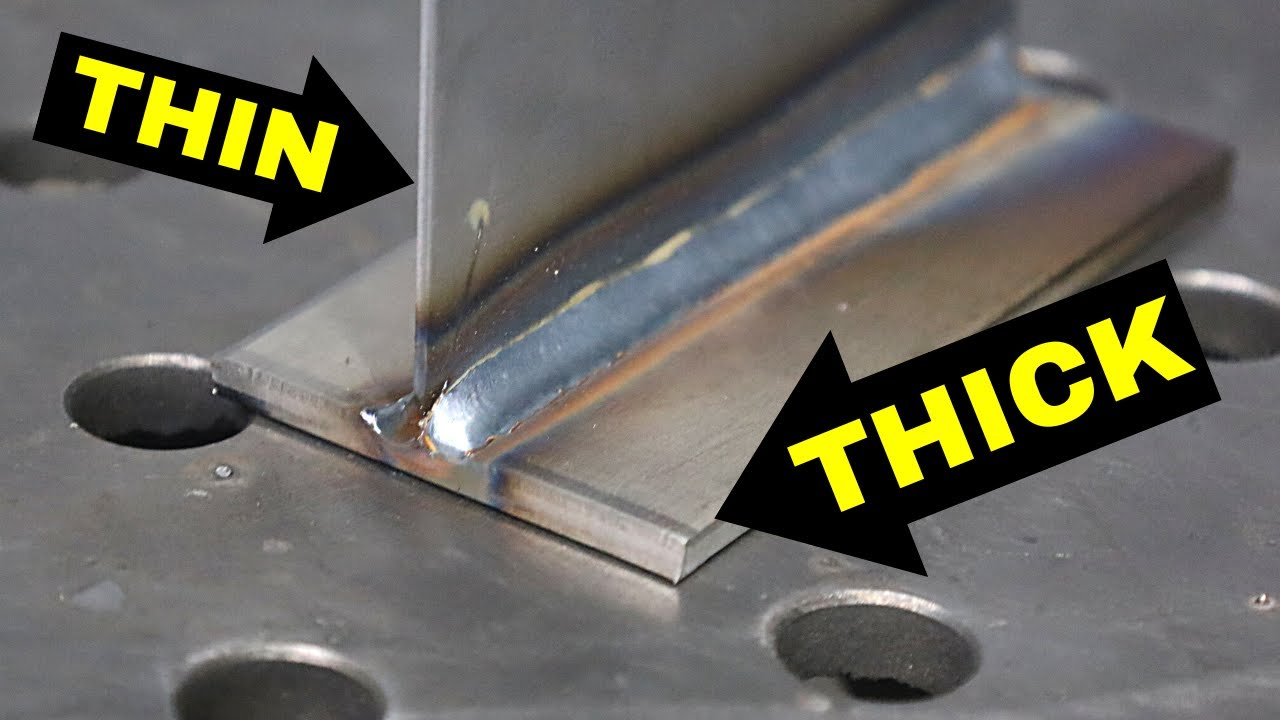
Credit: www.youtube.com
Step-by-step: How To Stick Weld Thin Sheet Metal
Here is a clear process you can follow:
- Clean the surfaces of your sheet metal. Remove rust, paint, grease, and coatings.
- Set up your joint. Clamp the pieces tightly and leave a tiny gap if possible.
- Set your welder to the lowest safe amperage for your chosen rod.
- Attach your ground clamp to clean, bare metal close to the weld.
- Tack weld the joint in several places to hold it steady.
- Hold the electrode at a shallow angle (about 15° from vertical) and keep a short arc.
- Strike the arc briefly, then move quickly along the joint for 1–2 cm.
- Stop and let the area cool. Move to another spot and repeat (stitch welding).
- Repeat until the joint is finished. Fill in gaps as needed.
- Chip off slag carefully after each section. Inspect for holes or defects.
- Grind or sand smooth if needed, but avoid removing too much metal.
This method will give you a strong, neat weld with less risk of burn-through or warping.
Practical Tips And Insights From Experienced Welders
Some tricks are not obvious to beginners, but they make a big difference in results.
Preheat Your Rods
Store your electrodes in a dry, warm place. Damp rods can cause porosity and unstable arcs. Some welders even preheat rods in an oven at 100°C (212°F) for an hour before use.
Use A Smaller Rod Than You Think
Many welders start with a 2. 5 mm (3/32″) rod for all jobs. For thin sheet, this is often too large. Try a 1. 6 mm (1/16″) rod first. Smaller rods give more control and less heat.
Watch The Weld Pool
Do not watch only the arc. Watch the shape and size of the weld pool. If it gets too wide or hot, stop and let it cool. If it is very small and rough, you may need a touch more amperage.
Test On Scrap Metal
Every piece of sheet metal is different. Test your setup on scrap first. Look for a bead that is slightly raised, smooth, and does not burn through.
Use Both Hands
If possible, use both hands to steady the electrode holder. This gives you more control and helps keep a short, steady arc.
Weld In A Comfortable Position
Do not weld in a cramped or awkward spot. Arrange your work so you can move smoothly and see the joint clearly.
Keep A Damp Rag Nearby
If you see the metal getting too hot, you can touch the back of the weld with a damp rag. This cools it quickly and helps stop warping.
Common Mistakes When Stick Welding Thin Sheet Metal
Many people make the same mistakes at first. Knowing them helps you avoid problems.
Using Too Much Heat
Setting the welder too high is the fastest way to burn holes in thin metal. Always start with low amps and increase only if the arc will not stay lit.
Long Weld Beads
Welding a long bead in one go puts too much heat into the metal and causes warping and burn-through. Use short beads and let the metal cool between passes.
Dirty Or Coated Metal
Welding through rust, paint, or oil causes porosity and weak welds. Always clean the metal first.
Wrong Rod Size
Using a rod that is too thick makes the weld pool too big and hard to control. Choose the smallest rod that gives a stable arc.
Poor Fit Up
If your metal pieces do not fit tightly or are not clamped well, the joint can move, open up, or warp.
Not Chipping Off Slag
Leaving slag on the weld can hide defects. Always chip off slag and inspect your welds.
Not Practicing
Every sheet metal job is a bit different. Practice on scrap first to test your settings and technique.
Repairing Burn-through And Mistakes
Even the best welders burn through sometimes. Here is how you can fix common errors.
Small Holes
If you burn a small hole, stop welding and let the area cool. Use a copper backing bar behind the hole if possible. Set your welder to a lower amperage, use a small rod, and make quick, short arcs to fill the hole.
Let cool and repeat as needed.
Large Holes
For bigger holes, you may need to patch with a small piece of sheet metal. Clean the area, tack the patch in place, and weld around the edge using short stitches.
Warped Metal
If your piece warps, you can sometimes flatten it with a hammer and dolly after welding. For visible parts, you may need to grind and fill with body filler before painting.
Porosity
Porous welds are weak. If you see bubbles or holes, grind out the bad weld and re-weld at a lower amperage, using a dry rod.
How To Inspect Your Welds
After welding, check your work for strength and quality.
- Visual Inspection: Look for smooth, even beads with no holes, cracks, or trapped slag.
- Bend Test: If possible, gently bend the welded joint. It should not crack.
- Hammer Tap: Tap the weld with a hammer. A solid weld rings; a bad weld sounds dull and may break off.
- Grind Test: If you grind the bead, the metal underneath should be solid and free of voids.
If you find defects, repair as described above.
When Not To Use Stick Welding For Thin Sheet Metal
Some jobs are too delicate for stick welding, no matter how skilled you are.
- Very thin metal (less than 1 mm, or 22 gauge) is almost impossible to stick weld without burning through.
- Visible car body panels that must look perfect are better welded with MIG or TIG.
- Non-ferrous metals like aluminum or copper are not good for stick welding thin sections.
If you have access to other welding methods, consider them for these jobs.
Comparison: Stick Vs. Mig Vs. Tig For Thin Sheet Metal
Stick welding is only one way to weld thin sheet metal. Here is how it compares to MIG and TIG.
| Welding Method | Control on Thin Metal | Equipment Cost | Skill Needed | Outdoor Use |
|---|---|---|---|---|
| Stick (SMAW) | Hardest to control | Low | Moderate | Very good |
| MIG (GMAW) | Easier, less burn-through | Medium | Easy | Poor (wind blows gas away) |
| TIG (GTAW) | Best, precise control | High | Advanced | Poor (wind blows gas away) |
Stick welding is the best choice when you need a portable, cheap setup or when working outdoors. For clean, cosmetic welds on thin metal, TIG is the best if you have the option.
Safety Tips For Stick Welding Thin Sheet Metal
Welding always brings risks. Thin sheet metal does not change that, but you may face extra hazards from fumes and burns.
- Always wear a welding helmet with the correct shade (usually shade 10 for stick welding).
- Use leather gloves and long sleeves to protect from sparks and spatter.
- Work in a well-ventilated area. Burning coatings or flux can make dangerous fumes.
- Keep a fire extinguisher nearby.
- Never touch hot metal with bare hands.
- If grinding, use safety glasses and ear protection.
Summary Checklist For Success
Before you start, make sure you:
- Cleaned the metal fully
- Chose the smallest suitable stick rod (preferably 6013, 1.6 mm)
- Set your welder to low amps (test on scrap)
- Clamped pieces tightly with good fit-up
- Used short, quick beads (stitch welding)
- Let metal cool between passes
- Chipped off all slag and checked for defects
These steps will help you avoid most problems and get better results.
Frequently Asked Questions
What Is The Thinnest Sheet Metal You Can Stick Weld?
Stick welding works best on metal thicker than 1.5 mm (16 gauge). Thinner than this, you risk burning through even at the lowest amperage. For 1 mm (20 gauge) or less, MIG or TIG welding is safer.
Why Does My Stick Weld Keep Burning Holes In Thin Metal?
This usually means you are using too high amperage, or your rod is too large. Try a smaller rod (1.6 mm, 6013), lower your amperage, and use short, quick stitch welds.
Can You Weld Stainless Or Aluminum Sheet Metal With Stick Welding?
Stainless steel can be stick welded with special rods, but thin stainless is even harder to weld without burn-through. Aluminum is not practical to stick weld on thin sheets. Use TIG or MIG for both metals if possible.
How Do You Control Warping When Stick Welding Thin Sheet Metal?
Use short welds, let the metal cool between passes, and clamp your work tightly. Stitch welding and using a copper backing bar can also help absorb heat and reduce warping.
What Is The Best Stick Rod For Thin Sheet Metal?
6013 rods in 1.6 mm (1/16″) size are the most forgiving for thin steel. They make a soft arc, little spatter, and are easy to control. 7014 is also good if you want a smoother bead. Always use the smallest rod that gives a stable arc.
Stick welding thin sheet metal is difficult, but it is possible with patience and practice. If you follow these methods and keep learning from each job, your results will improve. For more technical details, you can check the Shielded Metal Arc Welding page on Wikipedia. Keep your setup simple, pay attention to your technique, and you will get stronger, neater welds on thin sheet metal.
Credit: yeswelder.com