Disclosure: This post contains affiliate links and I will be compensated if you make a purchase after clicking through my links. Learn More
How do you determine the correct welding technique? Start by identifying the metal type, thickness, desired weld quality, joint design, and welding environment. Match these factors with the right welding process—like MIG, TIG, Stick, or Flux-Cored—for safe, strong, and cost-effective results.
Choosing the right welding technique is the backbone of strong, reliable metalwork. If you pick the wrong method, you risk weak welds, wasted materials, and even safety hazards. Whether you’re working on a car frame, a bridge, or a simple fence, your process must fit the material and the job.
Many beginners stick to what they know, but expert welders analyze every project and adapt. This guide will show you exactly how to select the right welding method for any situation—based on proven industry standards, real-world data, and years of field experience.
Why Picking The Right Welding Technique Matters
The welding technique you use shapes the outcome of your work. Each process—MIG, TIG, Stick, Flux-Cored, or specialty types—has strengths and weaknesses. Using the wrong technique can weaken joints, cause cracks, or add unnecessary costs.
Key factors affected by your choice:
- Joint strength and durability
- Aesthetics and finish quality
- Speed and efficiency
- Material compatibility
- Work environment safety
For example, welding stainless steel outdoors with TIG can lead to contamination and wasted gas. On the other hand, Stick welding on thin car panels could burn holes through the metal. Making informed choices saves time, money, and frustration.
Know Your Welding Processes
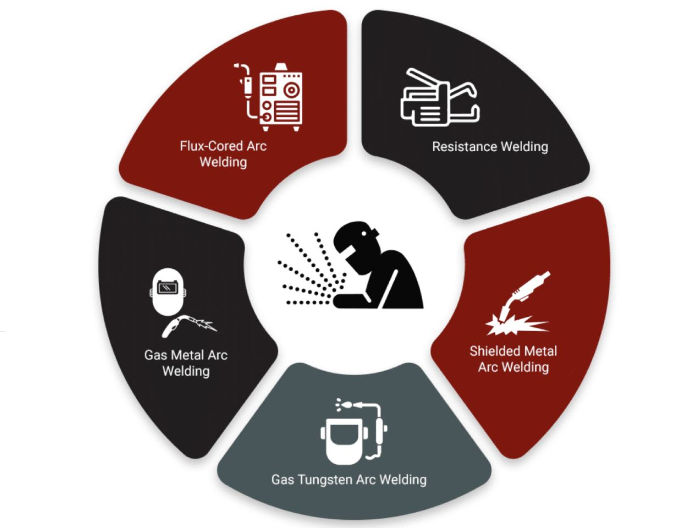
Before selecting a technique, you need to understand the main welding processes used in industry and repair work. Here’s a clear breakdown:
| Process | Best For | Advantages | Limitations |
|---|---|---|---|
| MIG (GMAW) | Steel, Stainless, Aluminum (thin/medium) | Fast, easy to learn, clean welds | Wind-sensitive, needs shielding gas |
| TIG (GTAW) | Aluminum, Stainless, thin metals | Best quality, precise, no spatter | Slower, high skill, needs clean metal |
| Stick (SMAW) | Structural steel, thick sections, outdoors | Works in wind, cheap, portable | Slag clean-up, more spatter, harder on thin metals |
| Flux-Cored (FCAW) | Steel, outdoor jobs, thick metals | High deposition rate, wind-resistant | Requires slag removal, heavy smoke |
Non-obvious insight: Many shops use a mix of processes on one job—like TIG for visible joints and MIG for speed elsewhere. Don’t limit yourself to one method.
Step 1: Identify The Metal Type
The foundation for choosing a welding technique is knowing your base metal. Every metal reacts differently to heat and filler materials. Get this wrong, and your weld could crack or corrode.
Common metals and their welding preferences:
- Mild steel: Works with almost any process—MIG, Stick, or Flux-Cored are all great.
- Stainless steel: TIG or MIG preferred for clean, corrosion-resistant welds.
- Aluminum: TIG gives the best finish, but MIG with special wire can be fast for thick pieces.
- Cast iron: Stick welding with nickel rods is standard. Preheat for best results.
- Copper, brass: TIG is safest for thin, heat-sensitive metals.
Expert tip: Always check if your metal has coatings or treatments (like galvanized steel). These can create toxic fumes and require special prep or rods.
Step 2: Measure Metal Thickness
Metal thickness drives your technique choice. Thin sheet metal (under 1/8 inch) needs low heat and careful control. Heavy steel beams demand deep penetration and high amperage.
| Thickness | Recommended Technique | Notes |
|---|---|---|
| Under 1/8″ (3 mm) | TIG, MIG | Use lower amps, avoid burn-through |
| 1/8″ to 1/4″ (3-6 mm) | MIG, Stick, FCAW | Balance speed and penetration |
| Over 1/4″ (6 mm) | Stick, FCAW | Deep fusion needed, multiple passes likely |
Pro insight: For mixed thickness joints, use the technique best suited to the thinnest section. You can always build up welds with multiple passes.
Credit: kindle-tech.com
Step 3: Decide On Weld Quality And Appearance
Weld quality isn’t just about strength. For some jobs, a smooth, attractive finish is critical—think of food-grade stainless or visible automotive panels. Other times, function matters more than looks.
- High visual quality needed: Choose TIG for precise, neat beads and minimal spatter.
- Speed and utility: MIG or Flux-Cored welds are fast but may need grinding for a clean look.
- Rough, structural jobs: Stick welding is rugged but leaves slag and spatter.
Industry secret: Many professional fabricators finish visible welds with a flap disc or grinder, even if using a “messier” process.
Step 4: Analyze The Joint Design
The way two pieces of metal fit together changes everything. There are many types of joints—lap, butt, corner, T, edge. Each one interacts differently with each welding process.
Best process for common joint types:
- Butt joints: MIG or TIG for clean penetration, Stick for heavy steel
- Lap joints: MIG or Flux-Cored to fill gaps quickly
- Corner/T-joints: All methods work, but TIG offers top control on thin material
- Edge joints: TIG for thin edges, Stick for thicker plates
If you have tight corners or awkward angles, TIG’s precision and small torch are hard to beat.
Credit: www.megmeet-welding.com
Step 5: Assess The Welding Environment
Your workspace can limit your choices. Some welding methods need clean, dry, indoor conditions. Others work even in wind, rain, or dirty sites.
Key factors:
- Indoors: MIG and TIG excel, but keep air moving to clear fumes.
- Outdoors: Stick and Flux-Cored are wind-tolerant; shielding gas in MIG/TIG will blow away.
- Confined spaces: Use processes with minimal fumes and good torch control.
Safety tip: Always use proper ventilation—welding fumes are hazardous, especially in tight spaces.
Step 6: Consider Your Skill Level
Some processes are beginner-friendly, while others require months of practice.
- Easy to learn: MIG is often called “point and shoot.” Flux-Cored is similar.
- Intermediate: Stick welding takes practice, especially for vertical or overhead welds.
- Advanced: TIG demands two hands, careful foot pedal control, and lots of patience.
Non-obvious insight: Many beginners skip TIG because it looks intimidating. In reality, slow, steady hand movements matter more than speed.
Step 7: Factor In Speed And Productivity
In a busy shop, time is money. Faster techniques may save hours, but sometimes at the cost of appearance or precision.
- Fastest: MIG and Flux-Cored—great for long seams and repetitive work.
- Slower but detailed: TIG—excellent for short, critical welds.
- Stick: Medium speed; changing electrodes slows progress.
Industry example: Shipyards often use Flux-Cored for thick steel hulls because of its high deposition rate.
Step 8: Evaluate Equipment And Supplies
Your available gear can restrict your choices. Not every shop owns a TIG welder or can afford multiple gas cylinders.
Checklist for equipment needs:
- MIG: Wire feeder, shielding gas, compatible torch
- TIG: High-frequency AC/DC machine, argon gas, foot pedal, tungsten electrodes
- Stick: Simple power supply, electrodes, ground clamp
- Flux-Cored: Similar to MIG, but self-shielded wire needs no gas
If you have only basic equipment, Stick welding is often the most flexible.
Step 9: Check Filler Material Compatibility
Every welding process uses different rods, wires, or electrodes. Match your filler to both the base metal and the desired strength.
- MIG/TIG wires: Must match or exceed the strength of your base metal.
- Stick electrodes: Come in various types (6010, 6011, 7018) for different penetration and finish needs.
- Flux-Cored wire: Available for mild steel, stainless, and some alloys.
Expert tip: Never mix filler types unless you understand metallurgy. Wrong combinations weaken welds and can cause failure.
Step 10: Review Cost And Budget
Cost matters, especially on large projects. Some techniques burn through consumables faster or require expensive shielding gases.
| Process | Equipment Cost | Consumable Cost | Labor Cost |
|---|---|---|---|
| MIG | Moderate | Moderate (wire, gas) | Low (fast) |
| TIG | High | High (gas, tungsten) | High (slow) |
| Stick | Low | Low (electrodes) | Medium |
| Flux-Cored | Moderate | Moderate (wire) | Low |
Smart approach: For projects where finish is less critical, Stick or Flux-Cored saves money. Reserve TIG for high-value work.
Step 11: Consider Safety And Health
Welding creates intense light, hot metal, fumes, and even radiation. Each process has unique hazards.
- TIG and MIG: Create UV light and ozone, need proper eye and skin protection.
- Stick and Flux-Cored: Generate heavy smoke—always use a respirator and ventilation.
- All methods: Protect hands, eyes, and lungs with gloves, helmets, and filters.
Industry data: According to the American Welding Society, over 500,000 workers face welding-related injuries yearly in the US. Cutting corners on safety isn’t worth it.
Step 12: Special Applications And Exotic Alloys
Some jobs call for more than the standard processes. Hardfacing, underwater welding, or working with titanium alloys need specialized methods.
- Hardfacing: Adds wear-resistant layers using special electrodes or wire.
- Underwater welding: Stick or special wet-welding rods are essential.
- Titanium or exotic alloys: TIG is almost always required for its precision and inert gas protection.
For rare applications, consult technical datasheets or the American Welding Society.
Comparing The Most Common Welding Techniques
To help you compare at a glance, here’s a real-world scenario:
| Project | Best Technique | Why |
|---|---|---|
| Repairing a farm gate (outdoors, rusty steel) | Stick | Works on dirty metal, no shielding gas needed |
| Building a stainless kitchen counter | TIG | Clean, strong, food-safe welds |
| Fixing an aluminum boat hull | TIG or MIG (with aluminum wire) | Good penetration and neat finish |
| Welding auto body panels | MIG | Fast, low heat input, minimal warping |
| Heavy equipment repair | Flux-Cored or Stick | Deep fusion, works in field conditions |
Pro tip: Always match your process to the real-world demands, not just theory.
Mistakes Beginners Make When Choosing A Welding Technique
- Ignoring metal type: Welding aluminum with the wrong process leads to weak joints.
- Overheating thin metal: Using Stick or high-amp MIG on car panels warps or burns through.
- Skipping joint prep: Dirty or poorly fit joints weaken any weld, even with the best process.
- Using the same technique for every job: Each project has unique needs—adapting is key.
- Neglecting safety: Choosing a process without considering fumes or ventilation puts health at risk.
Non-obvious insight: Many beginners think a higher amperage is always better. In reality, setting your machine just right for the job is more important than raw power.
Practical Examples: Choosing The Right Technique
- Small metal art sculpture (thin steel rods): TIG is ideal for precise, tiny welds without spatter.
- Outdoor fence repair (galvanized steel): Stick welding with a 6011 rod burns through coatings and works even if it’s windy.
- Trailer frame build (thick steel): Flux-Cored or Stick ensures deep penetration and strong welds.
How To Test And Confirm Your Choice
Even experienced welders test their selected process before doing the full job.
- Practice on scrap: Try your chosen technique on similar material before starting.
- Check weld appearance: Look for smooth beads, no cracks, and good fusion at edges.
- Test weld strength: Bend or hammer test a sample if possible.
If you see porosity, poor fusion, or weak joints, adjust your technique or try a different process.

Credit: meritusgas.com
The Role Of Welding Certification And Codes
For critical work—bridges, pressure vessels, or commercial construction—codes and certifications often dictate the correct technique. Always follow:
- AWS D1.1 for structural steel
- ASME codes for pressure vessels
- API codes for pipelines
These standards specify required processes, filler materials, and testing methods.
Keeping Up With Technology And Trends
Welding technology changes fast. New machines offer “multi-process” capability—letting you switch between MIG, TIG, and Stick in seconds. Digital controls make fine-tuning easier, and new wires and electrodes improve results on tricky metals.
Industry insight: The best welders never stop learning. Staying current with trends and certifications makes you more valuable in the field.
Summary: Key Steps To Determine The Correct Welding Technique
- Identify your base metal
- Measure thickness
- Decide on finish quality
- Analyze joint design
- Assess environment
- Consider skill level
- Factor in speed
- Check equipment
- Match filler materials
- Review cost
- Prioritize safety
- Consult codes for critical work
By systematically working through these steps, you’ll consistently choose the right technique, improve job quality, and reduce risks.
Frequently Asked Questions
What Is The Easiest Welding Technique For Beginners?
MIG welding is often best for beginners. It offers a simple setup, easy control, and produces clean welds on most metals. You’ll learn proper technique quickly and can move on to more advanced methods later.
Can I Use The Same Welding Process For All Metals?
No, different metals need specific welding techniques and filler materials. For example, TIG works well on aluminum and stainless, while Stick suits heavy, rusty steel. Using the wrong process can weaken your welds or cause defects.
Why Does Shielding Gas Matter In Welding?
Shielding gas protects the weld pool from air contamination. Without it, oxygen and nitrogen can cause porosity, weak welds, and poor appearance. MIG and TIG both need the correct gas type and flow for best results.
How Do I Know If My Weld Is Strong Enough?
Test your weld on scrap metal first. Look for smooth beads and good penetration. For critical work, use bend or X-ray tests, and always follow relevant welding codes for strength and inspection.
Is Tig Welding Better Than Mig?
TIG welding gives the highest quality, precise welds, especially for thin or specialty metals. MIG is faster and easier for general work. The best choice depends on your project’s needs, your skill, and available equipment.
Choosing the correct welding technique is a skill that pays off in strong, safe, and professional results. With the right approach, you’ll tackle any project with confidence.