Disclosure: This post contains affiliate links and I will be compensated if you make a purchase after clicking through my links. Learn More
Choosing the right MIG wire for mild steel can make your welding work smoother, stronger, and more efficient. Many people begin with the basics but miss some small details that affect results. This guide explains everything you need to know, so you can select the best wire with confidence.
Whether you are a hobbyist, a student, or a professional welder, you will find answers to your questions about wire types, sizes, coatings, and even tips that most beginners overlook.
What Is Mig Wire And Why Does It Matter?
MIG stands for Metal Inert Gas welding. MIG wire acts as both the electrode and the filler material during the welding process. As you weld, the wire feeds through the gun and melts to join pieces of mild steel together.
The wire you choose affects:
- Weld strength
- Bead appearance
- Ease of welding
- Amount of spatter
- Suitability for the metal thickness
Picking the wrong wire can cause poor welds, more clean-up, and wasted time. For example, if you use a wire that is too thick for thin metal, you can burn holes in your workpiece. If you use a wire that is too thin for thick metal, your weld may not be strong enough.
Even the type of wire coating makes a difference in how smoothly the wire feeds through your welder.
Many welders, even those with some experience, may not realize how much the wire choice impacts their finished work. A good wire can help a beginner produce professional-looking welds, while a poor choice can make even an expert’s work look messy.
Understanding Mild Steel
Mild steel, also known as low-carbon steel, contains a small amount of carbon (usually below 0. 25%). This makes it easy to weld, cut, and shape. It is widely used in structures, auto repair, and home projects.
Because mild steel is so common, you will find many wire choices. But not all wires work the same way. Mild steel’s low carbon content means it is less likely to crack during welding, but it can still suffer from poor welds if you use the wrong wire or settings.
For example, mild steel is more forgiving than high-carbon steel, but using the wrong wire can still cause undercutting or weak welds.
One more thing: mild steel often comes with a thin layer of mill scale (a type of oxide) or oil from the factory. Some wires, like ER70S-6, are designed to handle a bit of surface contamination, but cleaning your metal first always gives the best results.
Main Types Of Mig Wire For Mild Steel
There are two main types of MIG wire you can use for mild steel welding:
- Solid wire (ER70S-6)
- Flux-cored wire (E71T-GS or E71T-11)
Solid Mig Wire (er70s-6)
Solid wire is the most popular choice for mild steel. You use it with a shielding gas, usually a mix of argon and CO2, to protect the weld from air.
Advantages:
- Clean welds with less spatter
- Smooth bead appearance
- Good for thin or medium-thick metal
Disadvantages:
- Needs a gas cylinder
- Not good outdoors (wind can blow the gas away)
Solid wire is perfect for indoor workshops and garages. It gives a professional finish that needs little grinding or cleaning. Most auto body shops, for instance, use solid wire because it makes neat welds that are easy to sand and paint over.
However, solid wire is not flexible if you need to weld outside. Even a small breeze can blow away the gas shield, causing porosity (tiny holes) in the weld.
Flux-cored Mig Wire (e71t-gs Or E71t-11)
This wire has a special core filled with flux. The flux creates a shield around the weld, so you do not need a separate gas.
Advantages:
- No gas cylinder needed
- Works outdoors and in windy areas
- Good for thicker metal
Disadvantages:
- More spatter and smoke
- Rougher bead appearance
- More clean-up needed
Flux-cored wire is often chosen for farm repairs, construction sites, and outdoor maintenance work. The self-shielding flux protects the weld from the wind, so you do not need to worry about your gas shield blowing away.
But, you will notice that the weld bead is not as smooth and that you will need to brush away slag after welding. For projects where appearance is important, some extra grinding or sanding is needed.
How To Match Wire Type To Your Needs
To choose the right wire, first answer these questions:
- Will you weld indoors or outdoors?
- What is the thickness of your mild steel?
- Do you have a gas supply?
If you weld indoors and want clean welds, use ER70S-6 solid wire with gas. For outdoor work or if you do not have gas, choose flux-cored wire like E71T-GS.
It’s also important to think about how much cleaning you want to do after welding. If you want fast, clean results with little grinding, solid wire is better. If you do not mind cleaning off slag and you need portability, flux-cored wire is a good option.
One more detail: if you are planning to weld rusty or painted metal, flux-cored wire usually performs better, but cleaning the joint as much as possible will always improve your results.
Wire Diameter: Why Size Matters
Wire comes in different diameters. The size you use depends on the steel thickness and your welder’s power.
Common sizes for mild steel:
- 0.023 inch (0.6 mm)
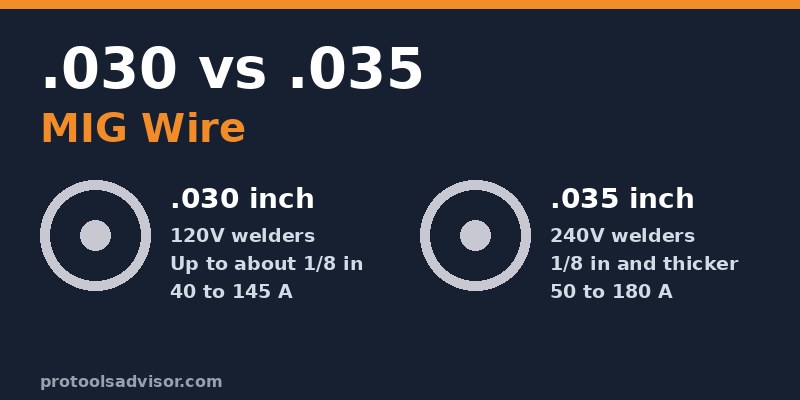
- 0.030 inch (0.8 mm)
- 0.035 inch (0.9 mm)
- 0.045 inch (1.2 mm)
0.023 inch: For thin sheet metal (like auto body panels).
0.030 inch: Most popular for home use. Works for 18-gauge to 1/8 inch thick steel.
0.035 inch: Good for 1/8 inch to 1/4 inch thick steel.
0.045 inch: For thicker steel, usually in industrial shops.
Choosing the right wire diameter is not just about thickness. It also affects how easy it is to control the weld pool. For example, thinner wire melts faster and allows for lower heat input, which is important when you want to avoid warping thin panels.
A common mistake is to use one wire size for every job. You will get better results by matching the wire size to each specific project. For example, if you try to weld a fence post with 0. 023-inch wire, you may spend more time making passes and still not get full penetration.
Example:
If you want to weld a car body panel (about 1 mm thick), choose 0.023 inch solid wire. For a trailer frame (about 3 mm thick), use 0.030 or 0.035 inch wire.
Another example: If you are repairing lawn equipment or making a gate, 0.035-inch wire may be ideal. For a mailbox or thin sheet metal, 0.023-inch will give you more control and less risk of burn-through.
Popular Mild Steel Mig Wire Brands
Some brands are known for consistent quality. Choose a brand that matches your needs and budget.
- Hobart
- Lincoln Electric
- ESAB
- Forney
- Weldcote
Try to buy from well-known brands. Cheaper wire may have impurities or inconsistent coatings that cause problems.
Good quality wire feeds smoothly, has a consistent diameter, and does not jam in your welder. Even if the price is higher, you save time and effort by avoiding feed issues, poor welds, and wasted material.
Some brands offer low-spatter or high-performance wires. These may cost more but can improve your results, especially for beginners who want to spend less time grinding or cleaning up after welding.
If you are trying a new brand, buy a small spool first and test it. You will notice the difference quickly if the wire is not up to standard.

Credit: www.millerwelds.com
Essential Factors To Consider
1. Shielding Gas
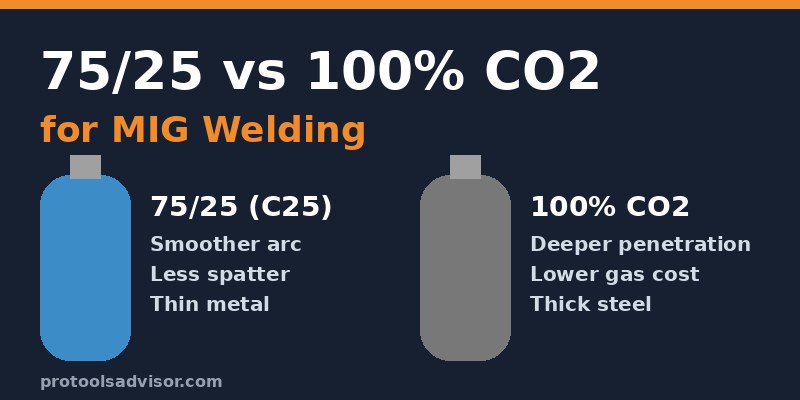
Solid wire needs shielding gas. The most common gas mix for mild steel is 75% Argon / 25% CO2. Pure CO2 is cheaper and gives deeper welds but creates more spatter. For most jobs, the Argon mix is easier to use.
Flux-cored wire does not need gas, but some types (dual shield) can use it for better results. Dual shield wires are mainly used in heavy industry, not in small home welders.
If you are using a small “MIG” machine that only supports flux-cored wire, make sure not to buy solid wire by mistake. Without gas, solid wire welds will be weak and porous.
2. Wire Spool Size
MIG wire comes on spools of different weights (1 lb, 2 lb, 10 lb, 33 lb, and more). Make sure your welder can fit the spool size you buy. For home use, 2 lb or 10 lb spools are common.
If you do not weld often, a smaller spool is better. Large spools are cheaper per pound, but if you leave them open in a humid area, the wire can rust before you use it all.
Some small welders only accept 1 lb or 2 lb spools. For larger jobs or industrial work, 10 lb or 33 lb spools save time by reducing how often you need to change wire.
3. Wire Chemical Composition
Look at the code on the wire, like ER70S-6. “ER” means electrode rod. “70” means the weld can hold 70,000 psi of strength. “S” means solid wire. The last number shows the wire’s chemical content.
- ER70S-6 has extra deoxidizers, which help when welding dirty or rusty steel.
- ER70S-3 is for clean steel.
If you mostly weld new, clean metal, ER70S-3 is fine. But for general repairs, ER70S-6 is a safer choice because it can handle some rust or mill scale. This small detail is why so many hobbyists and professionals choose ER70S-6 for everyday work.
4. Storage And Handling
Moisture can cause wire to rust or corrode. Keep wire spools in a dry area. Do not touch the wire with greasy hands, as oil can create weld defects.
Rusty wire causes erratic feeding and poor welds. Even small amounts of rust can get into your welder’s liner and cause blockages. For long-term storage, sealing spools in plastic bags with a silica gel packet helps keep the wire dry and clean.
5. Welding Position
Some wires work better in certain positions. For example, E71T-11 flux-cored wire can weld in all positions (flat, horizontal, vertical, overhead). Solid wire works best flat or horizontal.
If you need to weld on a vertical surface or overhead, check that your wire is rated for all positions. Not all wires are designed for the extra heat and gravity challenges of out-of-position welding.
How To Read Mig Wire Labels
Wire packaging uses codes that explain the wire’s properties. Understanding these codes helps you pick the right wire.
Example: ER70S-6
- ER: Electrode, Rod
- 70: Tensile strength (70,000 psi)
- S: Solid wire
- 6: Chemical content (extra deoxidizers)
Example: E71T-11
- E: Electrode
- 71: Tensile strength (71,000 psi)
- T: Tubular (flux-cored)
- 11: Usable without gas, all positions
Some wire labels also include details about recommended polarity (DCEN or DCEP), so check your welder’s settings to match the wire.
Comparing Solid And Flux-cored Wire
To help you see the differences, here is a comparison:
| Feature | Solid Wire (ER70S-6) | Flux-Cored Wire (E71T-11) |
|---|---|---|
| Shielding Gas | Required | Not required |
| Spatter | Low | High |
| Weld Appearance | Clean, smooth | Rougher, more cleanup |
| Outdoor Use | Poor | Good |
| Metal Thickness | Thin to medium | Medium to thick |
One detail many beginners miss: Flux-cored wire can make stronger welds on dirty or painted metal, but the welds are often not as neat. In contrast, solid wire welds may look better but will not be strong if the base metal is not clean.
Common Mistakes When Choosing Mig Wire
- Using the wrong wire diameter. Too thick for thin metal causes burn-through. Too thin for thick metal gives weak welds.
- Ignoring gas needs. Buying solid wire without a gas supply leads to bad welds.
- Buying poor quality wire. Cheap wire can jam, splatter, or cause weak welds.
- Not matching wire to welder. Some welders can only handle certain spool sizes or diameters.
- Wrong wire for the position. Using wire that cannot weld overhead or vertical leads to poor results.
Another common mistake: Not checking the polarity setting. Flux-cored wire often needs electrode negative (DCEN), while solid wire with gas needs electrode positive (DCEP). Using the wrong setting causes poor arc stability and weak welds.
Choosing Wire For Different Projects
Auto Body Repair
Use 0.023 inch solid wire with 75/25 Argon/CO2 gas. This gives less heat, less warping, and smooth welds.
If you use too much heat or a thicker wire, you risk blowing through the thin metal or causing warping. Solid wire makes it easier to control the heat and get a smooth finish for painting.
Home And Farm Repairs
If you work outside or on thicker metal, choose 0.030 or 0.035 inch flux-cored wire. It works well on rusty or painted steel.
Farm equipment and gates often have old paint or rust. Flux-cored wire can handle these conditions and gives a strong weld, even if the metal is not perfectly clean.
Light Fabrication
For steel up to 1/4 inch, 0.030 or 0.035 inch solid wire is a good match. Use with gas for cleaner results.
This is common for making shelves, tables, and brackets. You get enough penetration for strength without too much spatter.
Heavy Fabrication
For steel over 1/4 inch, use 0.045 inch wire. Many home MIG welders cannot handle this size, so check your welder first.
Heavy fabrication often means multiple passes. If your welder cannot use 0. 045-inch wire, make several passes with 0. 035-inch wire for strength.
How Wire Quality Affects Your Weld
High-quality wire gives:
- Stable arc
- Even feed
- Less spatter
- Consistent welds
Low-quality wire may:
- Jam in the liner
- Create uneven welds
- Cause porosity (holes in weld)
Non-obvious insight: Some low-cost wires have a thin or uneven copper coating. This can clog your welder’s liner and cause feed problems, even if the wire looks fine.
Another detail: High-quality wire often has tighter tolerances in diameter, meaning the wire feeds more smoothly and the arc stays more stable. This can be the difference between a fun welding session and a frustrating one.

Credit: www.thefabricator.com
How To Test Wire Quality Before Buying Large Amounts
If you can, buy a small spool first. Test for:
- Smooth feed
- Stable arc
- Low spatter
If you notice feed problems or many burn-backs, try a different brand before buying larger spools.
Run a few test beads on scrap metal. If you see uneven feeding, unusual spatter, or have trouble keeping the arc stable, change brands before you invest in a large spool.
Wire Coatings And Why They Matter
Most MIG wires have a copper coating. This helps with:
- Electrical conductivity
- Rust prevention
- Smoother feeding
Some new wires use a thin or special coating to reduce fume and spatter. Read the packaging details if you want to try these, but stick to standard copper-coated wire for most projects.
Copper coating also helps prevent the wire from rusting in storage. However, if you notice green or blue corrosion, the wire may have been exposed to moisture and should not be used.
Wires with a “bare” finish (no coating) are rare for mild steel. If you find one, check carefully that it is meant for your process.
How Spool Size Affects Performance
Large spools (10 lb or 33 lb) are cheaper per pound but need a welder that fits them. For short jobs, use a 1 lb or 2 lb spool to avoid rust or moisture problems.
Non-obvious insight: If you rarely weld, small spools keep wire fresh. Large spools left open too long can rust and cause poor welds.
If you do heavy welding for hours at a time, large spools save money and reduce how often you need to reload. For most home users, small spools are safer because they will not sit long enough to rust.
Matching Wire Speed And Voltage
The right wire feed speed and voltage are just as important as wire choice. Too high or too low causes:
- Poor penetration
- Excess spatter
- Burn-back
Always adjust your settings after changing wire size. Most wire packages or welder manuals give starting points.
For example, if you switch from 0. 023-inch to 0. 035-inch wire, you will need to increase your voltage and adjust the wire speed higher. If your arc feels unstable or the wire is burning back into the tip, check your settings and make small adjustments.
If you are not sure where to start, practice on scrap metal. Watch the bead and listen to the sound. A smooth, steady “buzz” means you are close to the right settings.
Credit: weldguru.com
How To Store Mig Wire Properly
- Keep spools in a dry, cool area.
- Seal unused wire in plastic bags.
- Avoid touching the wire with bare hands.
- For long-term storage, use silica gel packs to keep moisture away.
Rusty wire will cause poor welds and can jam your welder.
If you live in a humid area, consider keeping wire spools in a sealed container with a small dehumidifier or moisture-absorbing packet. Even a little rust can ruin a project or damage your welder’s liner.
Step-by-step: How To Choose The Right Mig Wire For Mild Steel
- Identify your project. Are you welding thin, medium, or thick mild steel? Indoors or outdoors?
- Choose the wire type. Use solid wire with gas for clean, indoor work. Use flux-cored for outdoor or dirty steel.
- Select the wire diameter. Match wire size to metal thickness and your welder’s limits.
- Pick the right spool size. Buy only what you will use in a few months.
- Check your welder. Make sure it supports the wire type and spool size.
- Buy from a trusted brand. Quality wire saves time and trouble.
- Store properly. Keep wire dry and clean.
Following these steps will help you avoid common headaches like wire jams, poor weld strength, and wasted time redoing work.
Mig Wire Selection Chart For Mild Steel
Here is a simple chart to help you match wire size to steel thickness and project type.
| Steel Thickness | Project Example | Wire Size | Wire Type | Shielding Gas |
|---|---|---|---|---|
| Up to 1/16″ (1.6 mm) | Auto body, sheet metal | 0.023″ | ER70S-6 | 75/25 Argon/CO2 |
| 1/16″ – 1/8″ (1.6-3 mm) | Home repair, tubing | 0.030″ | ER70S-6 or E71T-11 | Gas or gasless |
| 1/8″ – 1/4″ (3-6 mm) | Frames, brackets | 0.035″ | ER70S-6 or E71T-11 | Gas or gasless |
| Over 1/4″ (6 mm+) | Heavy fabrication | 0.045″ | ER70S-6 or E71T-11 | Gas or gasless |
This chart is a quick way to check your choices before each project. If you ever feel unsure, start with a small test weld and adjust as needed.
Tips For Best Mig Welding Results On Mild Steel
- Clean the base metal. Remove rust, oil, and paint for better results.
- Set correct wire speed and voltage. Start with chart values, then adjust.
- Keep a short stick-out. About 3/8 inch is best.
- Check for even bead. Look for smooth edges and no holes.
- Change contact tip if feeding is rough. Worn tips can cause poor wire feed.
Another helpful tip: Pay attention to the angle of your gun. A slight push or drag angle (about 10-15 degrees) usually gives the best results. Also, avoid weaving the gun side-to-side, especially on thin steel.
If you see porosity (tiny holes) in your weld, check for drafts or leaks in your gas line, or try cleaning the metal more thoroughly.
Frequently Asked Questions
What Is The Best Mig Wire For Mild Steel?
For most projects, ER70S-6 solid wire is the best choice if you have a shielding gas. It works well on clean or slightly dirty mild steel and gives clean welds with low spatter.
Can I Use Flux-cored Wire For Mild Steel?
Yes, you can use E71T-11 or E71T-GS flux-cored wire for mild steel, especially if you work outdoors or do not have a gas supply. Just remember, the welds need more cleaning.
How Do I Know What Wire Diameter To Use?
Match the wire size to the steel thickness. Use 0.023 inch for thin metal, 0.030 inch for medium, and 0.035 or 0.045 inch for thicker steel. Check your welder’s manual for supported sizes.
Why Does My Mig Wire Keep Jamming Or Burning Back?
This usually happens because of poor quality wire, wrong wire tension, a worn contact tip, or a rusty spool. Make sure you use quality wire and set the correct feed tension.
Where Can I Find More Information About Welding Standards And Codes?
You can read more about welding wire standards and codes at the Gas Metal Arc Welding Wikipedia page.
Choosing the right MIG wire for mild steel takes a little research but pays off in stronger, cleaner welds and fewer problems. Follow the steps and tips above, and you will get better results, less frustration, and save time on every project.