Disclosure: This post contains affiliate links and I will be compensated if you make a purchase after clicking through my links. Learn More
Welding is a skill that shapes everything from bridges to cars. Two of the most common weld types are fillet welds and groove welds. Many people confuse these because both join metal pieces together. Still, they have different shapes, uses, and strengths. Knowing the differences helps welders, engineers, and construction workers choose the right method for the job. Whether you are learning welding or want to understand how things are built, this guide will explain every key point. You will see how each weld works, where to use them, and why their differences matter.
What Is A Fillet Weld?
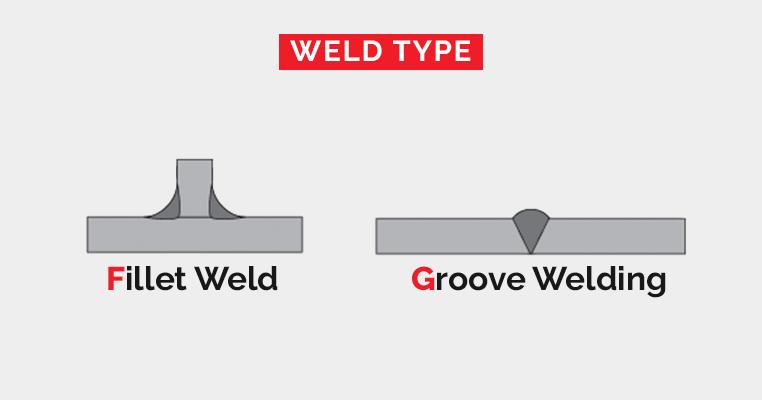
A fillet weld joins two surfaces at a right angle or another angle. This weld creates a triangle-shaped bead. You often see it in T-joints, lap joints, and corner joints. The fillet weld does not need the edges of the metal to be shaped or prepared much before welding.
You can find fillet welds in many everyday objects. For example, the frame of a bicycle often uses fillet welds. Construction beams, ship hulls, and fences also use this type of weld. In home projects, items like window grills, metal tables, or shelves often rely on fillet welds for their structure.
Fillet welds are popular because they are fast and simple. Welders can make these welds without much edge preparation, saving time and money. The triangle shape gives good strength, especially when joining thin to medium-thick metals.
One thing many people do not realize is that fillet welds can be made from one side of the joint. This means if you can only reach one side of the assembly, you can still create a reliable connection. This is a big advantage in places with limited access.
Fillet welds also allow for a small amount of misalignment between parts. If the pieces do not fit perfectly, the weld can often fill gaps, which helps speed up assembly. However, too large a gap can weaken the joint, so proper fit-up is still important.
Another detail is that fillet welds can be made in many positions: flat, horizontal, vertical, or even overhead. This flexibility is useful in construction, shipyards, and repair work, where not all parts can be moved for easy access.
What Is A Groove Weld?
A groove weld joins two pieces of metal edge to edge. The welder first prepares the metal edges by shaping them—this process is called “grooving.” Groove welds come in many shapes like square, V, U, J, or bevel. The shape depends on the thickness of the metal and the strength needed.
Groove welds appear in butt joints, where two metal plates join in the same plane. You will see groove welds in pipelines, pressure vessels, and large steel structures. These welds offer high strength, especially for thick materials.
Welders use groove welds when strong, deep penetration is needed. Preparing the edges takes more time, but the result is a solid connection that handles high stress.
A non-obvious point is that groove welds allow for “full penetration” welds, meaning the weld metal goes completely through the joint. This is important for parts that will face heavy loads, vibration, or pressure, such as in boilers or cranes.
Full penetration provides better fatigue resistance, which is critical in moving structures.
Groove welds also let you join plates with the same or different thicknesses. By adjusting the groove shape or using more weld passes, you can join thick to thin without losing strength. However, more passes mean more work and more chances for mistakes if not done carefully.
Groove welds are also used when you need a smooth surface after welding. The weld bead can be ground flush with the plates, making the joint look like a single piece of metal. This is important for pipelines or tanks, where a smooth interior prevents buildup and makes cleaning easier.
Key Differences Between Fillet Weld And Groove Weld
Understanding the differences between these two welds is more than knowing their shapes. It helps with project planning, cost estimation, and safety.
1. Joint Design
Fillet welds join surfaces at angles, usually 90 degrees. The metals overlap, forming a “T,” “L,” or “corner” shape. You do not need to cut or shape the metal edges much.
This makes fillet welds ideal for quick assembly, especially in repetitive manufacturing or repair. For example, in making steel furniture, parts are often joined with fillet welds to save time.
Groove welds join surfaces edge to edge. The welder shapes the metal edges into grooves. These grooves can be V, U, J, square, or bevel, depending on the design.
This edge-to-edge design is best when the joint must be as strong as the base metal. For example, in bridges or pressure vessels, engineers use groove welds to ensure the joint will not be the weak point.
2. Preparation Before Welding
Fillet welds need little edge preparation. You can start welding after cleaning the surfaces. This makes fillet welds popular for quick repairs or fieldwork, where time and tools are limited.
Groove welds require more work. The welder must cut and shape the metal edges to make a groove. This process takes time but is important for deep penetration.
For groove welds, precise groove angles and depths are needed. If the groove is too narrow, the welder may not achieve full penetration. If it is too wide, too much filler metal is used, adding cost and time.
3. Shape And Appearance
Fillet welds look like a triangle or “fillet” between the two joined pieces. You can see the bead along the joint.
A neat fillet weld should have equal legs and a smooth surface. Irregular shape or undercut (where the weld cuts into the base metal) weakens the joint.
Groove welds fill the groove between two edges. The final shape matches the groove (V, U, etc. ). The bead is often flush with the surface or slightly raised.
In some critical jobs, groove welds are ground flush for better appearance or to meet hygiene standards, such as in food processing equipment.
4. Types Of Joints Used
Fillet welds are most common in these joints:
- T-joints (where one piece meets another at a right angle)
- Lap joints (where two pieces overlap)
- Corner joints (where two pieces meet at the end)
You might also see double fillet welds, where both sides of a T-joint are welded for more strength.
Groove welds are used in:
- Butt joints (two pieces end-to-end)
- Edge joints (edges of two pieces meet)
- Some corner and T-joints (if a groove is prepared)
Sometimes, a combination is used: a groove weld for strength, with a fillet weld on the outside for extra support or sealing.
5. Strength And Penetration
Fillet welds usually do not penetrate as deep as groove welds. They are strong for many uses, but not always for thick materials.
For example, a fillet weld might be strong enough to hold a fence together but not a bridge.
Groove welds give deeper penetration. They can join thick materials and handle high stress. This makes them good for critical structures.
In many code standards, groove welds are required for joints that must carry the same load as the base material.
6. Welding Symbols
In engineering drawings, fillet welds use a triangle symbol.
Groove welds use different symbols based on the groove shape (V, U, J, square, bevel).
Learning to read these symbols helps you understand what the designer wants and avoid costly mistakes.
7. Cost And Time
Fillet welds are usually cheaper and faster to make. Less preparation and welding time means lower costs.
For example, in mass production, using fillet welds can save thousands of dollars in labor.
Groove welds cost more and take longer. Preparation is more complex, and more weld metal may be needed.
However, the extra cost is often worth it for safety and performance in demanding jobs.
8. Common Applications
Fillet welds:
- Frames and supports
- Shipbuilding
- Car chassis
- Fences and gates
Groove welds:
- Pipelines
- Pressure vessels
- Large steel structures
- Bridges
Some products use both types. For example, a ship hull might use groove welds for main seams and fillet welds for interior brackets.
9. Inspection And Testing
Fillet welds are usually inspected visually or with simple tools.
Simple gauges can check if the fillet size matches the drawing.
Groove welds often need more advanced testing like X-ray or ultrasonic inspection, especially in critical jobs.
These tests look for hidden cracks or lack of fusion that could cause failure.
10. Typical Sizes
Fillet weld size is measured by the leg length (the triangle’s sides).
For example, a 6 mm fillet weld has legs of 6 mm each.
Groove weld size is measured by the depth of penetration and thickness filled.
A “full penetration” groove weld means the weld goes through the entire joint thickness.
Table: Quick Comparison Of Fillet Weld Vs Groove Weld
Here’s a side-by-side view to help you compare:
| Feature | Fillet Weld | Groove Weld |
|---|---|---|
| Joint Type | T, lap, corner | Butt, edge, some T/corner |
| Preparation Needed | Minimal | Significant (grooving) |
| Weld Shape | Triangle | Fills groove (V, U, etc.) |
| Penetration | Shallow to moderate | Deep |
| Strength | Good for most uses | High, for thick/critical joints |
| Cost & Time | Low | Higher |
| Common Uses | Frames, ships, cars | Pipelines, bridges |
| Inspection | Visual, simple tools | Advanced (X-ray, ultrasonic) |
| Symbol | Triangle | V, U, J, square, bevel |
| Size Measurement | Leg length | Depth, thickness filled |
Types Of Fillet Welds
Fillet welds are not all the same. Here are the main types:
- Transverse fillet weld – runs across the joint.
- Longitudinal fillet weld – runs along the length of the joint.
- Intermittent fillet weld – welds are spaced with gaps.
- Continuous fillet weld – no gaps, weld runs the full length.
Each type suits different needs. For example, intermittent welds save material but are strong enough for light loads.
Transverse welds are common in brackets that hold shelves, while longitudinal fillet welds are often used in long frames or rails.
Continuous fillet welds provide a seal, which is helpful in water tanks or containers. Intermittent fillet welds, with spaces, are used where full strength isn’t needed, such as in light-duty frames, to reduce weight and cost.
Types Of Groove Welds
Groove welds come in several forms, based on the groove shape:
- Square groove weld – edges are flat, used for thin materials.
- V-groove weld – edges cut at an angle, makes a “V.”
- U-groove weld – edges curved, forms a “U.”
- J-groove weld – one edge curved, other straight, looks like a “J.”
- Bevel groove weld – one edge angled, other flat.
These shapes help control penetration and strength. For thick steel, a V- or U-groove is common because it lets the weld go deep.
U-groove and J-groove welds are often chosen when saving filler material is important, because their shape uses less weld metal than a wide V-groove.
Square groove welds are very simple but only work well with thin materials, since deep penetration is hard to achieve without grooving.

Credit: www.youtube.com
Table: Common Groove Weld Shapes
This simple table shows the main groove types and when to use them.
| Groove Type | Shape | Typical Use |
|---|---|---|
| Square | || | Thin plates |
| V-groove | V | Medium to thick plates |
| U-groove | U | Thick plates, less filler |
| J-groove | J | Asymmetric joints |
| Bevel | / | One-sided prep |
How To Choose: Fillet Weld Or Groove Weld?
Choosing between fillet and groove welds depends on several factors. Here’s how you can decide:
Material Thickness
Use fillet welds for thin to medium plates (up to about 12 mm). They work best when both pieces overlap.
Use groove welds for thick plates (over 12 mm) or when you need to join plates edge-to-edge.
For example, joining two 20 mm steel plates for a bridge beam almost always requires a groove weld for enough strength.
Required Strength
For normal support, fillet welds are enough. For high-pressure or load-bearing parts, groove welds are safer. Groove welds give full penetration, which means the weld goes through the full thickness.
If the welded part will carry dynamic or shock loads (like in a crane or vehicle frame), groove welds are usually a must.
Cost And Speed
Fillet welds are less expensive and faster. They need less skill and material.
Groove welds take longer and cost more, but give greater strength.
A good tip: Use fillet welds for non-critical, repetitive joints (like fences), and groove welds for safety-critical structures.
Joint Location And Access
Fillet welds work well if you can reach the joint from one side. Groove welds may need access to both sides, especially for thick materials.
If you can only weld from one side, a partial penetration groove weld may be used, but it is not as strong as a full penetration weld.
Welding Position
Welders can make fillet welds in many positions—flat, horizontal, vertical, or overhead. Groove welds, especially on thick plates, are easier in flat position.
Working in the flat position improves weld quality and reduces the risk of defects.
Credit: blog.red-d-arc.com
Real-world Examples
Fillet Weld Example
A metal gate frame uses fillet welds at every corner. The welder places one tube against another at right angles. A fillet weld joins them without cutting or shaping the tube ends. This gives strong, neat corners.
Another example is furniture made from steel angles. The legs and top frame are joined with simple fillet welds. These joints are strong enough for daily use, but fast to make.
Groove Weld Example
A pipeline uses groove welds to join pipe sections. The welder prepares the pipe ends with a V-groove. This helps the weld metal penetrate deep, making the joint strong enough to handle high pressure.
Another case is a building’s main steel beams. Where beams are joined end-to-end, a groove weld ensures the joint is as strong as the beam itself. This is critical for earthquake or wind resistance.
Why These Differences Matter
The wrong weld can cause failure. For example, if you use only a fillet weld on a thick pipeline, the joint may crack under pressure. In construction, groove welds prevent collapse in heavy steel beams.
Engineers often check welding codes and standards to decide which weld is safe. For example, the American Welding Society (AWS) sets rules for weld size and inspection.
Another important point is repair. If a groove weld fails, repair is more complex and costly than a fillet weld. Correct choice from the start prevents expensive fixes later.
Table: Weld Cost And Time Estimates
This table shows typical differences in time and cost for both weld types (based on industry data):
| Weld Type | Average Prep Time (min) | Weld Time (min) | Material Used (kg/m) | Relative Cost |
|---|---|---|---|---|
| Fillet | 2-5 | 5-10 | 0.25 | Low |
| Groove | 10-20 | 10-30 | 0.50+ | High |
*These values change with material thickness and weld length.

Credit: www.wcwelding.com
Common Mistakes With Fillet And Groove Welds
Many beginners make mistakes that can weaken a weld. Here are some to avoid:
- Wrong joint preparation – Not cleaning or shaping edges can cause weak welds.
- Over or under welding – Too much weld wastes material; too little may not hold.
- Poor fit-up – Gaps between parts make the weld weak.
- Wrong weld type – Using a fillet weld where a groove weld is needed can cause failure.
- Ignoring codes – Not following standards can lead to poor quality.
A less-known mistake is using the wrong welding process or filler metal. For example, using a process that does not allow deep penetration in a groove weld can leave hidden weak spots.
An experienced welder checks the fit, cleans the metal, and chooses the right weld for the job.
Non-obvious Insights For Beginners
- Weld size is critical. Many people think “bigger is better,” but an oversized fillet weld can cause stress and cracks. Always match the weld size to engineering rules.
- Access matters. Sometimes, a groove weld is impossible if you cannot reach both sides. Plan your project so welders have full access, or choose a fillet weld if only one side is open.
- Heat input matters. With groove welds, too much heat can warp the metal. Weld in short sections and let the metal cool to avoid distortion.
- Sequence affects strength. The order you weld joints can reduce stress and shrinkage. For example, welding alternate sides in a groove joint helps keep the plates straight.
Practical Tips For Better Welding
- Always remove rust, paint, and oil before welding.
- Use the correct welding position for your skill level.
- For groove welds, ensure full penetration by adjusting current and travel speed.
- For fillet welds, keep the bead size even and do not overfill.
- Practice on scrap metal before making final welds, especially with new joint types.
- Use clamps or jigs to hold parts steady and keep gaps small.
Industry Standards And Codes
The main standards for welding are set by the American Welding Society (AWS) and International Organization for Standardization (ISO). These codes explain how to size, inspect, and test fillet and groove welds. Following these standards increases safety and reliability. You can read more on welding standards at the American Welding Society.
Many countries have their own codes, but most follow similar ideas—using the right weld for the load, inspecting critical joints, and training welders properly.
Frequently Asked Questions
What Is The Main Difference Between Fillet Weld And Groove Weld?
The main difference is the joint type and preparation. Fillet welds join two surfaces at an angle with little edge preparation. Groove welds join two edges with grooves prepared for deeper penetration and higher strength.
Which Weld Is Stronger: Fillet Or Groove?
Groove welds are usually stronger, especially for thick or critical joints. They give full penetration and can handle more stress. Fillet welds are strong enough for most light to medium jobs.
Can I Use A Fillet Weld Instead Of A Groove Weld?
You can use a fillet weld if the load is light and the material is thin. For high-stress or thick joints, always use a groove weld. Using the wrong weld type can cause failure.
How Do I Measure A Fillet Weld?
Measure the leg length (the sides of the weld triangle) with a fillet gauge. The size should match engineering drawings or codes.
Are Fillet Welds Or Groove Welds Faster To Make?
Fillet welds are usually faster and cheaper because they need little preparation. Groove welds take more time for edge shaping and welding, but offer higher strength.
Choosing the right weld affects safety, strength, and cost. By understanding these differences, you can make better decisions for any welding project.