Disclosure: This post contains affiliate links and I will be compensated if you make a purchase after clicking through my links. Learn More
Welding connects metals by melting and fusing them. While strong welds hold buildings, ships, and cars together, welding can also cause problems in the metal. One serious problem is cold cracking. Cold cracking can ruin a weld and even make structures unsafe. Many people hear about welding cracks but do not realize how cold cracking is different from other types. It often appears after the welding is done—sometimes hours or even days later. That makes it hard to spot and even harder to fix if you do not understand it.
Cold cracking is not just a random flaw. It happens under specific conditions. If you want to prevent expensive repairs, delays, or failures, you need to know exactly what causes cold cracking, how to identify it, and, most importantly, how to stop it from happening.
This article explains everything you should know, using simple words and practical examples.
What Is Cold Cracking In Welding?
Cold cracking is a type of weld defect. The crack forms at low temperatures, after the weld cools down. Unlike hot cracking, which happens while the metal is still very hot, cold cracking usually appears below 200°C (392°F). This can happen minutes, hours, or even days after welding is finished.
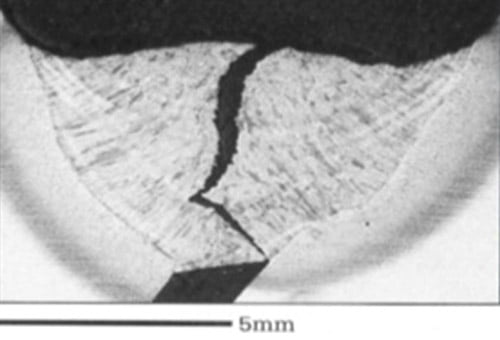
Cold cracking is also called delayed cracking or hydrogen-induced cracking. It often starts in the heat-affected zone (HAZ)—the area next to the weld where the metal was heated but not melted. Sometimes, the crack appears in the weld metal itself.
The main problem is that cold cracks can grow over time, making the weld weak. If left alone, these cracks can lead to sudden failure of a part or structure.
Why Does Cold Cracking Happen?
Several factors work together to cause cold cracking. It is not usually just one mistake. Instead, it happens when three main conditions are present at the same time:
- Hydrogen in the weld area
- High hardness or brittleness in the metal
- High residual or external stress
Let’s look at each one in detail.
Hydrogen In The Weld Area
Hydrogen is a small atom that can get into the weld pool during welding. It comes from moisture (water vapor), oil, rust, paint, or even the electrode coating. When the weld cools, hydrogen gets trapped inside the metal. Over time, hydrogen can move around and collect at weak spots, causing cracks to form.
High Hardness Or Brittleness
If the steel near the weld becomes hard or brittle, it cannot stretch or bend easily. This happens if the steel cools too quickly or if the composition of the metal makes it harden. Hard, brittle areas are more likely to crack when stressed.
High Residual Or External Stress
Residual stress is the leftover stress in the metal after welding, caused by the way the metal expands and shrinks during heating and cooling. External stress can come from outside forces, like bending or loading the welded part. If the stress is high enough, and the metal is already brittle and has hydrogen inside, a crack can appear.
Credit: weldguru.com
What Does Cold Cracking Look Like?
Cold cracks can be hard to spot. They are usually thin, straight, and run along the grain of the metal. They often start at the edge of the weld or in the heat-affected zone. Sometimes, you can see them with your eyes, but often, special tests are needed.
Some signs of cold cracking:
- Cracks appear after the weld cools
- Cracks are usually in the HAZ, not the center of the weld
- They may follow the edge of the weld bead
- Cracks may be hidden under the surface
Types Of Cold Cracking
Cold cracking can take several forms, depending on where the crack starts and how it grows.
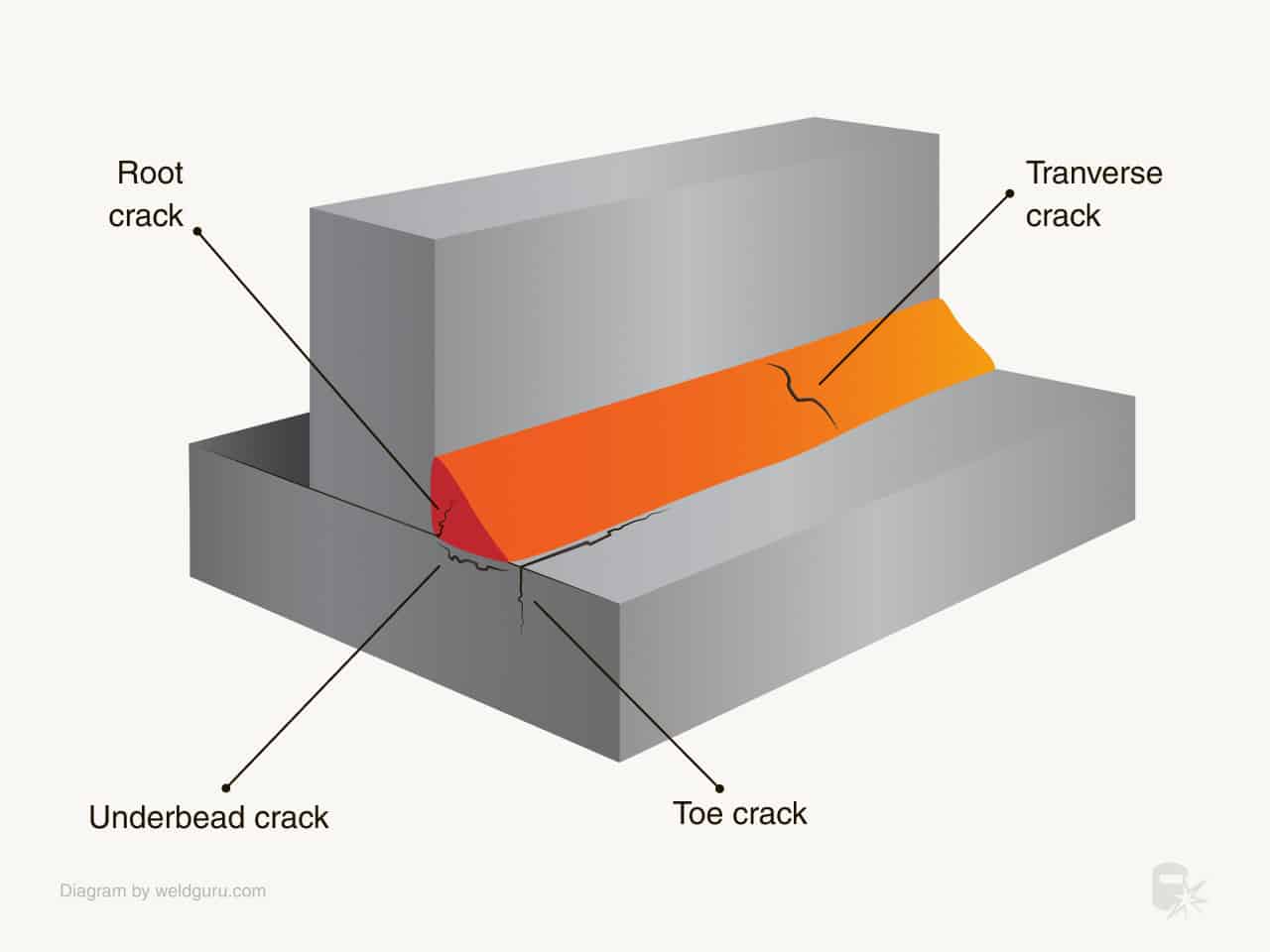
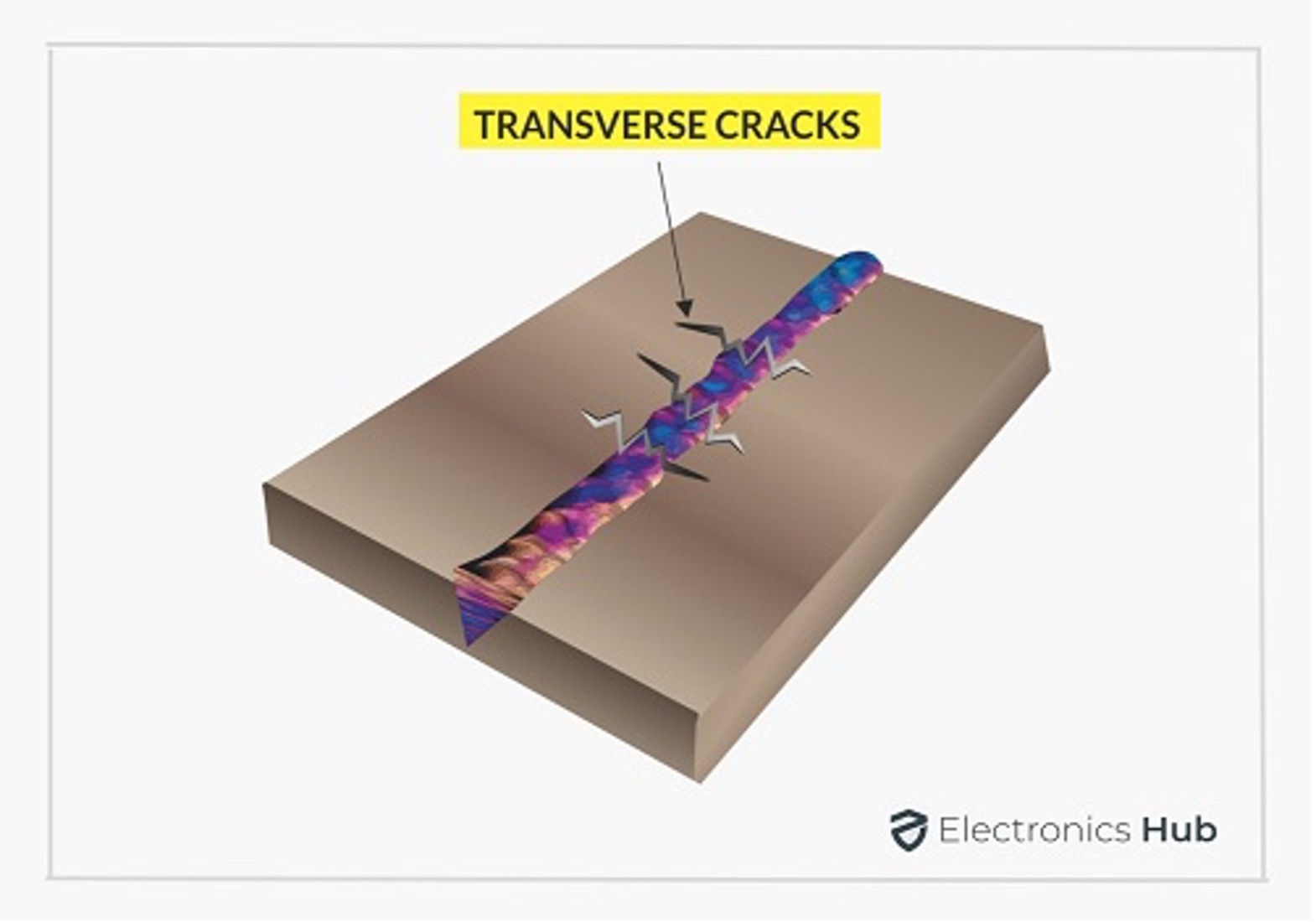
- Transverse cracks: These cracks run across the weld, perpendicular to the weld bead. They often result from high stress.
- Longitudinal cracks: These cracks run along the length of the weld. They are less common but can happen if the weld cools too fast.
- Crater cracks: These appear at the end of a weld bead, where the arc was stopped. The metal here cools quickly and is often more brittle.
- Toe cracks: These cracks start at the edge (toe) of the weld bead and move into the base metal.
- Root cracks: These start at the root of the weld, deep inside the joint, and are hard to see from the outside.
Credit: esab.com
Which Materials Are Most At Risk?
Not all metals have the same risk of cold cracking. Some are much more likely to crack than others.
Carbon Steels
High-strength, low-alloy steels and medium to high carbon steels are most at risk. These steels can become hard and brittle when they cool quickly. The more carbon a steel has, the higher the risk of cold cracking.
Low-alloy Steels
Low-alloy steels with special elements (like chromium, molybdenum, or nickel) can also be sensitive if they harden during cooling.
Stainless Steels And Non-ferrous Metals
Austenitic stainless steels (like 304 or 316) and most non-ferrous metals (like aluminum, copper, or titanium) are much less likely to suffer from cold cracking. Their structure does not harden in the same way as carbon steels.
Cast Irons
Cast iron is generally brittle, but it does not show classic hydrogen-induced cold cracking as in steels. Still, cracks can form from stress and rapid cooling.
Key Factors That Increase Cold Cracking Risk
Several conditions make cold cracking more likely. Understanding these can help you prevent problems.
1. High Hydrogen Content
- Using wet electrodes or fluxes
- Welding on dirty, oily, or rusty surfaces
- High humidity in the work area
- Using cellulosic electrodes, which have high hydrogen content
2. Fast Cooling Rates
- Welding thick or heavy sections without preheating
- Cold weather or strong drafts during welding
- Using high welding currents that create a small, hot spot
3. High Hardness In Haz
- Steels with high carbon or alloy content
- Lack of preheat or post-weld heat treatment
- Fast cooling after welding
4. High Residual Stress
- Restraining the part during welding (clamps, fixtures)
- Poor joint design that does not allow movement
- Multiple passes without allowing the weld to cool
5. Poor Welding Practice
- Incorrect electrode choice
- Poor technique causing lack of fusion or undercut
- Poor fit-up or joint preparation
How To Detect Cold Cracking
Finding cold cracks early is important. Some cracks are visible, but many are hidden just below the surface. There are several ways to check for cold cracking.
Visual Inspection
Look for straight, narrow cracks near the weld bead or in the HAZ. Clean the weld surface first, as dirt can hide cracks.
Magnetic Particle Testing (mt)
This test works on ferromagnetic metals like steel. Fine magnetic particles are sprinkled over the weld. If there is a crack, the particles gather at the crack, making it visible.
Dye Penetrant Testing (pt)
A colored liquid is applied to the weld, then wiped off. A developer powder draws liquid from cracks, making them visible as colored lines.
Ultrasonic Testing (ut)
High-frequency sound waves are sent into the metal. If there is a crack, the waves bounce back, and a technician can see the defect on a screen.
Radiographic Testing (rt)
X-rays or gamma rays are used to see inside the weld. Cracks show up as dark lines on the film.
Each method has strengths and weaknesses. For example, magnetic particle testing only works on magnetic metals. Ultrasonic and radiographic tests can find deep or hidden cracks.
Effects Of Cold Cracking
Cold cracks are dangerous because they can grow over time. They usually start small, but stress and vibration can make them bigger. In some cases, a crack can suddenly cause a weld to fail. This can lead to:
- Equipment breakdown
- Structural collapse
- Costly repairs
- Safety hazards for people
Many serious accidents have happened because of undetected cold cracks. For example, in the oil and gas industry, a single crack can cause a pipe to leak or burst.
How To Prevent Cold Cracking
Preventing cold cracks is easier than fixing them. The main goal is to control the three key factors: hydrogen, hardness, and stress.
1. Reduce Hydrogen
- Use low-hydrogen electrodes. These are designed to keep hydrogen levels low.
- Store electrodes in dry, heated containers.
- Pre-bake electrodes if required by the manufacturer.
- Clean the metal before welding. Remove oil, grease, rust, and paint.
- Keep the work area dry.
2. Control Cooling Rate
- Preheat the metal before welding. This slows cooling and reduces hardness.
- Use the correct welding current and speed.
- Avoid welding in cold or drafty places.
- Use post-weld heat treatment if needed, to let hydrogen escape.
3. Reduce Stress
- Use good joint design to allow movement.
- Weld in a sequence that spreads out heat and stress.
- Avoid clamping parts too tightly during welding.
- Allow the weld to cool between passes.
4. Choose The Right Welding Parameters
- Use the correct electrode or filler metal for the job.
- Match the welding process to the material and thickness.
- Do not use excessive welding current.
5. Material Selection
- Use steels with lower carbon and alloy content if possible.
- Know the carbon equivalent (CE) of your steel. This value predicts how easily a steel can harden and crack.
Example of Carbon Equivalent Calculation:
Ce = C + (mn/6) + [(cr+mo+v)/5] + [(ni+cu)/15]
If CE > 0. 4, the risk of cold cracking is high.
6. Use Proper Welding Technique
- Keep a short arc length
- Avoid stopping and starting the arc too often
- Fill craters at the end of welds to avoid crater cracks
7. Allow For Hydrogen Diffusion Time
- After welding, let the part sit at a warm temperature (called “hydrogen bake out”) to help hydrogen escape.
Real-world Example
In shipbuilding, many ship hulls use high-strength steel. If the welders do not preheat the plates and use low-hydrogen electrodes, cold cracks can form and travel through the hull. This can lead to leaks or, in the worst case, cause the hull to break apart.
Cold Cracking Vs. Hot Cracking
People often confuse cold cracking with hot cracking. They are different problems.
| Feature | Cold Cracking | Hot Cracking |
|---|---|---|
| When It Happens | After cooling, below 200°C | During solidification, above 1000°C |
| Main Cause | Hydrogen, hardness, stress | Impurities, poor weld design |
| Where It Appears | HAZ or weld metal | Weld metal, centerline |
| Detection | Delayed, sometimes hidden | Usually visible soon after welding |
Understanding the difference helps choose the right prevention method.
Welding Processes And Cold Cracking Risk
Some welding processes have a higher risk of cold cracking due to how they work.
Shielded Metal Arc Welding (smaw)
Often called stick welding. Uses covered electrodes. If these are not stored dry, they can absorb moisture and increase hydrogen levels.
Gas Metal Arc Welding (gmaw/mig)
Uses a wire and shielding gas. Lower risk of hydrogen, but poor gas coverage can allow moisture in.
Flux-cored Arc Welding (fcaw)
Uses a tubular wire with flux inside. Some types (especially self-shielded) can introduce more hydrogen.
Submerged Arc Welding (saw)
Used for thick sections. Needs clean, dry flux to prevent hydrogen pick-up.
Gas Tungsten Arc Welding (gtaw/tig)
Very clean process. Low risk of hydrogen-induced cold cracking.
| Welding Process | Hydrogen Risk | Typical Use |
|---|---|---|
| SMAW | Medium to High | Construction, repair |
| GMAW (MIG) | Low | Fabrication, automotive |
| FCAW | Medium | Heavy structures |
| SAW | Low (if flux is dry) | Thick plate welding |
| GTAW (TIG) | Very Low | Precision work |
Practical Tips For Welders And Inspectors
Cold cracking can catch even skilled welders by surprise. Here are some practical tips based on real experience:
- Always check the manufacturer’s data sheet for electrodes or filler metals. They tell you about storage and handling to avoid hydrogen problems.
- If you see a crack after welding, do not just grind it out and re-weld. Find out why it cracked first, or the problem will return.
- Use a heat crayon or thermometer to check preheat and interpass temperature, not just your hand.
- Keep a record of preheat and welding temperatures for important jobs. This helps if problems appear later.
- Check weather conditions. If it’s cold or damp, take extra care to keep materials and electrodes dry.
- For large or critical welds, use non-destructive testing (like MT or UT) to check for hidden cracks before approving the weld.
Many beginners miss the importance of preheat and electrode storage. Skipping these steps may save a few minutes but can cause cracks that take days to appear and cost much more to fix.
Credit: weldingengineers.co.nz
Industry Standards And Codes
Many industries have strict rules about preventing cold cracking. Some standards you may see:
- AWS D1.1 (Structural Welding Code – Steel)
- ASME Section IX (Boiler and Pressure Vessel Code)
- EN ISO 17642 (Welding – Test for cold cracking in welds)
These standards give guidance on preheat, electrode storage, and inspection. Always check which code applies to your project.
Advanced Methods To Reduce Cold Cracking
Some modern methods help further reduce cold cracking risk, especially for high-strength steels:
- Controlled cooling systems: Use blankets or induction heaters to manage cooling speed.
- Advanced filler metals: New alloys release hydrogen more easily or do not harden the HAZ as much.
- Weld design optimization: Using joint shapes that spread out stress and reduce restraint.
Research continues on how to reduce hydrogen and control microstructure during welding. Some companies use hydrogen analyzers to check weld samples, especially for critical jobs like pipelines or offshore structures.
For more scientific information, see the Wikipedia page on weld cracking.
Frequently Asked Questions
What Is The Main Cause Of Cold Cracking In Welding?
The main cause is a mix of hydrogen in the weld area, high hardness in the heat-affected zone, and stress. When these three come together, cold cracks can form after the weld cools.
How Soon Can Cold Cracking Appear After Welding?
Cold cracking can appear minutes, hours, or even days after welding is finished. This delay is why it is sometimes called delayed cracking.
How Can I Prevent Cold Cracking When Welding High-strength Steel?
Use low-hydrogen electrodes, preheat the metal, keep everything clean and dry, and allow the weld to cool slowly. Use the correct welding parameters and follow industry codes for guidance.
Can Cold Cracks Be Repaired?
Yes, but only after you find and fix the cause. Simply grinding out and re-welding the crack is not enough. Adjust your process to reduce hydrogen and stress before repairing.
What Is The Difference Between Cold Cracking And Hot Cracking?
Cold cracking happens after the metal cools, mostly because of hydrogen, hardness, and stress. Hot cracking happens while the weld is still very hot, usually due to impurities or bad weld design.
Cold cracking in welding is a serious problem, but it can be controlled with the right knowledge and practice. Understanding the causes, using good procedures, and always checking your work are the best ways to make sure your welds stay strong and safe.