Disclosure: This post contains affiliate links and I will be compensated if you make a purchase after clicking through my links. Learn More
Flux core welding is a popular way to join metal, especially for people new to welding. Many hobbyists and professionals use flux core welding because it works well outdoors, can handle dirty or rusty metal, and doesn’t need a separate gas tank.
While it looks simple, beginners often face problems like spatter, bad welds, or poor penetration. Good results come from using the right settings, techniques, and safety steps. This guide will give you practical tips to help you start flux core welding and get better results quickly.
What Is Flux Core Welding?
Flux core welding, also called FCAW (Flux-Cored Arc Welding), uses a special wire with a hollow core filled with flux. This flux melts and creates a protective shield over the weld, keeping out air and other gases. Unlike MIG welding, which uses a solid wire and shielding gas, flux core welding can work outside in windy areas. Many find it easier for thick materials, construction, or repair jobs.
There are two main types of flux core wire:
- Self-shielded wire: Best for outdoor use, doesn’t need extra gas.
- Gas-shielded wire: Needs a separate gas tank, gives cleaner welds.
For beginners, self-shielded flux core wire is easier since it doesn’t need extra equipment.
Key Equipment For Flux Core Welding
Before you start, you need some basic tools and safety gear. Here is a list of what you need:
- Flux core welder: Many entry-level welders support flux core wire.
- Flux core wire: Choose the right size for your machine and project, usually 0.030″ or 0.035″ for beginners.
- Welding helmet: Use an auto-darkening helmet for safety and better visibility.
- Protective gloves: Heavy-duty welding gloves protect your hands from heat and sparks.
- Welding jacket or sleeves: Wear flame-resistant clothing to protect your arms and body.
- Wire brush or chipping hammer: Clean the weld area before and after welding.
- Clamps: Hold your workpieces steady.
- Angle grinder: Prepare metal surfaces and clean up welds.
- Safety glasses: Always protect your eyes, even when not welding.
Using the right tools and safety gear makes welding safer and your welds stronger.
Setting Up Your Flux Core Welder
A good setup leads to better welds. Pay attention to:
- Polarity: Most flux core wires need DCEN (Direct Current Electrode Negative). Check your welder and wire packaging.
- Wire feed speed: Start with the manufacturer’s suggested speed and adjust as needed.
- Voltage: Set the voltage based on the wire size and metal thickness.
- Tension: Adjust the wire feed tension so it moves smoothly but doesn’t slip.
- Ground clamp: Attach it to clean, bare metal for a good electrical connection.
Check your welder’s manual and wire packaging for recommended settings. If you use the wrong settings, you may get poor welds or lots of spatter.
Flux Core Welding Tips For Beginners
If you are new to flux core welding, these tips will help you get better results and avoid common mistakes.
1. Clean The Metal Surface
Even though flux core welding can handle dirty metal, you still get better results if you clean the weld area. Use an angle grinder or wire brush to remove rust, paint, oil, and dirt. Clean metal gives you a stronger weld with less spatter and fewer defects.
2. Use The Right Wire
Choose the correct wire size and type for your project. For most home projects, use E71T-11 or E71T-GS self-shielded wires. Use 0.030″ wire for thin metal (less than 1/8″ thick) and 0.035″ for thicker pieces. Check your welder’s manual for the best match.
3. Set The Correct Polarity
Many new welders forget to check polarity. For self-shielded flux core wire, connect the torch to the negative terminal and the ground to the positive. Using the wrong polarity causes weak welds and more spatter.
4. Adjust Voltage And Wire Feed Speed
Settings depend on wire size, metal thickness, and position. Too high voltage or speed causes burn-through. Too low creates poor fusion. Start with recommended settings and test on scrap metal. Listen for a steady, crackling sound (like frying bacon); this means your settings are close.
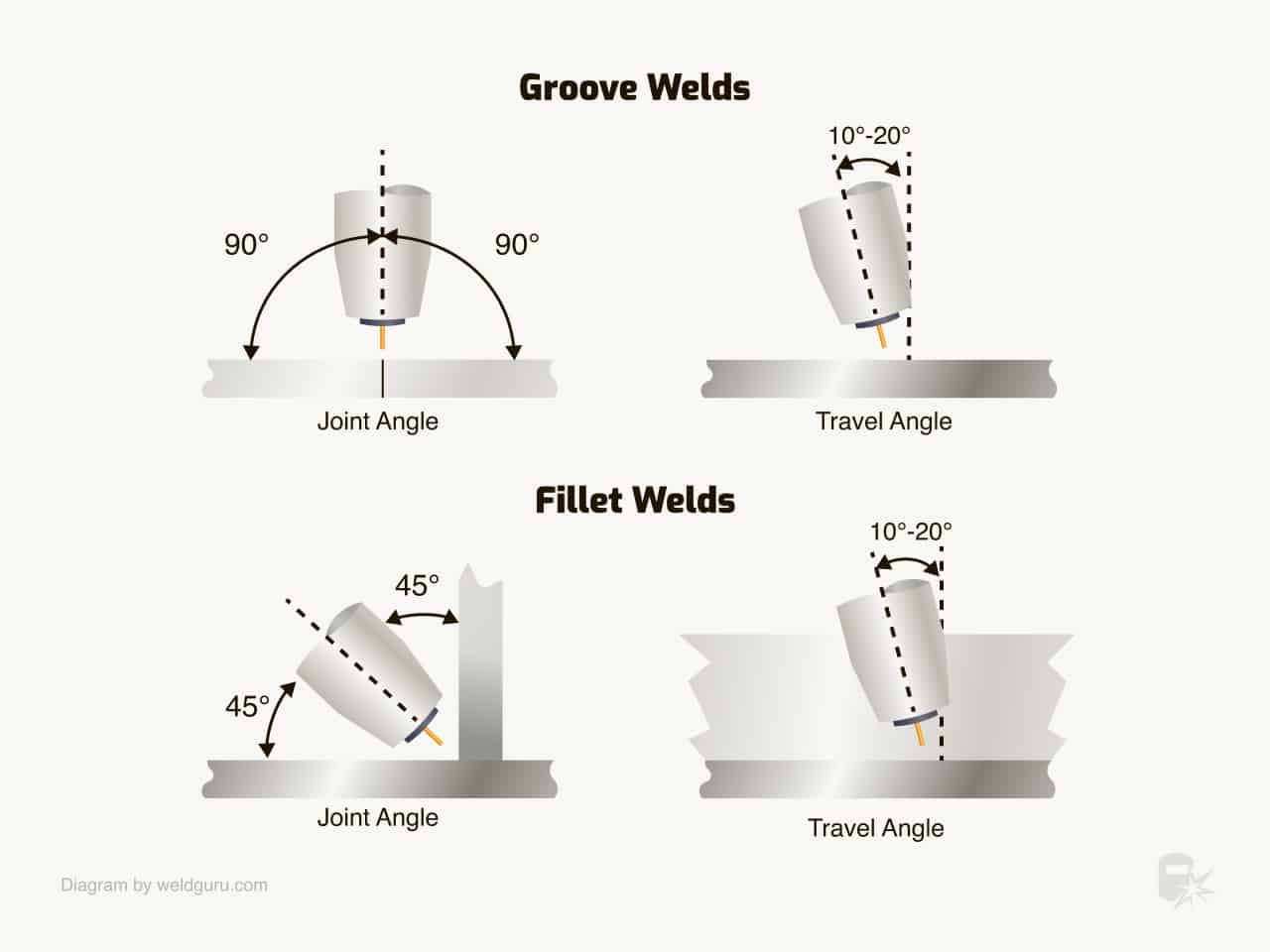
5. Hold The Gun At The Right Angle
Use a drag (pull) technique. Hold the gun at a 15° angle away from the weld direction and pull it toward you. This helps the slag cover the weld pool and protects it as it cools. Avoid pushing the gun forward.
6. Keep A Steady Travel Speed
Move the gun at a constant speed. If you go too fast, the weld will be thin and weak. Too slow, and you’ll get a wide, messy bead. Watch the weld pool and try to keep the bead the same width all along.
7. Keep The Correct Stick-out
Stick-out is the length of wire between the contact tip and the workpiece. For flux core, use a stick-out of 1/2″ to 3/4″ (12-19 mm). Too short overheats the tip, too long causes weak welds and lots of spatter.
8. Use Short Welds To Control Heat
Welding creates a lot of heat, which can warp thin metal. Weld in short sections, then let the metal cool before starting again. This also helps avoid burn-through.
9. Remove Slag After Each Pass
Slag is the hard, crusty layer that forms over the weld bead. Use a chipping hammer and wire brush to remove it. If you leave slag, your next weld pass will be weak and could trap defects.
10. Watch Your Position And Comfort
Welding is easier and safer if you are comfortable. Set your work at a height where you can see the weld pool clearly. Keep your arms steady and avoid awkward positions.
11. Use Proper Ventilation
Flux core welding produces smoke and fumes. Always weld in a well-ventilated area or use a fume extractor. Breathing welding fumes is unhealthy.
12. Practice On Scrap Metal
Before working on your main project, practice on scrap pieces. Try different settings, angles, and speeds until you get a strong, neat bead.
13. Use Clamps For Better Control
Secure your work with clamps. This prevents movement and keeps joints tight, which leads to stronger welds.
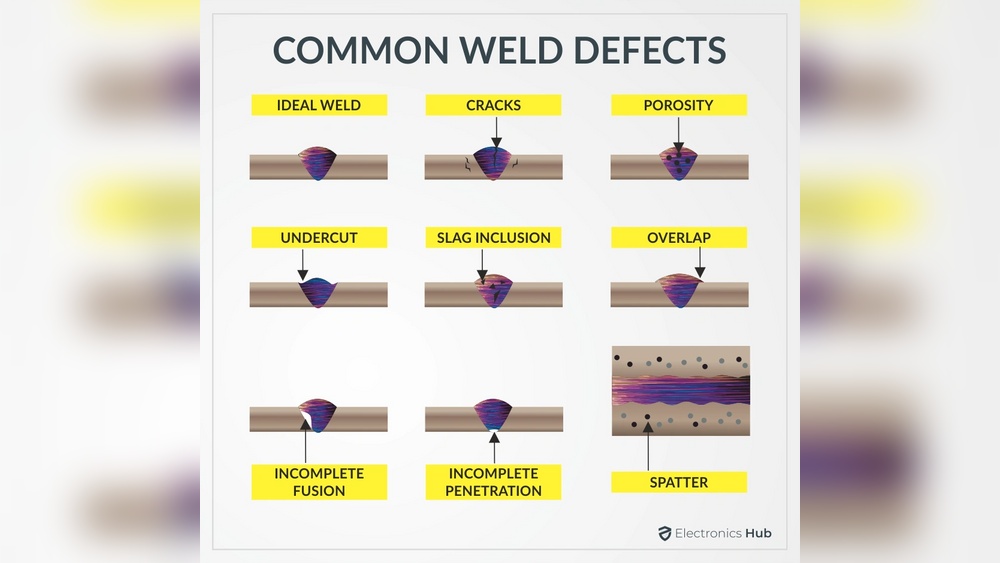
14. Check For Common Weld Defects
Look for defects like porosity (holes in the weld), undercut (grooves along the weld edge), and lack of fusion (poor bonding). Fix these by adjusting your speed, angle, and settings.
15. Keep Your Equipment Clean
Regularly clean the wire feed system, gun nozzle, and contact tip. Dirt and debris cause wire jams, poor electrical contact, and spatter.
16. Store Flux Core Wire Properly
Flux core wire absorbs moisture, which causes weld defects. Store wire in a dry place and seal opened spools in plastic bags.
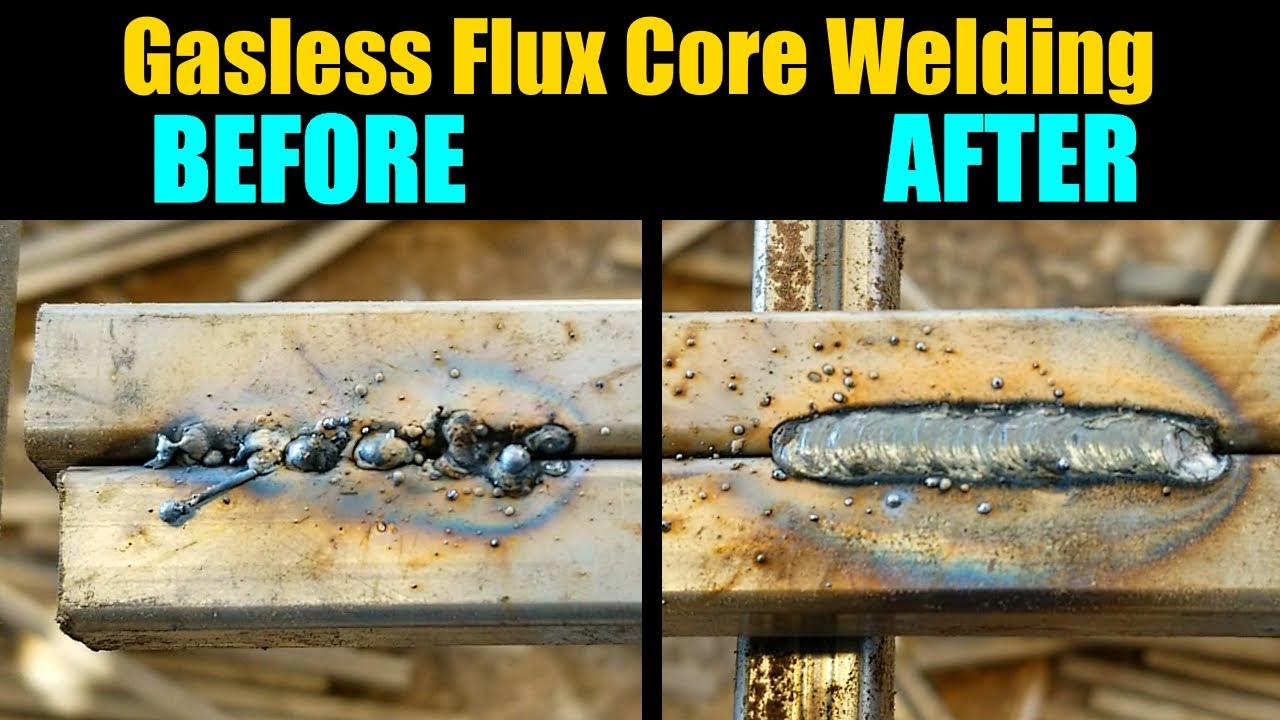
17. Learn To Read Weld Beads
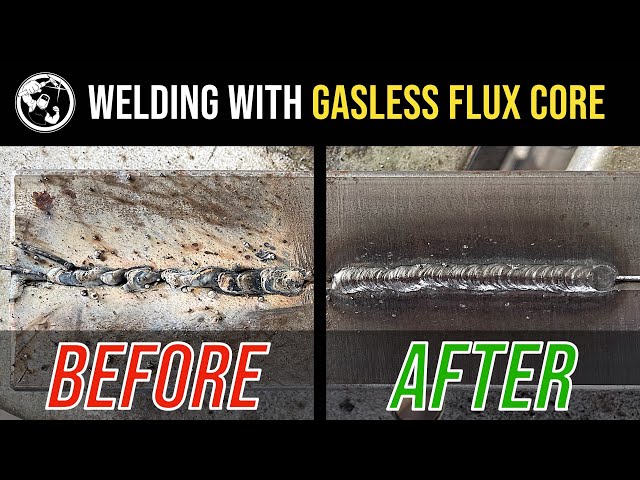
A good weld bead looks even, smooth, and slightly convex. Practice checking your welds and learn to spot problems early.
18. Use Both Hands For Control
If possible, use both hands to steady the gun, especially when learning. This improves accuracy and reduces shaking.
19. Don’t Overdo The Amperage
More power isn’t always better. Too much amperage causes burn-through and excess spatter. Match your settings to the material thickness.
20. Stay Patient And Keep Learning
Welding takes time to master. Don’t rush. If you make a mistake, fix it and try again. Each weld teaches you something new.
Flux Core Vs. Mig Welding
Many beginners wonder how flux core welding compares to MIG welding. Here is a simple side-by-side look:
| Feature | Flux Core Welding | MIG Welding |
|---|---|---|
| Shielding | Flux in wire | External gas |
| Outdoor Use | Works well | Wind can blow gas away |
| Metal Prep | Tolerates rust/dirt | Needs clean metal |
| Spatter | More spatter | Less spatter |
| Weld Appearance | Rougher, slag to remove | Smoother, no slag |
| Cost | No gas needed | Gas and regulator needed |
Flux core welding suits outdoor work, repairs, and thicker metals. MIG welding gives cleaner welds but needs more equipment and works best indoors.
Common Mistakes And How To Fix Them
Even with good tips, beginners make mistakes. Here are frequent problems and what to do:
Too Much Spatter
- Cause: Wrong settings, dirty metal, or bad technique.
- Fix: Clean the metal, check polarity, and adjust voltage and wire speed.
Burn-through
- Cause: Too high voltage or slow travel speed.
- Fix: Lower the voltage or move the gun faster. Use shorter welds.
Porosity (bubbles Or Holes)
- Cause: Moisture in wire, dirty metal, or wrong technique.
- Fix: Dry and store wire properly, clean metal, use correct stick-out and angle.
Weak Or Brittle Welds
- Cause: Wrong polarity, poor fusion, or low power.
- Fix: Check polarity, clean surfaces, and adjust voltage.
Wire Jamming
- Cause: Dirty wire feed, wrong tension, or liner problems.
- Fix: Clean the wire feed and liner, set correct tension.
Table Of Recommended Wire Sizes And Settings
Choosing the right settings is important. This table shows general starting points for common wire sizes and steel thicknesses:
| Steel Thickness | Wire Size | Voltage (V) | Wire Speed (in/min) |
|---|---|---|---|
| 16 gauge (1.6 mm) | 0.030″ | 16-17 | 180-210 |
| 1/8″ (3.2 mm) | 0.030″ or 0.035″ | 17-18 | 210-230 |
| 1/4″ (6.4 mm) | 0.035″ | 18-19 | 230-260 |
Always test your setup on scrap metal before starting your main project.
Safety Tips For Flux Core Welding
Welding is hot, bright, and creates fumes. Always:
- Wear a welding helmet with the right shade.
- Use gloves and flame-resistant clothing.
- Keep a fire extinguisher nearby.
- Work in a well-ventilated area.
- Do not weld near flammable materials.
- Cover exposed skin to avoid burns and UV exposure.
- Let hot metal cool before touching or moving.
Credit: weldguru.com
Two Insights Beginners Often Miss
- Wire Quality Matters: Cheap or old wire can cause feeding problems, excess spatter, and weak welds. Use fresh, high-quality wire from trusted brands for reliable results.
- Proper Lighting Makes a Difference: Many think the arc is bright enough, but good shop lighting helps you see the weld pool and bead shape better, especially at the start and end of a weld.
How To Improve Your Welds Over Time
Practice is the best way to get better, but a few habits speed up your learning:
- Keep a welding journal: Write down settings, results, and mistakes. Track what works for each project.
- Ask for feedback: Show your welds to experienced welders or join online forums. Honest advice helps you spot problems faster.
- Try different positions: Practice welding flat, vertical, and overhead. Each needs slightly different techniques.
- Take breaks: Fatigue leads to mistakes. Short breaks keep your hands steady and your mind sharp.
- Review weld samples: Save pieces with good and bad welds. Compare them to understand what changes improve your work.
Credit: www.youtube.com
Welding Defects: Examples And Solutions
Here are some common defects with brief solutions:
- Porosity: Check for moisture in wire or dirty surfaces.
- Cracks: Slow down cooling, avoid welding over slag, and use correct settings.
- Undercut: Reduce voltage or travel faster.
- Overlap: Move the gun steadily and use correct angle.
When To Use Flux Core Vs. Other Welding Types
Flux core welding is best for:
- Outdoor repairs (wind, no gas needed)
- Welding thicker steel (over 1/8″)
- Construction, automotive repairs, and farm equipment
It is less suitable for:
- Thin sheet metal (risk of burn-through)
- Decorative welds (more spatter, rough bead)
- Aluminum welding (not recommended)
For thin or delicate work, consider MIG or TIG welding.
Table: Pros And Cons Of Flux Core Welding
Here is a quick overview of the main advantages and disadvantages:
| Pros | Cons |
|---|---|
| Works outdoors | More spatter |
| No gas tank needed | Slag to remove |
| Handles dirty/rusty metal | Rougher bead |
| Good penetration on thick steel | Not for aluminum |
| Lower equipment cost | More fumes |
Frequently Asked Questions
What Is The Best Flux Core Wire For Beginners?
Most beginners use E71T-11 or E71T-GS self-shielded wires. These work well with common home welders and do not need extra gas. Choose a wire size that matches your welder, usually 0.030″ or 0.035″.
Can I Weld Aluminum With Flux Core Wire?
No, flux core welding is not suitable for aluminum. This method works best for mild steel and some stainless steel. For aluminum, use MIG or TIG welding with the right wire and shielding gas.
Why Is My Flux Core Welder Making A Lot Of Spatter?
Excess spatter usually means the settings are wrong, the metal is dirty, or you are using the wrong technique. Clean the weld area, check wire polarity, and adjust voltage and wire speed. Practice helps reduce spatter over time.
Do I Need Gas For Flux Core Welding?
If you use self-shielded flux core wire, you do not need gas. The flux inside the wire makes its own shielding. Some flux core wires need gas, but these are less common for beginners.
Is Flux Core Welding Strong Enough For Structural Work?
Yes, flux core welding gives strong joints, especially on thick steel. Many construction and repair jobs use flux core welding. Always follow proper techniques and check your welds for defects.
Flux core welding is a solid choice for beginners who want to learn fast and weld in many conditions. With the right tools, practice, and safety steps, you can make strong, clean welds on steel projects. To learn more about safe and effective welding, see this detailed resource. Practice, patience, and careful setup will help you gain skill and confidence as you continue welding.
Credit: www.youtube.com