Disclosure: This post contains affiliate links and I will be compensated if you make a purchase after clicking through my links. Learn More
Many welders ask a key question: should you use short circuit or spray transfer in MIG welding? The answer depends on your project, the type of metal, and the result you want. Both short circuit transfer and spray transfer have their own strengths and weaknesses. If you choose the wrong one, you might get poor welds, more spatter, or even damage the metal. In this guide, you will learn when and why to use each method, how they work, and how they affect your welding results. You will also see practical tips, examples, and data to help you decide with confidence.
Understanding Mig Welding Transfer Modes
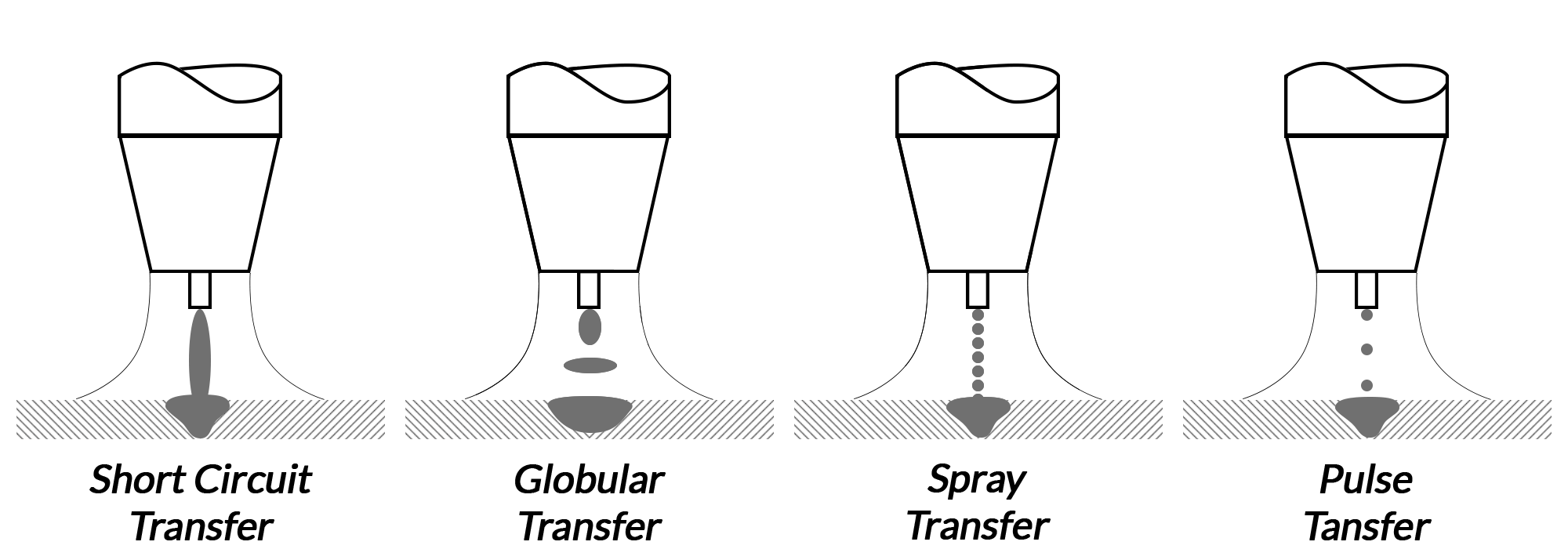
MIG welding, also known as Gas Metal Arc Welding (GMAW), uses different ways to move molten metal from the wire to the weld pool. These methods are called transfer modes. The two most common are short circuit and spray transfer.
Short circuit transfer happens at lower voltage and amperage. The wire touches the metal, creating a “short circuit.” This produces small, repeated arcs that melt the wire tip, which dips into the weld pool.
Spray transfer uses higher voltage and amperage. The wire melts before it touches the workpiece. Tiny droplets of molten metal “spray” across the arc into the weld pool. This creates a smoother, hotter weld.
Knowing how each mode works makes it easier to choose the right one for your job.
How Short Circuit Transfer Works
Short circuit transfer, sometimes called “short arc,” is the most common mode for MIG welding thin materials. The wire electrode makes contact with the base metal up to 100 times per second. Each touch creates a short circuit, melts the wire tip, and passes metal into the weld.
Key Features
- Low heat input
- Works with low voltage (16-22V) and low amperage (40-180A)
- Uses smaller diameter wires (usually 0.023″–0.035″)
- High spatter, but easy to control
- Good for welding thin sections (as thin as 24 gauge)
- Works in all positions (flat, vertical, overhead, horizontal)
- Can weld on dirty or rusty metal
Short circuit transfer creates a crackling sound, like frying bacon, when set up correctly.
Example
A car body shop often uses short circuit transfer to repair thin steel panels. If they use spray transfer, the panels might warp or burn through.
How Spray Transfer Works
Spray transfer uses higher energy to create a stream of tiny droplets. The wire never touches the workpiece. Instead, the arc melts the wire tip, and the shielding gas “sprays” droplets across the gap.
Key Features
- High heat input
- Needs higher voltage (22-30V) and amperage (180A+)
- Uses larger diameter wires (0.035″ and up)
- Very smooth, low spatter welds
- Best for thick sections (over 1/8″ or 3mm)
- Usually limited to flat and horizontal positions
- Requires clean metal and pure argon or argon-rich gas
Spray Transfer Sounds Like A Steady Hiss Or “whoosh.”
Example
A welder joining 1/2″ steel plates for a bridge would use spray transfer. It delivers deep penetration and a strong, smooth weld bead.
Short Circuit Vs Spray Transfer: Side-by-side Comparison
A clear comparison helps you see how each method fits different jobs.
| Feature | Short Circuit Transfer | Spray Transfer |
|---|---|---|
| Wire Diameter | 0.023″–0.035″ | 0.035″–0.052″ |
| Voltage Range | 16–22V | 22–30V |
| Amperage Range | 40–180A | 180A+ |
| Metal Thickness | Thin (24 ga – 1/4″) | Thick (1/8″ and up) |
| Welding Position | All positions | Flat, horizontal only |
| Spatter | Moderate to high | Low |
| Shielding Gas | CO2 or CO2/argon mix | Argon-rich mix |
| Metal Cleanliness | Tolerates rust, paint | Needs clean metal |
| Penetration | Shallow to medium | Deep |
| Bead Appearance | Rough, uneven | Smooth, even |
When To Use Short Circuit Transfer
Short circuit transfer shines in certain situations. Here is when you should choose it:
1. Welding Thin Metal
Short circuit transfer works best on thin steel (24 gauge up to 1/4″). It lets you weld without burning through or warping the metal. Car bodies, HVAC ducting, and appliance repair all use this mode.
2. Out-of-position Welding
You can weld in any position with short circuit transfer. If you need to weld overhead or vertical, this mode gives more control. The lower heat means the weld pool does not drip or sag as much.
3. Working On Dirty, Painted, Or Rusty Surfaces
Short circuit transfer can handle less-than-perfect surfaces. It works with mild rust, primer, or oil, making it suitable for field repairs and farm equipment.
4. Low Power Supply
Some shops or job sites do not have heavy-duty power. Short circuit runs on basic 120V or 230V outlets and small machines. This flexibility helps with quick fixes or light fabrication.
5. Tacking And Stitch Welding
Short circuit is great for tacking pieces in place. It also works for stitch welding, where you make short, spaced welds to control heat.
6. Low Cost And Simple Setup
You do not need expensive gas blends or large wires. Standard CO2 or CO2/argon mix works well. Small spools and basic MIG machines keep costs down.
7. Training And Learning
Beginners can master short circuit transfer faster. It is forgiving and easy to set up. Most entry-level MIG welders use this mode.
Practical Insight
Some welders try to use spray transfer on thin metal, thinking it will give a better bead. This often ends in burn-through and wasted material. Always match the transfer mode to the metal thickness.
Common Mistake
Many people set the voltage too high with short circuit transfer. This causes excessive spatter and a wide, flat bead. Keep voltage and amperage within the recommended range for your wire and gas.
When To Use Spray Transfer
Spray transfer is the top choice for fast, clean welds on thick metal. Here is when to use it:
1. Welding Thick Metal
Spray transfer is ideal for steel plates over 1/8″ (3mm). It gives deep penetration and a strong joint. Structural steel, heavy machinery, and pressure vessels need this strength.
2. High-quality, Smooth Weld Beads
If appearance matters, spray transfer produces neat, shiny beads with little spatter. This reduces cleanup and makes your work look professional.
3. Production And Automated Welding
Factories often use spray transfer for speed and repeatability. The process works well with robotics and long, straight welds. It also supports high deposition rates (more metal added per hour).
4. Welding Aluminum And Stainless Steel
Spray transfer is almost always used for aluminum and stainless steel. It needs pure argon or argon/helium mixes, which support the spray action. Short circuit does not work well with these metals.
5. Flat And Horizontal Welds
Spray transfer is easiest in flat or horizontal positions. The weld pool is fluid and will drip if used overhead or vertical.
6. Clean, Prepared Metal
Spray transfer needs clean, bright metal. Dirt, oil, or rust can cause porosity and weak welds. Always grind or brush the area before welding.
7. When You Have Enough Power
This mode needs a strong power supply. Industrial machines can deliver the high voltage and amperage required.
Practical Insight
Some shops try to use spray transfer with CO2 gas to save money. This almost never works. Pure argon or an argon-rich mix (at least 80% argon) is required for stable spray transfer.
Common Mistake
A frequent error is using spray transfer in vertical or overhead positions. The fluid weld pool will run, creating a mess. Use short circuit or pulsed spray for these positions instead.
Key Differences In Gas Selection
The shielding gas you use can make or break your welding process.
- Short circuit transfer works with 100% CO2 or a CO2/argon mix (for example, 75% argon/25% CO2).
- Spray transfer needs at least 80% argon with CO2 or O2 (like 90% argon/10% CO2). Pure argon is best for aluminum.
The wrong gas can stop spray transfer from forming, or make short circuit transfer unstable.
Gas Mix Data
| Transfer Mode | Common Gas Mix | Result |
|---|---|---|
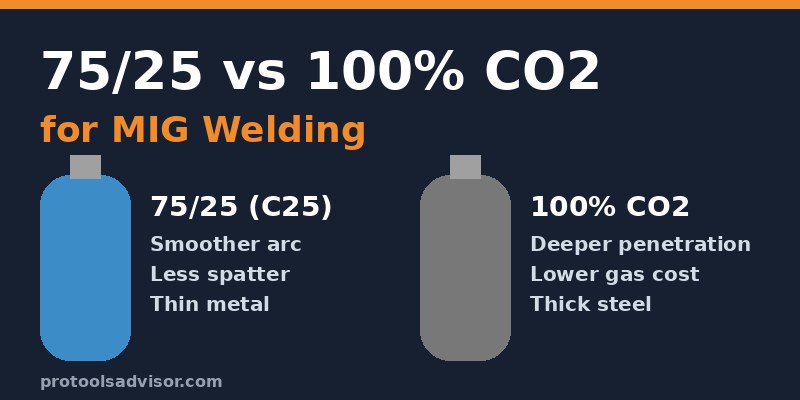
| Short Circuit | 100% CO2 | High spatter, good penetration, low cost |
| Short Circuit | 75% Argon/25% CO2 | Smoother arc, lower spatter |
| Spray Transfer | 90% Argon/10% CO2 | Stable spray arc, low spatter |
| Spray Transfer | 98% Argon/2% O2 | Best for stainless steel |
| Spray Transfer | 100% Argon | Required for aluminum |
Power Source And Machine Settings
Your welder must match the needs of your transfer mode.
- Short circuit transfer: Standard MIG machines with lower voltage and amperage.
- Spray transfer: Industrial machines with higher voltage (22-30V) and higher amperage (180A+).
Wire feed speed also matters. Too fast, and you get stubbing or excessive spatter. Too slow, and the arc becomes unstable.
Example Settings
- Short circuit (0.030″ wire, mild steel, 75/25 gas): 18V, 120A, 240–270 IPM wire feed.
- Spray transfer (0.045″ wire, mild steel, 90/10 gas): 26V, 260A, 380–420 IPM wire feed.
Always check your machine’s manual for recommended ranges.
Pros And Cons Of Each Method
Each transfer mode has strong points and weak points. Here is a quick review:
Short Circuit Transfer
Pros:
- Works on thin materials
- Good for all positions
- Handles dirty metal
- Uses simple gas and power
Cons:
- More spatter
- Weaker, rougher welds on thick metal
- Not good for aluminum or stainless
- Lower deposition rate (slower)
Spray Transfer
Pros:
- Deep penetration
- Clean, smooth beads
- High deposition rate (fast)
- Best for aluminum and stainless
Cons:
- Needs high power and expensive gas
- Only flat/horizontal positions
- Not for thin metal
- Metal must be clean
Real-world Applications
Many industries use both methods depending on the job.
- Automotive repair: Short circuit for patch panels, spray transfer for frame repairs.
- Construction: Spray transfer for beams and columns, short circuit for stairs and railings.
- Manufacturing: Robotics often use spray transfer for speed, while hand welders use short circuit for detailed work.
- Farm equipment: Short circuit for field repairs, spray transfer for shop-built attachments.
Switching between modes is common, even on the same project.

Credit: www.youtube.com
Transitioning Between Short Circuit And Spray Transfer
Some welders need to switch modes during a build. For example, you might use short circuit to tack parts together, then spray transfer for final welds on thick joints.
Steps For Switching
- Change the gas (if needed). For spray transfer, use an argon-rich blend.
- Increase voltage and amperage. Move into the higher range for your wire size.
- Check wire feed speed. It usually rises with spray transfer.
- Clean the metal. Remove rust, paint, and oil.
- Change position. Use spray transfer only in flat/horizontal joints.
Non-obvious Insight
Do not try to “force” a transition by only changing voltage or amperage. If your shielding gas or wire type is wrong, you will not get true spray transfer.
Pulsed Spray Transfer: The Hybrid Option
There is a third mode called pulsed spray transfer. It uses a pulsed current to create spray droplets at lower average heat. This lets you weld out of position and on thinner metal, but with less spatter than short circuit.
- Needs advanced, pulsed-capable machines
- Works with argon-rich gas
- Used in aerospace, shipbuilding, and high-end fabrication
Most hobbyists do not need this mode, but it is common in large shops.

Credit: www.thefabricator.com
Tips For Choosing The Right Transfer Mode
Making the right choice saves time and money, and improves safety.
- Know your metal thickness. Thin metal (under 1/8″)? Use short circuit. Thick metal (over 1/8″)? Use spray transfer.
- Check your weld position. Out-of-position? Short circuit. Flat/horizontal? Spray transfer.
- Inspect surface cleanliness. Dirty metal? Short circuit. Clean metal? Spray transfer.
- Review your power supply. Limited power? Short circuit. Industrial power? Spray transfer.
- Choose the right gas. CO2 for short circuit, argon-rich for spray transfer.
- Set voltage and amperage properly. Stay in the recommended range for each mode.
- Practice and test. Always run test beads before starting your project.
Case Study: Mig Welding A Trailer Frame
A trailer frame uses both thin and thick steel. The cross members are 1/8″ wall tubing, while the tongue is 1/4″ plate.
- For the thin tubing, use short circuit transfer to avoid burn-through.
- For the thick tongue, switch to spray transfer for deep penetration.
This approach gives you strong welds without damaging the thin sections.
Credit: www.aedmetals.com
Data: Deposition Rates
Deposition rate means how much metal you add to the weld per hour.
| Transfer Mode | Wire Size | Deposition Rate (lbs/hr) |
|---|---|---|
| Short Circuit | 0.030″ | 3–5 |
| Spray Transfer | 0.045″ | 8–12 |
| Pulsed Spray | 0.045″ | 7–10 |
Spray transfer works much faster, but only on thick, flat workpieces.
Safety Considerations
Both transfer modes produce UV light, heat, and fumes. But spray transfer creates more heat and fumes, which can be dangerous in small spaces.
- Use proper PPE: Gloves, helmet, long sleeves.
- Ventilate your work area, especially with spray transfer.
- Keep flammable materials away from your welding zone.
Troubleshooting Common Problems
Short Circuit Problems
- Excessive spatter: Lower voltage, adjust wire feed.
- Poor penetration: Increase amperage slightly.
- Unstable arc: Use fresh wire and clean contact tip.
Spray Transfer Problems
- Weld pool runs: Use only flat/horizontal positions.
- No spray arc: Check gas mix (must be argon-rich).
- Porosity: Clean the metal and check for leaks in the gas line.
Non-obvious Insights Most Beginners Miss
- Weld bead appearance is not just about aesthetics. A rough bead in spray transfer often means poor gas coverage or wrong voltage.
- Short circuit transfer can mask poor joint fit-up. Because it is so forgiving, beginners may not notice bad fit-up or lack of fusion, which weakens the weld.
Summary: Quick Reference
- Use short circuit transfer for thin, dirty, or out-of-position welds.
- Use spray transfer for thick, clean, flat, or horizontal welds where speed and appearance matter.
- Always match your power, gas, and wire to the chosen mode.
- Test settings on scrap before welding your project.
For more technical details, see the Gas Metal Arc Welding Wikipedia page.
Frequently Asked Questions
What Happens If I Use Spray Transfer Settings On Thin Metal?
The high heat of spray transfer will likely burn through thin metal. You risk warping, large holes, or weak welds. Always use short circuit transfer on thin materials to avoid damage.
Can I Use Short Circuit Transfer For Aluminum Welding?
Short circuit transfer does not work well with aluminum. The arc is unstable, and you get poor fusion. Spray transfer (with pure argon) is the standard for MIG welding aluminum.
Why Is My Spray Transfer Arc Unstable?
An unstable spray transfer arc usually means your shielding gas is wrong. Make sure you use at least 80% argon in your mix. Also, check that your voltage and amperage are high enough for your wire size.
Is Pulsed Spray Transfer Better Than Regular Spray Transfer?
Pulsed spray transfer allows for out-of-position welding and works on thinner metal. It reduces heat input but needs a special pulsed MIG welder. For most thick, flat work, regular spray transfer is faster and simpler.
How Do I Know If My Welder Can Do Spray Transfer?
Check your machine’s voltage and amperage ratings. If it can deliver at least 180A and 22V with the correct wire and gas, it should support spray transfer. Read your welder’s manual for details.
—
Both short circuit and spray transfer have important roles in MIG welding. By understanding the differences and knowing when to use each, you can weld safer, faster, and with better results. With practice and attention to settings, you will get the most from your MIG welder, no matter the job.