Disclosure: This post contains affiliate links and I will be compensated if you make a purchase after clicking through my links. Learn More
Arc welding is everywhere—factories, construction sites, repair shops. This process helps build cars, bridges, machinery, and even everyday items. Many people see the sparks and bright light but do not know what arc welding really means. Some think it is only for professionals, but anyone can understand how it works and why it matters.
This article explains arc welding from the basics to the advanced, using clear language and practical examples.
What Is Arc Welding?
Arc welding is a process that joins two metals using heat from an electric arc. The arc forms between an electrode and the workpiece. This arc melts the metal at the point of contact. As the melted metals cool, they fuse together and create a strong joint.
Most arc welding uses electricity from a power source. There are two main types: Direct Current (DC) and Alternating Current (AC). The choice depends on the metals, the job, and the welding method.
How Does Arc Welding Work?
The process starts with an electrode, which carries the electric current. The welder brings the electrode close to the metal without touching it. The high voltage causes electricity to jump, creating an arc. This arc reaches temperatures above 6,500°F (3,600°C).
The heat melts both the base metal and the electrode tip. Sometimes, the electrode also adds new metal to the joint.
A protective gas or flux shields the molten metal from air. This stops oxygen and nitrogen from causing weak welds or holes.
What Does “arc” Mean?
In welding, an arc means a visible discharge of electricity through the air between the electrode and the workpiece. The arc is the main source of heat in this method. Unlike other welding methods that use a flame or laser, arc welding depends only on electricity to create high heat.
History And Development
Arc welding began in the late 1800s. Sir Humphry Davy, a British scientist, first created an electric arc in 1800. But it was not until 1881 that Nikolay Benardos and Stanisław Olszewski used the arc for welding metals. Early arc welding was slow, and the equipment was heavy.
By the 1920s, technology improved. Companies developed better electrodes and lighter power sources. Arc welding became a key process in shipyards during World War II. It helped build ships faster and stronger.
Today, arc welding is used in almost every country. It keeps evolving with new machines and safety features.
Main Types Of Arc Welding
Arc welding is not just one method. It includes several techniques. Each type has its own tools, electrodes, and uses. Here are the most common types:
1. Shielded Metal Arc Welding (smaw)
Many people call this stick welding. It uses a covered electrode, or “stick”. The flux on the electrode melts and forms a shield of gas around the weld. This stops contamination from air.
SMAW is popular for repairs, construction, and heavy steel work. It works outdoors and in windy places. The equipment is simple and not expensive.
2. Gas Metal Arc Welding (gmaw) Or Mig Welding
MIG welding stands for Metal Inert Gas welding. It uses a wire electrode fed through a gun. A gas (like argon or CO2) protects the weld from the air.
MIG welding is fast. It is good for thin metals, car bodies, and factories. Beginners often find it easier to learn.
3. Gas Tungsten Arc Welding (gtaw) Or Tig Welding
TIG welding (Tungsten Inert Gas) uses a non-melting tungsten electrode. The welder adds filler metal by hand. A flow of argon or helium gas protects the weld.
TIG welding makes very clean, precise welds. It is common for stainless steel, aerospace, and art work. But it needs skill and steady hands.
4. Flux-cored Arc Welding (fcaw)
FCAW uses a wire with a core of flux. The flux makes a shield of gas and slag. Some types also use extra gas.
FCAW works well for thick steel and outdoor jobs. It is fast and strong, but the equipment is heavier than MIG.
5. Submerged Arc Welding (saw)
SAW feeds the electrode under a layer of powdered flux. The arc is hidden, so there is less light and smoke.
This method joins thick plates, like in shipbuilding or large tanks. It is used on flat or horizontal welds only.
6. Plasma Arc Welding
Plasma arc welding uses a focused jet of plasma, which is a hot, charged gas. It is similar to TIG but much hotter and more precise.
It can cut or weld thin metals with very clean lines. This process is common in aerospace and electronics.
Key Parts Of Arc Welding Equipment
To weld with an arc, you need the right tools. Each part has a job, and using the wrong equipment can cause bad welds or danger.
- Power Source: This gives the electricity. It can be AC or DC. The current and voltage depend on the job.
- Electrode: Carries the current to the weld. Some electrodes melt and add metal; others do not.
- Electrode Holder or Welding Gun: Holds the electrode and lets the welder control the arc.
- Ground Clamp: Connects the workpiece to the power source. It closes the electric circuit.
- Cables: Carry electricity from the power source to the holder and ground clamp.
- Shielding Gas System or Flux: Protects the melted metal from air.
- Protective Gear: Includes a helmet with a dark lens, gloves, jacket, and boots. The helmet protects eyes from the bright light and sparks.
- Ventilation System: Removes fumes and gases created by welding.
Example: Mig Welding Equipment
A basic MIG setup includes a wire feeder, a cylinder of argon/CO2 gas, a welding gun, a power source, and cables. The wire feeds automatically, making it easier for long welds.
Credit: weldguru.com
How To Do Arc Welding: Step-by-step
Anyone can learn the basic steps of arc welding. Here is a simple outline for stick welding (SMAW), which is the most common method:
- Prepare the Workpiece: Clean the metal. Remove rust, oil, paint, and dirt. Clean metal helps the weld stick and stay strong.
- Set Up Equipment: Connect the ground clamp to the work. Insert the electrode into the holder. Set the right current on the power source.
- Wear Protective Gear: Put on a welding helmet, gloves, jacket, and boots.
- Strike the Arc: Tap or scratch the electrode tip on the metal. The arc will start.
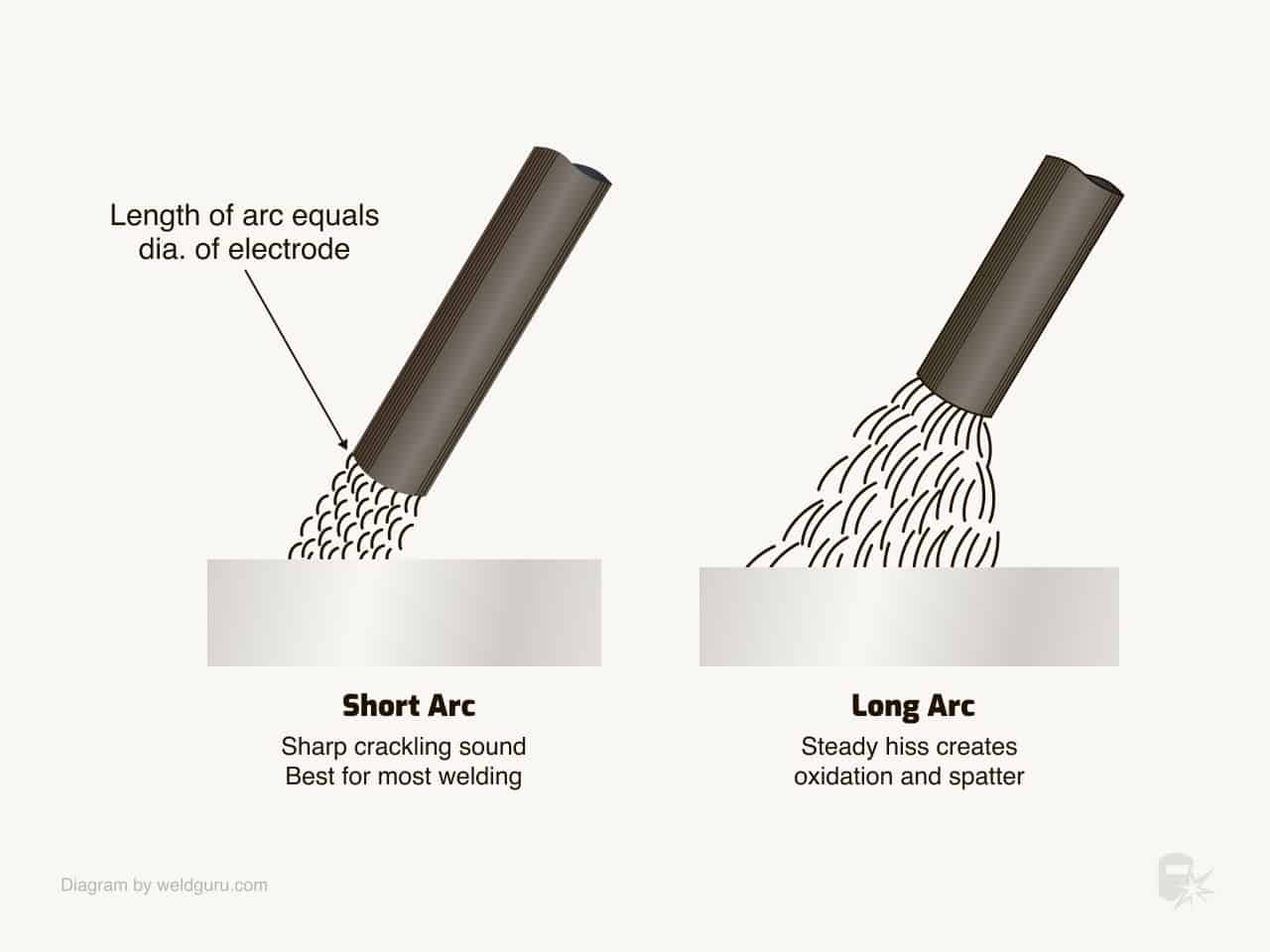
- Control the Arc Length: Keep the electrode close to the work (about 1/8 inch away) but do not touch it.
- Move the Electrode: Move in small circles or straight lines. Go at a steady speed to make a smooth weld.
- Finish the Weld: Lift the electrode away at the end. Turn off the power.
- Clean the Weld: Brush off the slag (cooled flux) with a chipping hammer and wire brush.
- Check the Weld: Look for cracks, holes, or weak spots.
Practical Tips
- Use the correct current: Too high burns holes, too low causes weak welds.
- Keep a steady hand: Shaky movement makes bad welds.
- Practice on scrap metal before working on important parts.
Common Arc Welding Materials
Arc welding works on many metals, but not all. Here are the most common:
- Mild Steel: Most common. Easy to weld with any arc method.
- Stainless Steel: Needs TIG or MIG for best results.
- Aluminum: Welds well with TIG or MIG. Needs special care.
- Cast Iron: Hard to weld. Needs special electrodes.
- Copper, Nickel, and Alloys: Often welded in factories with TIG or special methods.
Some metals, like magnesium and titanium, need very clean conditions and advanced skills.
Advantages Of Arc Welding
Arc welding is popular because it offers many benefits:
- Strong Joints: The welds can be as strong as the base metal.
- Low Cost: The equipment is often cheaper than other welding tools.
- Flexibility: Works on many metals and shapes.
- Portability: Small machines can be carried to different sites.
- Speed: Some methods (like MIG or FCAW) are very fast.
Arc welding builds everything from cars to bridges because of these strengths.
Disadvantages And Challenges
There are also limits and risks:
- Skill Needed: Some methods are hard to learn.
- Safety Risks: Bright light can hurt eyes; hot metal and sparks can burn skin.
- Fumes and Gases: Can be dangerous if not removed.
- Limited on Thin Metals: Some types burn through thin sheets.
- Surface Prep Needed: Dirty or rusty metal causes weak welds.
Understanding these helps avoid mistakes and choose the right process.
Safety In Arc Welding
Safety is critical. The electric arc creates intense light, heat, and fumes. Here are the main safety rules:
- Wear a Welding Helmet: Protects eyes from ultraviolet (UV) and infrared (IR) rays.
- Use Gloves and Protective Clothing: Stops burns from sparks and hot metal.
- Ventilate the Area: Fumes from welding can harm lungs.
- Keep Work Area Dry: Electricity and water can shock or kill.
- Check Equipment: Damaged cables or machines can cause shocks or fires.
- Never Look Directly at the Arc: Even a short look can cause “arc eye” (painful eye injury).
Non-obvious Insight
One detail many beginners miss: UV rays from the arc can burn uncovered skin, just like strong sunlight. Always cover arms and neck, even for short welds.
Arc Welding Vs. Other Welding Methods
Arc welding is only one group of welding processes. It is important to know how it compares to others.
| Method | Heat Source | Main Use | Best For |
|---|---|---|---|
| Arc Welding | Electric arc | General fabrication | Steel, stainless, aluminum |
| Gas Welding (Oxy-Acetylene) | Flame | Repairs, thin metals | Sheet metal, pipes |
| Laser Welding | Laser beam | Precision work | Electronics, medical tools |
| Resistance Welding | Electric current (pressure) | Mass production | Car bodies, wire mesh |
Arc welding is more flexible and cheaper than laser or resistance welding. Gas welding is slower and less used today.
Key Factors For Good Arc Welding
Good welds do not happen by accident. You need to control several important factors:
- Current (Amps): Too high or low causes problems.
- Voltage: Affects arc stability.
- Travel Speed: Moving too fast or slow changes the weld shape.
- Electrode Type: Must match the metal and job.
- Angle and Position: Wrong angles make weak or ugly welds.
- Cleanliness: Dirt or oil causes holes and weak spots.
Example
Welding a car body with too much current burns holes. Using the wrong electrode for stainless steel causes cracks. A good welder always checks these before starting.
Quality Control And Inspection
After welding, the joint must be strong and safe. Quality control means checking welds for problems like:
- Cracks
- Porosity (holes)
- Incomplete Fusion
- Slag Inclusions
- Undercut (groove beside weld)
There are ways to check welds:
- Visual Inspection: Look for surface defects.
- X-Ray or Ultrasound: Finds hidden flaws inside the weld.
- Bend or Break Tests: Tests strength by bending or breaking the sample.
Non-obvious Insight
Sometimes, a weld looks perfect but is weak inside. That is why big projects use X-ray or ultrasound testing, not just a quick look.

Credit: metalfusionpro.com
Where Is Arc Welding Used?
Arc welding is everywhere in modern life. Here are some examples:
- Construction: Builds bridges, buildings, and pipelines.
- Manufacturing: Makes cars, ships, trains, and machines.
- Repair and Maintenance: Fixes farm equipment, trucks, and tools.
- Art and Sculpture: Shapes metal art, gates, and furniture.
- Aerospace: Joins airplane parts and engines.
Arc welding is even used underwater (with special gear) to fix ships and oil rigs.
Popular Electrodes And Their Uses
Each welding job needs a special electrode. The numbers on electrodes (like E6013 or E7018) show their use.
| Electrode | Main Use | Strength | Position |
|---|---|---|---|
| E6013 | Thin sheet metal | 60,000 psi | All positions |
| E7018 | Structural steel | 70,000 psi | All positions |
| E6010 | Pipelines | 60,000 psi | Vertical/overhead |
| ER70S-6 (MIG) | General fabrication | 70,000 psi | Flat/horizontal |
Choosing the right electrode is key for a strong, safe weld.
Common Mistakes Beginners Make
Learning arc welding takes practice. Here are mistakes to avoid:
- Not cleaning the metal: Dirt makes weak welds.
- Wrong electrode: Causes cracks or poor fusion.
- Moving too fast or slow: Makes welds too thin or thick.
- Bad arc length: Too close sticks, too far breaks the arc.
- Skipping safety gear: Can cause burns or eye injury.
Many new welders do not check current settings, which can ruin a project.
Latest Trends And Technology In Arc Welding
Arc welding keeps changing. New machines are lighter, safer, and easier to use. Some new trends include:
- Inverter Welders: Smaller, more efficient, easier to carry.
- Pulse Welding: Controls heat better for thin metals.
- Robotic Welding: Used in car factories for speed and accuracy.
- Digital Controls: Save settings for different jobs.
Smart helmets now darken instantly and show welding data on a small screen. These changes help both beginners and professionals.

Credit: metalfusionpro.com
How To Choose The Right Arc Welding Method
Choosing the best method depends on:
- Type of metal
- Thickness
- Location (indoor/outdoor)
- Amount of welding
- Budget
Example
MIG is best for car repair (thin steel, indoor). Stick welding works outdoors for thick steel. TIG is for clean, beautiful welds on stainless or aluminum.
The Future Of Arc Welding
Experts see more automation and smart machines ahead. Welders may use augmented reality helmets for training. New electrode types will make welding faster and safer. But the basic idea—using an electric arc to join metals—will stay the same.
For more details on welding processes and industry trends, check the Arc Welding Wikipedia page.
Frequently Asked Questions
What Is The Main Purpose Of Arc Welding?
The main purpose is to join two metals using heat from an electric arc. This creates a strong, lasting joint.
Is Arc Welding Safe For Beginners?
Yes, if you use the right safety gear and follow safety rules. Always protect your eyes, skin, and lungs.
Which Metals Can Be Arc Welded?
Most common metals like mild steel, stainless steel, and aluminum can be arc welded. Some metals, like magnesium or titanium, need special care.
What Is The Difference Between Mig And Tig Welding?
MIG uses a wire fed automatically and is faster. TIG uses a hand-fed rod for more control and cleaner welds. Both use an electric arc.
Do I Need A Special License To Arc Weld?
For home projects, you do not need a license. For jobs in factories or construction, you may need training and certification.
Arc welding stands for strong, reliable, and flexible metal joining. It is a skill that opens doors in industry, repair, and art. With practice and the right knowledge, anyone can learn to do it safely and well.