Disclosure: This post contains affiliate links and I will be compensated if you make a purchase after clicking through my links. Learn More
Calculating the strength of a fillet weld is a skill that helps anyone working with welded structures. Whether you work in construction, mechanical design, or metal fabrication, knowing how to check weld strength can prevent failures and increase safety. Weld strength is not just about how much metal is used; it also depends on the weld shape, size, and the forces it faces.
Many people make mistakes because they miss small details or use the wrong formula. This article will explain how to calculate fillet weld strength step by step, using simple language and practical advice.
What Is A Fillet Weld?
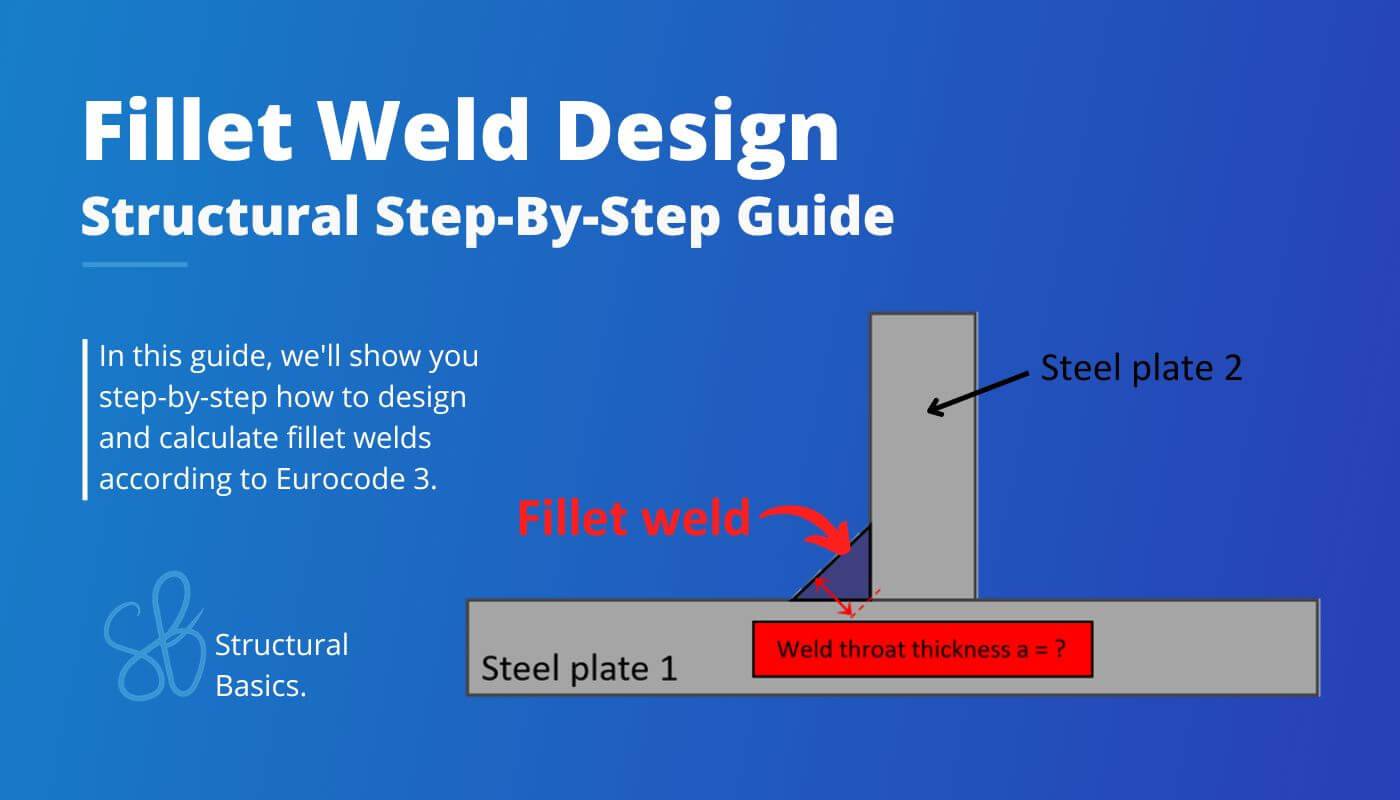
A fillet weld joins two surfaces at a right angle. You often see these welds in T-joints, lap joints, and corner joints. The weld forms a triangle shape when you look at the cross-section. Fillet welds are popular because they are simple, quick, and strong.
Fillet welds do not fill the entire joint, but they hold metal pieces together with a bead that covers the joint area. The size and placement of this bead are key to the weld’s strength.
Why Fillet Weld Strength Matters
Welds often carry heavy loads or face constant vibration. If the weld is too weak, the whole structure can fail. Unsafe welds can cause machinery to break or buildings to collapse. Checking strength before putting a weld into use saves time, money, and lives.
Calculating weld strength helps you:
- Meet safety codes and standards.
- Choose the right weld size.
- Avoid wasted material and over-design.
- Pass inspections and avoid costly repairs.
Basic Terms You Need To Know
Before you start calculating, you need to know a few key terms:
- Weld size (leg length): The shortest side of the triangle in the weld cross-section. Usually measured in millimeters or inches.
- Weld throat: The shortest distance from the root of the weld to the face.
- Weld length: The total length of the weld bead.
- Allowable stress: The maximum force the weld can safely carry per unit area, usually given by building codes or material suppliers.
- Load type: The kind of force the weld faces (tension, shear, or both).
Knowing these terms will help you follow the calculations and avoid mistakes.
Types Of Fillet Welds And Their Applications
Fillet welds come in a few main shapes. The way you calculate strength depends on the weld type.
1. Transverse Fillet Weld
The transverse fillet weld faces force at a right angle to the weld. You see this when a load tries to pull the plates apart in a straight line.
2. Longitudinal Fillet Weld
The longitudinal fillet weld runs parallel to the force. The load tries to slide the plates past each other.
3. Combined Welds
Some joints use both transverse and longitudinal welds. In these cases, you must calculate each weld’s strength and add them for the total.
Understanding The Forces On Fillet Welds
A fillet weld can face different types of loads:
- Shear: The force tries to cut the weld across its length. This is the most common.
- Tension: The force pulls the plates directly apart.
- Combined load: The weld faces both shear and tension at the same time.
- Fatigue: The weld faces repeated loading and unloading, which can cause cracks over time.
Calculating strength for each type uses a similar method, but you must use the right formula for the force direction.
The Standard Formula For Fillet Weld Strength
The most common calculation for fillet weld strength checks the weld’s ability to resist shear. The basic formula is:
Weld Strength = Throat Area × Allowable Shear Stress
- Throat Area: The throat is the shortest distance from the weld root to the face. For a flat fillet weld with equal legs, the effective throat (t) is:
T = 0.707 × Leg Length (a)
- Allowable Shear Stress: This value comes from codes, standards, or material properties. For common structural steel, it might be around 0.30 × yield strength.
- Total Weld Strength: Multiply the throat area by the weld length (L):
Total Strength = T × L × Allowable Shear Stress
Example
Suppose you have a fillet weld with a 6 mm leg length and 100 mm length, and the allowable shear stress is 180 MPa.
- Throat (t): 0.707 × 6 = 4.24 mm
- Throat area: 4.24 mm × 100 mm = 424 mm²
- Allowable strength: 424 mm² × 180 MPa = 76,320 N
This means the weld can carry up to 76. 3 kN in shear.
Step-by-step Guide: How To Calculate Fillet Weld Strength
Let’s break the calculation into simple steps:
Step 1: Identify Weld Size And Length
Find out the leg length (a) and the weld length (L). Check the drawing or measure the weld directly. Typical sizes range from 3 mm to 12 mm for most structural work.
Step 2: Calculate The Effective Throat
For a simple right-angle fillet weld, use:
T = 0.707 × A
If the weld has a different angle, you must adjust this value.
Step 3: Find The Throat Area
Multiply the throat by the weld length:
Throat Area = T × L
Step 4: Get The Allowable Shear Stress
Check the relevant code (like AWS D1.1 or Eurocode 3) or material specs. For steel, typical values are:
- Mild steel: 120–180 MPa
- High-strength steel: Up to 250 MPa
Never guess this value—always check the code.
Step 5: Calculate The Weld Strength
Multiply the throat area by the allowable shear stress:
Weld Strength = Throat Area × Allowable Shear Stress
Step 6: Compare With The Applied Load
Find out how much force the weld will face in service. Compare this value to your calculated weld strength. If the applied load is higher, you need a bigger weld.
Key Factors Affecting Fillet Weld Strength
Some things can increase or decrease the real strength of a fillet weld. Ignoring these can lead to problems.
1. Weld Size
A bigger weld has a larger throat area, so it is stronger. But making a weld too large can lead to wasted material, more distortion, and higher costs.
2. Weld Length
A longer weld spreads the force over a bigger area. But too much weld length can cause warping, especially in thin materials.
3. Weld Quality
Defects like porosity, cracks, or lack of fusion can weaken a weld. Always check for visible defects and use proper welding techniques.
4. Base Metal Strength
The weld is only as strong as the metal it joins. Using poor-quality steel or aluminum can reduce the weld’s strength, no matter how perfect the weld looks.
5. Direction Of Force
Shear and tension loads affect welds differently. Always check which type of force your weld will face.
6. Multiple Welds
If you use several welds, you can add their strengths together, but only if they share the load evenly.
Fillet Weld Strength: Sample Calculations
To make things clear, here are a few practical examples.
Example 1: Simple Shear
You have a 5 mm fillet weld, 150 mm long, on mild steel (allowable shear stress = 140 MPa).
- Throat: 0.707 × 5 = 3.54 mm
- Throat area: 3.54 mm × 150 mm = 531 mm²
- Strength: 531 mm² × 140 MPa = 74,340 N (74.3 kN)
Example 2: Two-sided Weld
A T-joint uses fillet welds on both sides of a 10 mm plate. Each weld is 8 mm leg length, 200 mm long. Allowable shear stress is 160 MPa.
- Throat per weld: 0.707 × 8 = 5.66 mm
- Throat area per weld: 5.66 mm × 200 mm = 1,132 mm²
- Total throat area (both sides): 1,132 mm² × 2 = 2,264 mm²
- Strength: 2,264 mm² × 160 MPa = 362,240 N (362.2 kN)
Example 3: Unequal Leg Fillet Weld
Sometimes, fillet welds have one leg longer than the other. Use the smaller leg size to calculate the throat.
- Leg sizes: 6 mm × 8 mm, use 6 mm
- Throat: 0.707 × 6 = 4.24 mm
Follow the same steps as before.
Fillet Weld Strength For Different Metals
Not all metals have the same strength. Here’s a quick comparison:
| Metal Type | Allowable Shear Stress (MPa) |
|---|---|
| Mild Steel | 120–180 |
| High-Strength Steel | 180–250 |
| Aluminum | 60–90 |
| Stainless Steel | 100–150 |
Always check the exact values for your material before calculating.
Codes And Standards For Fillet Weld Strength
Weld strength must meet local and international standards. Some of the most used codes are:
- AWS D1.1: Used in the US for steel structures.
- Eurocode 3: Used in Europe for steel construction.
- BS 5950: British standard.
- AS/NZS 1554: Used in Australia and New Zealand.
These codes give the allowable stress values, inspection methods, and design rules. Following them is not just good practice—it is often the law.
Practical Tips For Accurate Fillet Weld Calculations
Many beginners make the same mistakes when calculating fillet weld strength. Here are two insights you might not know:
1. Effective Length Is Not Always The Actual Length
If your weld stops short of the plate edges or has a crater at the end, the effective length is less than the measured length. Subtract the leg length from both ends to get the real effective length.
2. Overwelding Does Not Always Mean More Strength
Making a weld much bigger than the drawing shows can cause cracking, distortion, and waste. Follow the design size unless a code says otherwise.
Other tips:
- Always clean the base metal before welding to get full strength.
- Use the correct electrode or filler material for your base metal.
Fillet Weld Strength In Different Joint Types
Fillet welds work in many joint types. The way you calculate strength can change slightly depending on the joint.
T-joint
The welds are usually on both sides. Add their strengths if both welds carry the load.
Lap Joint
Often uses a single fillet weld. Strength is limited to the thinner plate.
Corner Joint
The weld is at the outside edge. Check both weld size and length.
End Joint
Fillet welds at the plate ends. Check that the weld covers the full load area.
Comparing Fillet Welds To Groove Welds
People often ask if fillet welds are as strong as groove welds. Here is a simple comparison:
| Weld Type | Strength | Ease of Use | Material Use |
|---|---|---|---|
| Fillet Weld | Good (for most jobs) | Easy | Less |
| Groove Weld | Very High | Harder | More |
Fillet welds are best for fast, strong joints where full penetration is not required.

Credit: www.youtube.com
Common Mistakes And How To Avoid Them
Even experienced workers make errors when checking weld strength. Here are mistakes to watch for:
- Using the wrong weld size: Always measure the leg, not just the bead.
- Ignoring weld defects: Cracks, undercut, or slag can reduce strength.
- Not checking the base metal: Weak or dirty metal means weak welds.
- Forgetting the load direction: Use the correct formula for shear or tension.
- Overlooking weld length reduction: Always use the effective length in calculations.
Using Design Aids And Software
Manual calculation works well for simple jobs, but for complex structures, software can help. Tools like AutoCAD, Tekla, or online calculators can speed up the process and reduce errors.
Still, you must understand the basics before trusting any tool. Always double-check the inputs and outputs.
Fillet Weld Size Selection Guide
Choosing the right weld size is key. Use these steps:
- Find the thinner plate thickness.
- Use a weld leg size between 0.7 to 1.0 times the plate thickness.
- Do not use a weld leg larger than the plate unless a code allows it.
For example, if you weld a 10 mm plate to a 16 mm plate:
- Use 0.7 × 10 mm = 7 mm as a starting size.
- Never exceed the thinner plate’s thickness unless approved.
Real-world Example: Fillet Weld On A Steel Beam
Suppose a steel beam requires a fillet weld connection to carry a 50 kN load. The plates are 8 mm thick, and the allowable shear stress is 150 MPa. What weld size and length do you need?
- Choose weld size: Try 6 mm leg.
- Throat: 0.707 × 6 = 4.24 mm.
- Weld strength per mm of length: 4.24 mm × 150 MPa = 636 N/mm.
- Required length: 50,000 N ÷ 636 N/mm ≈ 78.6 mm.
Round up for safety—use two 80 mm fillet welds on each side.
Checking Weld Strength With Inspection
Calculation is only one step. After welding, inspect the weld for:
- Correct size (measure with a fillet gauge).
- No cracks, undercut, or porosity.
- Proper length and coverage.
Use visual inspection, ultrasonic testing, or X-rays for critical work.
More About Allowable Shear Stress
Allowable shear stress depends on:
- Base metal type.
- Welding process.
- Quality control.
You can find values in standards or from suppliers. Never guess this number.
Advanced Considerations: Fatigue And Dynamic Loads
If a weld faces repeated loading (like in bridges or vehicles), use lower allowable stress values. Fatigue can cause failure even if the static load is safe. Always check the code for fatigue design.
Example: Using Aws D1.1 For Weld Strength
AWS D1.1 gives the following values for fillet welds in carbon steel:
- Allowable shear stress: 0.30 × yield strength.
- Example: Yield strength = 250 MPa, so allowable = 75 MPa.
Always use code values, even if your material supplier gives a higher number.
Credit: www.structuralbasics.com
Fillet Weld Strength: Quick Reference Table
Here’s a handy chart for quick checks:
| Leg Size (mm) | Throat (mm) | Strength per mm Length (N, 150 MPa) |
|---|---|---|
| 4 | 2.83 | 425 |
| 6 | 4.24 | 636 |
| 8 | 5.66 | 849 |
| 10 | 7.07 | 1,061 |
Multiply the strength per mm by your weld length to get total strength.
Where To Find More Information
For deeper details, welding codes and standards are the best sources. You can check the Welding Wikipedia page for more technical info and references.

Credit: engineering.stackexchange.com
Final Thoughts
Calculating fillet weld strength is more than plugging numbers into a formula. You must check the weld size, length, throat, and the forces the weld will face. Always use the correct allowable stress from a code, and inspect the finished weld to make sure it matches your design.
By following these steps, you can create strong, safe, and reliable welded structures.
Frequently Asked Questions
What Is The Difference Between Weld Throat And Weld Leg?
Weld throat is the shortest distance from the weld root to its face, while weld leg is the length of the sides of the triangular fillet. The throat carries the load, so calculations use the throat, not the leg.
How Do I Find The Allowable Shear Stress For My Material?
Check the welding code or your material supplier’s data sheet. For mild steel, typical values are between 120 and 180 MPa. Always use the value required by the code for your project.
Can I Add The Strengths Of Two Welds On Opposite Sides Of A Joint?
Yes, if both welds carry the load equally. Add their throat areas before multiplying by allowable stress.
Why Does The Formula Use 0.707 For The Throat?
- 707 is the sine of 45 degrees, which applies when the weld legs are equal and the angle is 90 degrees. It gives the shortest line from root to face in a right-angle triangle.
What Should I Do If My Calculated Weld Strength Is Less Than The Applied Load?
Increase the weld size, length, or both. Never use a weld that cannot carry the design load. Always follow the code for minimum sizes and other rules.