Disclosure: This post contains affiliate links and I will be compensated if you make a purchase after clicking through my links. Learn More
How long does it take to become a welder? Most people in the US need about 9 months to 4 years, based on 2026 figures from Universal Technical Institute (UTI) and the Bureau of Labor Statistics (BLS). A trade school program can take 9 to 10 months, and a union or employer apprenticeship usually takes 3 to 4 years.
Your timeline depends on the path you pick, the welding process you learn first, and the certifications your target job asks for. A shop that hires MIG welders for production work sets a lower bar than a pipeline contractor that wants 6G pipe tests.
We break down each path with real program lengths, the training you still get on the job, and the extra years you need for inspector-level roles.
How Long Does It Take to Become a Welder by Path?
It takes about 9 months to 2 years through school and 3 to 4 years through an apprenticeship. Every path still ends with a few months of on-the-job training before you work without close supervision.
| Path | Typical Time | Source |
|---|---|---|
| Trade school welding program | 9 to 10 months (UTI) | UTI, 2026 |
| Community college certificate | About 1 year | UTI, 2026 |
| Associate degree in welding | About 2 years full time | UTI, 2026 |
| Union or employer apprenticeship | 3 to 4 years | UTI, 2026 |
| On-the-job training after school | Several months | BLS OOH |
| AWS Certified Welding Inspector (with a high school diploma) | At least 5 years of welding work | AWS |
Trade School: 9 to 10 Months
Trade schools are the fastest structured route. UTI says its welding program takes 9 to 10 months and runs at 15 campuses. Most of that time is booth time on SMAW (stick), GMAW (MIG), FCAW (flux core) and GTAW (TIG), plus blueprint reading and safety.
You pay tuition, but you finish fast and can test for entry-level certifications before you graduate at many schools.
Community College Certificate: About 1 Year
A community college certificate usually takes around 1 year. Classes often run in the evening, so you can keep a day job. Tuition is usually lower than a private trade school, but the schedule is slower.
Associate Degree: About 2 Years
An associate degree in welding technology takes about 2 years of full-time study. You add metallurgy, math, and inspection classes on top of hands-on welding. That degree also cuts the work experience you need later for the AWS Certified Welding Inspector (CWI) credential.
Apprenticeship: 3 to 4 Years
Most apprenticeships take 3 to 4 years, and the exact length depends on the employer, union, and program. You earn a paycheck from day 1 and get classroom hours alongside paid work. The BLS lists employer-based apprenticeships as a normal way into the trade.
This path is slower on paper, but you finish with years of real job hours and no tuition debt. If you want to become a pipeline welder, an apprenticeship through a pipeline union is a common route.
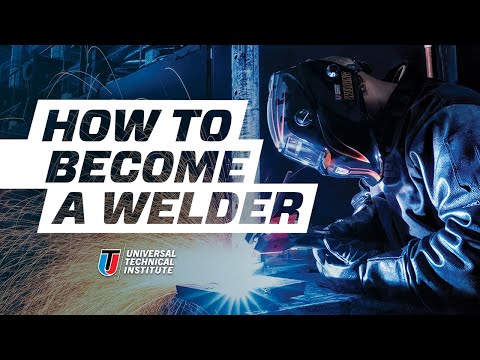
Credit: www.youtube.com
What Education Do You Need to Start Welding?
The BLS lists a high school diploma or equivalent as the typical entry-level education for welders, cutters, solderers, and brazers. It also says employers often prefer or require technical training beyond the diploma.
High school shop classes, math, and blueprint reading all shorten your learning curve. Some high schools and career centers run dual-credit welding programs, so you can start before you graduate.
How Long Is On-the-Job Training?
The BLS rates welding as moderate-term on-the-job training. It says entry-level workers with formal technical training still receive several months of training on the job.
That time covers the shop’s procedures, its machines, its welding procedure specifications (WPS), and its quality checks. Plan for it in your timeline even after you finish school.
How Long Does Welding Certification Take?
A welder certification is a hands-on test, so the test itself takes hours, not months. The real time cost is the practice you need to pass it. The AWS Certified Welder program tests you on a specific process, position, and material at an AWS Accredited Test Facility.
UTI notes that certifications are not required to work as a welder, but they help employers trust your skills sooner. The BLS adds that some employers require general or specific certification for certain jobs.
Some states and cities also require a welding license, and the rules vary by location. Check your state and city rules before you plan your timeline.
Certified Welding Inspector Work Experience
Inspector roles take the longest. AWS ties the CWI experience rule to your education level:
- Bachelor’s or higher in welding engineering or welding technology: 1 year of welding-based work.
- Associate or higher in welding, engineering technology, engineering, or physical science: 2 years.
- Trade or vocational school courses: 4 years.
- High school diploma or equivalent: 5 years.
- 8th grade schooling: 9 years.
Credit: www.youtube.com
What Changes Your Welder Training Timeline?
A few factors decide whether you land on the short or long end of the range.
- Process: MIG and flux core are faster to learn for production work. TIG and pipe stick take more practice to pass bend tests.
- Position: flat and horizontal tests come first. Vertical, overhead, and 6G pipe tests take longer.
- Schedule: full-time programs finish in months. Part-time evening classes stretch the same hours over a longer period.
- Job target: a fabrication shop may hire you after a short program. Structural, pipeline, and inspection work ask for more tests and more years.
- Practice time: extra hours in the booth or at home shorten the path to your first passing test.
Some people skip formal school and start in a shop as a helper. That route works, but it usually takes longer to reach certified, independent work.
Is the Time Worth It? Welder Pay and Outlook
The BLS reports a median annual wage of $53,750 for welders, cutters, solderers, and brazers in May 2025, or $25.84 per hour. Employment is projected to grow 2 percent from 2025 to 2035, slower than the average for all occupations.
Pay varies a lot by industry, location, and certification level. Specialized work like pipe and structural welding usually pays more, which is one reason many welders keep testing after their first job.
Welding Safety Training Comes First
Every path starts with safety. The BLS notes that OSHA requires welders to complete training on electrical safety. Arc welding carries risks of electric shock, fire, burns, arc flash to the eyes, and toxic fumes.
Learn to use a proper auto-darkening helmet, flame-resistant clothing, gloves, and fume ventilation from day 1. Good habits early save you from injuries that end careers.
Frequently Asked Questions
Can You Become a Welder in 6 Months?
Some short programs teach basic MIG or stick skills in a few months, but most structured trade school programs take 9 to 10 months. After that, the BLS says new welders still get several months of on-the-job training. Plan for closer to a year before you work on your own.
How Long Is Welding School?
Welding school usually lasts 9 months to 2 years. UTI’s welding program takes 9 to 10 months. A community college certificate takes about 1 year, and an associate degree takes about 2 years of full-time study. Part-time evening classes stretch those timelines out, so check the total course hours before you enroll.
How Long Is a Welding Apprenticeship?
Most welding apprenticeships take 3 to 4 years, based on UTI’s 2026 figures. The exact length depends on the employer, union, and program rules. You get paid as you learn and log classroom hours alongside real job work, so you finish with experience and usually no tuition debt to pay off.
Do You Need a Certification to Work as a Welder?
No, a certification is not always required, but many employers ask for one for certain jobs. The BLS notes that some states and cities also require a welding license. An AWS Certified Welder test on the right process and position makes you easier to hire and shows you can pass a bend test.
How Long Does It Take to Become a Welding Inspector?
It takes years of welding work before you can test as an AWS Certified Welding Inspector. With a high school diploma, AWS asks for at least 5 years of welding-based work. An associate degree cuts that to 2 years, and a bachelor’s in welding engineering or technology cuts it to 1 year.
Final Words
Most people take 9 months to 4 years to become a welder. A trade school gets you job-ready in under a year, and an apprenticeship takes longer but pays you the whole way.
Pick the path that fits your budget, schedule, and the type of welding job you want. Then add a few months of on-the-job training and the certification tests your employer asks for.
If you aim for inspection or specialty work, plan on several more years of welding hours after your first job.