Disclosure: This post contains affiliate links and I will be compensated if you make a purchase after clicking through my links. Learn More
Renting a welder typically costs $40 to $200 per day, depending on the machine type, power, and location. Weekly rates usually offer better value, averaging $150 to $600. Specialty welders and accessories can raise the total cost.
Welder rental is popular among homeowners, hobbyists, and contractors. Instead of buying an expensive machine you may only need a few times, renting lets you pick the right tool for the job and avoid maintenance worries. But for many, figuring out the real cost is confusing—there are daily fees, accessory charges, deposits, and even delivery to consider.
This guide breaks down every part of welder rental pricing so you can budget smart and avoid surprises.
—
What Affects Welder Rental Prices?
Welder rental prices do not stay the same for every project or every customer. You’ll see major differences based on several factors. Understanding these will help you estimate your total cost more accurately.
Type Of Welder
The type of welding machine is the biggest factor in rental rates. Basic stick welders cost less than advanced multi-process or TIG units. Here’s what you need to know:
- Stick (SMAW) Welders: Reliable, simple, and cheap to rent. Good for basic repairs.
- MIG (GMAW) Welders: Easy to use, faster, and ideal for auto and metal work.
- TIG (GTAW) Welders: Delivers precision for thin metals or aluminum. Rentals cost more.
- Engine-Driven Welders: Gas or diesel-powered, portable for remote sites. Higher daily rates.
- Multi-Process Welders: Handle stick, MIG, and TIG in one unit. Top-tier price.
If you’re not sure which you need, stick welders are usually enough for basic steel repairs, while MIG and TIG are better for clean, detailed work or for thinner materials. Multi-process machines are best for users who want flexibility in one rental.
Power Output
A higher amperage welder handles tougher jobs but costs more. Small 120V welders rent for less, while 240V or heavy-duty engine-driven models demand higher fees. If your project involves heavy steel or long welds, you’ll need a machine that won’t overheat or trip breakers.
Some renters overlook power compatibility—always check your worksite has the correct outlets or enough generator power. Bringing a welder home only to realize you lack a 240V outlet is a common mistake.
Rental Duration
Longer rentals nearly always lower your cost per day. If you need a welder for several days or a week, ask for a weekly rate—it’s usually much cheaper than paying the daily rate multiple times.
Also, many shops start charging for a second day if you return the welder even one hour late. Set realistic timelines and allow for unexpected delays so you’re not hit with extra fees.
Location
Rates in large cities or industrial areas often run higher than in rural regions. Local demand, labor costs, and competition all play a role. Always compare local rental shops and chain stores for the best deals.
In some small towns, you may find only one rental provider, which can mean higher prices. But in competitive markets, you can often negotiate or find coupons.
Accessories And Consumables
You will likely need welding leads, helmets, gloves, gas cylinders, and filler materials. Some shops include basics in the rental price, but many charge extra for accessories and consumables. Always ask for a clear breakdown.
Consumables can add up quickly. Even if you have your own helmet, you may still need to buy rods, wire, or gas, especially if you’re welding for several days.
Delivery Or Pickup
If the welder is large or engine-driven, you might need delivery. Most rental companies charge for delivery and pickup, sometimes $50–$150 each way, based on distance.
If you have a vehicle and help to load, picking up the machine yourself saves money. But for heavy units, delivery is often the safest choice.
Key Insight: Many first-time renters forget about the cost of consumables (rods, wire, gas). These can add $10 to $50 per day, depending on your project. For longer projects, consumables can equal or exceed the machine rental fee.
—
Average Welder Rental Rates By Machine Type
Let’s break down the typical rental rates you’ll find at major rental chains and local shops. Prices vary, but these averages reflect the US market.
| Welder Type | Daily Rate | Weekly Rate | Monthly Rate |
|---|---|---|---|
| Stick Welder | $40–$80 | $120–$250 | $350–$600 |
| MIG Welder | $60–$120 | $200–$400 | $600–$1,100 |
| TIG Welder | $75–$170 | $250–$550 | $700–$1,300 |
| Engine-Driven Welder | $120–$200 | $400–$600 | $1,000–$1,800 |
| Multi-Process Welder | $100–$190 | $350–$650 | $900–$1,500 |
Note: These prices do not always include accessories or consumables. Always check the fine print. In some cases, monthly rates can be negotiated, especially for contractors or larger jobs.
If you need multiple welders for a team or large project, some rental shops offer volume discounts, but you must ask.
—
What You Get With A Welder Rental
Most rental packages include the welder, power cables, and standard ground clamps. Some may throw in a basic helmet or gloves, but many do not. Here’s a closer look at what’s usually included and what’s extra:
- Included: Welder, ground clamp, power cord.
- Common Extras: Welding leads, helmet, gloves, gas cylinders, wire/rods, carts, extension cords.
Some shops provide a starter kit with your first rental—ask if they do. Always check your receipt or contract for a full list of included and rented items. If you forget to return an accessory, you could lose your deposit or be charged a replacement fee.
For advanced machines, you might receive a manual or a quick training session. This is especially useful for first-timers or if you’re using a welder with digital controls.
—
Cost Breakdown: Accessories And Consumables
Welding is not just about the machine. You must factor in everything you need to complete the job. Here’s what most users end up renting or buying:
Welding Helmet And Safety Gear
A basic helmet may cost $10–$20 per day to rent. High-quality auto-darkening helmets can be $20–$40 per day. Gloves, jackets, and aprons usually add another $5–$10 daily.
Don’t skip safety gear—welding without proper protection risks burns and eye damage. Some shops insist you have a helmet and gloves before they’ll rent you a machine.
Leads And Cables
Extra-long or heavy-duty cables can increase your bill by $5–$15 per day. Double-check your worksite for power access before renting.
If you’re working on a large site, you may need extra-long leads. Extension cords for welders must be heavy gauge—never use regular household cords, as they can overheat or cause machine damage.
Gas Cylinders
For MIG and TIG welding, you’ll need shielding gas (argon, CO2, or mixes). Most rental shops charge $20–$50 per cylinder per day, plus the cost of refilling if you use a lot.
Some shops charge a flat fee for the tank plus a refill fee per use. If you weld continuously, you may need more than one cylinder per week.
Welding Rods, Wire, Filler Metal
Consumables are almost never included. Expect to pay:
- Stick welding rods: $10–$20/day
- MIG wire: $10–$30/day (depends on material and spool size)
- TIG filler rods: $15–$30/day
Prices depend on material—aluminum, stainless, and flux-cored wire all cost more.
Carts And Stands
If you’re using a big machine, a cart or stand may cost another $10–$20 per day.
Carts are useful for moving the welder, especially in outdoor or uneven work areas. For engine-driven welders, carts or trailers may be mandatory.
Pro Tip: Ask for a bundled rate if you need several accessories. Shops sometimes discount package deals. If you provide your own safety gear or leads, mention this to avoid paying for unneeded items.
—
Comparing Rental Vs. Buying A Welder
Many people wonder if renting is better than buying a welder outright. Here’s a side-by-side look to help you decide:
| Factor | Renting | Buying |
|---|---|---|
| Upfront Cost | Low | High ($300–$5,000+) |
| Maintenance | Included in rental | Your responsibility |
| Flexibility | Choose any model for each job | Stuck with one machine |
| Long-term Cost | High for frequent use | Low after break-even |
| Accessory Costs | Often extra | Buy once, use many times |
| Storage | No need | Need safe storage space |
Quick Insight: If you only need a welder for a few days or once a year, renting is the clear winner. If you weld every week, buying saves you money fast.
One extra factor: Owning a welder means you can practice or do emergency repairs any time. But you’ll also need to maintain the machine and store it safely. For most occasional users, rental is simpler and less stressful.
—
How To Save Money On Welder Rentals
Renting can get expensive if you don’t plan ahead. Here are the top ways to keep your costs down:
- Book for Longer Periods: Weekly and monthly rates offer much better value than paying daily.
- Shop Around: Prices can differ by 20% or more between rental shops and big chains.
- Bundle Accessories: Ask for a package deal if you need cables, helmets, or gas.
- Pick Up Yourself: Avoid delivery fees by picking up the machine if you have a truck or trailer.
- Return Everything Clean: Shops charge cleaning or replacement fees for dirty or missing items.
- Schedule Wisely: Avoid weekend surcharges or peak times when possible.
- Bring Your Own PPE: If you own a helmet or gloves, use them to avoid rental costs.
- Check for Coupons: Some chains post rental discounts online or offer coupons for first-time customers.
Some shops also offer loyalty programs for repeat renters—ask about these if you expect to rent more than once.
Beginner Mistake: Many users keep the welder longer than planned, leading to extra charges. Be realistic with your project timeline. Add a buffer day if possible, especially for complex or unfamiliar work.
—
Real-world Example: Small Repair Vs. Large Project
Let’s look at two common scenarios so you can see how welder rental costs add up.
Example 1: Small Home Repair
- Need: Fixing a broken gate hinge (steel)
- Machine: Stick welder, 120V
- Rental Period: 1 day
- Accessories: Helmet and gloves
Estimated Cost:
- Stick welder: $50
- Helmet/gloves: $20
- Rods: $10
Total: $80 for one day
If you already own a helmet or gloves, you could save $20, bringing your cost down to $60.
Example 2: Large Fabrication Project
- Need: Building a metal fence
- Machine: MIG welder, 240V
- Rental Period: 1 week
- Accessories: Helmet, gloves, gas, wire, cart
Estimated Cost:
- MIG welder: $300 (week)
- Helmet/gloves: $50 (week)
- Gas: $40
- Wire: $20
- Cart: $15
Total: $425 for one week
For big jobs, remember to budget for extra consumables—if you run out of wire or gas, you’ll need to buy or rent more.
—
Where To Rent A Welder
You have two main options: local rental shops and national chains. Each offers different benefits.
Local Rental Shops
Local shops may offer better service and more flexible deals. They’re also good for last-minute needs or unique accessories. You may get personalized advice that helps you pick the right machine.
Some local shops will let you test the welder before you leave, which is a bonus if you’re new to welding or want to check everything works.
National Chains
Big chains like Home Depot, Sunbelt Rentals, United Rentals, and Herc Rentals have a large selection and clear pricing. They often offer online booking, fast pickup, and reliable machines.
- Home Depot: Wide selection, online reservations, consistent rates.
- Sunbelt Rentals: Good for heavy-duty and engine-driven welders.
- United Rentals: Large fleet, business accounts, fast delivery.
- Herc Rentals: Reliable for industrial-grade equipment.
Check each website for locations and availability in your area. Some chains also have apps for fast booking and account management.
—
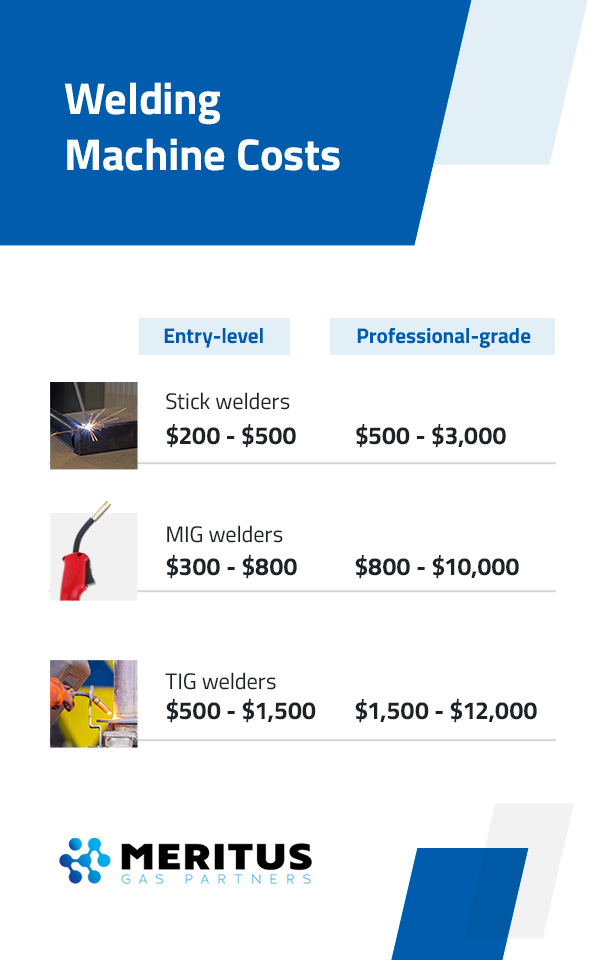
Credit: meritusgas.com
How To Choose The Right Welder For Your Project
Picking the wrong machine can waste your time and money. Here’s how to match the welder to your project:
- Metal Type and Thickness: Thin sheet metal? Go with MIG or TIG. Thick steel? Stick or engine-driven.
- Project Size: Small repairs can use 120V machines. Large jobs need more power (240V or engine-driven).
- Portability Needs: Working outdoors? An engine-driven unit means you don’t need power outlets.
- Skill Level: MIG is easiest for beginners. TIG gives the cleanest welds but is harder to learn.
- Budget: Stick welders cost less, but may not fit every project.
If you’re unsure, describe your job to the rental shop. They can recommend a suitable machine and tell you if you need specialty accessories or gas.
Expert Insight: Don’t be afraid to ask the rental shop for advice. They want you to succeed and can recommend the perfect machine.
—
Insurance, Deposits, And Fine Print
Most rental companies require a security deposit—often $100 to $500—when you pick up the welder. They refund this when you return everything in good shape.
Some shops offer or require insurance. This protects you if you damage the machine or something goes wrong. Insurance usually adds $10–$30 per rental, but it can save you thousands if there’s an accident.
Check the contract! Late returns, missing accessories, or equipment damage can lead to big extra charges.
Always inspect the welder before you leave the rental shop. Note any damage or missing parts, and make sure the machine works. Taking photos is a smart way to avoid disputes later.
—
Advanced Options: Specialty Welders
If you need to weld aluminum, stainless steel, or do pipe welding, you may need a specialty welder.
- Aluminum MIG/TIG Welders: Cost more due to advanced features and gas needs. Expect $120–$200 per day.
- Pipe Welders: Designed for pipeline work, often engine-driven. $150–$250 per day is common.
- Submerged Arc or Plasma Welders: For industrial use only, with prices often over $250 daily.
Some specialty machines require special training. If you’re not experienced, ask if the shop offers a quick tutorial or user manual.
Insider Tip: Specialty welders may require proof of experience or certification to rent. For safety and insurance reasons, shops may refuse to rent advanced units to beginners.
—
Common Mistakes When Renting A Welder
Avoid these pitfalls to save money and stress:
- Choosing the wrong machine for your metal or project size.
- Not asking about consumables—some shops don’t stock what you need.
- Ignoring power requirements—make sure your worksite has the right outlets or generators.
- Missing the return deadline and getting hit with extra charges.
- Damaging cables or accessories and losing your deposit.
One more: Some renters forget to check for extra fees like cleaning charges, insurance, or environmental fees. Always ask for a detailed quote.
—
Welder Rental Cost Vs. Hiring A Pro
Some jobs may be better handled by a professional welder, especially if you lack experience or the work is critical (like structural steel). Hiring a pro costs $50–$100 per hour, but you get skilled labor and their own equipment.
Quick Comparison:
- DIY with rental: Cheaper for small, simple jobs.
- Hire a pro: Safer and more reliable for complex or safety-critical work.
If you need certified welds (for code or inspection), hiring a pro is almost always required.
—
How To Get An Accurate Quote
Always call or email your top rental choices and ask for a full quote. Give them:
- The exact dates you need the welder
- The type of welding and materials you’ll use
- Your jobsite location (for delivery)
- Any accessories you need
- Your experience level (some shops offer training)
A detailed quote will help you avoid surprises. Review all charges before you agree, and get the quote in writing if possible.
—

Credit: www.rsi.edu
Industry Trends: Welder Rentals In 2024
The US welding equipment rental market is growing, with more DIYers and contractors renting high-end machines. According to Grand View Research, welding equipment rentals are expected to rise as more people prefer flexibility over ownership.
- Digital welders and inverter technology are replacing older transformer models—more efficient but sometimes pricier.
- Online reservations and app-based bookings make the process faster and simpler.
- Environmentally friendly welders (lower emissions, quieter engines) are becoming popular.
Shops are also offering more short-term rentals (even just a few hours) and flexible pickup/drop-off options to suit busy schedules.
—
Frequently Asked Questions
How Much Does It Cost To Rent A Welder For One Day?
Most basic welders cost $40 to $200 per day. The price depends on the machine type, power, and your location. Stick welders are the cheapest, while engine-driven or TIG welders cost more. Accessories are usually extra.
Are Welding Accessories Included In The Rental Price?
Usually, the basic machine includes standard cables and a ground clamp. Helmets, gloves, gas, and consumables like rods or wire are almost always extra. Ask your rental shop for a full itemized quote to avoid surprises.
Can I Rent A Welder If I Am A Beginner?
Yes, most rental shops will rent to beginners. Some may offer basic training or safety advice. Let them know your experience level so they can recommend the easiest and safest machine for your project.
Is It Cheaper To Rent Or Buy A Welder?
If you only weld a few times a year, renting is much cheaper. If you weld often or have ongoing projects, buying a welder saves money in the long run. Consider maintenance, storage, and accessory costs before deciding.
What Documents Do I Need To Rent A Welder?
You’ll need a valid driver’s license or ID and a credit card for the deposit. Some shops may require proof of insurance or experience for specialty or industrial welders. Always ask about requirements before you go.
—
Renting a welder gives you flexibility and control over your project budget. By understanding the costs, reading the fine print, and choosing the right machine, you get professional results with minimal hassle. Take the time to compare options and ask questions—smart planning will save you time, money, and stress.
With a little preparation, you can complete your welding project safely, efficiently, and without breaking the bank.

Credit: www.homedepot.com