Disclosure: This post contains affiliate links and I will be compensated if you make a purchase after clicking through my links. Learn More
Why is your MIG welder sputtering? Most often, it’s a problem with wire feed, dirty consumables, wrong settings, or gas flow issues. Fixing these can give you smooth, steady welds and far less frustration, whether at home or in a pro shop.
Common Reasons Your Mig Welder Sputters
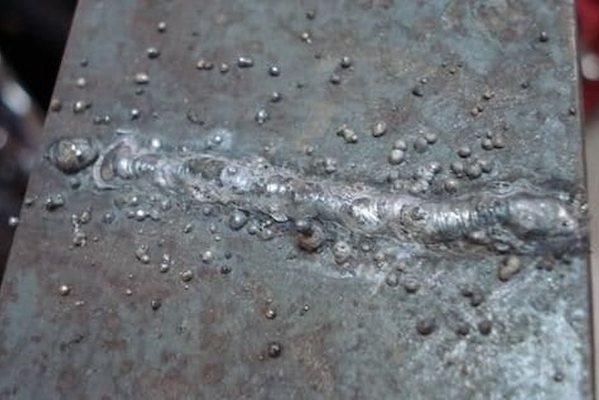
Sputtering is one of the most annoying MIG welding problems. The smooth “sizzle” turns into a series of pops, cracks, and uneven beads. Instead of a clean weld, you get spatter, holes, and weak joints. Understanding the root causes is the first step to stopping it.
1. Poor Wire Feed
A lot of MIG welders start sputtering because the wire feed isn’t smooth. If the wire “jerks” or stops, your arc breaks and restarts, causing popping noises and uneven welds.
Common wire feed issues include:
- Tension set too high or low
- Worn or dirty drive rollers
- Kinks or rust on the wire spool
- Liner clogged with dust or debris
Pro tip: Always check your wire feed first if you hear sputtering. Keep the drive rollers and liner clean. If the wire feels rough or snags, replace the liner or wire spool immediately.
2. Contaminated Wire Or Nozzle
Dirty wire or a clogged nozzle will almost always cause sputtering. Dust, oil, or rust on the wire will burn off during welding, making the arc unstable and causing spatter.
Signs of contamination:
- Black, sooty welds
- Wire feels gritty
- Nozzle clogged with spatter
Clean the wire with a soft cloth before loading it. Use nozzle gel to prevent spatter buildup. If you see a lot of debris inside the nozzle or contact tip, clean or replace them.
3. Incorrect Welding Parameters
MIG welding is very sensitive to voltage, amperage, and wire speed. Wrong settings lead to sputtering, burnback, or poor penetration.
- Too low voltage: Arc will pop and sputter.
- Too high wire speed: Wire pushes into the pool, stubbing and spattering.
- Too low wire speed: Arc becomes unstable and sputters.
Match your wire speed, voltage, and gas flow to the metal thickness and wire type. Check your machine’s chart or manual for recommended settings.
4. Shielding Gas Problems
MIG welding needs a steady flow of shielding gas to protect the weld from air. If the flow is too low, or if there’s wind or leaks, the arc will sputter and the weld will oxidize.
- Not enough gas flow: Porous, weak welds and lots of spatter.
- Too much gas flow: Turbulence pulls in air, also causing sputtering.
- Leaks: Hissing sound, poor shielding.
Check all hoses and fittings for leaks. Set the flow rate to 20-25 cubic feet per hour (CFH) for most jobs. Avoid welding in windy areas.
5. Bad Ground Connection
A weak or dirty ground clamp creates resistance. This leads to a sputtering arc, erratic bead, and possible machine damage.
Always clamp to clean, bare metal near your work. If the clamp is loose, corroded, or connected to painted/rusty metal, clean it or move it.
6. Defective Or Worn Out Consumables
Contact tips, liners, and nozzles wear out over time. A worn tip causes poor current transfer, leading to arc instability and sputtering.
Replace consumables regularly, especially if you weld often. Keep spares on hand and check tips for oval holes or burnback.
7. Using The Wrong Wire Or Gas
Not all wires and gases work for every job. For example, using flux-cored wire with gas or solid wire without gas causes problems. Mixing up wire types or sizes can also create arc instability.
Double-check your wire and gas match your project:
- Mild steel: ER70S-6 wire with C25 gas (75% argon/25% CO2)
- Stainless: Use proper stainless wire and tri-mix gas
- Aluminum: Aluminum wire with 100% argon
8. Too Much Extension (stickout)
Stickout means how much wire sticks out past the contact tip. Too much stickout cools the arc and makes it unstable, causing sputtering.
Keep stickout between 3/8” to 1/2” for most wires. Shorter stickout gives a hotter, more stable arc.
9. Power Supply Fluctuations
If your shop’s power supply is unstable, the welder can lose voltage, causing the arc to sputter. This is common in older buildings or if you run too many machines at once.
Use a dedicated circuit for your welder. If you notice flickering lights or machine resets, check your power supply and consider upgrading.
10. Operator Technique
Even with perfect setup, poor welding technique can cause sputtering. Moving the gun too fast or slow, holding the wrong angle, or inconsistent travel speed all affect the arc.
Practice holding the gun at a 10-15 degree angle and move at a steady speed. Listen for a steady “sizzle,” not pops.
Diagnosing Mig Welder Sputtering
To fix sputtering, you need to diagnose the real cause. Jumping to conclusions wastes time and materials.
Step 1: Listen And Observe
Start your weld and pay close attention. Is the sputter constant or random? Does it change as you move? Are you running out of gas? These clues point to the likely cause.
Step 2: Inspect The Wire Feed System
Stop welding and open the machine. Watch the wire as you pull the trigger. Is it smooth, or does it jerk and slip? Look for dust, rust, or bird-nesting (tangled wire).
Step 3: Check The Consumables
Remove the nozzle and contact tip. Is there spatter, burnback, or wear? Clean or replace as needed.
Step 4: Review Your Settings
Compare your machine settings to the chart inside your welder’s cover or in the manual. Are your voltage, wire speed, and gas flow in the right range?
Step 5: Inspect The Ground And Power
Check the ground clamp for rust or loose connections. Make sure your power cord is in good shape and plugged into a proper outlet.
Wire Feed Problems: Causes And Fixes
Wire feed is the heart of MIG welding. If the wire doesn’t come out smoothly, you’ll never get a steady arc.
| Problem | Symptoms | Solution |
|---|---|---|
| Loose Drive Rollers | Wire slips, jerks, stops | Tighten drive roller tension |
| Dirty Liner | Rough wire feed, jams | Clean or replace liner |
| Rusty Wire | Sparks, uneven arc | Replace wire; store dry |
| Wrong Roller Size | Wire deforms or shreds | Use correct size for wire |
Expert insight: Many beginners overlook liner maintenance. Even small dust or metal shavings in the liner can block wire movement, causing constant sputtering. Replace liners every 6-12 months if you weld regularly.
Shielding Gas Issues
Shielding gas is vital for MIG welding. Without it, the arc reacts with oxygen and nitrogen in the air, creating spatter, porosity, and weak welds.
| Gas Problem | Result | Fix |
|---|---|---|
| Low Flow | Sputter, porosity | Increase to 20-25 CFH |
| High Flow | Turbulence, spatter | Reduce flow |
| Leaky Hose | Hissing, poor shield | Check/replace hoses |
| Wind | Porous welds | Shield area or weld inside |
Extra tip: If you work outside, make a welding tent or shield to block wind. Outdoor MIG welding often needs higher gas flow, but it’s not a replacement for a calm environment.
Welding Parameters And Settings
Every type of metal, wire, and gas needs different settings. MIG welding is not “plug and play. ” Wrong settings cause most sputtering problems.
Key Settings To Check
- Voltage: Controls arc heat. Too low sputters; too high burns through.
- Wire Speed: Too fast, wire “stubs” and pops; too slow, arc cuts out.
- Gas Flow: Must be steady, not too high or low.
- Polarity: Most MIG uses DCEP (+). Wrong polarity causes spatter and weak welds.
Example Setting Chart
| Material | Thickness | Wire Speed (ipm) | Voltage (V) | Gas Flow (CFH) |
|---|---|---|---|---|
| Mild Steel | 1/8” | 250 | 18 | 20 |
| Stainless | 1/16” | 150 | 15 | 25 |
| Aluminum | 3/16” | 320 | 21 | 30 |
Always start with recommended settings, then fine-tune as you weld. If the arc sputters, adjust only one parameter at a time.
Bad Ground And Electrical Problems
A solid ground is essential. High resistance from rust, paint, or thin wires will cause voltage loss and sputtering.
- Clean a spot on your workpiece down to bare metal.
- Use a heavy-duty ground clamp.
- Keep cable connections tight and clean.
Pro tip: Never clamp to the welding table alone—always clamp as close as possible to your weld for best results.
Consumables: When To Replace
Many welders try to save money by using contact tips, liners, and nozzles too long. Worn parts create arc instability and constant sputtering.
When to replace:
- Contact tip hole is no longer round
- Nozzle is full of spatter
- Liner feels rough or wire jams
Keep extra consumables in your shop. They’re cheap and make a big difference in weld quality.
Matching Wire And Gas
Using the wrong wire or shielding gas is a common mistake, especially for new welders. Each metal and wire type needs a specific gas.
Mild steel: Use ER70S-6 wire with 75% argon/25% CO2.
Stainless: Use stainless wire and tri-mix gas (90% helium, 7.5% argon, 2.5% CO2).
Aluminum: Use pure argon.
Double-check your wire type and size. Using. 035” wire with. 023” tips will cause arc problems and sputtering.
The Role Of Stickout
Stickout affects arc stability. Too much stickout cools the arc and makes the wire melt unevenly, leading to spatter.
- For most MIG jobs, keep stickout at 3/8” to 1/2”.
- For flux-cored wire, use slightly longer stickout.
Short stickout gives better current transfer and a stable arc.
Power Supply And Extension Cords
Voltage drops from long or thin extension cords can cause your welder to sputter and lose power. Always use a heavy-duty, short extension cord rated for your welder’s amperage.
If your welder trips breakers or sputters when other machines run, check your shop’s wiring.

Credit: www.reddit.com
Operator Technique: Getting It Right
Even the best setup fails with poor technique. Hold the gun at a 10-15 degree push angle, keep a steady hand, and move at a consistent speed. Listen for a steady “sizzle” sound.
Extra insight: Many new welders move too fast or pull the gun too far from the work, causing the arc to sputter. Slow down and keep your stickout short.
Hidden Issues Beginners Miss
Many beginners focus only on machine settings and miss two common causes:
- Humidity and Storage: Wire left in damp areas rusts quickly, causing sputtering—even if it looks clean. Store wire spools in a dry, sealed container.
- Gas Bottle Running Low: As the shielding gas cylinder empties, pressure drops and flow becomes unstable. Always check your gauge before starting a new weld.
Troubleshooting Checklist
Quickly check these points if your MIG welder is sputtering:
- Is the wire feeding smoothly?
- Are the nozzle and contact tip clean?
- Are your voltage and wire speed settings correct?
- Is gas flowing at 20-25 CFH? Any leaks?
- Is your ground clamp clean and tight?
- Are you using the right wire and gas for your metal?
- Is your stickout between 3/8” and 1/2”?
- Is your power supply strong and stable?
- Are you using proper welding technique?
- Is your wire stored dry and your gas bottle full?
Fixing one or more of these usually solves most sputtering problems.
Preventing Mig Welder Sputtering
A little prevention saves a lot of time and frustration.
- Clean your wire feed system every month.
- Store wire spools dry and sealed.
- Replace contact tips and nozzles regularly.
- Check your gas bottle and regulator often.
- Practice steady gun movement and angle.
Expert advice: Don’t chase perfect welds with just machine settings. Good welds need maintenance, right consumables, and solid technique.
Credit: americantorchtip.com
When To Call A Professional
If you’ve checked everything and your MIG welder still sputters, it might have an internal problem—like a faulty control board or damaged motor. Don’t risk further damage. Take it to a certified repair shop or consult your manufacturer’s support.
For more details on MIG welding troubleshooting, the Lincoln Electric support page has in-depth guides and videos.
Frequently Asked Questions
What Is The Most Common Cause Of Mig Welder Sputtering?
The most common cause is poor wire feed, often from dirty liners, worn drive rollers, or rusty wire. This interrupts the arc, causing sputtering, spatter, and uneven welds. Always start troubleshooting with your wire feed system first.
Can The Wrong Shielding Gas Cause Sputtering?
Yes, using the wrong shielding gas, or having low or high gas flow, can cause sputtering. Make sure the gas matches your wire and metal, and set the flow rate to 20-25 CFH for most jobs to get a stable arc.
How Often Should I Change Mig Contact Tips?
Change contact tips whenever the hole becomes oval, there’s burnback, or wire feed feels inconsistent. For frequent welders, check tips weekly. Fresh tips ensure good current transfer and a smooth welding arc.
Why Does My Welder Sputter Only Sometimes?
Intermittent sputtering usually means a loose connection, dirty contact tip, or fluctuating gas flow. Check for loose ground clamps, worn consumables, or low gas pressure. Small leaks or wire feed issues can cause random arc instability.
Does Mig Welder Sputtering Always Mean A Machine Problem?
No, sputtering often comes from setup, technique, or consumables, not the machine itself. Most problems are easy to fix with cleaning, proper wire, correct settings, and good grounding. Only a few cases need professional repair.
Smooth welding starts with understanding your machine and staying ahead of problems. Fix sputtering by checking wire feed, consumables, gas, and technique. With the right habits, your MIG welder will give you clean, professional results every time.

Credit: www.reddit.com