Disclosure: This post contains affiliate links and I will be compensated if you make a purchase after clicking through my links. Learn More
Flux core welding is a popular process for joining metal. Many people use it in auto repair, construction, farm work, and home projects. A common question is: Do you push or pull flux core welding? This decision changes how your weld looks, how strong it is, and how clean the finished product will be. If you want to improve your skills or solve weld quality problems, understanding this topic is important.
Many people start flux core welding because it works outside, handles dirty metal, and does not need shielding gas. But technique matters, especially the direction you move the gun. Some people say “push. ” Others say “pull. ” Which is correct?
Does it depend on the wire or the project? This article gives a clear answer and explains why the right method matters. You will learn how each technique works, when to use them, and what happens if you choose wrong.
Real-world tips, common mistakes, and expert advice will help you get better results with flux core welding.
What Is Flux Core Welding?
Flux core welding, or FCAW (Flux Cored Arc Welding), uses a special wire that has flux inside. This wire melts and makes a weld. The flux creates gas and slag to protect the weld from air. This lets you weld outside, in windy places, or on rusty metal. Most people use two types of flux core wire:
- Self-shielded flux core wire (FCAW-S): Does not need a gas tank. The wire gives all the protection.
- Gas-shielded flux core wire (FCAW-G): Needs an extra gas tank and works better inside.
Flux core welding is different from MIG welding. MIG uses solid wire and always needs shielding gas. Flux core is more forgiving for dirty or painted metal. It also works well for thick steel and can weld faster.
What Does “push” And “pull” Mean In Welding?
When people talk about “push” or “pull” in welding, they mean the direction you move the welding gun compared to the weld. If you push, the gun points in the direction you move. If you pull, the gun points away from where you are going.
- Push technique: The gun tilts toward the weld. You move forward, pushing the puddle.
- Pull technique (Drag): The gun tilts back, away from the weld. You move backward, pulling the puddle.
Each method affects the weld’s look, how deep it melts the metal, and how much slag you get.
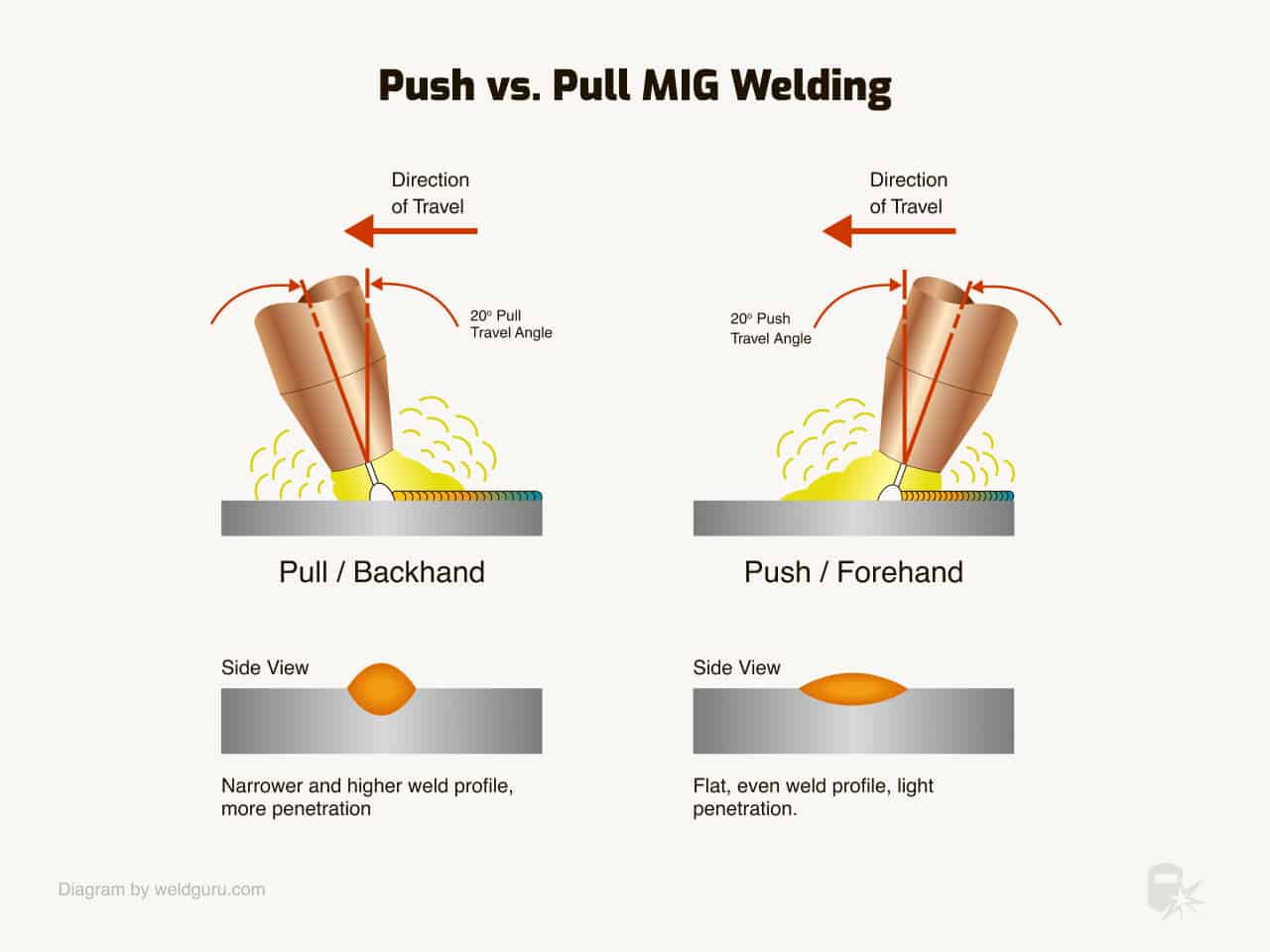
Credit: weldguru.com
Should You Push Or Pull With Flux Core Welding?
Most experts agree: You should pull (drag) with flux core welding. This rule is true for almost all self-shielded flux core wires. Pulling gives better weld penetration, less spatter, and cleaner results. Pushing often causes more slag, poor welds, and weak joints.
Why Pulling Works Best
When you pull, the flux stays ahead of the hot weld. This lets the slag cover the weld as it cools, which protects the fresh metal from air. It also helps the weld puddle soak deeper into the base metal.
This makes the weld stronger.
If you push, the slag gets trapped in the weld. This creates weak spots, holes, and a rough look. Many beginners struggle with slag inclusions and don’t know why. The answer is often technique.
The Simple Rule
Many welders use this phrase: “If there’s slag, you drag.” This means you should pull with any process that makes slag (flux core, stick welding). If you use a process without slag (like MIG), you can push.
The Science Behind Push And Pull
Weld direction changes the heat, the gas flow, and how the metal mixes. Flux core wires melt at high temperatures. The flux inside the wire burns and creates a gas shield. This gas is not as strong as the gas from a tank.
So, you need to keep the shield over the weld as long as possible.
Pulling keeps the flux and the gas in front of the weld puddle. The gas shield stays thick, and the slag covers the weld smoothly. This stops air from causing rust, cracks, or weak spots. The slag also peels off easily after the weld.
Pushing does the opposite. The gas and slag fall behind the weld. Air gets in, and slag can mix with the metal. This leads to poor welds and more cleaning work.
Visual Difference
If you compare the welds, you will see:
- Pulled welds: Smooth, even, strong, little spatter.
- Pushed welds: Rough, porous, weak, lots of spatter.
Many shops teach new welders to always drag the weld when using flux core. Some rare cases allow pushing, but these are for experts with special wires.
How To Pull Weld With Flux Core
Using the pull technique is simple, but there are details to watch. Here is how to do it:
- Set your machine: Use the right voltage and wire speed for the wire and thickness.
- Hold the gun at a 10-20 degree angle, tilted away from the weld.
- Aim the gun so the wire points at the weld pool, not ahead of it.
- Pull the gun backward along the joint.
- Move smoothly, keeping the same speed.
- Watch the puddle and the slag. Keep the puddle just ahead of the slag.
- After welding, let the slag cool, then chip or brush it off.
Example For Flat Welds
For a flat weld on steel, set the gun at 15 degrees back. Pull along the joint at a steady speed. If you go too fast, the weld is thin and weak. Too slow, and you get big lumps and more slag.
Example For Vertical Welds
For vertical-up welds, start at the bottom and move upward. Pull the gun up, using the same backward angle. If you weld downward, use a very short arc and pull quickly.
When Can You Push With Flux Core Welding?
In most jobs, you should pull. But some rare cases allow pushing:
- Gas-shielded flux core wire: Some wires let you push, but only indoors with good gas coverage.
- Thin metal: If you need a wide, flat bead on thin steel, you can push carefully. This is tricky and can cause problems.
- Special wires: Some new wires are made for both push and pull. Always read the instructions.
If you try to push with self-shielded wire, you will see more spatter, rough beads, and trapped slag. Most experts say beginners should not push with flux core.
Push Vs Pull: What Changes In The Weld?
The way you move the gun changes many things. Here is a side-by-side look:
| Feature | Pull (Drag) | Push |
|---|---|---|
| Weld Penetration | Deep | Shallow |
| Slag Inclusion | Low | High |
| Bead Shape | Narrow, raised | Wide, flat |
| Spatter | Less | More |
| Cleaning Needed | Easy | Hard |
Pulling is better for most jobs. Only experts use pushing for special reasons.
Factors That Affect Your Choice
Some situations make the choice less clear. Here are things to check before you start:
Type Of Wire
- Self-shielded wire: Always pull.
- Gas-shielded wire: Usually pull, but some allow push (check wire box).
Metal Thickness
- Thick steel: Pull for deep welds.
- Thin steel: Push if you must avoid burn-through, but go slow.
Position
- Flat, horizontal, vertical up: Pull.
- Vertical down: Pull fast, short arc. Only for thin metal.
Outdoor Or Indoor
- Outdoor: Always pull. Wind will blow away weak gas from flux.
- Indoor: You can try push with gas-shielded wire if you know what you are doing.
Skill Level
- Beginner: Always pull. It is safer and gives better results.
- Expert: Try push only for special joints or effects.
Common Mistakes When Choosing Push Or Pull
Many welders make the same errors. Knowing these can save you time and money.
1. Pushing With Self-shielded Wire
This causes most problems. The weld looks rough, and slag gets stuck inside. Always pull with self-shielded wire.
2. Wrong Gun Angle
If you tilt the gun too much, you lose gas coverage. Too little, and you do not drag enough slag. Aim for 10-20 degrees.
3. Moving Too Fast Or Slow
If you rush, the weld is thin. If you go slow, you get big lumps and holes.
4. Not Cleaning Slag
If you leave slag on top, later welds will not stick. Always chip and brush between passes.
5. Not Reading Wire Instructions
Some wires allow pushing, but most do not. Check the box before you change your method.
How To Get The Best Results With Flux Core Welding
If you want strong, clean welds, use these tips:
- Pull the weld with the right angle.
- Keep the wire stickout short (about 1/2 inch).
- Set the right voltage and wire speed.
- Clean the metal before welding.
- Watch the puddle and control your speed.
- Let the slag cool before removing it.
- Practice on scrap metal to see the difference between push and pull.
Example: Building A Trailer Frame
If you weld thick steel for a trailer, use a self-shielded wire. Pull each weld. The beads will be strong and smooth. If you push, the joints may crack or fail on the road.
Example: Repairing A Fence
On a windy day, you repair a steel fence. Use the pull method. If you try to push, the weak gas shield will let in air, causing rust and weak spots.

Credit: bakersgas.com
Do Professionals Always Pull With Flux Core?
Most professionals use the pull method for self-shielded wires. They know this gives the best results. In rare cases, with gas-shielded wires and inside, they may push to get a certain bead shape. But this is not common.
Shops that build bridges, ships, or heavy machines almost always pull welds with flux core. They want strength and safety. If you are new or working outside, always pull.
Comparing Push And Pull In Real-world Projects
To see how big the difference is, many welders test both methods. Here is an example:
| Project | Push Result | Pull Result |
|---|---|---|
| Outdoor fence repair | Porous, weak welds | Strong, clean welds |
| Thick plate welding | Shallow, uneven beads | Deep, smooth beads |
| Thin sheet patch | Wide, flat bead, risk of holes | Narrow bead, less heat |
| Vertical up weld | Slag runs into puddle | Easy slag removal |
The pull method wins in almost every case, especially for outdoor and heavy-duty jobs.

Credit: www.youtube.com
Advanced Tips For Experienced Welders
If you have welded for years, you may want to try advanced techniques. Here are some ideas:
- Stitch welds: Short welds with pauses. Pull each stitch for best strength.
- Weave beads: Move side to side as you pull. This gives wide, strong welds.
- Multiple passes: Clean the slag after each pass. Pull every pass for best results.
- Special wires: Some wires are made for both push and pull. Test on scrap first.
The Role Of Equipment And Settings
Good results need good settings. Check your machine and wire before you start.
Machine Type
Most small machines work well with self-shielded wire and pull method. If you have a dual machine (MIG/flux core), use flux core for dirty or outdoor jobs.
Voltage And Wire Speed
Set voltage and speed for the metal thickness. Too low, and the weld is weak. Too high, and you burn through. Pulling needs a steady speed.
Wire Size
Common sizes are. 030 or. 035 inch for small jobs,. 045 inch for thick steel. Always use wire that matches your machine and project.
Shielding Gas
If you use gas-shielded wire, check the gas type. CO2 or mixed gas works best indoors. For self-shielded wire, do not use gas.
Safety And Health With Flux Core Welding
Welding gives off smoke and fumes. Flux core wires make more smoke than MIG. Always wear safety gear:
- Helmet with auto-dark lens
- Gloves and long sleeves
- Good ventilation or fume extractor
Do not breathe the smoke. Some wires give off more fumes than others. If you weld inside, use a fan or open window.
Cleaning And Finishing Welds
After welding, let the slag cool. Use a chipping hammer and wire brush to remove it. Do not weld over slag. This causes weak joints.
If you see holes or rough spots, grind them out and weld again. The pull method makes slag removal easy. If you push, you will spend more time cleaning.
How To Practice Push And Pull
If you want to see the difference, try both methods on scrap steel.
- Set up your welder with the same settings.
- Make one weld with the pull method.
- Make another weld with the push method.
- Compare the beads after removing slag.
- Test the welds by bending or hammering the metal.
You will see that pulling gives stronger and better-looking welds. This simple test teaches more than any book.
Key Takeaways For Beginners
If you are new to flux core welding, remember these points:
- Always pull with self-shielded wire.
- Keep the gun at a 10-20 degree angle.
- Clean between welds.
- Set the right machine settings.
- Practice on scrap metal.
These steps will help you avoid common problems and make better welds.
Where To Learn More
You can find more tips and guides on Wikipedia’s Flux-cored arc welding page. This source explains the science, wires, and best practices in simple language.
Frequently Asked Questions
Why Is Pulling Better Than Pushing With Flux Core?
Pulling keeps slag ahead of the weld and gives better protection. This makes the weld stronger and cleaner. Pushing traps slag and causes weak spots.
Can I Ever Push With Flux Core Wire?
Most self-shielded wires should never be pushed. Some gas-shielded wires allow pushing indoors. Always check the wire instructions before you try.
What Happens If I Push Instead Of Pull?
You may see more spatter, rough beads, and trapped slag. The weld may be weak or even break. For strong welds, always pull with flux core.
How Do I Hold The Gun For Pulling?
Tilt the gun 10-20 degrees away from the weld. Point the wire at the puddle and pull backward at a steady speed.
Do Professionals Always Pull With Flux Core Welding?
Yes, almost always. Pulling gives the best results with self-shielded wire. Experts only push with special wires or for certain effects.
Flux core welding is a strong method for many projects, but the way you move the gun matters. Pulling gives better welds, less cleanup, and safer results. With practice and care, you can make strong, clean welds every time.