Disclosure: This post contains affiliate links and I will be compensated if you make a purchase after clicking through my links. Learn More
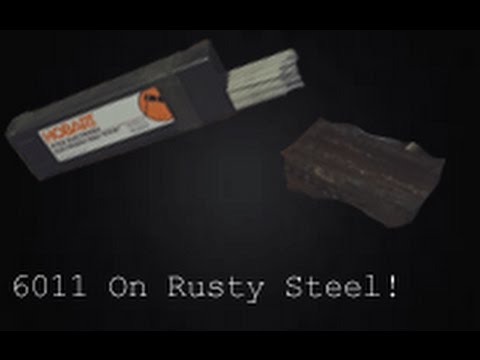
Can you weld rusty metal? Yes, you can, but rust makes the weld harder to start, adds porosity and spatter, and weakens the result. For a sound weld, grind or wire-brush the joint to bright metal first, and use an E6011 stick rod or a high-deoxidizer flux-cored wire when full cleaning is not possible.
Rust is iron oxide. It sits between your arc and the clean steel underneath, and it brings oxygen and moisture into the weld pool. Some processes handle that much better than others.
We cover what rust does to a weld, which processes and filler metals tolerate it, how to prep rusty steel, and when a rusted part should be replaced instead of welded.
Can You Weld Rusty Metal Without Cleaning It?
You can weld light surface rust without cleaning it, but expect a rougher weld. Hobart Brothers notes that welding over rust can cause porosity and high levels of spatter, and very rusty steel makes a stable arc harder to hold.
Light, thin surface rust is the best case for welding as-is. Heavy scale, flaking rust and deep pits need cleaning, because the arc can’t burn through enough oxide to reach clean steel.
What Rust Does to a Weld
Rust causes most of its trouble in the weld pool. These are the common problems you see.
- Porosity: oxygen and moisture in the rust form gas pockets in the bead.
- Spatter: the arc pops and throws more metal, so cleanup takes longer.
- Unstable arc: rust and scale make the arc harder to start and hold steady.
- Wavy, uneven bead: Hobart notes that moving too fast over mill scale gives an erratic weld pool and an inconsistent bead.
- Weak base metal: rust eats away steel, so a pitted part may be thinner than it looks.
If your welds already show pinholes, the fix for porosity from dirty metal starts with the same cleaning steps.

Credit: www.youtube.com
Best Welding Processes for Rusty Metal
Process and filler choice decide how much rust you can get away with. Flux-cored wires, according to Hobart, usually carry the most deoxidizers, which help lift impurities out of the weld pool.
| Process / filler | Dirty-steel handling | Notes |
|---|---|---|
| Stick, E6011 (Lincoln Fleetweld 180) | High | Sold for dirty and rusty metal; runs on AC or DC |
| Stick, E6010 | High | Same cellulosic family as E6011; DC only |
| Stick, E6013 (Lincoln Fleetweld 37) | Low | Lincoln lists it mainly for new, clean steel |
| Flux-cored, E71T-1C/M or E71T-9C/M | Good on mill scale | Gas-shielded wires Hobart names for mill scale |
| Self-shielded flux core, E71T-11 | Moderate | Extra deoxidizers; Hobart notes it works on coated steel |
| Metal-cored, E70C-6M | Good on mill scale | High silicon deoxidizer content |
| Solid MIG wire, ER70S-6 | Mill scale only | Lincoln: tolerates medium-to-heavy mill scale; clean rust first |
| TIG | Very low | Needs clean, bright metal |
Stick Welding With E6011 or E6010
Stick welding with a cellulosic rod is the classic choice for rusty farm and repair work. A retail listing for Lincoln Fleetweld 180 (E6011) claims excellent results on dirty and rusty metals and poor fit-ups, and the rod runs on AC or DC.
E6010 uses the same cellulosic coating type but runs on DC only. E6013 is a poor pick here, since Lincoln lists Fleetweld 37 as made mainly for new, clean steel. The fourth digit in welding rod numbers marks the coating type and current, which is why E6010 and E6011 behave differently.
Flux-Cored and Metal-Cored Wire
Flux-cored wire handles dirty steel better than solid wire. Hobart recommends flux-cored and metal-cored wires with high levels of deoxidizers to weld through rust. For mill scale, Hobart names gas-shielded E71T-1C/M and E71T-9C/M wires, and metal-cored E70C-6M.
Self-shielded E71T-11 wire is common on small 120V machines. Hobart notes its aluminum and other deoxidizers help on coated steel, but it still welds best on cleaned metal.
Solid MIG Wire
Solid wire is less forgiving. Lincoln says its ER70S-6 wire has high manganese and silicon content that helps it tolerate medium-to-heavy mill scale. Lincoln makes no rust claim, so clean rust off before MIG welding with solid wire.
TIG Welding
TIG is the least tolerant process. The arc and filler give no help against rust, so grind TIG joints to bright, clean metal every time.
How to Prep Rusty Metal Before Welding
Cleaning takes a few minutes and saves rework. Hobart recommends proper cleaning of the base metal on every job.
Step 1: Check the Metal Thickness
Look for deep pits, flaking layers and holes. If the steel is thin or rotted through, cut the bad section out and weld in new metal instead.
Step 2: Remove Loose Rust and Scale
Use a wire wheel, a flap disc or a grinder to take rust and scale off the joint and the area where the ground clamp goes. Hobart notes mill scale can also be blasted off.
Step 3: Grind to Bright Metal at the Joint
Grind the joint faces and the surface next to them until you see bright steel. Pay extra attention to the root of the joint, where rust hides.
Step 4: Wipe Off Oil and Grease
Rusty parts often carry oil too. Hobart advises wiping oil from the joint with acetone and a rag, and says there is little reason to ever weld over oil.
Step 5: Adjust Your Technique
On scale or light rust you could not remove, slow down. Hobart notes travel speed may need to drop to about half of what you use on clean steel. A 90% argon and 10% CO2 gas, or a slight voltage increase, gives a hotter arc on gas-shielded wire.
Credit: www.youtube.com
When You Should Not Weld Rusty Metal
- The part is rusted thin, pitted deep or has holes.
- The part carries a structural or safety load, such as a trailer frame, hitch or lifting point, and you can’t confirm sound metal.
- The rust sits under paint, galvanizing or another coating you have not removed. Hobart notes galvanized steel can cause porosity and weld cracking.
- The part held fuel or chemicals. Never weld a tank or container without proper cleaning and purging by a qualified person.
Safety: old paint and zinc coatings release harmful fumes when heated. Grind coatings off well past the weld zone, work with strong ventilation or fume extraction, and wear a respirator rated for welding fume when needed.
Frequently Asked Questions
Can You MIG Weld Rusty Metal?
You can, but solid MIG wire handles rust poorly and gives porosity and spatter. Grind the joint to bright metal first. If you can’t clean it fully, switch to a flux-cored or metal-cored wire with high deoxidizer content, which Hobart recommends for welding through rust and mill scale.
What Is the Best Welding Rod for Rusty Metal?
E6011 is a common choice for rusty steel. Lincoln sells its Fleetweld 180 E6011 rod for dirty and rusty metals, and it runs on AC or DC machines. E6010 works the same way on DC. Avoid E6013 rods on rusty work, since they suit clean steel.
Can You Flux Core Weld Rusty Metal?
Yes. Flux-cored wire carries more deoxidizers than solid wire, so it handles rust and mill scale better. Light rust is workable, but heavy rust still causes porosity and spatter. Clean the joint as much as you can and slow your travel speed to give the flux time to work.
Do You Have to Remove All Rust Before Welding?
You don’t have to remove every bit of rust from the whole part, but you should clean the joint and the ground clamp area to bright metal. Clean joints give a steadier arc, less spatter and fewer pores. Rust farther from the weld zone does not affect the weld much.
Is a Weld on Rusty Metal Strong?
A weld over rust is usually weaker than one on clean steel. Porosity and poor fusion lower its strength, and rust may have thinned the base metal. For load-bearing parts, clean to bright metal, check the remaining thickness, and replace any steel that is pitted or rotted through.
Final Words
You can weld rusty metal, and an E6011 rod or high-deoxidizer flux-cored wire gives you the best odds when cleaning is limited. Rust still costs you porosity, spatter and strength.
For any weld that matters, grind the joint to bright metal, wipe off oil and check the steel thickness first. Replace rotted metal instead of trying to weld over it.