Disclosure: This post contains affiliate links and I will be compensated if you make a purchase after clicking through my links. Learn More
Practicing welding beads on scrap metal is one of the best ways to improve your welding skills. Whether you are a beginner or someone with some experience, mastering bead work is essential. Good welding beads make your work strong, neat, and professional-looking.
Many welders start with scrap metal because it is affordable and reduces pressure—if you make a mistake, you can simply try again. This article explains how to practice welding beads on scrap metal in detail, covering every step, tool, and technique you need.
You will also find common mistakes, practical tips, and clear answers to common questions at the end.
Why Practice Welding Beads On Scrap Metal?
Practicing on scrap metal gives you room to learn without wasting expensive materials. Scrap metal pieces are easy to find and cost little. You can use old car parts, steel plates, or even leftover sections from previous projects. This practice helps you develop muscle memory, understand heat control, and improve your technique.
If you jump straight to important projects without practice, you might produce weak or messy welds. These mistakes can be costly and unsafe. Practicing on scraps lets you try different bead styles, torch angles, and speeds until you feel comfortable.
Tools And Materials You Need
To practice welding beads on scrap metal, you need certain tools and safety gear. Here’s what you should gather before starting:
- Welding machine: Choose MIG, TIG, or Stick based on your learning goal.
- Scrap metal pieces: Clean steel works best for beginners.
- Welding helmet: Protects your eyes and face from sparks and UV rays.
- Welding gloves: Shields your hands from heat.
- Welding jacket or sleeves: Prevents burns on your arms and body.
- Wire brush or grinder: Cleans the metal surface for better welds.
- Chipping hammer (for stick welding): Removes slag after welding.
- Clamps or magnets: Hold your workpiece in place.
- Measuring tape or ruler: For marking practice lines.
- Soapstone or marker: Draws visible lines on metal.
- Safety glasses and hearing protection: Adds extra safety.
Using the right tools keeps you safe and helps you produce consistent results. For example, a clean helmet lens improves your visibility, leading to better bead placement.
Choosing The Right Scrap Metal
Not all scrap metal is suitable for practice. Some metals are dirty, rusty, or coated with paint, which can affect your learning. Here’s how to pick good practice pieces:
- Prefer mild steel: It melts evenly and is easy to work with.
- Avoid galvanized or painted metals: These release toxic fumes.
- Select flat, thick pieces: Thin metal burns through easily, making it harder for beginners.
- Clean your scraps: Use a wire brush, grinder, or sandpaper to remove oil, rust, and dirt.
Using the right scrap metal helps you focus on technique instead of fighting with bad material.
Preparing Your Scrap Metal For Practice
Preparation is a key step. Clean metal leads to stronger welds and less frustration. To prepare your scrap pieces:
- Brush or grind the surface: Remove rust, oil, and mill scale.
- Wipe with a degreaser: Use acetone or denatured alcohol for a final clean.
- Mark straight lines: Use soapstone or a marker to draw lines where you want to lay beads.
- Clamp the piece: Secure it to your work surface so it doesn’t move.
A well-prepared surface helps you see your progress and produces a smoother weld.
Setting Up Your Welding Machine
Every welding process—MIG, TIG, or Stick—needs different settings. Proper setup is crucial for good practice.
Mig Welding
- Voltage: Set based on material thickness (e.g., 16–18 volts for 1/8″ steel).
- Wire speed: Adjust so the wire feeds smoothly without burning back.
- Gas flow: Use 20–25 cubic feet per hour of shielding gas.
Stick Welding
- Current (Amps): Start with 1 amp per 0.001 inch of metal thickness.
- Electrode type: Use E6013 or E7018 for clean practice beads.
- Polarity: Match your electrode’s requirements.
Tig Welding
- Amperage: 60–100 amps for thin steel.
- Tungsten size: Use 1/16″ or 3/32″.
- Gas: Set argon at 15–20 cubic feet per hour.
Always check your machine’s manual for detailed advice. Write down your settings so you can repeat what works.
Understanding Welding Bead Types
You will see several bead types in welding practice. Each teaches you different skills.
- Stringer bead: A straight, narrow bead. Focuses on hand control and speed.
- Weave bead: Moves side to side in a zigzag or circular motion. Covers wider gaps and builds muscle memory.
- Stacked dime bead (TIG): Makes repeated small circles that look like coins stacked.
- Fillet weld: Joins two pieces at a 90-degree angle.
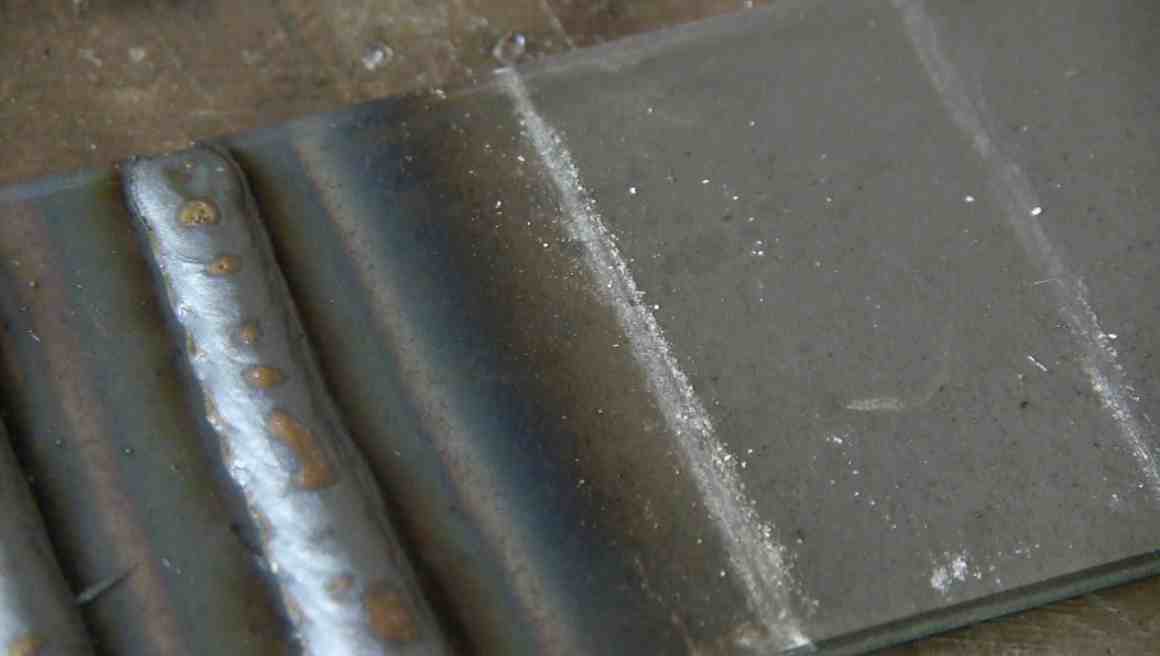
- Pad of beads: Multiple beads side by side. Teaches consistency.
Start with stringer beads. Move to weave and pads as you improve.
Practicing Safe Welding Habits
Welding is not just about technique but also about safety. Even a short bead can produce harmful fumes and sparks. Here are simple safety rules:
- Wear a certified welding helmet and gloves at all times.
- Keep a fire extinguisher nearby.
- Work in a well-ventilated space.
- Avoid loose clothes that can catch fire.
- Never touch hot metal with bare hands.
- Store gas cylinders upright and away from heat.
- Check cables and machine for damage before starting.
Safety is a habit you build with practice. Always put it first, even when working with scrap.
How To Practice Welding Beads: Step-by-step Guide
Learning to lay beads is about repetition and feedback. Follow these steps for effective practice.
1. Prepare Your Workspace
Clear your workbench. Remove flammable items. Lay out your tools and scrap pieces.
2. Clean And Mark The Metal
Use a wire brush or grinder to clean the scrap. Mark a straight line for your bead. This line acts as your guide.
3. Set The Machine
Double-check your voltage, amperage, and gas settings. Test on a small piece if needed.
4. Position Yourself
Stand or sit in a stable position. Keep your arms steady and comfortable. Your helmet should let you see the work clearly.
5. Hold The Torch Correctly
Hold your torch or gun at the right angle:
- MIG: 10–15 degrees from vertical.
- Stick: 15–20 degrees from vertical.
- TIG: 10–15 degrees, tip close but not touching.
6. Start The Arc
Strike the arc at the start of your line. For stick, tap or scratch the electrode. For MIG, pull the trigger. For TIG, use the pedal or switch.
7. Move Steadily
Travel along the line at a slow, steady speed. Watch the puddle, not the arc. Keep your hand moving at a consistent rate.
8. End The Bead
Release the trigger or stop the arc at the end. Let the bead cool before touching or cleaning.
9. Inspect And Repeat
Check your bead’s shape, size, and consistency. Practice again on a new line or piece. Try to improve each time.
Key Techniques For Better Beads
Practicing beads is not just about repetition. Focus on these key techniques:
- Steady travel speed: Moving too fast makes thin, weak beads. Too slow creates wide, high beads with too much heat.
- Correct angle: A wrong angle leads to undercut or poor fusion.
- Right stick-out: For MIG, keep 1/4″ wire stick-out. For stick, 1″ or less.
- Distance to work: Keep the arc close but not touching.
- Consistent motion: Use your wrist, not your whole arm, for fine control.
Try different combinations and see what changes. This feedback loop is how you learn.
How To Practice Stringer Beads
Stringer beads are straight and simple. They are the first step for all welders.
- Clean and mark straight lines on your scrap.
- Set your machine for the right metal thickness.
- Hold the torch at a small angle.
- Strike the arc and move straight along the line.
- Focus on even speed and steady hand.
- Stop and check bead shape and penetration.
Good stringer beads look smooth, even, and not too wide or tall. Practice laying multiple stringers side by side. This builds control and confidence.

Credit: www.dreamstime.com
How To Practice Weave Beads
Weave beads cover more area and teach you wrist movement. They are useful for filling gaps or welding thicker metal.
- Start as you would for a stringer bead.
- As you move, swing the torch gently side to side (zigzag, crescent, or circular).
- Keep a steady rhythm so the bead width stays even.
- Finish the bead and inspect for even coverage.
Weave beads should not be too wide. If they are, reduce your motion. Practice until you can make even, neat weaves.
Practicing Pads Of Beads
A pad of beads means stacking several beads side by side on the same piece. This helps you learn spacing and heat control.
- Lay your first stringer bead on the scrap.
- After it cools, lay the next bead right beside it, overlapping slightly.
- Repeat until you cover a square area.
Check for even height and smooth overlaps. This practice teaches you to control weld size and build up layers—skills needed for strong joints.
Practicing Fillet Welds On Scrap
Fillet welds join two pieces at a right angle. Practicing these on scrap helps you master joint welding.
- Clamp two clean pieces at a 90-degree angle.
- Tack them at both ends so they stay fixed.
- Set your machine for the joint thickness.
- Weld along the inside corner, keeping a steady hand and angle.
- Inspect for even leg length and smooth finish.
Good fillet welds have equal legs and no gaps at the root.
How To Evaluate Your Welding Beads
Self-evaluation is key to improvement. After each weld, check for:
- Shape: Good beads are smooth and uniform.
- Size: Not too big or small for the metal.
- Penetration: The bead fuses with the base metal, not just sitting on top.
- Undercut or overlap: Avoid grooves at the edge or extra metal spilling over.
- Porosity: Look for holes or bubbles. These weaken the weld.
Take notes or photos of your best and worst beads. Compare them as you practice.
Common Mistakes Beginners Make
Many new welders repeat the same errors. Knowing these helps you avoid frustration:
- Dirty metal: Causes weak welds and porosity.
- Moving too fast: Makes thin, uneven beads.
- Wrong machine settings: Leads to spatter or no penetration.
- Incorrect angle: Causes undercut or lack of fusion.
- Holding too far away: Makes the arc unstable.
- Ignoring safety: Leads to burns or eye damage.
- Not checking bead quality: Misses learning opportunities.
Try to spot these mistakes early. Adjust your technique and settings as needed.
How To Track Your Progress
Improvement is easier to see if you track your progress. Here’s how:
- Keep a welding journal: Write down settings, techniques, and results.
- Take photos: Before and after each session.
- Save your best and worst pieces: Compare over time.
- Ask for feedback: Show your work to a more experienced welder or use online forums.
Tracking helps you see small improvements that are easy to miss day by day.

Credit: www.dnabiotec.com
Advanced Practice: Trying Different Positions
Welding is not always flat and easy. Practice in different positions to build real skill.
- Flat position: Metal lies flat on the table. Easiest for beginners.
- Horizontal position: Metal is upright, bead is laid side to side.
- Vertical position: Weld up or down a vertical piece.
- Overhead position: Weld from below the piece.
Start with flat. Move to other positions as you improve. Each adds new challenges and requires better control.
Table: Welding Machine Settings For Bead Practice
The following comparison helps you choose machine settings for common bead practice:
| Process | Material Thickness | Voltage/Amps | Wire/Electrode | Gas |
|---|---|---|---|---|
| MIG | 1/8″ (3mm) | 16-18V | 0.030″ wire | CO2/Argon mix |
| Stick | 1/8″ (3mm) | 90-110A | E6013 rod | None |
| TIG | 1/8″ (3mm) | 70-100A | 1/16″ tungsten | Argon |
Always adjust these settings based on your actual machine and metal.
Table: Comparing Bead Types
Understanding the difference between bead types helps you plan your practice.
| Bead Type | Main Movement | Purpose | Difficulty |
|---|---|---|---|
| Stringer | Straight line | Control, basics | Easy |
| Weave | Side to side | Fill gaps, cover area | Medium |
| Pad | Multiple beads | Consistency, layering | Medium |
| Fillet | Corner joint | Joints, strength | Medium |
Focusing on each bead type builds a full set of welding skills.
Table: Common Welding Faults And Fixes
It’s normal to make mistakes. Here’s how to spot and fix them:
| Fault | What It Looks Like | How to Fix |
|---|---|---|
| Porosity | Small holes in bead | Clean metal, check gas flow |
| Undercut | Groove at edge | Slow down, reduce angle |
| Overlap | Extra metal spills over | Increase speed, less filler |
| Lack of Fusion | Bead sits on top | Increase heat, clean surface |
Use this table as a quick reference during your practice.
Non-obvious Insights For Better Results
Many beginners overlook two important areas:
- Workpiece temperature: If your scrap gets too hot from repeated beads, it can distort or warp. Let pieces cool or use thicker metal for long practice sessions.
- Consistent contact tip distance: Keeping the same distance between the MIG gun tip and the metal improves bead quality. Many beginners accidentally pull back, creating spatter and weak welds.
Also, focus on your breathing. Some welders hold their breath and shake as a result. Breathe slowly and weld with relaxed arms for better control.
Where To Find Quality Scrap Metal
You can find good scrap metal at auto shops, construction sites, or metal supply stores. Ask for clean, thick steel pieces. Avoid metals coated with paint or zinc. Some welders use old tools, shelves, or even appliance panels. Always clean the metal before using it.
If you want to learn more about types of steel and their uses, you can visit the Steel Wikipedia page.
Building Good Practice Habits
Regular, focused practice is better than long, unfocused sessions. Try these habits:
- Set a timer for 15–30 minutes per session.
- Focus on one bead type each time.
- Review your work after each session.
- Challenge yourself with new positions as you improve.
Over time, you will see your beads become smoother and more consistent.
Improving Further: Joining A Welding Class Or Community
Practicing alone can get you far, but feedback from others speeds up your progress. Consider joining a welding class or local maker space. Many online forums and videos also offer tips, but nothing beats hands-on guidance.
Final Thoughts
Practicing welding beads on scrap metal builds strong habits and skills for all types of welding. Start with the basics: clean metal, safe setup, and simple beads. Move to more complex techniques as you gain confidence. Track your progress, learn from mistakes, and always put safety first. With steady practice, you will see clear improvement and feel ready for real projects.
Frequently Asked Questions
How Often Should I Practice Welding Beads To Improve?
You should practice welding beads at least two or three times a week for steady progress. Short, focused sessions (15–30 minutes) are more effective than rare, long sessions.
What Type Of Scrap Metal Is Best For Beginners?
Clean, thick mild steel is best for beginners. It is easy to weld, melts evenly, and shows your mistakes clearly so you can learn from them.
Why Do My Welding Beads Have Holes Or Bubbles?
Holes or bubbles (porosity) usually mean the metal is dirty or your shielding gas is not working well. Clean the metal with a wire brush and check your gas flow rate.
Can I Use Painted Or Rusty Metal For Welding Practice?
You should avoid painted or rusty metal. Paint and rust create fumes and weak welds. Always grind or brush scrap clean before practice.
How Can I Tell If My Bead Is Strong Enough?
A strong bead looks smooth, even, and has good penetration into the base metal. You can test strength by trying to break the scrap after welding. If the bead holds, your technique is likely good.
Practicing welding beads on scrap metal is the best way to build skill and confidence. Stay patient, keep learning, and you’ll see steady improvement in your work.
Credit: www.weldingtipsandtricks.com