Disclosure: This post contains affiliate links and I will be compensated if you make a purchase after clicking through my links. Learn More
To learn how to braze cast iron, you clean the crack, grind a groove, preheat the casting, and fill the joint with a bronze rod and flux at a dull red heat. Then you let the part cool slowly so the iron does not crack again.
Brazing works well on cast iron because the filler melts at a lower heat than the base metal. You never melt the casting itself, so there is less stress and less risk of a new crack beside the repair.
The most common filler is low fuming bronze, sold to AWS A5.8 RBCuZn-C. It flows on gray iron, bonds to steel, and machines well after it cools.
Time: 1 to 3 hours plus slow cooling | Difficulty: Intermediate | Tools: Oxy-acetylene torch, bronze rod, flux, grinder, wire brush
What You Need to Know Before You Braze Cast Iron
Most cast iron repairs are braze welding, not capillary brazing. Braze welding builds a bead in a groove or fillet, the way a weld does. Capillary brazing pulls filler into a tight gap, which works for fitted parts but not for cracks.
Brazing filler metals melt at more than 840°F (450°C), which is the line between brazing and soldering. Cast iron melts far higher, so the casting stays solid the whole time. You can see the full split in our brazing vs soldering breakdown.
Brazing fits best on gray iron castings that do not see high heat in service, such as brackets, pulleys, pump housings, vise bodies, and hand plane parts. Parts that run very hot or need a color match are better candidates for nickel rod or a pro shop.
What You’ll Need
- Oxy-acetylene torch with a medium or heavy tip. A propane torch rarely gets a thick casting hot enough.
- Bronze brazing rod to AWS A5.8 RBCuZn-C, bare or flux coated. Harris LFB-FC and Radnor low fuming bronze are two common examples.
- Bronze brazing flux if you use a bare rod. Airgas notes that a bronze brazing flux is required with its bare RBCuZn-C rod.
- Angle grinder with a grinding wheel or burr to open a groove along the crack.
- Wire brush and solvent to strip oil, grease, paint, and rust.
- Drill and small bit to stop the crack ends.
- Fire bricks or a dry sand box to hold heat and slow the cool down.
- Gas welding goggles, leather gloves, a jacket, and good ventilation or a fume extractor.
Best Filler Rods for Brazing Cast Iron
The rod decides strength, color, and how easy the bead flows. Here are the common choices from the sources we checked.
| Filler | Classification | Key data | Best use |
|---|---|---|---|
| Low fuming bronze (bare) | AWS A5.8 RBCuZn-C | Needs separate bronze flux; Airgas lists Brinell 96 | General cast iron, steel to cast iron |
| Harris LFB-FC (flux coated) | AWS A5.8 RBCuZn-C | 65,000 psi tensile; brazing range 1,670°F to 1,750°F | Repairs without a flux pot |
| Nickel silver | RBCuZn-D | Named by Material Welding for cast iron | Stronger, whiter bead |
| 56% silver solder (Muggy Weld SSF-6) | Silver brazing alloy | Working temperature 1,150°F | Thin parts, lower heat repairs |
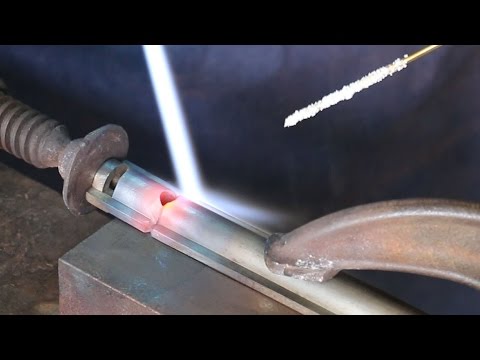
For most home shop jobs, a flux coated RBCuZn-C rod is the easy pick. It flows at a dull red heat and leaves a bead that you can file or machine.
Credit: www.youtube.com
How to Braze Cast Iron: Step by Step
Step 1: Clean the Casting
Strip oil, grease, paint, and dirt with solvent, then wire brush the area to bright metal. Parts that have been in service, like pump housings, hold oil in the pores, so heat the area lightly and clean again if it smokes.
Step 2: Stop the Crack and Grind a Groove
Find both ends of the crack and drill a small hole at each end to stop it from running. Then grind a V groove along the crack so the bronze can fill the full depth, not just the surface.
Round the groove edges and remove any graphite smear from the grinder with a wire brush. A clean, gray surface takes bronze far better than a shiny, burnished one.
Step 3: Preheat the Whole Part
Heat the casting slowly and evenly, starting wide and working in toward the joint. Material Welding lists a preheat range of 330°C to 410°C (about 626°F to 770°F) for cast iron brazing. Bring the joint itself up to a dull red right before you add rod.
Big castings hold heat poorly at the edges, so a furnace or a bed of fire bricks helps. Uneven heat is the main reason a casting cracks during a repair.
Step 4: Set a Neutral or Slightly Oxidizing Flame
Use a neutral or slightly oxidizing flame. A slightly oxidizing flame helps bronze wet cast iron and cuts zinc boil off. Keep the inner cone off the surface so you heat the iron without burning the bronze.
Step 5: Tin the Groove, Then Build the Bead
Dip a hot bare rod in flux, or use a flux coated rod, and touch it to the dull red groove. The bronze should spread thin and wet the surface like water on a hot pan. That first thin layer is called tinning.
Once the groove is tinned, add rod in small amounts and build the bead a little higher than the surface. Let each drop flow before you add more, and keep the torch moving so no spot overheats.
Step 6: Cool It Slowly
Never quench a brazed casting in water. Bury it in dry sand, wrap it in a welding blanket, or let it cool in still air away from drafts. Fast cooling can turn gray iron white and brittle and start a new crack.
Step 7: Remove Flux and Finish
Once the part is cool, scrub off the flux residue with warm water and a wire brush. Then file, grind, or machine the bead flush. Bronze cuts easily, so a flat file is often enough.

Credit: www.youtube.com
Common Mistakes to Avoid
- Overheating the bronze. If the puddle boils and gives off white smoke, you are burning zinc out of the rod. Pull the flame back.
- Brazing a cold casting. Bronze balls up and rolls off cold iron. Get the joint to a dull red first.
- Skipping the crack stop holes. Heat can push an open crack farther past the repair.
- Leaving oil in the pores. Oily iron causes poor wetting and pinholes in the bead.
- Quenching or cooling in a draft. Fast cooling is the top cause of a second crack.
- Using brazing on hot running parts. Bronze loses strength at high heat, so exhaust and furnace parts often need a different method.
Brazing vs Welding Cast Iron
Brazing uses lower heat and gives you a softer, machinable repair with less risk of cracking. The trade off is a yellow bronze color and a joint that is weaker at high service heat.
Welding melts the casting. You can weld cast iron with nickel rod using a stick welder, or weld cast iron with oxy acetylene and a cast iron filler rod for a color match. Material Welding notes that old cast iron is a good fit for braze welding, and newer iron welds well with Ni-55 rods.
Safety Notes for Brazing Cast Iron
Bronze rods contain zinc, and overheated zinc gives off fumes that can cause metal fume fever. Work outside or with a fume extractor, and keep your face out of the smoke.
Oxy-acetylene carries fire and flashback risk. Use flashback arrestors, check hoses for leaks, clear flammables from the area, and keep an extinguisher close. Wear shaded gas welding goggles, since a bright orange flame and red hot iron are hard on your eyes.
Frequently Asked Questions
Can You Braze Cast Iron With a Propane Torch?
A propane torch can handle small, thin cast iron parts, mostly with lower temperature silver braze alloys, but it struggles on thick castings. Bronze rod needs about 1,670°F to 1,750°F at the joint, so most people use oxy-acetylene to reach a dull red heat on heavier iron.
Is Brazing Cast Iron as Strong as Welding?
A good bronze braze is strong for most repairs. Harris lists its LFB-FC rod at 65,000 psi tensile strength. The joint loses strength at high service heat, so welding with nickel rod is a better choice for parts that run very hot in use.
What Flux Do You Use to Braze Cast Iron?
Use a bronze brazing flux made for copper zinc rods, or skip the flux pot and use a flux coated RBCuZn-C rod. Material Welding also names ESAB and Oxweld cast iron brazing flux. Apply flux to the hot rod and joint before you add filler.
Do You Have to Preheat Cast Iron Before Brazing?
Yes. Preheating the whole casting cuts the heat difference between the joint and the rest of the part, which is what causes cracks. Material Welding lists 330°C to 410°C, about 626°F to 770°F, with the joint brought up to a dull red before adding rod.
Can You Braze Cast Iron to Steel?
Yes. Low fuming bronze rod to RBCuZn-C is sold for joining steel, copper, cast iron, stainless steel, and nickel alloys to each other. Heat the cast iron side more because it holds heat differently, and preheat both parts before you tin the joint with bronze.
Final Words
Brazing cast iron comes down to clean metal, even preheat, the right bronze rod, and slow cooling. Get those four right and most cracked brackets, housings, and tool castings come back to work.
Start with a flux coated RBCuZn-C rod and an oxy-acetylene torch, practice on scrap iron first, and keep the bronze from boiling. If the part runs hot or holds pressure, have a pro look at it before you put it back in service.