Disclosure: This post contains affiliate links and I will be compensated if you make a purchase after clicking through my links. Learn More
Flux core aluminum welding rods attract attention from both new and experienced welders. Many people want to weld aluminum without expensive machines or shielding gas. They search for simple tools and hope these rods can help. But is the solution that easy?
The answer is more complex than many expect.
Aluminum is a tricky metal. It conducts heat fast and has a melting point much lower than steel. This makes welding aluminum different from welding steel or stainless steel. Regular flux core welding works well for steel. But aluminum presents unique problems.
Many people see “flux core aluminum rods” in stores or online and think they can use them just like flux core steel rods. This article explains what these rods really are, how they work, and when you should use them.
What Are Flux Core Aluminum Welding Rods?
Flux core aluminum welding rods are metal rods with a special core inside. This core contains flux material. The flux helps clean the metal and protects the weld from air. For steel, this method works with a flux core wire in MIG welders. For aluminum, things are different.
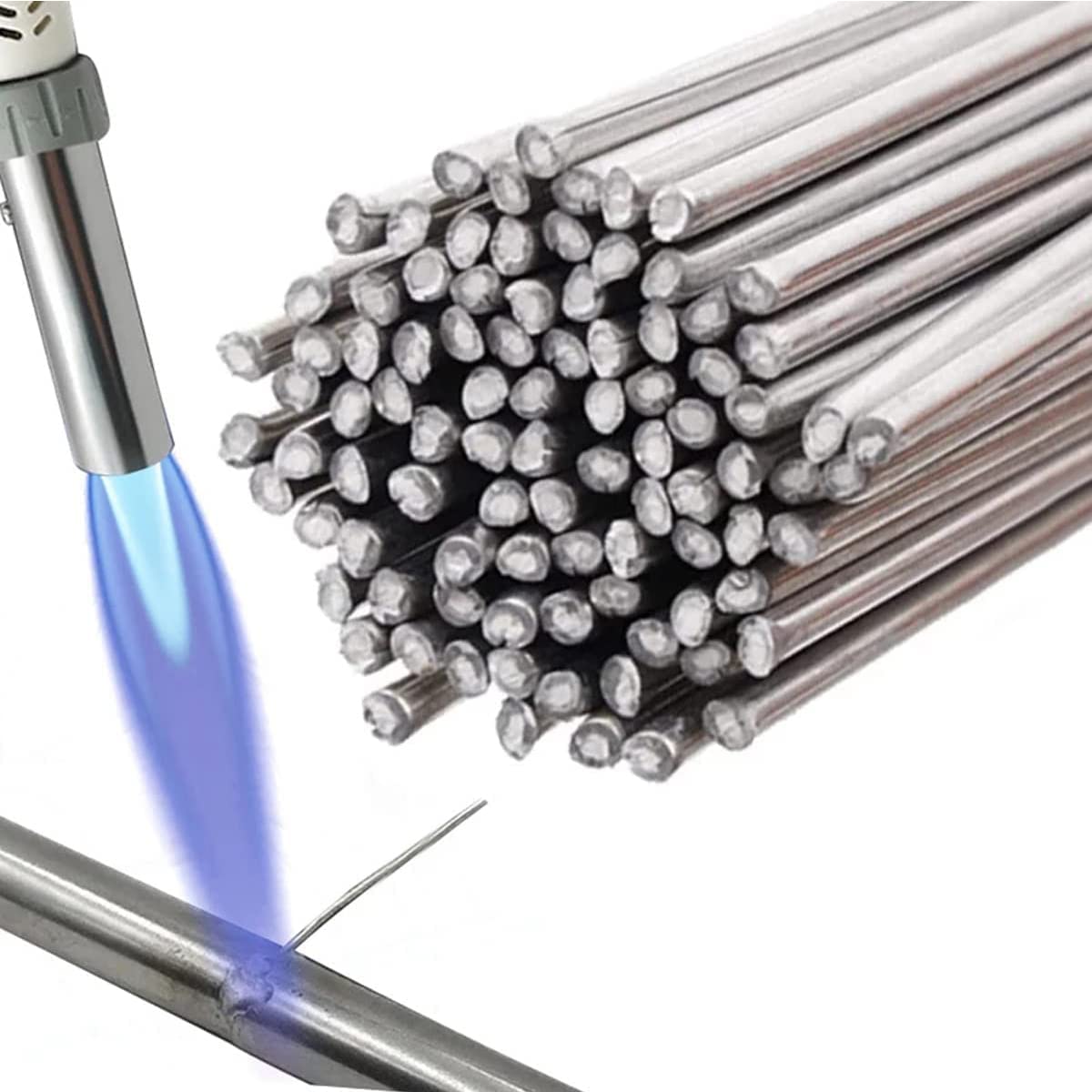
Most products called “flux core aluminum welding rods” are not true flux core wire like you find for steel. Instead, they are solid rods with a coating or a powdered flux inside. You use these rods with a standard torch, not with a MIG or FCAW (Flux Cored Arc Welding) machine.
Some rods have a white powder inside or around them. This powder is the flux. The flux melts and creates a shield over the hot metal. This prevents oxygen and other gases from making the weld weak.
Key Features
- Aluminum alloy: Usually made from a special aluminum alloy, often with silicon or zinc.
- Flux core or coating: Contains flux to help clean and protect the weld.
- No shielding gas needed: You do not need a gas tank like with TIG or MIG welding.
- Works with a torch: Most people use these rods with an oxy-acetylene torch or a propane torch.
Common Uses
People use these rods for small repairs, patching aluminum boats, fixing car parts, or making minor household repairs. They are popular with hobbyists and those who do not own advanced welding machines.
How Do Flux Core Aluminum Welding Rods Work?
When you heat the rod with a torch, the flux melts first. The flux cleans the aluminum by removing oxide layers. Aluminum oxide melts at a much higher temperature than aluminum itself. If the oxide is not removed, the weld will not stick. The flux helps solve this problem.
After cleaning, the rod melts and fills the joint. The flux flows over the weld and protects it from air. As the weld cools, you brush away the leftover flux.
The Welding Process
- Clean the surface: Use a wire brush or sandpaper to remove dirt, paint, and oil from the aluminum.
- Preheat if needed: For thick parts, preheat the aluminum with your torch.
- Apply heat: Heat the joint with your torch until the base metal is hot enough to melt the rod.
- Touch the rod: Touch the rod to the joint. If it melts, you have reached the right temperature.
- Move the rod: Feed the rod into the joint. Let the melted flux flow over the weld.
- Cool and clean: Let the weld cool. Brush off the flux residue with a wire brush.
Why Not Use Flux Core Wire In Mig Welders For Aluminum?
Many people wonder if they can use flux core wire in a MIG welder for aluminum like they do for steel. The answer is no. Aluminum MIG wire is too soft to push through most MIG guns. Also, there is no true flux core aluminum wire for standard MIG welders.
The rods sold for aluminum are for torch welding, not for wire feed machines.
Advantages Of Flux Core Aluminum Welding Rods
These rods offer some clear benefits for certain jobs. Here are the main reasons people choose them:
- No shielding gas needed: You do not need to buy or handle gas cylinders.
- Simple setup: Only a torch and rods are needed. No complex machines.
- Portable: You can weld anywhere, even outdoors, since wind does not blow away the flux shield.
- Good for repairs: Useful for quick fixes or patching holes.
- Affordable: The rods and a torch cost much less than a TIG or MIG setup.
People who work on boats, trailers, or outdoor equipment appreciate these advantages. For small jobs or field repairs, these rods can save time and money.
Disadvantages And Limitations
While these rods offer convenience, they also have important limits. Understanding these can prevent disappointment:
- Not as strong: Welds made with these rods are usually weaker than TIG or MIG welds.
- Not for structural work: Do not use for critical parts like car frames or load-bearing beams.
- Messy flux residue: You must brush off the leftover flux after welding.
- Hard to control: It is easy to overheat thin aluminum and burn holes.
- Limited alloys: Not all types of aluminum weld well with these rods.
- Skill needed: Getting a smooth, strong weld takes practice. Beginners may struggle at first.
Many beginners expect these rods to work like glue—just heat and stick. In reality, they require good surface preparation and careful heating.
Common Types Of Flux Core Aluminum Welding Rods
Several brands and types are available. Here are some common examples:
- Alumiweld (also known as Durafix): One of the most popular brands. These rods melt at around 730°F (390°C). They work with propane or MAPP gas torches. The flux is inside the rod.
- Bernzomatic AL3: These rods come with an aluminum-silicon alloy and a flux core. Sold in many hardware stores.
- Blue Demon ALUMIWELD: Similar to Alumiweld but sold under a different name. Good for thin aluminum sheets.
- Forney Easy Weld Aluminum Rods: These rods have a flux coating. They are affordable and easy to find.
- K-T Industries Aluminum Brazing Rods: These are sometimes sold as welding rods, but they are for brazing. Still, many use them for small repairs.
- Harbor Freight Aluminum Brazing Rods: Budget option, commonly used for quick, small repairs.
How Do These Rods Compare?
Here is a simple comparison for some common brands:
| Brand | Melting Point | Flux Type | Best For |
|---|---|---|---|
| Alumiweld | 730°F (390°C) | Powdered core | Thin sheets, repairs |
| Bernzomatic AL3 | 728°F (387°C) | Core | Small repairs |
| Blue Demon ALUMIWELD | 730°F (390°C) | Core | Auto, home repairs |
| Forney Easy Weld | 732°F (389°C) | Coated | Outdoor work |
All these rods work in a similar way. The main differences are price, melting point, and how easy they are to find locally.
When Should You Use Flux Core Aluminum Welding Rods?
These rods are best in specific situations. You should consider them if:
- You need to repair thin aluminum parts.
- You do not have a MIG or TIG welder.
- The job is not structural or safety-critical.
- You are working outdoors and cannot use shielding gas.
- You want to fix a leak, patch a hole, or join two small pieces.
They are not the best choice for:
- Heavy, thick aluminum plates.
- Parts under heavy stress.
- Professional or certified welding jobs.
- Critical boat hulls, vehicle suspensions, or pressure vessels.
Many boat owners use these rods for quick repairs above the waterline. Car hobbyists use them for fixing trim or panels, but not for main frames.

Credit: www.amazon.com.be
How To Choose The Right Flux Core Aluminum Welding Rod
Choosing the right rod depends on your needs. Here are important points to help you decide:
- Base metal type: Check what kind of aluminum you have. Some rods do not work with cast aluminum or certain alloys.
- Thickness: Most rods work best on thin parts (up to 1/4 inch). For thicker pieces, you need a bigger torch or preheat.
- Melting point: Lower melting point rods are safer for thin material. High melting points can warp or burn through the metal.
- Rod diameter: Thicker rods work for big gaps. Thin rods are better for small, tight joints.
- Availability: Pick a rod you can buy easily for future repairs.
Example Scenarios
- Boat hull repair: Use Alumiweld rods with a propane torch for patching small holes.
- Aluminum window frame fix: A low-melting-point rod like Bernzomatic AL3 works well.
- Outdoor trailer patch: Forney Easy Weld rods are good because they handle wind.
Step-by-step: How To Use Flux Core Aluminum Welding Rods
Many beginners struggle with these rods. Follow these steps for better results:
- Prepare the surface: Clean the area with a stainless steel wire brush. Remove all oil, paint, and oxidation.
- Test the fit: Make sure parts are tight together. Gaps make welding harder.
- Choose your torch: Use propane or MAPP gas for most rods. Oxy-acetylene torches are for bigger jobs.
- Heat the base metal, not the rod: Move the flame over the joint, not the rod. Let the metal heat up first.
- Feed the rod: Touch the rod to the hot metal. It should melt and flow into the joint.
- Use the flux: Let the flux cover the weld puddle. Do not burn off the flux by overheating.
- Let it cool: Allow the weld to cool naturally.
- Clean the weld: Remove all flux residue with a wire brush. Any remaining flux can cause corrosion.
Common Mistakes To Avoid
- Not cleaning the metal enough: Aluminum forms oxide fast. Clean it just before welding.
- Heating the rod instead of the metal: The rod will drip but not bond.
- Using too much heat: Thin aluminum will melt away.
- Leaving flux on the weld: This can cause corrosion over time.

Credit: alazab.net
Brazing Vs. Welding With Flux Core Aluminum Rods
Many rods sold as “aluminum welding rods” are actually for brazing, not true welding. Brazing means melting the rod, but not the base metal. The rod flows into the joint and sticks to the surface. True welding melts both the rod and the base metal, mixing them together.
Brazed joints are often strong enough for light work. For heavy-duty jobs, real welding is better. Most flux core rods for aluminum are really “brazing rods. ” They stick well, but do not create a full weld.
How To Tell The Difference
- Brazing: Only the rod melts. The base metal stays solid.
- Welding: Both the rod and base metal melt and fuse together.
If you want maximum strength, use TIG or MIG welding with real aluminum wire.
Comparing Flux Core Aluminum Rods With Other Welding Methods
Welders often ask how these rods compare to other methods like TIG or MIG welding. Here is a simple comparison:
| Method | Equipment Needed | Skill Level | Strength | Best For |
|---|---|---|---|---|
| Flux core aluminum rods | Torch, rods | Beginner to intermediate | Medium | Repairs, patching |
| TIG welding | TIG welder, gas, rod | Advanced | High | Structural, professional |
| MIG welding | MIG welder, gas, wire | Intermediate | High | Production, thick parts |
| Stick welding | Stick welder, rods | Intermediate | Low (for aluminum) | Rarely used |
Key Takeaways
- Flux core rods are easiest to start with, need little equipment, but are not as strong as TIG or MIG.
- TIG welding gives the best results for aluminum but costs more and takes practice.
- MIG welding works well for bigger jobs but needs special wire and a spool gun.
Credit: www.ebay.com
Safety Tips For Using Flux Core Aluminum Welding Rods
Welding aluminum with these rods is safer than using big machines, but you still need to be careful:
- Wear gloves and safety glasses: Hot metal and flux can burn skin and eyes.
- Work in a well-ventilated area: Flux fumes can irritate lungs.
- Protect from fire: Torches can start fires. Keep flammable items away.
- Use the right brush: Use a stainless steel brush for cleaning. Steel brushes can leave rust on aluminum.
- Cool the workpiece safely: Do not use water to cool the weld. It can cause cracks.
Maintenance And Storage
Proper care keeps your rods working well:
- Keep rods dry: Moisture ruins the flux. Store rods in a sealed container.
- Brush off residue: Always remove all flux after welding. Leftover flux can eat into the metal.
- Check your torch: Clean tips and hoses to keep a steady flame.
If you use the rods only once in a while, store them with silica gel packs to keep them dry.
Real-world Applications And Examples
Aluminum Boat Repairs
Small leaks in aluminum boats are common. Many boat owners use flux core rods for patching. The rods work well for above-water repairs. For underwater or large cracks, professional welding is safer.
Air Conditioning Lines
Repairing broken aluminum tubes in air conditioning systems is possible with these rods. The low melting point helps avoid burning thin walls.
Household Items
People fix broken chair legs, window frames, and other aluminum objects. The rods are quick and require no big machines.
Car Repairs
Some use these rods to fix non-structural parts like radiators, trim, or brackets. Never use them for safety parts like suspension or wheels.
Artistic Projects
Artists use these rods to join aluminum in sculptures and custom pieces. The low heat keeps details sharp.
Two Non-obvious Insights Beginners Miss
- Base Metal Cleanliness is Critical: Aluminum attracts oil, grease, and even hand sweat. If the surface is not spotless, the rod will not bond. Even a thin layer of oil will ruin the weld.
- Heat Control is More Important Than You Think: Many people overheat the metal, causing it to warp or burn through. The trick is to heat slowly and test the rod often. If the rod melts before the base metal, you need to slow down.
Troubleshooting: Common Problems And Solutions
The Rod Will Not Stick
- Problem: The rod melts but sits on top.
- Solution: Clean the metal better. Heat the base metal more.
Burn-through Or Holes
- Problem: The metal melts away.
- Solution: Use less heat. Use a thicker rod if possible.
Porous Or Weak Welds
- Problem: The weld is full of holes or breaks easily.
- Solution: Heat evenly. Make sure the flux covers the weld completely.
Dirty Or Dull Weld
- Problem: The weld looks gray or black.
- Solution: Clean the metal and remove all flux after welding.
Environmental And Health Considerations
Flux core rods produce fumes and waste. Always work with good ventilation. Sweep up flux residue and throw it away safely. Do not breathe in fumes. Some flux contains chemicals that can irritate your lungs or skin.
Welding aluminum does not produce as much harmful gas as steel, but you should still protect your health.
Are Flux Core Aluminum Welding Rods Right For You?
If you want to repair thin aluminum parts and do not need high strength, these rods are a smart choice. They are simple and do not need expensive tools. For heavy-duty or safety-critical jobs, use TIG or MIG welding.
Before buying, check your project needs. Try a few rods on scrap metal first to learn how they behave.
Frequently Asked Questions
What Is The Difference Between Flux Core Aluminum Welding Rods And Regular Aluminum Welding Rods?
Flux core aluminum rods have a flux in the center or on the outside. This flux helps clean and protect the weld. Regular aluminum rods do not have flux and need shielding gas or special equipment.
Can I Use Flux Core Aluminum Welding Rods In A Mig Welder?
No. Flux core aluminum welding rods are designed for torch welding, not for wire feed machines like MIG welders. There is no true flux core wire for MIG welding aluminum.
Are Flux Core Aluminum Welding Rods Strong Enough For Structural Repairs?
No. These rods are best for light repairs and non-structural parts. For structural or safety-critical jobs, use TIG or MIG welding.
Do I Need To Clean The Flux Residue After Welding?
Yes. Always brush off all flux residue after welding. Leftover flux can cause corrosion and weaken the weld.
Where Can I Learn More About Welding Aluminum?
You can find more details and guides at the Wikipedia page on Welding of Aluminium.
Flux core aluminum welding rods fill a unique need for quick, simple repairs. They make aluminum repair possible for more people. With the right technique and care, they can fix many problems. But always know their limits and use the right tools for the job.