Disclosure: This post contains affiliate links and I will be compensated if you make a purchase after clicking through my links. Learn More
Can you weld in your garage without a special electrical setup? Yes, you can weld in your garage with basic tools and household power, but you must understand your garage’s electrical limits, equipment needs, and critical safety issues before starting. Here’s what every home welder should know.
Welding In Your Garage: The Real Possibilities
Many people want to start welding at home, but the question is always the same: Is my garage ready for welding, or do I need expensive upgrades? The truth is, you can do a lot with what you already have. Most American garages come with standard 120V power outlets. That’s enough for many beginner welders, but it’s not the full story.
Standard garage wiring opens the door for many projects, but you must be realistic about your expectations. For example, you can build a steel table frame, repair a bike, or even patch a car exhaust—all with a basic welder. What holds most people back is not the lack of power, but a lack of knowledge about what their setup can and cannot do.
Understanding your limits helps you avoid frustration and potential hazards.
Let’s break down the facts, the risks, and the real steps you should take to weld safely and efficiently in your garage—even if you don’t have a special electrical setup.
What “special Electrical Setup” Means For Welding
A special electrical setup usually means a dedicated high-amperage circuit (like 240V, 30-50 amps), extra outlets, or wiring that can handle bigger machines. Professional shops install these for a reason: big welders draw a lot of power. But you don’t always need this at home.
Standard U.s. Garage Power
- Most U.S. garages have 120V, 15-20 amp circuits.
- Some newer or larger garages may have a 240V outlet for dryers or EV chargers.
- Overloading a circuit can trip breakers, damage wiring, or even start a fire.
Some homeowners add extra outlets or circuits for tools like air compressors or saws, but most stick with the original electrical setup. If your garage is older, check for signs of outdated wiring, such as cloth insulation, loose outlets, or old breaker panels.
Upgrading these small details can make a big difference in safety and performance.
Why Does Amperage Matter?
Welders pull a lot of amps. The higher the amps, the thicker the metal you can weld, and the longer you can weld without stopping. But your home wiring limits you.
- 120V, 15 amp: Good for light-duty welders (up to 90A output)
- 120V, 20 amp: Handles small MIG/TIG/stick machines (up to 140A output)
- 240V, 30+ amp: Needed for pro-level machines (over 180A output)
If you try to push a small circuit too hard, you might not only trip a breaker but also stress the wiring inside your walls. This can weaken insulation over time and create hidden hazards that could show up months later.
Key insight: Most garage outlets can run a basic welder, but not for heavy-duty or long sessions.
Types Of Welders You Can Use In A Standard Garage
You don’t need a commercial setup to weld at home. Today’s market offers compact, efficient welders that run on household power.
1. Mig Welders (wire Feed)
- Most popular for beginners.
- Many models work on 120V, like the Hobart Handler 140 or Lincoln Electric 140.
- Welds mild steel, stainless, and some aluminum (with a spool gun).
- Good for auto repair, light fabrication, and home projects.
MIG welders are especially friendly for people learning to weld, since the wire feed is automatic and you can focus on your torch movement. They also make quick work of repeated welds, such as building a fence or shelving.
2. Flux-cored Welders
- Like MIG, but no gas bottle needed.
- Runs easily on 120V.
- Creates more smoke and splatter, but works outside and on dirty metal.
Flux-cored models are handy for quick repairs outdoors where wind would blow shielding gas away. For example, fixing a garden gate, trailer, or even farm equipment becomes much easier with this option.
3. Stick Welders (smaw)
- Very simple and rugged.
- Many inverter stick welders run on 120V (example: Forney Easy Weld 100 ST).
- Not as pretty as MIG, but cheap and reliable.
Stick welding is more tolerant of rusty or painted metal, so it’s a good choice for repairing old tools, frames, or machinery. You don’t need gas, and the rods are affordable.
4. Tig Welders
- Delivers high-quality, clean welds.
- Small 120V TIGs (like the Everlast PowerARC 140ST) work for thin metals.
- Requires more skill and good ventilation.
TIG welders are best for projects needing a neat finish, such as stainless steel kitchen parts or art pieces. However, they require more practice to master and are slower than MIG for large jobs.
Obvious insight: You’ll get the best results with welders specifically designed for 120V input. Don’t use a big 240V machine on a cheap extension cord.
What Happens If You Use Too Much Power?
Plugging a large welder into a standard outlet causes:
- Breaker trips: Power stops, your project halts.
- Overheated wires: Can melt insulation, cause fire.
- Damaged welder: Expensive repairs.
Non-obvious insight: Even if your welder “works,” if you notice warm outlets, flickering lights, or the cord gets hot, your wiring is overloaded. This is a major safety risk.
Other warning signs include a buzzing sound from the breaker panel, or lights in other parts of the garage dimming when you weld. If you experience these, stop immediately and check your setup.
Credit: www.xlaserlab.com
How To Check If Your Garage Is Ready
Before plugging in, do this simple check:
- Find your breaker panel. Locate which breakers control the garage.
- Check breaker size. Most garages have 15 or 20 amp breakers for outlets.
- Read the welder label. Find “input amps” and “input voltage.”
- Compare numbers. If the welder needs 20A but your breaker is 15A, don’t use it.
It’s also smart to look for old or loose outlets—these can arc and heat up even at lower power levels. If you’re not sure about your wiring, ask a friend with electrical knowledge, or hire a pro for a quick inspection.
Pro tip: Never replace a breaker with a bigger one just to run a welder. This can lead to fire.
Extension Cords And Power Strips: Use Carefully
Many hobby welders use extension cords. This is risky if you don’t use the right size.
- Use only heavy-duty (10 or 12 AWG) extension cords.
- Keep cords as short as possible.
- Never use a power strip or household multi-outlet adapter.
Non-obvious insight: Thin, long extension cords drop voltage and heat up, which can damage both the welder and your house wiring.
As a rule, if an extension cord feels warm during use, it’s too thin or too long. Invest in a good quality cord rated for at least 20 amps. Avoid coiling the cord, as coils trap heat and increase risk.
What Can You Weld On Standard Garage Power?
You can do a lot with a 120V welder:
- Sheet metal: Auto panels, BBQ grills, thin tubing.
- Angle iron: Shelving, brackets, small frames.
- Repairs: Lawnmowers, gates, trailers (up to 1/8″ thick).
You can also tackle projects like metal planters, window guards, or basic home décor. With patience, you can even weld together a bike rack or a small cart, as long as the materials aren’t too thick.
But, if you need to weld thick steel (over 1/4″), or want to weld for hours, you’ll hit the limits fast.
When You Must Upgrade Your Electrical System
Some situations require more power:
- You want to weld thick steel (over 1/4″).
- You run into frequent breaker trips.
- You buy a welder that needs 240V.
- You want to use a plasma cutter or big air compressor.
In these cases, a licensed electrician should add a dedicated 240V circuit with the right wire gauge and outlet.
An upgrade is also wise if you plan to start a home business or take on bigger fabrication jobs. Long-term, a proper electrical setup will save you headaches and keep your insurance valid.
Credit: www.thefabricator.com
Safety Hazards: Don’t Ignore These
Welding at home is rewarding, but also dangerous if you ignore basic rules.
Electrical Hazards
- Don’t weld near water or damp floors.
- Always check cords and plugs for damage.
- Use a GFCI outlet (ground-fault circuit interrupter) if possible.
Using a GFCI isn’t just for shock protection. It can also detect ground faults caused by a damaged cable or tool, and instantly cut power to prevent injuries.
Fire Risks
- Sparks can fly 30 feet.
- Keep flammable liquids, cardboard, and rags away.
- Have a fire extinguisher nearby—ABC rated is best.
Keep a bucket of water or sand nearby if you’re working on the floor, especially in older garages with wood or oil stains. Welding blankets are also a smart investment to cover tires, seats, or other sensitive items.
Fume Dangers
- Welding makes harmful gases.
- Open the garage door or use a fan to blow fumes out.
- Never weld in a small, closed space.
Even small projects can produce fumes that linger. Position your fan to blow across your work and out the door, not just around the garage. Don’t rely on a ceiling fan—these usually just mix air and don’t pull fumes away.
Eye And Skin Protection
- Wear a welding helmet, gloves, and long sleeves.
- Use safety glasses under the helmet for grinding.
- Warn others not to look at the arc.
Welding arcs can cause a sunburn-like reaction, even if you’re only welding for a few minutes. Protective gear is a must every time.
Key insight: Many beginners forget that welding creates both electrical and fire hazards. Treat your garage like a mini welding shop and set up safely every time.
How To Set Up A Safe Welding Space In Your Garage
Welding in your garage can be safe and efficient with the right setup.
- Clear the area: Remove anything flammable.
- Set up welding curtains: Protect others from arc flash.
- Use a welding table: Metal surface, solid ground, not wood or plastic.
- Organize cables: Keep cords off the floor to avoid tripping.
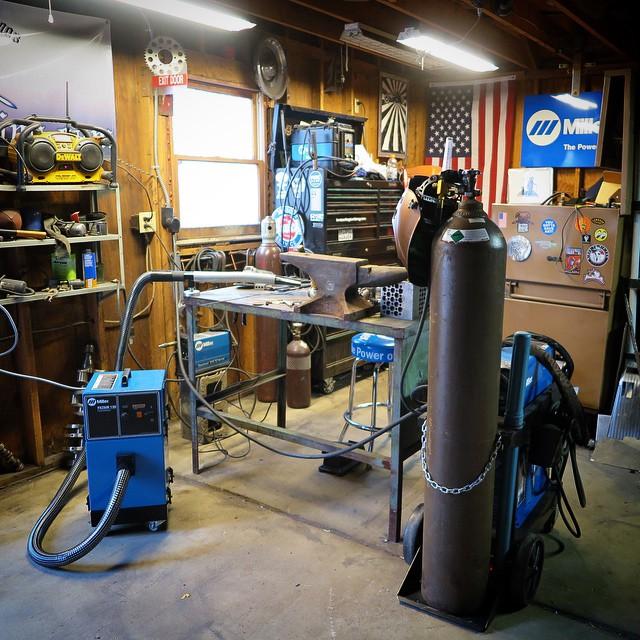
- Ventilate: Open doors, use a fan, or install a small exhaust fan.
If you have pets or kids, make sure your welding zone is off-limits to them. Use bright tape or portable barriers to signal when you’re working. Consider installing a smoke detector in your garage, but remember that welding fumes can trigger false alarms—so use one rated for garages or workshops.
Pro tip: Mark a welding zone with tape so family members stay clear during work.
Welding Equipment You Can Use Without A Special Electrical Setup
Many leading manufacturers make welders for standard garage outlets.
| Brand & Model | Type | Input Voltage | Max Thickness | Price Range (USD) |
|---|---|---|---|---|
| Hobart Handler 140 | MIG/Flux Core | 120V | 1/4″ steel | $550–$700 |
| Lincoln Electric 140 | MIG/Flux Core | 120V | 3/16″ steel | $500–$650 |
| Forney Easy Weld 140 FC-i | Flux Core | 120V | 1/4″ steel | $250–$350 |
| Everlast PowerARC 140ST | Stick/TIG | 120V/240V | 1/4″ steel | $300–$400 |
Most of these welders are easy to use, lightweight, and plug into a normal outlet. They’re perfect for auto repair, home projects, and learning.
Some manufacturers also offer “dual voltage” welders that work on either 120V or 240V, making them flexible if you upgrade your garage in the future. Always check the manufacturer’s duty cycle rating, which tells you how long you can weld before the machine needs a break.
Comparing 120v Vs. 240v Welders In Your Garage
If you’re not sure whether you need more power, this comparison helps.
| Feature | 120V Welder | 240V Welder |
|---|---|---|
| Power Source | Standard household outlet | Special outlet required |
| Metal Thickness | Up to 1/4″ | Up to 1/2″ or more |
| Duty Cycle | Shorter (stops more often) | Longer (welds longer) |
| Cost | Lower | Higher (plus install cost) |
| Best For | DIY, auto repair, thin steel | Professional, heavy fabrication |
Key takeaway: 120V welders are enough for most home projects. Upgrade to 240V only if you really need more power.
Real-world Examples: What Diy Welders Do In Their Garage
Auto Repair
Many car enthusiasts use a 120V MIG welder for body panels, exhaust repairs, and brackets. You can weld sheet metal and thin steel tubing without a special circuit.
A common project is fixing rust holes in a car fender. With a standard MIG, you can cut out the rust, weld in a patch panel, and grind the welds smooth—all in a typical garage.
Home Fabrication
Homeowners build workbenches, shelves, fences, and carts with small welders. They avoid thick steel and keep weld times short to prevent overheating.
A practical example is building a custom garage workbench with angle iron and plywood. You can make strong joints and add custom features like tool hooks or vise mounts.
Art And Hobby Work
Artists and hobbyists use 120V welders for sculptures, garden art, and custom signs. These projects rarely need more than what a garage outlet offers.
A beginner might weld scrap metal into a yard sculpture, or make a decorative trellis. The creative options are endless as long as you work within the power limits.
Common Mistakes Beginners Make
- Ignoring breaker ratings: Plugging in a welder that needs more amps than the outlet can deliver.
- Using thin extension cords: This causes overheating and voltage drop.
- Poor ventilation: Breathing welding smoke is bad for health.
- No fire protection: Not keeping a fire extinguisher nearby.
- Not wearing PPE: Welding without gloves, helmet, or flame-resistant clothing.
Some people also forget to unplug other devices, like fridges or freezers, from the same circuit. This can cause unexpected power loss and damage both your project and your appliances.
Non-obvious insight: Many beginners think “If it fits, it’s safe.” Always check your welder’s requirements against your garage wiring.
How To Make The Most Of Your Existing Electrical Setup
Even with just standard outlets, you can weld smarter.
- Weld in short bursts: Let the machine and wiring cool between welds.
- Unplug other tools: Don’t run a heater, shop vac, or compressor on the same circuit.
- Upgrade outlets: If your outlets are old, replace them with new, snug-fitting ones.
- Use a dedicated circuit: If possible, ask an electrician to put your garage outlets on a separate breaker.
Another tip: check the duty cycle on your welder. For example, if your welder is rated at 20% duty cycle at full power, you should only weld for 2 minutes out of every 10 to avoid overheating. It’s a simple way to extend both machine and wiring life.
Signs You Need An Electrician
Don’t wait for disaster. Call a professional if you see:
- Warm outlets or breakers
- Frequent breaker trips
- Lights dimming when you weld
- Burnt smell or discoloration around outlets
An electrician can upgrade your wiring, add dedicated outlets, and make sure you’re safe.
Sometimes, an electrician can also spot hidden problems like loose connections behind the wall or undersized wires. An inspection is a smart investment before you buy a bigger welder.
Do You Need Permits To Weld At Home?
Most cities allow hobby welding in your garage. But, if you want to add a 240V outlet or new wiring, you may need an electrical permit. Check your local code or ask an electrician.
Key insight: Welding itself usually doesn’t need a permit, but electrical upgrades do.
Some homeowner associations (HOAs) may have rules about noise, fumes, or fire risk. Always check before starting if you live in a neighborhood with an HOA.
Insurance And Liability: What’s Covered?
Homeowner’s insurance may not cover fires caused by DIY electrical changes. If you burn down the garage because you swapped a breaker, you could be on your own. Always use a licensed pro for wiring changes.
Even if you’re careful, insurance companies look for reasons to deny claims. Taking shortcuts with electrical work puts your coverage and your savings at risk. Keep records of any professional work for proof.
Environmental Concerns And Fume Extraction
Welding creates ozone, metal fumes, and particulates. Good airflow is essential for your health.
- Open doors and windows.
- Use a fan to blow fumes outside.
- Consider a small fume extractor if you weld often.
For example, welding galvanized steel produces toxic zinc fumes. Never weld unknown metals without extra ventilation or a proper respirator.
For more details on welding safety and air quality, visit the OSHA Welding Safety resource.
What About Battery-powered Welders?
Some new battery-powered welders (like the DeWalt Power Station) can run for short jobs. They’re portable and don’t need outlets, but have low power and short run time. Best for quick repairs, not heavy work.
Battery welders are useful for jobs far from outlets—like fences or farm gates—but aren’t a substitute for a full-size machine in the garage.
Is A Generator An Option?
A portable generator can power a small welder if you lack outlets. It must have enough wattage (at least 4,000–5,000W for a 120V welder). Generators are noisy and need to be used outdoors for safety.
Always use a heavy-duty cord from the generator to your welder, and never run a generator indoors (risk of carbon monoxide poisoning).
Final Thoughts
Welding in your garage without a special electrical setup is possible—and practical—for many people. With a modern 120V welder, a basic garage can handle light fabrication, auto repair, and many home projects. The key is to know your limits: respect your breaker ratings, use the right cords, and always put safety first. If you want to weld thicker steel or run bigger machines, bring in an electrician and upgrade your wiring the right way.
Welding is a skill that pays off for life. Start small, stay safe, and you’ll get great results without risking your home or health.
Frequently Asked Questions
Is It Safe To Weld In A Standard Garage Outlet?
Yes, it’s safe to weld in a standard garage outlet if your welder’s input matches the outlet’s voltage and amperage. Use heavy-duty extension cords, keep the area clear, and never overload the circuit or run other power tools at the same time.
Can I Weld Thick Steel With A 120v Welder?
A 120V welder is good for thin to medium metal (up to 1/4″ thick). For thicker steel, you’ll need a 240V welder and a special outlet. Pushing a 120V welder too hard can trip breakers or damage the machine.
Do I Need A Permit To Weld In My Garage?
You don’t need a permit just to weld in your garage for hobby projects. But, if you install new wiring or a 240V outlet, local code may require a permit and inspection by a licensed electrician for safety.
What Is The Best Welder For Garage Use Without Special Wiring?
A 120V MIG or flux-cored welder is best for most garage uses. Brands like Hobart Handler 140, Lincoln Electric 140, and Forney Easy Weld are reliable, easy to use, and run safely on standard outlets.
How Can I Improve Garage Safety For Welding?
Improve safety by keeping flammable items away, using a fire extinguisher, wearing proper gear, and ensuring good ventilation. Check cords and outlets for damage, and never weld in damp or wet conditions to prevent electrical shocks.