Disclosure: This post contains affiliate links and I will be compensated if you make a purchase after clicking through my links. Learn More
A 110V welder typically uses between 20 and 30 amps during normal operation. The exact current depends on the welder’s size, welding process, and the thickness of the metal you’re working with. Always check your welder’s manual for its specific amp rating.
Why Amperage Matters For 110v Welders
When you choose a 110V welder, understanding the amp requirement is critical. The amp draw tells you if your home electrical circuit can safely run the welder. Using the wrong circuit can trip breakers, damage equipment, or create fire risks.
Most household outlets in the USA support either 15 amps or 20 amps. Many 110V welders push the upper limit of these circuits, especially at higher settings. If you plan to weld thicker materials or run the welder at maximum output, amperage becomes even more important.
How To Calculate Amps For A 110v Welder
You can estimate how many amps a 110V welder uses with a simple formula:
Amps = Watts ÷ Volts
For example, if your welder uses 2200 watts at full power:
- Amps = 2200 ÷ 110 = 20 amps
But remember, welders don’t use full power all the time. The actual amp draw can be lower when welding thinner metal or at lower settings.
Example Calculation
Suppose you have a welder rated at 120V and 20A. That means it can use up to:
- 120V x 20A = 2400 watts
But if you only use the welder at half power, it might draw closer to 10 amps.
Credit: www.homedepot.com
Common Amp Ratings For Popular 110v Welders
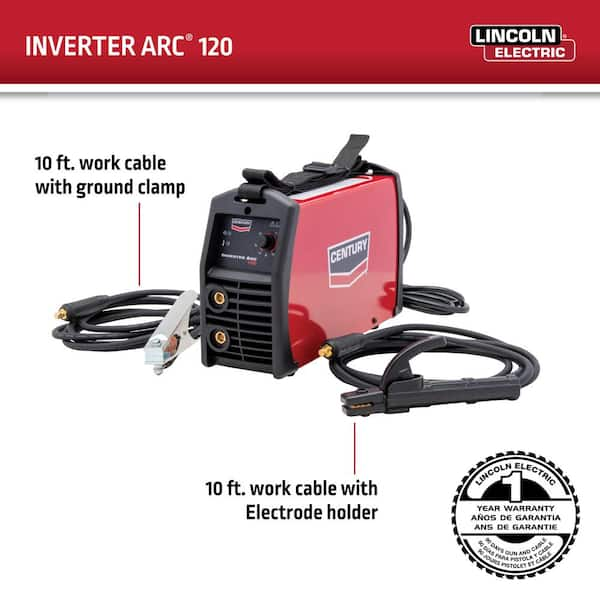
Different models pull different amps. Here are typical amp ranges for popular 110V welders:
| Welder Type | Input Voltage | Rated Amperage | Typical Use |
|---|---|---|---|
| Flux Core MIG | 110-120V | 20-30A | Light fabrication, DIY |
| Stick Welder | 110-120V | 15-20A | Repair, hobby |
| TIG Welder | 110-120V | 15-25A | Precision, thin metals |
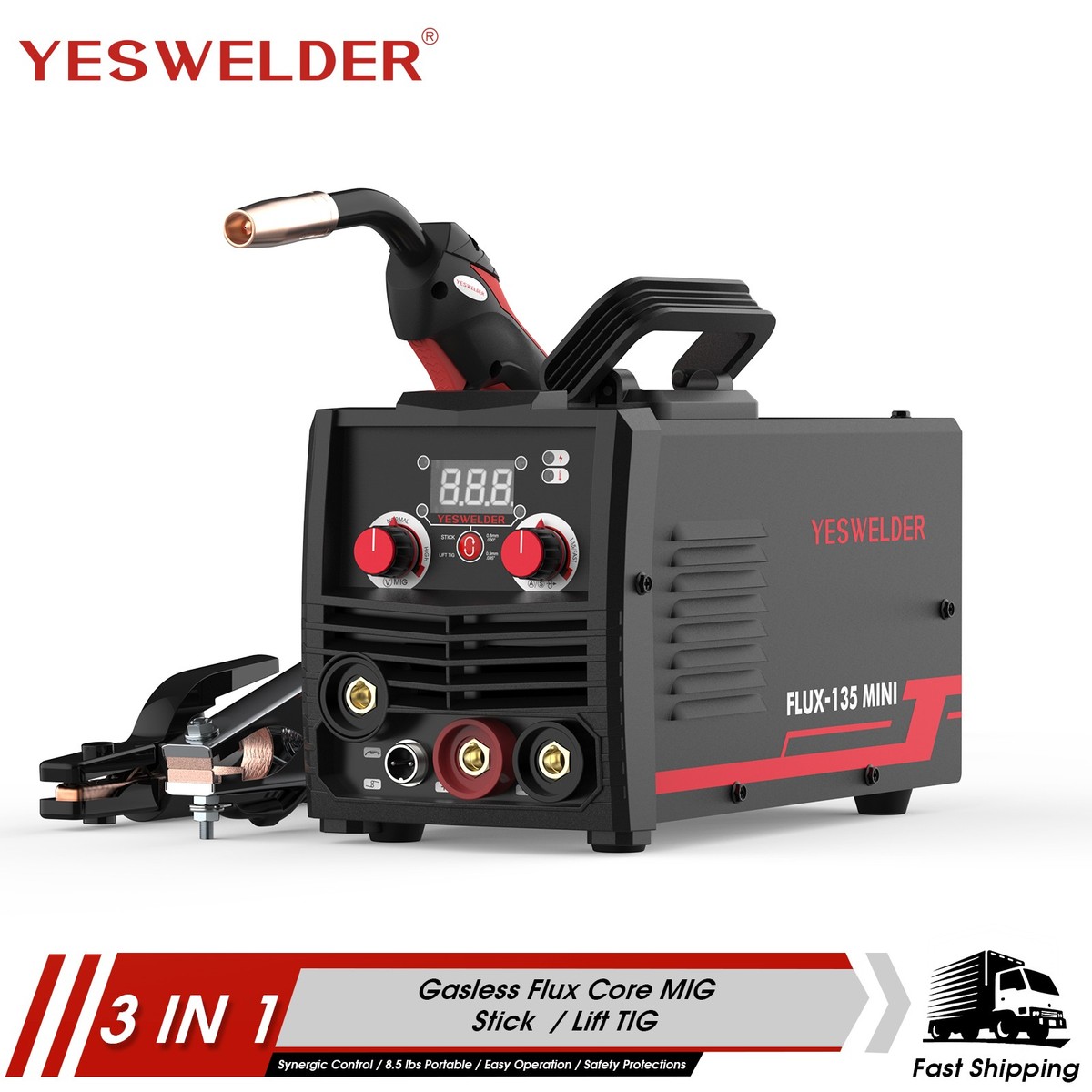
Most home users buy flux core or stick welders for small jobs. These machines stay under 20-25 amps in most cases.
Why Circuit Size And Breaker Rating Matter
Every electrical circuit has a breaker that protects your wiring. If your welder draws more amps than the breaker’s rating, the breaker will trip and shut off power.
Most garages use 15A or 20A breakers. If your welder pulls 20 amps on a 15A breaker, you’ll have problems. Running other tools on the same circuit makes it even worse.
Pro tip: Use a dedicated 20A circuit for your welder. Avoid running other heavy tools on that line while welding.
Credit: www.ebay.com
Real-world Amp Usage: What Affects It?
Welder amp draw isn’t constant. Several factors change how much power your welder uses:
1. Welding Process
MIG, TIG, and Stick welding all have different power needs. Stick and flux core MIG tend to draw more amps at startup.
2. Material Thickness
Thicker metal means higher settings, which means more amps.
3. Duty Cycle
The duty cycle shows how long you can weld before resting the machine. High duty cycles usually mean higher average amp draw.
4. Wire Size And Type
Thicker wire or rods can require more power.
5. Extension Cords
Long or thin extension cords cause voltage drop, making your welder draw more amps to compensate.
6. Input Voltage Fluctuations
If your house voltage drops below 110V during welding, amp draw increases to keep the same power output.
Comparing 110v Welders To 220v Welders
You might wonder how 110V welders compare to 220V models. Here’s a quick look:
| Feature | 110V Welder | 220V Welder |
|---|---|---|
| Input Amps | 15-30A | 10-15A |
| Max Output | Up to 140A (typical) | Up to 250A+ |
| Best For | Light/medium jobs | Heavy fabrication |
| Home Outlets | Standard (USA) | Special outlet needed |
110V welders work great for DIY and auto work. For thick steel or daily heavy use, a 220V welder is better.
How To Check Your Welder’s Amp Requirement
You need to know the amp draw before plugging in any welder. Here’s how:
1. Read The Nameplate
Every welder has a label with input voltage and amperage. Look for “Input: 120V, 20A” or similar.
2. Check The Manual
The user manual always lists maximum input amps.
3. Look For ‘i1max’ And ‘i1eff’
‘I1max’ is the highest amps the welder will draw. ‘I1eff’ is the average during regular use.
4. Use A Clamp Meter
For real readings, a clamp meter around the power cord gives live amp draw.
5. Contact Support
If you’re unsure, ask the manufacturer for the real amp numbers.
Tip: Always use the maximum amp rating to size your circuit and extension cords.
Can You Run A 110v Welder On A Standard Home Outlet?
Most 110V welders are designed for standard US outlets. But there are a few things to watch for:
- 15A Outlets: You may trip the breaker at max welder settings.
- 20A Outlets: Most small welders run fine, even at high power.
- Shared Circuits: Lights, heaters, or other tools on the same line can cause problems.
If you weld often, have an electrician check your wiring. Upgrading to a dedicated 20A circuit is a smart move for safety and smoother welding.
Extension Cords For 110v Welders: What Gauge Do You Need?
Using the wrong extension cord can damage your welder or trip breakers. For 110V welders:
- Use 12 gauge cord (or thicker) for up to 25 feet.
- Use 10 gauge cord for 25–50 feet.
- Avoid cords longer than 50 feet if possible.
Thin cords can overheat, cause voltage drop, and make your welder work harder.
Real-world Examples: Amp Ratings Of Popular 110v Welders
Let’s look at some actual models sold in the USA:
| Model | Max Input Amps | Output Amps | Recommended Circuit |
|---|---|---|---|
| Hobart Handler 140 | 20A | 25-140A | 20A Breaker |
| Lincoln Handy MIG | 20A | 35-88A | 20A Breaker |
| Forney Easy Weld 140 FC-i | 20A | 32-140A | 20A Breaker |
| Everlast PowerARC 140ST | 20A | 10-140A | 20A Breaker |
As you can see, most top-rated 110V welders ask for a 20A breaker. They run at lower amps for thin metal, but max out at 20A on thick steel.
What Happens If You Use A 110v Welder On A 15a Circuit?
It’s possible to use a small welder on a 15 amp circuit if you:
- Keep power settings low.
- Weld only thin metal.
- Avoid running other tools on the same circuit.
But at higher settings, you’ll often trip the breaker. Frequent tripping can wear out the breaker, overheat wires, and create a safety risk. For regular welding, upgrade to 20 amps.
Insider tip: Some welders have a switch or jumper to limit max amp draw for 15A circuits. Check your manual.
Duty Cycle And Its Impact On Amps
Duty cycle tells you how long you can weld before letting the machine cool down. A 20% duty cycle at 90 amps means you can weld for 2 minutes out of every 10.
Higher duty cycles mean higher average amp draw. If you run your welder continuously at max output, the amp draw stays near the top limit. For short welds, the average amps are lower.
Don’t ignore the duty cycle. Overheating the welder can damage internal parts and void your warranty.
How Metal Thickness And Joint Type Affect Amp Draw
If you weld thin sheet metal (like car panels), you can use lower settings—maybe 40–60 amps output, which means the welder draws less power.
Welding 1/4-inch steel? You’ll need higher settings, and your welder draws close to its max input amps (often 20A).
Fillet welds and butt joints need different power levels. T-joints or lap welds on thick steel pull more amps than straight seams on thin stock.
Power Factor And Efficiency: The Hidden Numbers
Most welders are not 100% efficient. The power factor tells you how much power is wasted as heat or noise.
- Cheap welders: Power factor as low as 0.7
- Quality inverters: Power factor up to 0.9
A welder rated for 20A input may actually draw 22-25A at startup due to inefficiency. This is why some machines need a little extra headroom on the breaker size.
Non-obvious insight: If you live in an older house with weak wiring, a low power factor welder is more likely to trip breakers.
Upgrading Your Electrical Circuit For A 110v Welder
If you weld often, it pays to install a dedicated circuit:
- Use 12 gauge wire for a 20A, 110V line.
- Install a high-quality breaker.
- Keep the run as short as possible to reduce voltage drop.
Ask a licensed electrician if you’re not sure. Safe wiring protects your house, tools, and family.
Can You Use A Generator To Power A 110v Welder?
Yes, but the generator must provide enough continuous watts and amps.
- For a welder that draws 20A at 110V, you need at least a 2500W generator.
- For best results, use a 3000–3500W generator.
- Never use a cheap, unstable generator with sensitive inverter welders.
Common mistake: People buy a generator based on “peak watts” not “running watts.” Always check the running wattage.

Credit: www.reddit.com
The Real Cost Of Running A 110v Welder
Most people worry about breaker size, but what about your electric bill? Welding at max power (20A at 110V) uses 2,200 watts per hour.
If you weld for 1 hour straight, you use 2.2 kilowatt-hours (kWh). At $0.15 per kWh (USA average), that’s only $0.33 per hour.
But most home welders only weld a few minutes at a time. The real cost is low, but the amp draw is high during operation.
Safety Tips For Using 110v Welders
- Never use a welder on damaged or undersized wiring.
- Use a properly rated breaker and dedicated circuit.
- Check your extension cord gauge and length.
- Inspect plugs and outlets for heat or discoloration.
- Keep the work area dry and clear of flammable materials.
Non-obvious tip: Use a surge protector if your local power is unstable. Voltage spikes can destroy sensitive inverter welders.
Expert Recommendations For Home Welders
- Choose a welder with a 20A max input for home use.
- Install a dedicated 20A outlet in your garage or workshop.
- Use a short, thick extension cord if needed.
- If you plan to weld thick steel or run long beads, consider a 220V machine.
How To Troubleshoot Tripped Breakers With 110v Welders
Tripped breakers are the most common problem for new welders. Here’s how to fix it:
- Check what else is plugged in. Unplug other devices on the same circuit.
- Lower your welder settings. Weld at the lowest power that does the job.
- Check your extension cord. Upgrade to a thicker gauge.
- Upgrade the breaker. Switch to a 20A breaker and 12 gauge wire.
- Inspect for loose connections. Poor wiring can cause breaker trips.
If the problem persists, have a pro check your wiring.
What To Look For When Buying A 110v Welder (amp-wise)
- Input Amps: Look for welders with clear “input amps” info.
- Output Amps: Higher max output is better for thick steel.
- Duty Cycle: Higher numbers mean more welding time before rest.
- Power Factor: Quality brands post this number; higher is better.
- Circuit Requirements: Make sure your home can handle the amp draw.
Don’t buy a welder just because it’s “110V. ” If your wiring can’t handle 20+ amps, you need an upgrade.
Mistakes Beginners Make With 110v Welders And Amps
- Ignoring the circuit rating and tripping breakers daily.
- Using cheap, thin extension cords that overheat.
- Running the welder and a compressor on the same circuit.
- Assuming “110V” means “any outlet will work.”
- Not checking the manual for real amp requirements.
Non-obvious insight: Many new users mistake “output amps” for “input amps.” These are different. Always size your circuit for input amps.
How To Maximize Your 110v Welder’s Performance
- Weld at lower power when possible.
- Use short, thick extension cords.
- Keep duty cycle in mind—don’t overheat the machine.
- Upgrade wiring if you weld frequently.
- Use quality outlets and breakers.
With the right setup, a 110V welder can handle most auto and home jobs with no issues.
Summary: How Many Amps Does A 110v Welder Use?
A typical 110V welder in the USA uses 15–20 amps for light welding and up to 30 amps for heavy use. Most home models need a 20A breaker and a dedicated circuit for safe, reliable operation. Always check your welder’s manual and size your wiring accordingly.
Want more details? The Wikipedia page on arc welding offers more technical background.
Frequently Asked Questions
How Many Amps Does A 110v Mig Welder Use?
A 110V MIG welder usually uses between 20 and 25 amps at maximum settings. For most light welding tasks, the amp draw will be lower. Always use a 20A breaker and check your manual for the exact rating.
Can I Run A 110v Welder On A Regular Household Outlet?
You can run a small 110V welder on a standard outlet, especially if it’s a 20A circuit. Avoid using high power settings on 15A outlets, as this can trip the breaker or overheat the wiring.
What Gauge Extension Cord Should I Use For A 110v Welder?
For best safety and performance, use a 12 gauge cord up to 25 feet, or a 10 gauge cord for 25-50 feet. Thicker cords reduce voltage drop and keep your welder running smoothly.
Will A 110v Welder Trip My Breaker?
If you use maximum settings on a 15A breaker, there’s a good chance the welder will trip the breaker. A dedicated 20A breaker and wiring are recommended for most 110V welders to prevent power interruptions.
What Happens If I Exceed The Amp Rating Of My Circuit?
If your welder draws more amps than the circuit can handle, the breaker will trip to protect the wiring. Repeated tripping can damage the breaker and your welder. Always match your circuit to the welder’s maximum input amps.