Disclosure: This post contains affiliate links and I will be compensated if you make a purchase after clicking through my links. Learn More
How hot does a welder get? Most welding arcs reach 6,500°F to 10,000°F (3,600°C to 5,500°C), depending on the process. That’s hotter than lava, and enough to melt steel fast. Each welding type produces different heat levels, impacting safety, materials, and technique.
Why Welding Temperature Matters
Welding is not just about joining metal. It’s about controlling extreme heat to create strong, lasting bonds. The heat melts the base metals and, sometimes, a filler material. If the weld isn’t hot enough, the bond is weak. Too hot, and you risk burning through the metal or damaging it. Understanding the actual temperatures involved helps you choose the right process, protect yourself, and get the best results.
The Science Behind Welding Heat
Welding heat comes from electricity, gas combustion, or chemical reactions. The goal is to generate enough energy to melt metals, usually steel or aluminum. Each method uses a different source:
- Arc welding: Electric arc between an electrode and the base metal.
- Gas welding: Combustion of fuel gases like acetylene.
- Laser welding: Focused laser beam.
- Resistance welding: Electrical resistance at the joint.
Every process has a unique temperature range and heat distribution. This affects penetration, speed, and safety precautions.
How Hot Do Different Welding Processes Get?
Different welding types hit different temperature peaks. Here’s how the main processes compare:
| Welding Process | Peak Temperature (°F) | Peak Temperature (°C) |
|---|---|---|
| Shielded Metal Arc (SMAW/Stick) | 7,000–8,000 | 3,870–4,430 |
| Gas Metal Arc (MIG) | 6,500–8,500 | 3,600–4,700 |
| Gas Tungsten Arc (TIG) | 6,000–11,000 | 3,315–6,100 |
| Oxy-Acetylene (Gas) | 5,620 | 3,100 |
| Plasma Arc Welding | 25,000 | 13,900 |
| Laser Welding | Up to 54,000 | Up to 30,000 |
| Resistance Spot Welding | 2,500–3,000 | 1,370–1,650 |
These temperatures are not just numbers. They change how fast you work, which materials you can use, and what safety gear is needed.
Shielded Metal Arc Welding (stick Welding)
SMAW, or stick welding, is one of the most common and oldest arc welding methods. It uses a coated electrode to create an electric arc. That arc gets hot—usually 7,000°F to 8,000°F. This intense heat melts the electrode and base metal, allowing them to fuse.
Stick welding is popular for its versatility. You’ll see it in construction, pipelines, and repairs. The high temperature means it works on thick steel, but it also creates a lot of spatter and demands full safety gear. The heat zone is focused, so the area cools quickly, which can cause brittleness if not handled well.

Credit: www.youtube.com
Mig Welding (gas Metal Arc Welding)
MIG welding uses a wire electrode fed through a gun and shielded by gas, usually argon or CO2. The arc temperature ranges from 6,500°F to 8,500°F. That’s enough to melt most steels and aluminum.
MIG is famous for its speed and clean welds. The lower end of its temperature range makes it ideal for thin metals, car bodywork, and manufacturing. The shielding gas helps keep the weld clean, but can be blown away by wind outdoors.
A practical detail: high heat input increases the risk of warping thin metal. Adjusting voltage and wire feed speed is key to controlling how hot things get.
Tig Welding (gas Tungsten Arc Welding)
TIG welding stands out for its precision. The arc, generated between a non-consumable tungsten electrode and the workpiece, can reach 6,000°F to 11,000°F. That’s hotter than most other arc welds.
TIG can weld almost any metal, including stainless steel, aluminum, and even titanium. The adjustable heat (using a foot pedal or fingertip control) lets you work on delicate parts or thick plates. The high temperature gives deep penetration, but the process is slower and demands a steady hand.
Key insight: Many beginners do not realize TIG’s arc can get so hot that it’s easy to overheat thin workpieces, causing burn-through if you’re not careful.
Oxy-acetylene Welding (gas Welding)
Oxy-acetylene uses a flame from burning acetylene and oxygen, hitting about 5,620°F at the hottest part. This is lower than most electric arc methods, but enough to melt steel and many other metals.
Gas welding is valued for its portability and control. It’s common in auto repair, art, and sheet metal work. The lower flame temperature makes it easier to braze or cut, not just weld.
A mistake to avoid: the hottest part of the flame is at the inner cone. Beginners often hold the flame too far from the work, getting only a fraction of the real heat.
Plasma Arc Welding
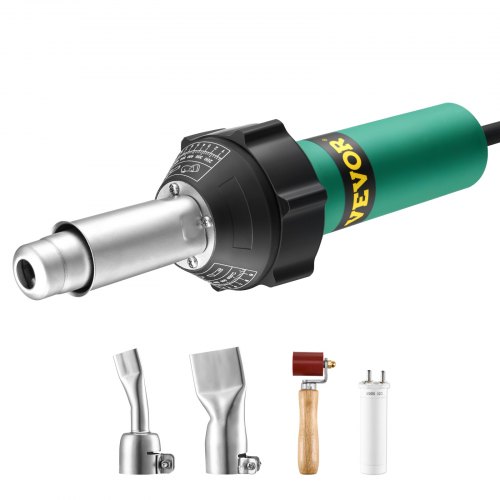
Plasma arc welding takes heat to another level. The plasma jet can hit 25,000°F or more. This is possible because plasma is an ionized gas—a superheated, electrically charged state of matter.
With such high temperatures, plasma welding can cut or weld thick and thin metals at high speed. You’ll see it in aerospace, robotics, and high-end manufacturing. Because the heat is so concentrated, there’s less warping and distortion.
Pro tip: Plasma can slice through stainless steel like butter, but always check your torch’s cooling system. Overheating can ruin expensive parts fast.
Credit: www.vevor.com
Laser Welding
Laser welding is the cutting edge—literally. Focused laser beams can reach up to 54,000°F in the smallest area, though the heat-affected zone is tiny. This means fast, clean welds with minimal material change.
Industries like automotive, medical devices, and electronics use laser welding for precision and automation. The high temperature makes it possible to weld hard-to-join metals, even in tiny spots.
One insight many miss: lasers deliver heat so fast that poor fit-up or surface contamination can cause instant defects. Cleanliness is not optional.
Resistance Spot Welding
Resistance welding relies on electrical resistance to generate heat at the joint. The temperature peaks at 2,500°F to 3,000°F, which is just above steel’s melting point. That’s enough to fuse thin sheets together in milliseconds.
Used in car manufacturing and appliances, spot welding is fast and efficient. The heat is highly localized, so there’s little impact on the surrounding metal.
A practical point: Good contact and correct pressure are as important as the current. Dirty or oxidized surfaces reduce the heat and give weak welds.
How Hot Do Welded Metals Get?
The welding arc or flame gets extremely hot, but the workpiece temperature is usually lower. Most steel welds reach 1,500°F to 2,800°F at the joint. That’s still enough to cause severe burns instantly.
Key fact: The metal cools rapidly after welding, especially thin pieces. This fast cooling, known as quenching, can make some metals brittle unless you use post-weld heat treatment.
Factors That Affect Welding Temperature
Welding isn’t just about max heat. The actual temperature at the weld depends on several factors:
- Welding process: Each method generates different heat.
- Current and voltage: Higher settings mean more heat.
- Electrode or filler type: Materials with high melting points need more energy.
- Shielding gas: Some gases conduct heat better.
- Metal thickness: Thicker metals absorb more heat.
- Travel speed: Slow movement increases heat input.
- Duty cycle: Longer welds build up more heat.
For example, using a thicker electrode with higher current in stick welding will increase the temperature at the arc and the weld pool. But if you move too slowly, you risk burning through the workpiece or causing excessive distortion.
Comparing Welding Heat To Other Common Temperatures
To put welding heat in perspective, here’s how it stacks up:
| Item | Temperature (°F) | How it Compares |
|---|---|---|
| Boiling water | 212 | Welding is 30x hotter |
| Lava | 1,300–2,200 | Arc welding is 3–4x hotter |
| Campfire | 1,100 | Arc welding is 6–9x hotter |
| Sun surface | 10,000 | Plasma and laser welding are comparable |
| Steel melting point | 2,500 | Most welding exceeds this |
Welding isn’t just hot—it’s in the same range as the surface of the Sun. That’s why safety is so important.
Why Do Welding Temperatures Vary?
Not all jobs need the same heat. The temperature depends on:
- Metal type: Aluminum melts at 1,221°F, while titanium needs 3,034°F.
- Joint design: Deep grooves need more heat.
- Welding position: Overhead welds often use lower settings to avoid drips.
- Desired speed: Higher heat allows faster travel.
For example, joining thick steel plates requires more heat than welding thin sheet metal. Using too much heat for thin pieces causes burn-through, while too little heat on thick pieces leads to cold lap—a weak, incomplete weld.

Credit: www.reddit.com
The Dangers Of Extreme Heat In Welding
Welding heat is dangerous. Direct exposure causes severe burns in seconds. But the risk goes beyond the obvious.
- Infrared and UV radiation: Arcs emit intense light that can burn skin and eyes—arc eye is common without proper protection.
- Sparks and spatter: Tiny droplets of molten metal can ignite clothing, hair, or flammable materials nearby.
- Heat stress: Working near high temperatures can cause dehydration or heat exhaustion.
Non-obvious insight: Even after you finish welding, the metal stays hot for minutes. Many burns happen during cleanup when workers forget the piece is still dangerously hot.
How To Measure Welding Temperature
Measuring welding temperature is tricky. Regular thermometers can’t handle these extremes. The main methods are:
- Infrared thermometers: Good for surface temperatures after welding.
- Thermocouples: Thin wires placed at or near the weld. Used in research or quality control.
- Pyrometric crayons: Mark the metal with a special wax. If the mark melts, you’ve hit that temperature.
- Optical sensors: Used in automated welding for real-time control.
For everyday welding, you judge by color of the metal, the size of the weld pool, and your experience. Still, precise measurement is critical in aerospace, nuclear, and medical work.
How Welding Heat Affects Metal Properties
Welding changes the metal, not just at the joint but in the heat-affected zone (HAZ). Here’s how:
- Grain structure: Rapid heating and cooling can make the metal brittle or soft, depending on the alloy.
- Residual stress: Uneven expansion and contraction cause internal stress, sometimes leading to cracks.
- Distortion: High heat warps thin or long pieces.
Smart welders use preheating or post-weld heat treatment to manage these effects. For example, preheating thick steel reduces cracking, while slow cooling helps prevent brittleness.
Protective Equipment For Extreme Welding Temperatures
With welding arcs as hot as the Sun, proper protection is non-negotiable:
- Welding helmet: Blocks UV, IR, and visible light.
- Welding gloves: Insulated to protect against burns.
- Flame-resistant clothing: Cotton or leather, never synthetic fibers.
- Safety boots: Steel toe, heat-resistant soles.
- Face shield and goggles: For grinding and prep work.
One thing many beginners miss: Even light-duty jobs, like tack welding, can deliver a serious burn through thin gloves or shirts. Always gear up.
How To Control Heat During Welding
Too much heat causes burn-through, warping, and weak welds. Not enough heat leads to poor fusion. Here’s how pros control heat:
- Adjust amperage/voltage: Use just enough power for the job.
- Change travel speed: Move faster to reduce heat input.
- Use intermittent welds: Short bursts instead of a long bead.
- Backstep technique: Weld in short sections, alternating direction.
- Heat sinks: Clamp copper or aluminum to absorb extra heat.
An advanced tip: On delicate jobs, use a pulse welding setting if available. This rapidly cycles the current, giving time for the metal to cool between pulses.
Real-world Applications And Welding Heat
Welding heat is not just academic. It shapes real-world products:
- Automobile frames: MIG and spot welding, controlled to avoid warping.
- Pipeline construction: Stick welding at high heat for deep penetration.
- Shipbuilding: Submerged arc welding, using high amperage for thick plates.
- Aerospace: TIG and plasma welding for exotic alloys, with strict heat control.
Each application balances speed, strength, and minimal distortion. Skilled welders know how to manage heat for perfect results.
Welding Heat And Material Choice
Not every metal can handle the same heat. Here’s how some common materials react:
- Mild steel: Easy to weld, wide heat range.
- Stainless steel: Needs careful heat control—too much causes warping and discoloration.
- Aluminum: Melts at low temperature, high thermal conductivity. Needs fast, precise welding.
- Titanium: Demands clean, controlled heat. Sensitive to contamination at high temperatures.
- Copper: High heat needed for melting, but conducts heat away quickly.
Matching the right process and settings to the metal is critical for a strong, clean weld.
Heat Management For Large And Small Welds
Large, thick welds often need preheating to reduce thermal shock. This is common with high-strength steels and cast iron. Preheating slows cooling, reducing the chance of cracks.
Small, thin parts need the opposite. Use lower settings, move quickly, and use heat sinks. Otherwise, you risk warping or burning through.
For repetitive work, cooling jigs or water-cooled fixtures help keep temperatures safe and consistent.
Welding Safety: Beyond The Obvious
Welding heat is dangerous, but many hazards are not obvious:
- Hot tools: Pliers, clamps, and even welding rods stay hot.
- Ambient temperature: Closed spaces can heat up fast, risking heat stroke.
- Fire risk: Sparks can smolder and ignite materials hours later.
- Fume inhalation: High heat releases toxic fumes from coatings and fillers.
Expert advice: Always check your surroundings, keep a fire extinguisher close, and ventilate the work area. Even pros get caught off guard by hidden heat hazards.
The Future Of Welding Heat
New welding methods are pushing heat even higher—or using it more efficiently:
- Friction stir welding: Uses mechanical force, not high heat, for aluminum and aerospace parts.
- Hybrid laser-arc welding: Combines laser and arc for deep, fast welds.
- Robotic welding: Monitors and adjusts heat in real time for perfect results.
As industries demand stronger, lighter, and more complex products, precise heat control will only become more important.
Frequently Asked Questions
How Hot Is A Welding Arc Compared To The Sun?
A welding arc can reach up to 10,000°F. The sun’s surface is about the same temperature—10,000°F. Some advanced welding methods, like plasma and laser, can even exceed the sun’s surface temperature in a tiny area.
Can Welding Heat Melt All Metals?
Most welding processes generate enough heat to melt common metals like steel, aluminum, and copper. For very high-melting-point metals (like tungsten), only specialized methods like plasma or laser welding can melt them efficiently.
Is The Air Around A Welder Hot?
Yes, the air near a welding arc can feel very hot, especially in small spaces. But the air temperature doesn’t reach welding arc levels. Proper ventilation is essential to keep the workspace safe and comfortable for welders.
How Long Does Metal Stay Hot After Welding?
Welded metal can stay dangerously hot for several minutes after finishing the weld. The exact time depends on the metal’s thickness and room temperature. Always test with a gloved hand or infrared thermometer before touching.
What Happens If You Weld With Too Much Heat?
Too much welding heat can cause burn-through, warping, and weak joints. It may also change the metal’s structure, making it brittle. Always match your heat settings to the metal and the job for safe, strong welds.
Final Thoughts
Welding is about harnessing extreme heat—from 2,500°F to over 50,000°F—to join metals in ways that shape our world. The heat level depends on the process, materials, and job requirements. Understanding how hot a welder gets is not just trivia; it’s the foundation of safe, skilled, and effective welding. Keep safety first, adjust your settings wisely, and treat every hot metal piece with respect. For deeper information, check out Wikipedia’s welding overview—it’s a reliable resource for industry standards and methods.