Disclosure: This post contains affiliate links and I will be compensated if you make a purchase after clicking through my links. Learn More
How hot does a MIG welder get? The welding arc from a MIG welder reaches temperatures of 6,500°F to 8,500°F (3,600°C to 4,700°C), easily melting steel and other metals. The actual workpiece temperature usually ranges from 1,500°F to 3,000°F, depending on materials and settings.
Why Mig Welding Gets So Hot
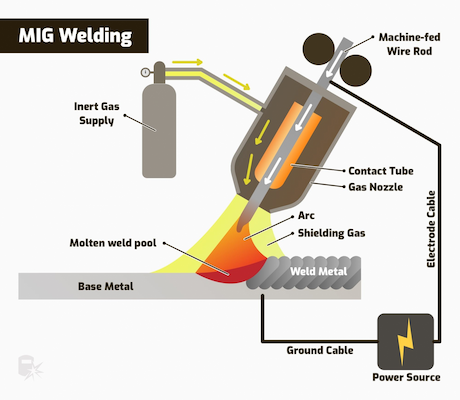
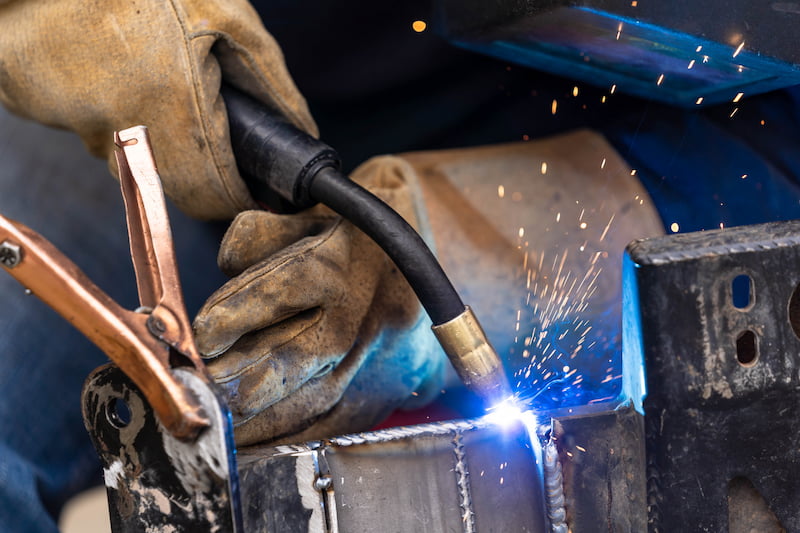
MIG welding, short for Metal Inert Gas welding, uses an electric arc to fuse metals together. This arc forms between a wire electrode and the metal piece you want to join. The heat is intense—enough to melt steel in seconds. This extreme temperature is essential for the process because it allows the filler wire and base metal to mix and create a strong, consistent weld.
The heat generated comes from the electrical resistance as the current jumps through the air gap between the wire and the workpiece. This arc not only melts the wire but also the edge of the base metal, creating a molten pool that will cool to form a solid joint.
MIG welding’s high temperatures allow for fast work, deeper penetration into thick metal, and strong welds. But such heat also means you must handle the process with respect and attention to safety.
Key Temperatures In Mig Welding
When people ask how hot a MIG welder gets, they’re often talking about the arc temperature. But other temperatures are also important in the welding process.
- Arc Temperature: The core of the MIG arc can reach 6,500°F to 8,500°F. This is much hotter than most flames or torches used in metalwork.
- Workpiece Temperature: The actual piece you’re welding usually heats up to 1,500°F to 3,000°F at the weld zone. The temperature drops quickly as you move away from the weld.
- Wire Melting Point: Common MIG wires, like ER70S-6 for mild steel, melt around 2,700°F. Aluminum wire melts at about 1,220°F.
These temperatures depend on settings like voltage, current, wire speed, and the type of shielding gas used. For example, welding on thick steel at high amps creates a hotter arc and a deeper melt.
How Voltage And Amperage Affect Mig Welding Heat
The heat from a MIG welder depends on two key controls: voltage and amperage. Here’s how each one matters:
- Voltage (V): Controls the arc length and energy. Higher voltage means a longer, hotter arc.
- Amperage (A): Controls the rate of wire feed and overall heat. More amps mean more heat and faster melting.
Together, voltage and amperage decide the total heat input, measured in watts (V x A). The settings you choose affect penetration, bead shape, and the risk of burn-through.
| Material Thickness | Voltage (V) | Amperage (A) | Estimated Arc Temp (°F) |
|---|---|---|---|
| Thin Sheet (18 ga) | 16-18 | 60-90 | 6,500-7,000 |
| 1/8″ Steel | 18-20 | 90-130 | 7,000-8,000 |
| 1/4″ Steel | 22-24 | 160-200 | 8,000-8,500 |
As you can see, thicker materials and higher settings push the temperature up. This is why you adjust your welder based on the job.
The Role Of Shielding Gas And Its Effect On Heat
MIG welding uses a shielding gas to protect the weld from air contamination. The choice of gas affects both arc stability and temperature.
- 100% CO₂: Creates a hotter, more penetrating arc. Good for thick steel but increases spatter.
- 75% Argon / 25% CO₂ (C25): Most common for mild steel. Offers a stable, medium-hot arc with less spatter.
- 100% Argon: Used for aluminum and thinner metals. Produces a cooler, smoother arc.
- Helium mixes: For extra hot, deep-penetrating welds, especially on thick aluminum or copper.
Your shielding gas mix can raise or lower arc temperature by several hundred degrees. For example, switching from argon to CO₂ can increase the heat and change how the weld looks and performs.
Heat Affected Zone (haz) In Mig Welding
Every weld produces a Heat Affected Zone (HAZ) around the bead. This area gets hot enough to change the metal’s structure, but not to melt it.
The HAZ temperature usually ranges from 700°F to 1,600°F. This can affect hardness, grain size, and even cause unwanted brittleness if not managed well. For most jobs, controlling the HAZ is key to preventing cracks or weak spots.
The size of the HAZ depends on:
- Welding speed (faster = smaller HAZ)
- Heat input (lower = smaller HAZ)
- Material thickness (thicker = larger HAZ)
Skilled welders learn to balance these factors to make strong, clean joints without overheating the metal.
How Mig Welding Compares To Other Welding Processes
To understand MIG welding’s heat, it helps to compare it with other popular methods:
| Welding Type | Arc Temperature (°F) | Typical Use |
|---|---|---|
| MIG (GMAW) | 6,500–8,500 | Steel, aluminum, auto repair, fabrication |
| TIG (GTAW) | 11,000 | Precision, thin metals, aerospace, art |
| Stick (SMAW) | 7,000–8,000 | Heavy steel, construction, outdoors |
| Oxy-Acetylene | 5,600 | Cutting, repair, brazing |
Notice that TIG welding is much hotter than MIG, making it ideal for very precise or specialty jobs. MIG hits the sweet spot for speed and versatility.
Credit: americantorchtip.com
Factors That Influence Mig Welder Temperature
The actual heat you get from a MIG welder depends on several real-world variables:
- Wire Type and Diameter: Thicker wire can carry more current and produce more heat. Steel wire melts at a higher temperature than aluminum.
- Material Thickness: Thicker metal requires more heat for proper penetration.
- Travel Speed: Moving the torch slower increases heat input in one spot, risking burn-through on thin metal.
- Polarity: Most MIG welding uses DC Electrode Positive (DCEP), which creates a hotter arc than DC Electrode Negative.
- Torch Angle and Distance: Holding the gun too close or at a wrong angle can concentrate the heat and create defects.
Professional welders fine-tune these variables for the best results, especially on critical or visible welds.
Dangers Of High Heat In Mig Welding
The high temperatures in MIG welding bring both benefits and risks. If you don’t respect the heat, you can run into problems:
- Burn-through: Too much heat melts right through thin metal, ruining the piece.
- Warping: Uneven heating causes the base metal to bend or twist.
- Cracking: Overheating can make the metal brittle, leading to cracks after cooling.
- Spatter: Excess heat and poor settings create more flying molten metal.
- Personal Injury: The arc can burn skin instantly and cause serious eye damage without protection.
To prevent these issues, always use the lowest effective settings, keep a steady hand, and use proper safety gear.
How To Control Heat In Mig Welding
Skillful heat control separates good welders from great ones. Here’s how you can manage the temperature and get better results:
- Set Correct Voltage and Amps: Use the recommended settings for your wire, gas, and metal thickness. Most welders have a chart inside the cover.
- Adjust Travel Speed: Move at a steady pace. Too slow overheats the joint; too fast leads to poor fusion.
- Use Proper Wire Size: Match wire diameter to the job. Thicker wire for thicker metal, thinner wire for sheet metal.
- Choose the Right Gas Mix: For cooler welds on thin metal, use more argon. For hotter welds, add CO₂.
- Practice Good Technique: Keep the gun angle between 10-15 degrees, hold a consistent stick-out, and avoid weaving too wide.
Many shops keep a scrap piece handy for test welds before working on the main project. This habit prevents costly mistakes.
Real-world Examples: Mig Welder Temperatures In Action
Let’s look at some real scenarios to show how hot a MIG welder actually gets and what that means in practice.
1. Automotive Panel Welding
Welding a car body panel (usually 20 or 22 gauge) needs careful heat management. If you run the welder too hot—say, above 70 amps with high voltage—you’ll burn holes in the panel.
Most pros use 16-18 volts and 60-80 amps for thin sheet metal. The arc still hits around 6,500°F, but the metal only heats to 1,400-1,700°F at the weld.
2. Structural Steel Fabrication
For thicker steel—like 1/4” plates used in building frames—settings often reach 22-24 volts and 180-220 amps. Here, the arc can hit 8,500°F, and the steel in the weld pool gets close to 2,800°F, right below the melting point.
Strong welds depend on full penetration, so the high heat is necessary. Welders may pause between passes to let the steel cool and avoid warping.
3. Aluminum Boat Repair
Aluminum melts much lower, about 1,220°F. Welders use 100% argon shielding gas and lower voltage (14-18V). The arc is still very hot, but the heat input must be carefully controlled to avoid burn-through.
Heat sinks—pieces of copper clamped behind the weld—are often used to absorb extra heat and protect the thin aluminum.
How To Measure Mig Welder Temperature
You can’t measure the arc temperature directly, but you can check the heat at the workpiece. Two common tools are:
- Infrared Thermometers: Point and shoot to check the temperature of the metal after welding.
- Temperature Sticks (Tempilstiks): Wax crayons that melt at set temperatures, helping you gauge preheat or interpass temps.
Most welders estimate heat by watching the weld pool and checking for signs like color changes, bead shape, and spatter.
Myths About Mig Welder Heat
There’s a lot of confusion about how hot a MIG welder actually gets. Here are some common myths:
- Myth: The welder itself gets as hot as the arc.
- Truth: Only the arc and weld pool reach extreme temperatures. The welder’s case stays cool.
- Myth: More voltage always means better welds.
- Truth: Too much voltage overheats the metal and weakens the joint.
- Myth: You can weld any thickness with enough heat.
- Truth: Each welder has limits. For very thick steel, you need multi-pass techniques or a more powerful machine.
Understanding these facts helps you avoid mistakes and get the most from your MIG welder.
How Mig Welder Heat Affects Different Metals
Different metals react to the MIG arc’s heat in unique ways. Here’s what you need to know:
Steel
Steel is the most common MIG welding metal. Mild steel melts at about 2,700°F. The arc easily melts the wire and the surface, giving a strong, ductile weld. But if you overheat, steel can warp or become brittle.
Stainless Steel
Stainless steel handles heat differently. While it melts around 2,750°F, it holds heat longer and can distort easily. Using a lower amperage and faster travel speed helps prevent discoloration and warping.
Aluminum
Aluminum melts at only 1,220°F. The MIG arc’s high temperature means you must use fast travel, lower heat, and special wire/gas combinations. Aluminum also conducts heat quickly, so controlling the puddle is tricky.
Copper And Alloys
Copper melts at 1,984°F but draws heat away rapidly. Welders often use helium mixes and higher settings to get enough penetration.
Heat Management Tips For Better Mig Welding
To get clean, strong welds and protect your metal, use these expert tips:
- Preheat Thicker Pieces: For steel over 1/2”, preheating to 300-500°F helps avoid cracking.
- Stitch Weld Thin Metal: Use short bursts rather than a long bead to prevent overheating.
- Let Metal Cool Between Passes: On thick projects, pause to avoid excessive heat build-up.
- Clamp Heat Sinks: For delicate jobs, clamp copper behind the weld to absorb extra heat.
- Monitor HAZ: After welding, check for signs of a large HAZ (discoloration, hardness). Adjust technique if needed.
Small adjustments make a big difference. Skilled welders constantly watch and adapt to what the metal tells them.
Credit: fractory.com
Essential Safety Gear For Handling Mig Welder Heat
Working with such high temperatures demands respect. Always wear:
- Auto-darkening welding helmet: Protects eyes from UV rays and arc flash.
- Flame-resistant gloves: Stops burns from hot metal and spatter.
- Long-sleeve jacket: Shields skin from sparks and infrared heat.
- High-top boots: Protect feet from falling hot metal.
- Welding apron or leathers: Extra protection for heavy work.
Never wear synthetic fabrics—they can melt and stick to your skin. Always keep a fire extinguisher nearby.
Common Mistakes Beginners Make With Mig Welder Heat
Many new welders struggle with heat management. Some frequent errors include:
- Using factory settings for every job: Always adjust for material thickness and type.
- Ignoring the HAZ: Overheating weakens the metal around the weld.
- Going too slow: Lingering in one spot overheats and warps the metal.
- Wearing the wrong gloves: Regular work gloves won’t protect from molten spatter.
Learn to watch the puddle, listen to the arc, and check your work often.
Mig Welder Maintenance: Keeping Cool For Consistent Heat
A well-maintained welder delivers consistent temperatures. Key steps:
- Clean wire feed system: Dirt or rust increases resistance and causes fluctuating heat.
- Check connections: Loose leads create voltage drops and unstable arcs.
- Inspect cooling fans: Overheated welders can shut down or damage circuits.
- Replace worn tips and nozzles: Bad consumables change arc shape and heat.
A poorly maintained welder makes heat control much harder.
How Ambient Conditions Affect Mig Welder Heat
Even the shop’s air temperature and humidity can affect your welds.
- Cold weather: Metal needs preheating to avoid cracking.
- Windy conditions: Shielding gas can blow away, making the arc unstable and changing heat input.
- Humidity: Moisture can create porosity in welds, especially at higher temperatures.
For best results, weld indoors or shield your work from wind and weather.

Credit: yeswelder.com
Advanced Techniques For Managing Mig Welding Heat
Experienced welders use advanced tricks to manage heat on tough jobs:
- Backstep welding: Weld in small sections, starting at the middle and working out, to spread heat evenly.
- Skip welding: Weld short sections apart, then fill in the gaps, to avoid warping.
- Pulse MIG: Use machines that pulse the current for better control on thin or heat-sensitive metals.
- Double-sided welding: Weld both sides of a thick joint to balance heat input.
These techniques help handle complex jobs where heat is especially hard to control.
How To Choose The Right Mig Welder For Your Heat Needs
Choosing the right welder means matching machine capability to your projects:
- Light-duty (up to 140A): Good for auto body, sheet metal, home repairs. Handles up to 1/8” steel.
- Mid-range (180-210A): Best for farm, fabrication, 1/4” steel.
- Heavy-duty (250A+): Needed for structural steel, long welds, thick plate.
Always check the duty cycle—the percentage of time the welder can run at a given amperage without overheating. A higher duty cycle means more heat, longer welds, and fewer shutdowns.
Environmental Impact Of Mig Welding Heat
MIG welding’s high heat does more than melt metal. It also:
- Produces ozone and fumes: Especially at higher settings and with CO₂ gas.
- Uses lots of electricity: High heat means higher power draw.
- Can start fires: Hot spatter or metal can ignite nearby materials.
Use proper ventilation, keep your work area clean, and follow local codes for disposal of welding waste.
Future Trends: Heat Control In Mig Welding
Technology is making heat control smarter and safer:
- Synergic MIG welders: Adjust amps and volts automatically for perfect heat.
- Waveform control: Customizes the arc for specific metals and jobs.
- Digital monitoring: Tracks temperature and heat input for quality assurance.
These advances help welders get better results, even on tricky materials.
Frequently Asked Questions
How Hot Is The Arc Of A Mig Welder?
The arc of a MIG welder can reach temperatures between 6,500°F and 8,500°F. This extreme heat is necessary to melt both the wire electrode and the base metal for strong, reliable welds.
Does The Actual Metal Piece Get As Hot As The Mig Arc?
No, the workpiece does not reach arc temperature. The weld zone on the metal usually heats up to 1,500°F to 3,000°F, just enough to melt and fuse the edges without damaging the entire piece.
Can Mig Welding Cause Metal To Warp From Heat?
Yes, excessive heat input or slow welding can cause metal to warp or distort. To prevent this, control your settings, use the right technique, and allow the metal to cool between passes if needed.
What Is The Safest Way To Handle Hot Metal After Mig Welding?
Always use welding gloves and proper tools like pliers or clamps to handle freshly welded metal. Metal can remain dangerously hot for minutes, so never touch it with bare hands even if it looks cool.
Is Mig Welding Hotter Than Tig Or Stick Welding?
MIG welding is very hot but usually not as hot as TIG, which can reach up to 11,000°F. Stick welding is similar to MIG in arc temperature but has different characteristics and applications.
Wrapping Up
A MIG welder’s heat is powerful—enough to melt steel, aluminum, and more in seconds. The core arc reaches up to 8,500°F, while the surrounding metal can hit 3,000°F during welding. Every variable—voltage, wire, gas, technique—affects how this heat works for or against you. The best welders master heat control, protect themselves, and adapt settings for each job. Whether you’re fixing a car, building with steel, or learning the trade, understanding MIG welder temperatures gives you the confidence to work safely, efficiently, and with professional results. For deeper technical specs, you can check the American Welding Society’s guidelines at Wikipedia – Gas Metal Arc Welding.