Disclosure: This post contains affiliate links and I will be compensated if you make a purchase after clicking through my links. Learn More
A spot welder works by passing a high electric current through two metal pieces pressed together, heating and melting the contact point to form a strong weld. This process is fast, energy-efficient, and essential for joining sheet metal in many industries.
What Is A Spot Welder?
A spot welder is a machine designed to join two or more metal sheets together at specific points, called spots, using heat generated by electrical resistance. The process is commonly known as resistance spot welding. The welder presses two copper electrodes against the sheets, sends an electric current through them, and the resistance at the contact point creates intense heat. This heat melts the metal locally, forming a solid bond once it cools.
Spot welding is one of the most widely used methods for joining thin sheets of metal. Industries like automotive manufacturing, home appliances, electronics, and even aerospace rely on it for its speed and reliability. The process is clean, produces minimal deformation, and requires no filler material.
How Does Spot Welding Work? The Science Explained
Spot welding relies on a simple but powerful principle: electrical resistance. When an electric current passes through a conductor, resistance converts some of that energy into heat. In spot welding, this effect is focused at the contact point between two metal sheets.
Here’s how it unfolds:
- Preparation: Two sheets of metal are placed together, often overlapping.
- Pressure: The welder’s copper electrodes clamp the sheets tightly.
- Current Flow: A strong electric current (often thousands of amps) flows for a brief period, usually less than a second.
- Heat Generation: The highest resistance is at the interface between the sheets. The metal heats up rapidly at this spot.
- Fusion: The metal melts locally, creating a small pool of molten metal.
- Solidification: The current stops, pressure remains, and the metal cools, forming a solid weld nugget.
- Release: The electrodes open, and the joint is complete.
This whole cycle can take less than a second for each weld. The process is highly repeatable and easy to automate, which is why spot welders dominate assembly lines.
Key Components Of A Spot Welder
A spot welder may look simple, but several critical components work together to make strong, reliable welds.
1. Electrodes
The electrodes are usually made of copper alloys, which conduct electricity well and resist sticking to molten metal. They apply pressure and deliver the current to the sheets. Their shape and size affect the quality and size of the weld spot.
2. Transformer
The transformer steps down incoming high voltage to a lower voltage but much higher current. Spot welding typically uses currents from 1,000 to 20,000 amps. This high current is key to creating the necessary heat.
3. Control System
Modern spot welders use electronic or microprocessor-based controls. The control system manages:
- Weld time: How long the current flows
- Current level: How much current passes through
- Electrode pressure: How hard the electrodes press
These settings must be precise for consistent weld quality.
4. Cooling System
Spot welding generates a lot of heat. Water cooling channels inside the electrodes and sometimes the transformer prevent overheating. If electrodes get too hot, they wear out faster and weld quality drops.
5. Frame And Actuator
The frame supports all the components. The actuator (pneumatic, hydraulic, or motor-driven) moves the electrodes together and applies the necessary pressure.
Non-obvious insight: Many beginners overlook the importance of electrode maintenance. Worn or dirty electrodes cause poor welds and costly downtime.
Step-by-step: The Spot Welding Process
Understanding the exact steps helps both operators and beginners avoid mistakes.
- Alignment: Place the metal sheets in the correct position. Even small misalignments can weaken the weld.
- Clamping: The electrodes move together and apply pressure, holding the sheets tightly.
- Welding Current: The control system sends a high current through the electrodes for a set time (often 0.1 to 0.5 seconds).
- Weld Formation: The heat melts metal at the spot, forming a weld nugget.
- Hold Time: Pressure stays on for a moment after current stops, allowing the nugget to solidify without cracks.
- Release: The electrodes open, and the welded part is removed or repositioned for the next weld.
Non-obvious insight: Skipping the hold time can cause weak, brittle welds because the nugget doesn’t have enough time to solidify under pressure.
Types Of Spot Welders
Spot welders come in several designs, each suited for different jobs. Choosing the right type impacts productivity and weld quality.
| Type | Main Feature | Common Use |
|---|---|---|
| Manual Spot Welder | Hand-operated, portable | Garage, repair shops |
| Pedal Spot Welder | Foot pedal activates electrodes | Light manufacturing |
| Bench Spot Welder | Mounted on a table, semi-automatic | Workshops, small factories |
| Robot Spot Welder | Fully automated, programmable | Automotive, mass production |
| Portable Gun Spot Welder | Handheld, flexible | Body shops, site repairs |
Manual Spot Welder
A manual spot welder is compact and activated by hand. It’s ideal for small jobs, repairs, and learning the basics. Limited control over pressure and current makes it less precise, but it’s affordable and easy to use.
Pedal Spot Welder
This model uses a foot pedal to close the electrodes and start the weld. It allows the operator to keep both hands free for positioning metal. It’s common in small workshops and light manufacturing.
Bench Spot Welder
Bench models mount on a table and may use levers or automatic actuators. They offer more consistent pressure and current settings, so they’re popular in small factories and schools.
Robot Spot Welder
In car plants and large factories, robotic spot welders dominate. Robots position the electrodes, apply pressure, and control the welding cycle with high accuracy. This type is fast, consistent, and can run 24/7.
Portable Gun Spot Welder
A portable spot welding gun gives flexibility for onsite work, such as automotive body repair. It’s lightweight and easy to maneuver, but less powerful than stationary models.
Spot Welding Vs. Other Welding Methods
Spot welding isn’t the only way to join metal. Comparing it to other popular methods helps you choose the right tool for the job.
| Method | Heat Source | Main Use | Speed | Material Thickness |
|---|---|---|---|---|
| Spot Welding | Electrical Resistance | Sheet Metal | Very Fast | Thin (up to 3 mm) |
| MIG Welding | Electric Arc | Sheet and Thick Metal | Medium | Thin to Thick |
| TIG Welding | Electric Arc | Precision Jobs | Slow | Thin to Medium |
| Arc Welding | Electric Arc | Heavy Structures | Medium | Medium to Thick |
| Soldering | External Heat | Electronics | Slow | Very Thin |
Spot welding is unmatched for joining thin sheets quickly and cleanly. It’s not suitable for thick metal or precise, visible joints. MIG and TIG welding offer more flexibility but require more skill and setup.
Advantages Of Spot Welding
Spot welding is so common in manufacturing for good reasons.
1. Speed
A single weld takes less than a second. High production lines can make thousands of welds per hour.
2. Efficiency
Spot welding uses only the energy needed for the weld area. There’s little waste, and it’s cheaper than most other welding methods.
3. Automation
Easily automated with robots or programmable controllers, spot welding is perfect for mass production.
4. Clean Process
No filler metals, flux, or shielding gases are needed. The process produces minimal fumes and little post-weld cleaning.
5. Strong Joints
Properly made spot welds are strong and reliable, especially for sheet metal structures.
6. Low Skill Requirement
With modern controls, even beginners can make good welds after basic training.
Limitations And Challenges
Spot welding isn’t perfect for every job. Understanding its limits saves time and money.
1. Material Thickness
Spot welding works best with sheets up to about 3 mm thick. Thicker material needs more heat and pressure, which most machines can’t provide.
2. Joint Design
Only lap joints—where sheets overlap—are suitable. Butt joints and complex angles don’t work with spot welders.
3. Material Type
Steel is ideal for spot welding, especially low-carbon steel. Aluminum and stainless steel are harder to weld because they conduct heat too well or form oxides.
4. Accessibility
You need access to both sides of the joint for the electrodes. Closed or boxed shapes are difficult.
5. Quality Control
Poor electrode maintenance, incorrect settings, or misalignment can cause weak or inconsistent welds.
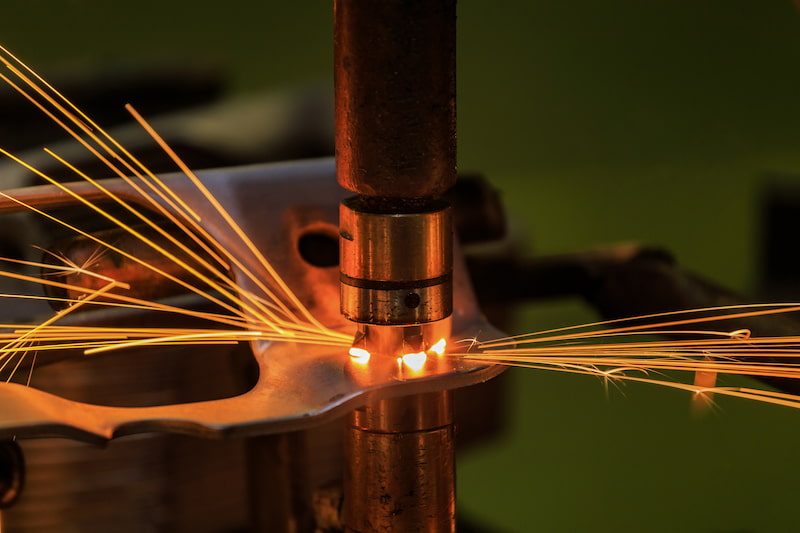
Credit: fractory.com
Common Applications Of Spot Welding
Spot welding is everywhere, often hidden inside products you use daily.
1. Automotive Manufacturing
Car bodies use thousands of spot welds. Robots weld together panels, doors, roofs, and frames. Spot welding delivers speed and consistency that car factories need.
2. Household Appliances
Washing machines, refrigerators, and microwave ovens all use spot-welded sheet metal cases and internal parts. It keeps appliances sturdy and cost-effective.
3. Electronics
Battery packs, computer cases, and small device enclosures often use spot welding to join thin metal tabs and shells.
4. Aerospace
Aircraft use spot welding for non-structural panels and brackets. Aluminum is tricky to weld, but with careful control, spot welding can be used for lightweight assemblies.
5. Construction
HVAC ducts, steel furniture, and elevator doors are spot welded for durability and appearance.
Interesting fact: The Ford Model T, one of the first mass-produced cars, used spot welding as early as the 1920s.
Factors That Affect Spot Weld Quality
Producing strong, repeatable spot welds requires attention to several critical variables.
1. Electrode Condition
Worn, dirty, or misshapen electrodes ruin weld quality. Regular maintenance is key.
2. Current And Time Settings
Too much current can burn through the metal; too little causes weak welds. The time must be long enough to create a nugget but short enough to prevent excess heat.
3. Pressure
Insufficient pressure leads to arcing and weak bonds. Excessive pressure can squirt molten metal out, causing “splash” defects.
4. Material Cleanliness
Oils, paint, or rust at the weld point block current flow and weaken the weld. Surfaces should be clean and bare.
5. Sheet Fit-up
Gaps between sheets reduce heat at the interface. Sheets must be flat and in close contact.
6. Cooling Rate
Too fast or too slow cooling can cause cracks or brittle joints. Proper hold time and cooling are essential.
How To Choose The Right Spot Welder
Selecting a spot welder isn’t just about price. Consider your materials, volume, and workplace.
1. Sheet Thickness
Choose a welder rated for your maximum sheet thickness. Overloading a machine reduces its life and weld quality.
2. Material Type
If you weld aluminum or stainless steel, look for machines with higher power and specialized controls.
3. Production Volume
For occasional repairs, a manual or pedal model is fine. For frequent production, consider automated or bench types.
4. Power Supply
Check if your shop’s electrical system can handle the welder’s demands. High-amperage machines may need dedicated circuits.
5. Electrode Style
Different jobs need different electrode shapes. Look for a welder that accepts a variety of tips.
6. Maintenance And Support
Reliable machines with good support reduce downtime and cost in the long run.
Spot Welding Safety Tips
Spot welding is safer than many other welding processes, but risks remain.
- Eye Protection: Sparks and bright flashes can damage your eyes. Wear safety glasses or a welding face shield.
- Hand Safety: Electrodes and welded parts get very hot. Use heat-resistant gloves.
- Electrical Safety: Spot welders use high currents. Inspect cables, insulation, and connections regularly.
- Fire Hazards: Keep flammable materials away from the work area. Hot metal can start fires.
- Ventilation: Welding fumes are minimal, but work in a well-ventilated space for comfort and safety.
Expert tip: Never touch the electrodes or workpiece during or immediately after welding—they can cause serious burns.

Credit: www.youtube.com
Troubleshooting Common Spot Welding Problems
Even experienced operators face issues. Here’s how to solve the most common ones.
1. Weak Welds
- Check for worn electrodes or dirty surfaces
- Increase weld current or time slightly
- Ensure tight clamping and proper pressure
2. Electrode Sticking
- Use the correct copper alloy tips
- Reduce welding current if possible
- Allow for proper hold time before release
3. Burn-through
- Lower the welding current or time
- Check for thin or damaged metal
- Use larger electrodes to spread heat
4. Excessive Splash
- Reduce current or pressure
- Ensure clean, flat metal surfaces
- Use correct electrode shape
5. Irregular Weld Size
- Replace worn electrodes
- Clean and align workpieces
- Check machine calibration
Spot Welder Maintenance For Long Life
A well-maintained spot welder delivers years of reliable service and consistent welds.
1. Electrode Cleaning
Wipe and lightly sand electrodes to remove oxidation and residue. Replace them when worn or pitted.
2. Water Cooling System
Check for leaks, blockages, and proper flow. Overheating is the enemy of electrodes and transformers.
3. Electrical Inspection
Inspect cables, switches, and connections for signs of wear or overheating.
4. Moving Parts Lubrication
Keep actuators and moving parts clean and lubricated to prevent jamming.
5. Calibration
Test and recalibrate controls regularly to maintain weld quality.
Pro tip: Keep a log of maintenance actions. Small problems caught early prevent major breakdowns.
Spot Welding In Automation And Industry 4.0
Modern manufacturing is moving towards full automation. Spot welders are at the heart of this transformation, especially in auto and appliance factories.
- Programmable Logic Controllers (PLCs): Manage complex welding cycles and quality checks.
- Robotic Arms: Position and weld with speed and accuracy no human can match.
- Data Collection: Sensors monitor every weld, storing data for quality control and troubleshooting.
Spot welding robots can make up to 20 welds per minute, 24 hours a day. This technology is key to mass production and high-quality standards.
For more on automation in manufacturing, see this Wikipedia article on industrial robots.
Environmental Impact Of Spot Welding
Spot welding is more eco-friendly than many other joining methods. It doesn’t use filler metals, flux, or shielding gas, so there’s less waste and fewer emissions.
- Lower Energy Use: Only the weld area is heated, not the whole part.
- Minimal Fumes: No burning flux or filler means cleaner air.
- Recyclability: Spot welded parts are easy to recycle because they don’t contain mixed materials.
Many industries favor spot welding to meet tough environmental standards.
Real-world Example: Spot Welding In Car Factories
A modern car contains about 5,000 spot welds. Robotic spot welders can join a car body together in under an hour. Each weld is checked by sensors, and any weak spots are flagged for repair. This process guarantees both speed and safety.
Spot welding is also used for battery packs in electric cars, where precise, reliable connections are critical for performance and safety.
Key takeaway: Without spot welding, modern car manufacturing would be slower, more expensive, and less reliable.
Frequently Asked Questions
How Thick Can Spot Welders Weld?
Most standard spot welders handle sheet metal up to 3 mm thick. Special heavy-duty machines can weld thicker materials, but spot welding is best for thin sheets. For thicker metals, other welding methods are more suitable.
Is Spot Welding Strong Enough For Car Bodies?
Yes, spot welding is the industry standard for car bodies. When done correctly, spot welds are strong and durable. They can handle daily stress, impacts, and vibration, making them ideal for automotive use.
Can Spot Welders Join Aluminum?
Spot welding can join aluminum, but it’s more challenging than welding steel. Aluminum conducts heat quickly, so machines need higher current and precise control. Special electrodes and settings help improve weld quality on aluminum.
Do Spot Welders Require Special Maintenance?
Spot welders need regular maintenance, especially cleaning and replacing electrodes, checking the cooling system, and inspecting electrical connections. Good maintenance prevents weak welds, extends machine life, and reduces costly downtime.
Are Spot Welders Safe For Beginners?
Spot welders are safer than many other welding types. Basic training, eye protection, gloves, and keeping the work area clean help prevent most accidents. Beginners should start with small projects and always follow safety guidelines.
Spot welding is fast, reliable, and essential for modern manufacturing. By understanding how spot welders work, you can choose the right tool, make strong joints, and keep your operation running efficiently.

Credit: yeswelder.com