Disclosure: This post contains affiliate links and I will be compensated if you make a purchase after clicking through my links. Learn More
Stick welding, also called Shielded Metal Arc Welding (SMAW), remains popular for its reliability and versatility. This method uses a welding rod, also known as an electrode, to create strong joints in metal. Choosing the right stick welding rod size is critical for safe, clean, and effective welds. Many new welders struggle to pick the right rod size, often leading to weak welds or wasted materials. In this guide, you’ll find a complete stick welding rod sizes chart, practical advice, and detailed explanations. If you want to weld with more confidence and accuracy, you are in the right place.
Understanding Stick Welding Rods
Stick welding rods are metal wires coated with flux. The flux creates a shield that protects the weld from air and helps the arc form. Rods come in different sizes, each with a number that shows the diameter in inches or millimeters.
The rod’s size affects the amount of current (amperage) you use and the thickness of the metal you can weld.
For example, a 1/8-inch rod works well on medium-thick steel, while a 3/32-inch rod fits thinner metals. Rod size also impacts the weld bead’s shape, penetration, and strength. Choosing the right size is not only about the numbers—it’s about matching the rod to your project and welding machine.
Why Stick Welding Rod Size Matters
The rod size is not just a technical detail. It has a direct effect on:
- Weld strength: Using the wrong size can lead to weak or brittle joints.
- Weld appearance: Too large a rod can make a messy, uneven bead.
- Penetration: Thicker rods can reach deeper, but may burn through thin metal.
- Ease of use: Smaller rods are easier to control for detailed work.
Many beginners pick a rod based only on what they see online or in a store. This often leads to poor results or wasted supplies. Understanding how rod size connects to your project will save you time, money, and frustration.
Key Factors That Influence Rod Size Choice
Selecting the right stick welding rod size depends on several factors:
- Metal Thickness: Thicker metals need larger rods for proper penetration.
- Welding Position: Overhead or vertical welds often need smaller rods for better control.
- Type of Joint: Wide gaps may need thicker rods or multiple passes.
- Welding Machine Output: Your welder must supply enough current for the rod size.
- Weld Appearance: Large rods make bigger beads, which may not look neat on small parts.
Choosing based on these factors gives more reliable and safer results.
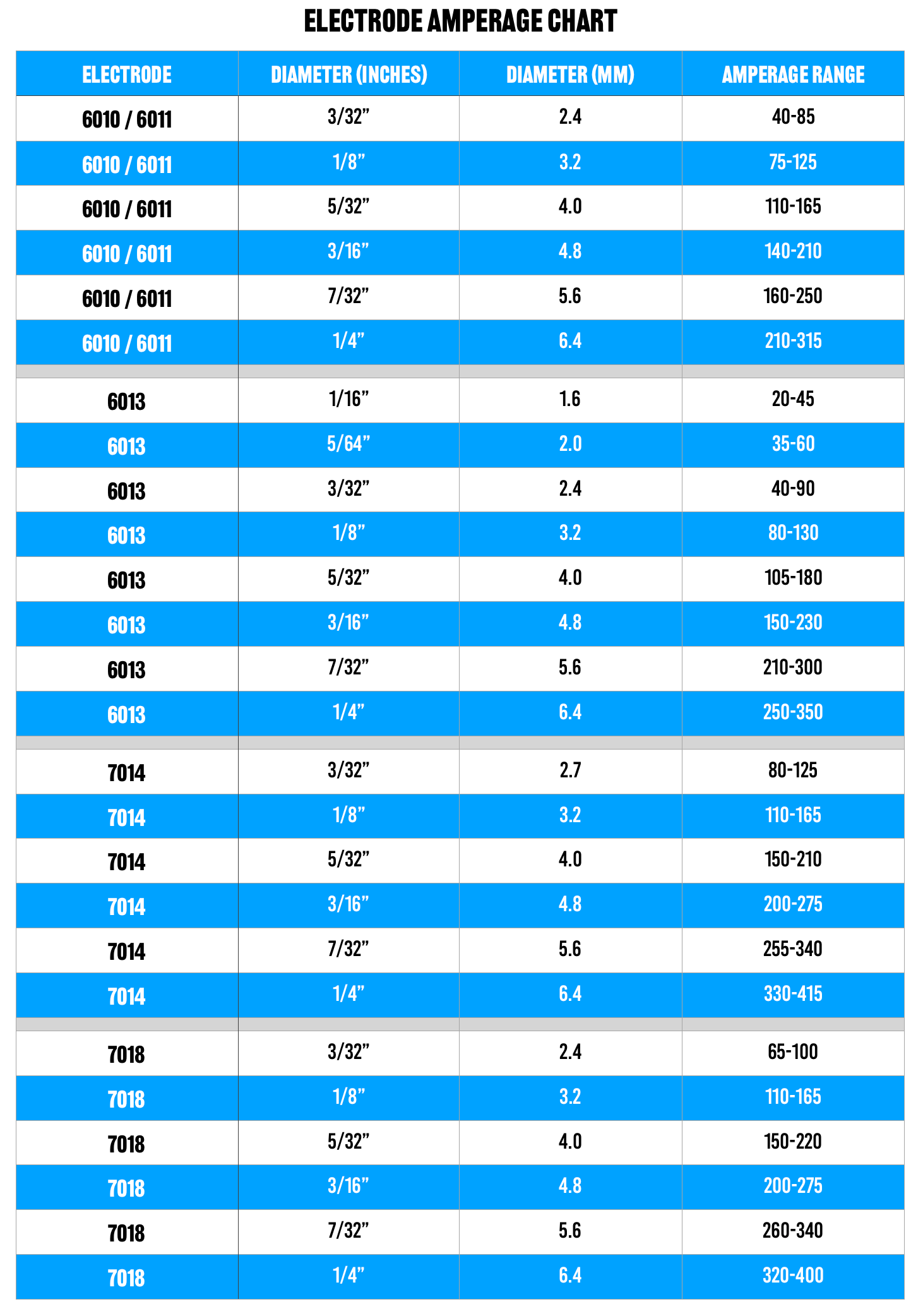
Stick Welding Rod Sizes Chart
The following chart shows common stick welding rod sizes, their recommended amperage ranges, and suitable metal thicknesses. This quick reference can help you match rod size to your specific job.
| Rod Size (inches/mm) | Common Rod Types | Amperage Range (A) | Metal Thickness (inches/mm) | Typical Uses |
|---|---|---|---|---|
| 1/16″ (1.6mm) | 6013, 7014 | 20–40 | Up to 3/32″ (2.4mm) | Sheet metal, thin steel, small repairs |
| 5/64″ (2.0mm) | 6013, 7014 | 35–60 | Up to 1/8″ (3.2mm) | Sheet metal, light fabrication |
| 3/32″ (2.4mm) | 6011, 6013, 7018 | 40–90 | 1/16″–1/4″ (1.6–6.4mm) | General repairs, automotive work |
| 1/8″ (3.2mm) | 6010, 6011, 6013, 7018 | 75–125 | 1/8″–3/8″ (3.2–9.5mm) | Structural steel, frames, heavy repairs |
| 5/32″ (4.0mm) | 6010, 6011, 7018 | 110–160 | 1/4″–1/2″ (6.4–12.7mm) | Thick plate, heavy equipment |
| 3/16″ (4.8mm) | 6010, 6011, 7018 | 140–210 | 3/8″–1/2″ (9.5–12.7mm) | Large structures, bridges |
| 1/4″ (6.4mm) | 7018 | 210–315 | 1/2″ and above (12.7mm+) | Very thick steel, industrial welding |
Common Stick Welding Rod Types And Their Sizes
Each rod type suits specific jobs, and their size ranges can affect both performance and ease of use. Here are the most-used rods with their available sizes:
6010 Rods
6010 rods are known for deep penetration and fast freezing. They work well on dirty or rusty steel. Common sizes are:
- 3/32″, 1/8″, 5/32″, 3/16″
- Best for pipe welding, structural work
6011 Rods
6011 rods are similar to 6010 but can be used with AC or DC machines. They handle poor fit-up and work on painted or rusty metal. Sizes include:
- 1/16″, 3/32″, 1/8″, 5/32″, 3/16″
- Good for farm repairs, general maintenance
6013 Rods
6013 rods provide a smooth, stable arc and neat bead. They need less cleaning after welding and suit sheet metal. Available sizes:
- 1/16″, 5/64″, 3/32″, 1/8″, 5/32″
- Used for thin metal, clean work, furniture
7014 Rods
7014 rods have a thick flux and work at higher speeds. They give a strong, smooth weld and work with AC or DC. Sizes:
- 1/16″, 3/32″, 1/8″, 5/32″
- Used for fabrication, maintenance
7018 Rods
7018 rods are famous for strong, low-hydrogen welds. They make ductile joints and are often used in construction. Sizes:
- 3/32″, 1/8″, 5/32″, 3/16″, 1/4″
- Chosen for heavy steel, bridges, pressure vessels
How To Read Welding Rod Numbers
Welding rods use a numbering system that gives key information:
- First two digits: Tensile strength (e.g., 60 means 60,000 psi)
- Third digit: Welding position (1 = all positions, 2 = flat/horizontal)
- Fourth digit: Special features or current type
For example, a 7018 rod can weld in all positions, has 70,000 psi strength, and is low-hydrogen.
How Rod Size Affects Amperage And Metal Thickness
The rod’s diameter sets the range of amperage you need. Using the wrong amperage can cause problems:
- Too high: Burns through metal, creates spatter, weakens joints
- Too low: Poor penetration, sticking rod, lumpy welds
A quick guide:
- 1/16″ rod: 20–40 amps, for metals up to 3/32″ thick
- 3/32″ rod: 40–90 amps, for metals up to 1/4″ thick
- 1/8″ rod: 75–125 amps, for metals up to 3/8″ thick
- 5/32″ rod: 110–160 amps, for metals up to 1/2″ thick
If you weld thick metal with a thin rod, the weld won’t be strong enough. If you use a large rod on thin metal, you risk burning holes.
Choosing The Right Rod Size For Your Project
To pick the right rod size, answer these questions:
- How thick is your base metal?
- What welding position will you use?
- What type of joint do you need?
- What is your machine’s amperage range?
- How strong does the weld need to be?
A good rule: Use a rod diameter that is close to the thickness of the metal, but never larger. For example, for 1/8″ steel, use a 1/8″ or smaller rod.
Example 1: Welding Sheet Metal
If you weld 16-gauge sheet metal (about 1.5 mm thick), use a 1/16″ or 5/64″ rod. Set your welder to 25–40 amps for best results.
Example 2: Repairing A Trailer Frame
A trailer frame is usually 1/8″–1/4″ thick. Use a 3/32″ or 1/8″ rod. Set amperage to 70–110 amps depending on the rod and metal thickness.
Example 3: Building A Heavy Steel Structure
For steel beams 1/2″ thick or more, choose a 5/32″ or 3/16″ rod. Amperage should be 140–210 amps. Make multiple passes for full penetration.

Credit: www.scribd.com
Position Welding: How Rod Size Makes A Difference
Welds are made in different positions: flat, horizontal, vertical, or overhead. Rod size affects control and quality.
- Flat position: Large rods are easy to use and produce clean beads.
- Vertical/Overhead: Smaller rods (like 3/32″ or 1/8″) give better control and reduce dripping.
- Tight spaces: Thin rods fit better and allow precise welding.
If you try to weld overhead with a heavy 1/4″ rod, the molten metal may fall. Use smaller rods for out-of-position work.
Common Mistakes When Selecting Rod Size
Many beginners repeat these errors:
- Choosing too large a rod: Causes burn-through and messy welds on thin metal.
- Ignoring machine limits: Small welders can’t run thick rods at high amperage.
- Not matching to metal type: Some rods, like 7018, need high amperage and clean metal.
- Using one size for all jobs: Each project may need a different rod size.
A careful match between rod size, metal, and welder prevents these problems.
Stick Welding Rod Size And Amperage Comparison
Here’s a quick comparison to help you set up your welder correctly:
| Rod Size | Minimum Amps | Maximum Amps | Best Metal Thickness |
|---|---|---|---|
| 1/16″ | 20 | 40 | Up to 3/32″ |
| 3/32″ | 40 | 90 | 1/16″–1/4″ |
| 1/8″ | 75 | 125 | 1/8″–3/8″ |
| 5/32″ | 110 | 160 | 1/4″–1/2″ |
| 3/16″ | 140 | 210 | 3/8″–1/2″ |
| 1/4″ | 210 | 315 | 1/2″ and above |
Stick Welding Rod Size For Common Metals
Different metals require different rods and sizes. Here are some examples:
Mild Steel
- Most common rods: 6011, 6013, 7018
- For thin steel (up to 1/8″): 3/32″ or 1/8″ rods
- For thick steel (over 1/4″): 1/8″ or 5/32″ rods
Stainless Steel
- Use special stainless rods (e.g., 308, 312)
- Thin stainless: 3/32″ rods at low amps
- Thick stainless: 1/8″ rods at higher amps
Cast Iron
- Use nickel rods (e.g., ENi-CI)
- Small cracks: 1/8″ rods, low amps, short welds
Aluminum
- Stick welding is less common for aluminum, but use special rods like 4043.
- Thin aluminum: 3/32″ rods
- Thick aluminum: 1/8″ rods, high amperage
How To Store And Handle Stick Welding Rods
Rod size is not the only thing that matters. How you store rods affects their performance:
- Keep rods dry: Moisture can ruin the flux and weaken welds.
- Store in sealed containers: Use rod ovens for 7018 rods.
- Do not bend or drop: This can damage the coating and cause arc problems.
A common beginner mistake is using old, damp rods. This can lead to porosity and weak welds.
How Rod Size Affects Weld Quality
Rod size impacts not only the look but the strength and safety of your welds:
- Small rods: Create narrow, neat beads but may not reach deep into thick metal.
- Large rods: Provide deeper penetration, stronger welds on thick pieces, but can look rough on thin metal.
A skilled welder changes rod size based on the weld’s purpose—appearance, strength, or speed.
Practical Tips For Choosing And Using Stick Welding Rods
- Test on Scrap First: Before welding your project, test the rod size and amperage on scrap metal of the same thickness.
- Adjust Travel Speed: With large rods, move faster to avoid excess buildup. With small rods, slow down for full fusion.
- Use Proper Angle: Hold the rod at 15–30 degrees from vertical for most welds.
- Clean Metal Surface: Even rods for dirty metal (like 6011) work better on clean surfaces.
- Keep Spare Rods: If a rod sticks or breaks, have extras ready to keep working.
Many new welders miss that travel speed and rod angle matter as much as size. Even with the right rod, poor technique will ruin the weld.
Stick Welding Rod Size Troubleshooting
Problems often point to wrong rod size or amperage:
- Weld bead is too high or rough: Try a smaller rod or increase amperage.
- Rod sticks to metal: Amperage is too low or rod is too thick.
- Burn-through holes: Rod is too large or amperage is too high for thin metal.
- Lack of penetration: Use a larger rod or higher amperage.
If you see slag inside the weld or bubbles, check that rods are dry and the correct size for the job.
Credit: bakersgas.com
Stick Welding Rod Size: Myths And Facts
Myth: Bigger rods always make stronger welds.
Fact: Too large a rod can cause burn-through and weak joints on thin metal.
Myth: One rod size fits all.
Fact: Each job and position may need a different rod.
Myth: Amperage is not important.
Fact: Amperage must match rod size for the arc to form correctly.
Key Insights Most Beginners Miss
- Rod size is not just about strength: It also controls bead shape, penetration, and finish.
- Welding position matters: Smaller rods are easier to use vertically or overhead.
- Machine limits are real: Do not push your welder past its amperage range. It can damage the machine or cause poor welds.
Stick Welding Rod Sizes At A Glance
Here is a quick summary for reference:
| Rod Size | When to Use | Typical Amps |
|---|---|---|
| 1/16″ | Sheet metal, thin parts | 20–40 |
| 3/32″ | General repair, thin to medium steel | 40–90 |
| 1/8″ | Frames, heavy repairs | 75–125 |
| 5/32″ | Thick plate, large structures | 110–160 |
| 3/16″ | Industrial, bridges | 140–210 |
| 1/4″ | Very heavy steel | 210–315 |
Where To Find More Information
If you want to check detailed specifications and standards for stick welding rods, see the Shielded Metal Arc Welding page on Wikipedia.
Frequently Asked Questions
How Do I Know What Size Stick Welding Rod To Use?
Check your metal’s thickness first. Use a rod diameter close to, but not bigger than, the metal thickness. For thin sheet metal, use 1/16″ or 3/32″. For medium steel, use 1/8″. For thick steel, use 5/32″ or larger. Match the rod to your welder’s amperage range.

Credit: www.arccaptain.com
Can I Use A Large Rod On Thin Metal?
It is not a good idea. Large rods need high amperage and will burn holes in thin metal. Pick a rod that fits the job, usually 1/16″ or 3/32″ for thin parts.
What Is The Most Versatile Stick Welding Rod Size?
The 1/8-inch rod (3.2mm) is most versatile. It works for many jobs, from repairs to building frames, and suits most home welders.
Do All Stick Welding Rods Work With Any Welder?
No. Some rods (like 6010) need DC power, while others (like 6011, 7018) work with AC or DC. Your welder must supply enough amps for the rod size.
How Should I Store Stick Welding Rods?
Keep rods dry and in sealed containers. For low-hydrogen rods (like 7018), use a rod oven if possible. Damp rods can cause weak welds and porosity.
—
Choosing the correct stick welding rod size is key for strong, clean, and safe welds. By matching rod size to metal thickness, amperage, and welding position, you will get better results every time. Use the charts and tips here to build your skills and avoid common mistakes. Stick welding is a craft that rewards careful planning and the right tools. With practice and knowledge, you can weld with confidence and precision.